
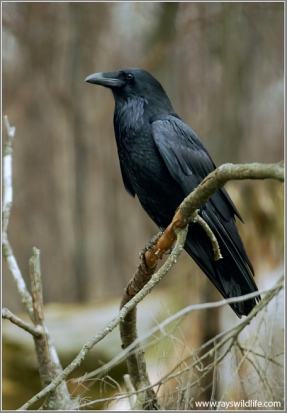
Northern Raven (Corvus corax) by Ray

Lee – Taken by Dan 6/27/13
Be anxious for nothing, but in everything by prayer and supplication, with thanksgiving, let your requests be made known to God; (Philippians 4:6 NKJV)

The Lazuli Bunting
From col. John F. Ferry. Copyrighted by
Nature Study Pub. Co., 1897, Chicago.

Lazuli Bunting (Passerina amoena) Birds Illustrated By Color Photography
The joy is great of him who strays
In shady woods on summer days.
—Maurice Thompson.

N Colorado and Arizona the Lazuli Painted Finch, as it is called, is common, while in California it is very abundant, being, in fact, generally distributed throughout the west, and along the Pacific Coast it is found as far north as Puget Sound, during the summer. Davie says it replaces the Indigo Bunting, (See Birds, The Indigo Bunting) from the Plains to the Pacific, being found in all suitable localities. The nest is usually built in a bush or in the lower limbs of trees, a few feet from the ground. Fine strips of bark, small twigs, grasses, and hair are used in preparing it for the four tiny, light bluish-green eggs, which readily fade when exposed to light. The eggs so closely resemble those of the Bluebird as not to be distinguishable with certainty. The nest is an inartistic one for a bird of gay plumage.
From Florence A. Merriam’s charming book, “A-Birding on a Bronco,” we select a description of the pretty manners of this attractive bird. She says:
“While waiting for the Woodpeckers, one day, I saw a small brownish bird flying busily back and forth to some green weeds. She was joined by her mate, a handsome blue Lazuli Bunting, even more beautiful than our lovely Indigo, and he flew beside her full of life and joy. He lit on the side of a cockle stem, and on the instant caught sight of me. Alas! he seemed suddenly turned to stone. He held onto that stalk as if his little legs had been bars of iron and I a devouring monster. When he had collected his wits enough to fly off, instead of the careless gay flight with which he had come out through the open air, he timidly kept low within the cockle field, making a circuitous way through the high stalks. He could be afraid of me if he liked, I thought, for after a certain amount of suspicion, an innocent person gets resentful; at any rate I was going to see that nest. Creeping up cautiously when the mother bird was away, so as not to scare her, and carefully parting the mallows, I looked in. Yes, there it was, a beautiful little sage-green nest of old grass laid in a coil. I felt as pleased as if having a right to share the family happiness. After that I watched the small worker gather material with new interest, knowing where she was going to put it. She worked fast, but did not take the first thing she found, by any means. With a flit of the wing she went in nervous haste from cockle to cockle, looking eagerly about her. Jumping down to the ground, she picked up a bit of grass, threw it down dissatisfied, and turned away like a person looking for something. At last she lit on the side of a thistle, and tweaking out a fibre, flew with it to the nest.
“A month after the first encounter with the father Lazuli, I found him looking at me around the corner of a cockle stalk, and in passing back again, caught him singing full tilt, though his bill was full of insects! After we had turned our backs I looked over my shoulder and had the satisfaction of seeing him take his beakful to the nest. You couldn’t help admiring him, for though not a warrior who would snap his bill over the head of an enemy of his home, he had a gallant holiday air with his blue coat and merry song, and you felt sure his little brown mate would get cheer and courage enough from his presence to make family dangers appear less frightful.”
Summary:
LAZULI BUNTING.—Passerina amoena. Other name: “Lazuli Painted Finch.”
Range—Western United States from the Great Plains to the Pacific; south in winter to Western Mexico.
Nest—In a bush or the lower limbs of trees, a few feet from the ground, of fine strips of bark, small twigs, grasses, and is lined with hair.
Eggs—Usually four, light bluish-green.

Lazuli Bunting (Passerina amoena) by Daves BirdingPix
Lee’s Addition:
Sing unto the LORD a new song, and his praise from the end of the earth, ye that go down to the sea, and all that is therein; the isles, and the inhabitants thereof. (Isaiah 42:10 KJV)
Take an harp, go about the city, … make sweet melody, sing many songs, that thou mayest be remembered. (Isaiah 23:16 KJV)
While the Eastern half of the United States has the Indigo Bunting, the Western half has their beautiful Lazuli Bunting. Both Buntings belong to the Cardinalidae – Grosbeaks, Saltators & Allies Family. The Lazuli Bunting is a North American songbird named for the gemstone lapis lazuli.
After males are two years old, they develop their own individual song composed of a “series of different syllables.” The song is a high, rapid, strident warble, similar to that of the Indigo Bunting but longer and with less repetition.
Two different birds singing: (from xeno-canto)
The male is easily recognized by its bright blue head and back (lighter than the closely related Indigo Bunting), its conspicuous white wingbars, (one wider than the other) and its light rusty breast and white belly. The color pattern may suggest the Eastern and Western Bluebirds, but the smaller size (13–14 cm or 5–5.5 inches long), wingbars, and short and conical bunting bill quickly distinguish it. The female is brown, grayer above and warmer underneath, told from the female Indigo Bunting by two thin and pale wingbars and other plumage details.
Lazuli Buntings breed mostly west of the 100th meridian from southern Canada to northern Texas, central New Mexico and Arizona, and southern California. On the Pacific coast their breeding range extends south to extreme northwestern Baja California. They migrate to southeastern Arizona and Mexico. Their habitat is brushy areas and sometimes weedy pastures, generally well-watered, and sometimes in towns.
These birds eat mostly seeds and insects. They may feed conspicuously on the ground or in bushes, but singing males are often very elusive in treetops.
This bird makes a loose cup nest of grasses and rootlets placed in a bush. It lays three or four pale blue eggs. In the eastern and southern part of its range, it often hybridizes with the Indigo Bunting.
Lazuli Bunting (Passerina amoena)

Lazuli Bunting (Passerina amoena) by Michael Woodruff
Lazuline Sabrewing (Campylopterus falcatus)

Lazuline Sabrewing (Campylopterus falcatus) ©WikiC
Click Here for a beautiful photo at IBC
Lazuli Kingfisher (Todiramphus lazuli) – No Photo Available in Creative Commons
Click Here for a great photo at IBC
*
Birds Illustrated by Color Photography – Revisited
The above article is an article in the monthly serial for October 1897 “designed to promote Knowledge of Bird-Live.” These include Color Photography, as they call them, today they are drawings. There are at least three Volumes that have been digitized by Project Gutenberg.
To see the whole series of – Birds Illustrated by Color Photography – Revisited
*
(Information from Wikipedia and other internet sources, with editing)
Next Article – Bird Miscellany Plus
The Previous Article – Vermilion Flycatcher Version II
Links:
*

The Vermilion Fly-catcher
From col. George F. Breninger. Copyrighted by
Nature Study Pub. Co., 1897, Chicago.

HICKETS along water courses are favorite resorts of this beautiful Fly-catcher, which may be seen only on the southern border of the United States, south through Mexico to Guatemala, where it is a common species. Mr. W. E. D. Scott notes it as a common species about Riverside, Tucson, and Florence, Arizona. Its habits are quite similar to those of other Fly-catchers, though it has not been so carefully observed as its many cousins in other parts of the country. During the nesting season, the male frequently utters a twittering song while poised in the air, in the manner of the Sparrow Hawk, and during the song it snaps its bill as if catching insects.
The Vermilion’s nest is usually placed in horizontal forks of ratana trees, and often in mesquites, not more than six feet from the ground; they are composed of small twigs and soft materials felted together, with the rims covered with lichens, and the shallow cavity lined with a few horse or cow hairs. Dr. Merrill states that they bear considerable resemblance to nests of the Wood Pewee in appearance and the manner in which they are saddled to the limb. Nests have been found, however, which lacked the exterior coating of lichens.
Three eggs are laid of a rich creamy-white with a ring of large brown and lilac blotches at the larger end.
Pallid, wan-faced clouds
Press close to the frozen pines,
And follow the jagged lines
Of fence, that the sleet enshrouds.
Sharp in the face of the sky,
Gaunt, thin-ribbed leaves are blown;
They rise with a shuddering moan,
Then sink in the snow and die.
At the edge of the wood a vine
Still clings to the sleeping beech,
While its stiffened tendrils reach
A nest, and around it twine.
A little gray nest all alone,
With its feathery lining of snow,
Where bleak winds, piping low,
Croon a sweet minor tone.
—Nora A. Piper.
*
Summary:
VERMILION FLY-CATCHER.—Pyocephalus rubineus mexicanus.
Range—Southern Border of the United States south through Mexico and Guatemala.
Nest—In forks of ratana trees, not more than six feet up, of small twigs and soft materials felted together, the rims covered with lichens; the cavity is shallow.
Eggs—Usually three, the ground color a rich creamy-white, with a ring of large brown and lilac blotches at the larger end.

Vermilion Flycatcher (Pyrocephalus rubinus) by Margaret Sloan
Lee’s Addition:
“Come now, and let us reason together,” Says the LORD, “Though your sins are like scarlet, They shall be as white as snow; Though they are red like crimson, They shall be as wool. (Isaiah 1:18 NKJV)
The Vermilion Flycatcher (Pyrocephalus rubinus) is a small passerine bird in the Tyrannidae, or tyrant flycatcher family. Most flycatchers are rather drab, but the Vermilion Flycatcher is a striking exception. It is a favourite with birders, but is not generally kept in aviculture, as the males tend to lose their vermilion colouration when in captivity.
Vermilion Flycatchers generally prefer somewhat open areas, and are found in trees or shrubs in savannah, scrub, agricultural areas, riparian woodlands, and desert as well, but usually near water. Their range includes almost all of Mexico; it extends north into the southwestern United States, and south to scattered portions of Central America, parts of northwestern and central South America, and on southwards to central Argentina. They are also found in the Galapagos Islands.
The species grows to about seven inches in length, and is strongly dimorphic; males are bright red, with dark brown plumage. Females have a peach-coloured belly with a dark grey upperside, and are similar to Say’s Phoebe.
The flycatchers feed mostly on insects such as flies, grasshoppers and beetles. These are usually taken in mid-air, after a short sally flight from a perch.
They lay 2-3 whitish eggs in a nest made of twigs, stems and roots, and lined with hair. The eggs are incubated for around two weeks by the female and the young are ready to leave the nest 15 days after hatching.

Vermilion Flycatcher (Pyrocephalus rubinus) Female on nest ©WikiC
*
Birds Illustrated by Color Photography – Revisited
The above article is an article in the monthly serial for October 1897 “designed to promote Knowledge of Bird-Live.” These include Color Photography, as they call them, today they are drawings. There are at least three Volumes that have been digitized by Project Gutenberg.
To see the whole series of – Birds Illustrated by Color Photography – Revisited
*
(Information from Wikipedia and other internet sources)
Next Article – The Lazuli Bunting
The Previous Article – The European Kingfisher
Links:
*

European Kingfisher for Birds Illustrated
From col. Chi. Acad. Sciences. Copyrighted by
Nature Study Pub. Co., 1897, Chicago.

European Kingfisher for Birds Illustrated
From col. Chi. Acad. Sciences. Copyrighted by
Nature Study Pub. Co., 1897, Chicago.

ARELY indeed is this charming bird now found in England, where formerly it could be seen darting hither and thither in most frequented places. Of late years, according to Dixon, he has been persecuted so greatly, partly by the collector, who never fails to secure the brilliant creature for his cabinet at every opportunity, and partly by those who have an inherent love for destroying every living object around them. Gamekeepers, too, are up in arms against him, because of his inordinate love of preying on the finny tribe. Where the Kingfisher now is seen is in the most secluded places, the author adds, where the trout streams murmur through the silent woods, but seldom trod by the foot of man; or in the wooded gullies down which the stream from the mountains far above rushes and tumbles over the huge rocks, or lies in pools smooth as the finest mirror.
The Kingfisher is comparatively a silent bird, though he sometimes utters a few harsh notes as he flies swift as a meteor through the wooded glades. You not unfrequently flush the Kingfisher from the holes in the banks, and amongst the brambles skirting the stream. He roosts at night in holes, usually the nesting cavity. Sometimes he will alight on stumps and branches projecting from the water, and sit quiet and motionless, but on your approach he darts quickly away, often uttering a feeble seep, seep, as he goes.
The habits of the English Kingfisher are identical with those of the American, though the former is the more brilliant bird in plumage. (See Birds, Vol. I, p. 61.) The ancients had a very absurd idea as to its nesting habits. They believed that the bird built a floating nest, and whenever the old bird and her charge were drifted by the winds, as they floated over the briny deep, the sea remained calm. He was, therefore, to the ancient mariner, a bird held sacred in the extreme. Even now these absurd superstitions have not wholly disappeared. For instance, the nest is said to be made of the fish bones ejected by the bird, while the real facts are, that they not only nest but roost in holes, and it must follow that vast quantities of rejected fish bones accumulate, and on these the eggs are of necessity laid.
These eggs are very beautiful objects, being of a deep pinkish hue, usually six in number.
The food of the Kingfisher is not composed entirely of fish, the remains of fresh-water shrimps being found in their stomachs, and doubtless other animals inhabiting the waters are from time to time devoured.
The English Kingfisher, says Dixon, remains throughout the year, but numbers perish when the native streams are frozen. There is, perhaps, not a bird in all the ranks of the feathered gems of equatorial regions, be it ever so fair, the Humming-bird excepted, that can boast a garb so lovely as this little creature of the northland. Naturalists assert that the sun has something to do with the brilliant colors of the birds and insects of the tropics, but certainly, the Kingfisher is an exception of the highest kind. Alas, that he has no song to inspire the muse of some English bard!

Common Kingfisher (Alcedo atthis) by Phil Kwong
Little Folks:
I shouldn’t have liked it one bit if my picture had been left out of this beautiful book. My cousin, the American Kingfisher, had his in the February number, and I find he had a good deal to say about himself in his letter, too.
Fine feathers make fine birds, they say. Well, if that is true, I must be a very fine bird, for surely my feathers are gay enough to please anybody—I think.
To see me in all my beauty, you must seek me in my native wood. I look perfectly gorgeous there, flitting from tree to tree. Or maybe you would rather see me sitting on a stump, gazing down into the clear pool which looks like a mirror.
“Oh, what a vain bird!” you would say; “see him looking at himself in the water;” when all the time I had my eye on a fine trout which I intended to catch for my dinner.
Well, though I wear a brighter dress than my American cousin, our habits are pretty much alike. I am sure he catches fish the same way I do—when he is hungry.
With a hook and line, as you do?
Oh, no; with my bill, which is long, you observe, and made for that very purpose. You should just see me catch a fish! Down I fly to a stump near the brook, or to a limb of a tree which overhangs the water, and there I sit as quiet as a mouse for quite a while.
Everything being so quiet, a fine speckled trout, or a school of troutlets, play near the surface. Now is my chance! Down I swoop, and up I come with a fish crosswise in my bill.
Back I go to my perch, toss the minnow into the air, and as it falls catch it head first and swallow it whole. I tell you this because you ought to know why I am called Kingfisher.
Do we swallow bones and all?
Yes, but we afterwards eject the bones, when we are resting or roosting in our holes in the banks of the stream. That must be the reason people who write about us say we build our nests of fish bones.
Sing?
Oh, no, we are not singing birds; but sometimes, when flying swiftly through the air, we give a harsh cry that nobody but a bird understands.
Your friend,
The English Kingfisher.
Summary:
EUROPEAN KINGFISHER.—Alcedo ispida.
Range—England and portions of Europe.
Nest—In holes of the banks of streams.
Eggs—Usually six, of a deep pinkish hue.
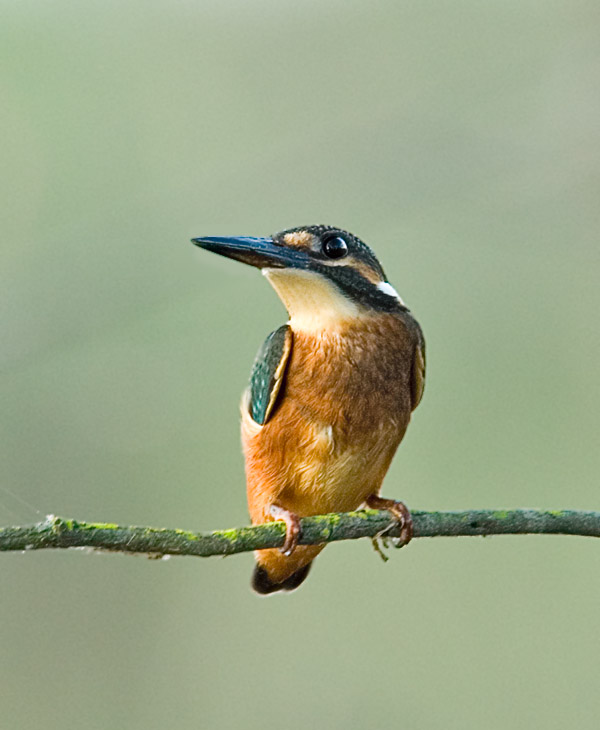
Common Kingfisher (Alcedo atthis) by Phil Kwong
Lee’s Addition:
And as He walked by the Sea of Galilee, He saw Simon and Andrew his brother casting a net into the sea; for they were fishermen. Then Jesus said to them, “Follow Me, and I will make you become fishers of men.” (Mark 1:16-17 NKJV)
The Common Kinfisher is part of the Alcedinidae – Kingfishers Family, now divided into the River Kingfishers or Alcedinidae group. Personally, Kingfishers are a favorite of mine and I enjoy the neat design, attitude and challenge to photograph the Lord gave them.
The Common Kingfisher (Alcedo atthis) also known as Eurasian Kingfisher or River Kingfisher, is a small kingfisher with seven subspecies recognized within its wide distribution across Eurasia and North Africa. It is resident in much of its range, but migrates from areas where rivers freeze in winter.
This sparrow-sized bird has the typical short-tailed, large-headed kingfisher profile; it has blue upperparts, orange underparts and a long bill. It feeds mainly on fish, caught by diving, and has special visual adaptions to enable it to see prey under water. The glossy white eggs are laid in a nest at the end of a burrow in a riverbank.
This species has the typical short-tailed, dumpy-bodied large-headed and long-billed kingfisher shape. The adult male of the western European subspecies, A. a. ispida has green-blue upperparts with pale azure-blue back and rump, a rufous patch by the bill base, and a rufous ear-patch. It has a green-blue neck stripe, white neck blaze and throat, rufous underparts, and a black bill with some red at the base. The legs and feet are bright red.[5] It is about 16 centimetres (6.3 in) long with a wingspan of 25 cm (9.8 in), and weighs 34–46 grams (1.2–1.6 oz).
The female is identical in appearance to the male except that her lower mandible is orange-red with a black tip. The juvenile is similar to the adult, but with duller and greener upperparts and paler underparts. Its bill is black, and the legs are also initially black.
The flight of the Kingfisher is fast, direct and usually low over water. The short rounded wings whirr rapidly, and a bird flying away shows an electric-blue “flash” down its back.
In North Africa, Europe and Asia north of the Himalayas this is the only small blue kingfisher. In south and southeast Asia it can be confused with six other small blue-and-rufous kingfishers, but the rufous ear patches distinguish it from all but juvenile Blue-eared Kingfisher; details of the head pattern may be necessary to differentiate the two species where both occur.
The Common Kingfisher has no song. The flight call is a short sharp whistle, chee, repeated two or three times. Anxious birds emit a harsh, shrit-it-it and nestlings call for food with a churring noise
Flight Call from xeno-canto by Marco Dragonetti

Common Kingfisher (Alcedo atthis) by W Kwong
*
Birds Illustrated by Color Photography – Revisited
The above article is an article in the monthly serial for October 1897 “designed to promote Knowledge of Bird-Live.” These include Color Photography, as they call them, today they are drawings. There are at least three Volumes that have been digitized by Project Gutenberg.
To see the whole series of – Birds Illustrated by Color Photography – Revisited
*
(Information from Wikipedia and other internet sources)

Common Kingfisher (Alcedo atthis) by Ian
Next Article – The Vermilion Fly-Catcher
The Previous Article – The Yellow-billed Tropic Bird
Links:
Common Kingfisher – Wikipedia
Common Kingfisher – xeno-canto
Alcedinidae – Kingfishers Family
*

The Yellow-billed Tropic Bird, 1897
N appearance this bird resembles a large Tern (See The Black Tern), and its habits are similar to those of the Terns. Inter-tropical, it is of a wandering disposition, breeding on the islands of mid-ocean thousands of miles apart. It is noted for its elegant, airy, and long-protracted flight. Davie says that on Bourbon, Mauritius and other islands east and south of Madagascar it breeds in the crevices of the rocks of inaccessible cliffs, and in hollow trees. In the Bermuda Islands it nests about the first of May in holes in high rocky places along the shores. Here its favorite resorts are the small islands of Great Sound, Castle Harbor, and Harrington Sound. The Phaeton, as it is felicitously called, nests in the Bahamas in holes in the perpendicular faces of cliffs and on the flat surfaces of rocks. A single egg is laid, which has a ground-color of purplish brownish white, covered in some specimens almost over the entire surface with fine reddish chocolate-colored spots.
These species compose the small but distinct family of tropic birds and are found throughout the tropical and sub-tropical regions of the world. Long journeys are made by them across the open sea, their flight when emigrating being strong, rapid, and direct, and immense distances are covered by them as they course undismayed by wind or storm. In feeding, Chapman says, they course over the water, beating back and forth at a height of about forty feet, and their long willowy tail-feathers add greatly to the grace and beauty of their appearance when on the wing. They are of rare and probably accidental occurrence on our coasts.
The Songs of Nature never cease,
Her players sue not for release
In nearer fields, on hills afar,
Attendant her musicians are:
From water brook or forest tree,
For aye comes gentle melody,
The very air is music blent—
An universal instrument.
—John Vance Cheney.
***
The people who make a study of birds say that I look like a large Tern, and that my habits are like his.
I don’t know whether that is so, I am sure, for I have no acquaintance with that bird, but you little folks can turn to your The Black Tern and see for yourselves if it is true.
For my part, I think I am the prettier of the two on account of my long, willowy tail-feathers. They add greatly, it is said, to the grace and beauty of my appearance when on the wing. Then, the color of my coat is much more beautiful than his, I think, don’t you think so, too?
We are not so common as the Terns, either, for they are very numerous. There are only three species of our family, so we consider ourselves quite distinct.
What are we noted for?
Well, principally for our long distance flights across the sea, elegant and airy, as the writers say of us. Maybe that is the reason they call us the Phaeton sometimes.
Do we go north in the summer as so many other birds do?
Ugh! You make me shudder. No, indeed! We never go farther north than Florida. Our home, or where we build our nests, is in the tropical and sub-tropical regions, where the weather is very warm, you know.
We are great wanderers and build our nests on islands, way out in the ocean many thousands of miles apart.
In trees?
Oh, no, but in any hole we see in the face of a great rock or cliff, and sometimes right on the top of a rock.
How many eggs?
Only one. That is the reason, you see, that our family remains small.
Sing?
Oh, my, no! We are not singing birds. We have a call-note, though harsh and guttural, which sounds like tip, tip, tip.
Summary:
YELLOW-BILLED TROPIC BIRD.—Phaethon flavirostris. Other names: “Phaeton.” (Now ~ White-tailed Tropicbird (Phaethon lepturus)
Range.—Tropical coasts; Atlantic coasts of tropical America, West Indies, Bahamas, Bermudas; casual in Florida and accidental in Western New York and Nova Scotia. (Chapman.)
Nest—In holes in the perpendicular faces of cliffs, also on the flat surfaces of rocks.
Eggs—One, ground color of purplish brownish white, covered with fine reddish chocolate-colored spots. (Davie.)

White-tailed Tropicbird (Phaethon lepturus) by Ian
Lee’s Addition:
So it shall be, while My glory passes by, that I will put you in the cleft of the rock, and will cover you with My hand while I pass by. (Exodus 33:22 NKJV)
Our Yellow-billed Tropic Bird is now the White-tailed Tropicbird (Phaethon lepturus). It’s name has gone through several changes according to Avibase. What a lovely bird the Lord created with this family of birds. They are members of the Phaethontidae – Tropicbird Family which only has three species; the Yellow-billed, Red-tailed and Red-billed.
The White-tailed Tropicbird Phaethon lepturus, is a tropicbird, smallest of three closely related seabirds of the tropical oceans and smallest member of the order Phaethontiformes. It occurs in the tropical Atlantic, western Pacific and Indian Oceans. It also breeds on some Caribbean islands, and a few pairs have started nesting recently on Little Tobago, joining the Red-billed Tropicbird colony. In addition to the tropical Atlantic, it nests as far north as Bermuda, where it is locally called a “Longtail”.

White-tailed Tropicbird (Phaethon lepturus) ©WikiC
The White-tailed Tropicbird breeds on tropical islands laying a single egg directly onto the ground or a cliff ledge. It disperses widely across the oceans when not breeding, and sometimes wanders far. It feeds on fish and squid, caught by surface plunging, but this species is a poor swimmer. The call is a high screamed keee-keee-krrrt-krrt-krrt.
The adult White-tailed Tropicbird is a slender, mainly white bird, 71–80 cm long including the very long central tail feathers, which double its total length. The wingspan is 89–96 cm, and there is a black band on the inner wing There is black through the eye and the bill is orange-yellow to orange red. The bill colour, pure white back and black wing bar distinguish this species from Red-billed.
Sexes are similar, although males average longer tailed, but juveniles lack the tail streamers, have a green-yellow bill, and a finely barred back.
*
Birds Illustrated by Color Photography – Revisited
The above article is an article in the monthly serial for October 1897 “designed to promote Knowledge of Bird-Live.” These include Color Photography, as they call them, today they are drawings. There are at least three Volumes that have been digitized by Project Gutenberg.
To see the whole series of – Birds Illustrated by Color Photography – Revisited
*
(Information from Wikipedia and other internet sources)
Next Article – The European Kingfisher
The Previous Article – The Cerulean Warbler
Links:
*

Laughing Kookaburra (Dacelo novaeguineae) by Lee
While we were at Lowry Park Zoo last week, we also had the joy of hearing the Laughing Kookaburra (Dacelo novaeguineae) sounding off with its mate. Seems like the Myna birds and the singing dogs were not the only ones in a happy mood. The two Kookaburras got to “laughing” also. They sort of set the tone to put you a joyful mood.
For You, O Lord, have made me glad by Your works; at the deeds of Your hands I joyfully sing. (Psalms 92:4 AMP) Make a joyful noise to the Lord, all the earth; break forth and sing for joy, yes, sing praises! (Psalms 98:4 AMP)
I have always enjoyed seeing the Kookaburras. When we were at the National Aviary I tried recording them, but by the time I got the camera on, they stopped. I recorded them this time but didn’t get the camera focused on them until about half way through. Oh, the challenges of birdwatching! Well, at least trying to get a recording to use on the blog anyway. When you put all the events together; the singing Bali Myna, the singing dogs, and these singing Kookaburras, it brings to mind a story in the Bible. When Paul and Silas where in prison, (behind bars) they were joyful just the same. All of these critters plus the men (Paul and Silas) are behind bars, yet they are joyful and carrying on with their lives. Could there be a lesson there for us to learn and observe?
And at midnight Paul and Silas prayed, and sang praises unto God: and the prisoners heard them. (Acts 16:25 KJV)
Consider it wholly joyful, my brethren, whenever you are enveloped in or encounter trials of any sort or fall into various temptations. (James 1:2 AMP)
We all have things come into our lives, but our attitude affects how well we handle those circumstances. Prayer is one of the best ways to find peace in the midst of trials. Knowing the Lord Jesus Christ as personal Savior is the absolute best way. I trust you know Him.
*
This video has two of my photos to cover the blurred part, but the sound is the whole recording.
The Laughing Kookaburra (Dacelo novaeguineae) is a carnivorous bird in the kingfisher family Halcyonidae. Native to eastern Australia, it has also been introduced to parts of New Zealand, Tasmania and Western Australia. Male and female adults are similar in plumage, which is predominantly brown and white. A common and familiar bird, this species of kookaburra is well known for its laughing call.
There are actually 6 Kookaburras:
See:
Laughing Kookaburra – Wikipedia
Alcedinidae – Kingfishers – Family
*


 Birds of the Bible For Kids