Lesson From The Bird’s Nest

*

A week ago, we went to Lake Morton in Lakeland for half hour or so. Several of the Swans were sitting on nest and a Peking Duck or a White Mallard was working on her nest. She kept adding twigs and grass to the nest and then walked away.

Have you ever watched a bird build or work on a nest? They add the “walls” and a “floor” and some birds like Weavers, make a “roof” over their nest.

As I watched the bird working on her nest, it reminded me of what was going on at our house. As I mentioned last week, our house was in “disarray” while our “spare” bedroom and two other areas were being worked on. Many spare rooms become a collection of “stuff.” (At least our is)

Behold, the days come, that all that is in thine house, and that which thy fathers have laid up in store until this day, shall be carried to Babylon: nothing shall be left, saith the LORD. (Isaiah 39:6 KJV)

This was a warning to the Israelites. We all know that there are good things put in “store.”

Upon the first day of the week let every one of you lay by him in store, as God hath prospered him, that there be no gatherings when I come. (1 Corinthians 16:2 KJV)

Laying up in store for themselves a good foundation against the time to come, that they may lay hold on eternal life. (1 Timothy 6:19 KJV)

Back to our nest. This verse: “Even the stork in the sky knows her appointed seasons, and the dove, the swift and the thrush observe the time of their migration. But my people do not know the requirements of the LORD.” (Jeremiah 8:7 NIV)

Another lesson we can learn from our birds. They do not load their nest with stuff. Some add colorful threads now and then, but there are no hat racks or closets with different feathers hanging. They do not have to decide what color feather they to wear today. No cooking utensils to worry about. No suitcase ready to pack when it become time to migrate. When it is time to go, they go.
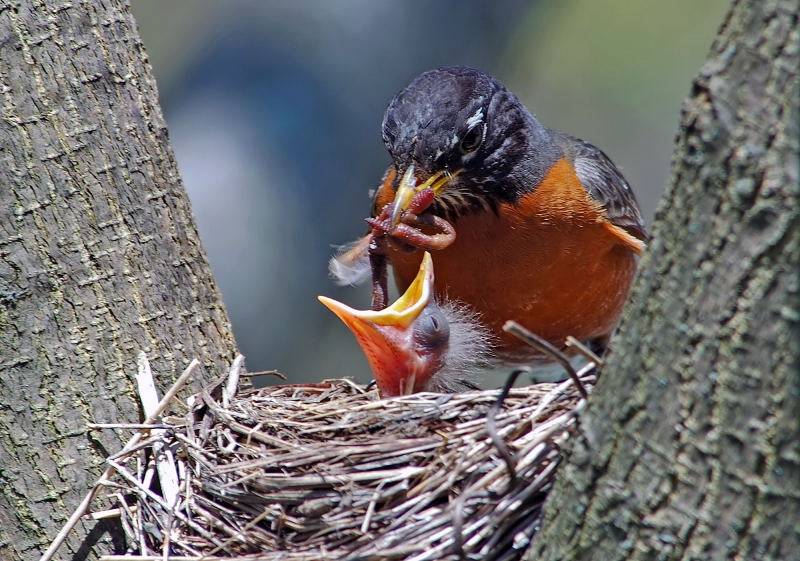
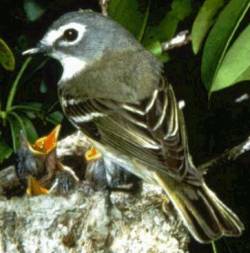
American Robin (Turdus migratorius) with youngstersby Raymond Barlow

American Robin (Turdus migratorius) with youngstersby Raymond Barlow

Must be a lesson there. I am a bit of a pack-rat and it has been interesting around here lately. Especially when all did not go as planned. A mix-up caused a delay, so the disarray has continued longer than expected. Now that the floor is finally completed, I am trying to de-clutter some as “things” are returned to the “spare” room. At least the computer is back up and running. Yeah!

Yep! The birds have the right idea. Lord bless you all as you face your challenges. Maybe the birds will have a hint to help you also.

*

Wordless Birds

*


Birds of the Bible – Alpine Swifts

Alpine Swift (Tachymarptis melba) by Ian

Alpine Swift (Tachymarptis melba) by Ian

Even the stork in the heavens Knows her appointed times; And the turtledove, the swift, and the swallow Observe the time of their coming. But My people do not know the judgment of the LORD. (Jeremiah 8:7 NKJV)

While reading my latest issue of the Birdwatchers Digest, I came across and interesting note about a recent study of the behavior Alpine Swifts that was published in 2013. It was published in the Nature Communications.

“Although observers have claimed that some swifts may stay on the wing for almost their entire lives—except for breeding—there was no solid evidence of this. Then, a team of researchers caught six alpine swifts in Switzerland, tagged them with data loggers (to record the birds’ acceleration and location), and were able to recapture three of them the next year, upon their return from Africa.” (BWD)

After analyzing data, they found that “the swifts appear to fly nonstop when they aren’t breeding. (The swifts eat insects in mid-air, of course, so they don’t starve.) The actual time totals up to a phenomenal 200 days aloft.” (BWD) This posses another question. Do the Swifts actually sleep on the wing? There were indications that this was happening.

The articles go on, but I find this truly amazing. Our Creator used such Wisdom when He made these Swifts. Not only are they able to eat on the wing, but also catch a nap. Wow!

*

Alpine Swift (Tachymarptis melba) by Ian

Alpine Swift (Tachymarptis melba) by Ian

Day unto day uttereth speech, and night unto night sheweth knowledge. (Psalms 19:2 KJV)

Half of brain asleep article – Interesting Things – Not So Bird-Brained

*

*

Bible Birds – Solomon’s Wisdom About Birds I

Australian Raven (Corvus coronoides) by Ian

Australian Raven (Corvus coronoides) by Ian

Also he spoke of trees, from the cedar tree of Lebanon even to the hyssop that springs out of the wall; he spoke also of animals, of birds, of creeping things, and of fish. (1 Kings 4:33 NKJV)

(Relocated)

The Rescue of the Canary Bird

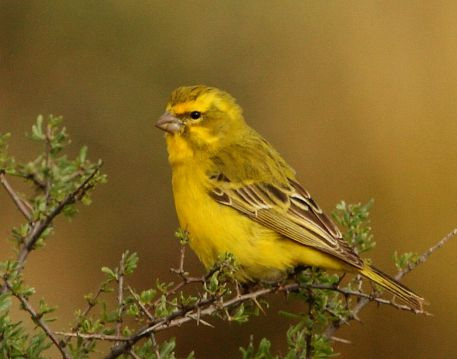
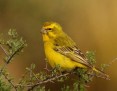
Yellow Canary (Crithagra flaviventris) Male ©WikiC

Yellow Canary (Crithagra flaviventris) Male ©WikiC

THE RESCUE OF THE CANARY BIRD

She Watched the Little Bird.

She Watched the Little Bird.

“I am going to tell you a really true story,” said daddy, “something which happened to-day. I was walking along a rather poor part of the city when I saw a number of children gathered in a group in a little side yard of a tenement house. The children were screaming to one boy: ‘Oh, catch him! Don’t let the awful cat get him!'”

“Oh, was it a bird?” asked Jack eagerly.

“Yes,” replied daddy; “it was a bird, but not just the usual kind of bird that is seen around city streets, for only the sparrows like the noise of a city. Most birds like the woods and the country, where they can have homes in the trees and can sing all day long.

“But this was a tame yellow canary who had flown out of an open window to pick up some goodies he saw on the ground, and a cat was after him.”

“Did they get him from the cat?” asked Evelyn eagerly, for she was devoted to animals and perhaps especially to birds.

“Yes,” answered daddy; “the little boy succeeded in rescuing him, but the poor canary had been so frightened that his little heart was beating, oh, so fast, and the children were afraid he was not going to live.

“They all followed the little boy who had caught the canary just in time into the tenement house. The cat had knocked several feathers from the bird’s tail.

“Another child told me the canary belonged to a little girl who lived in the tenement. He asked me to follow, too, for he said that the little girl had trouble with her back and had to lie flat all the time. She loved visitors, for so much of the time she was lonely. Her mother was poor and out all day sewing, so the little girl’s only companion was the canary, who would sing for hours and hours. He seemed to know he must keep her cheered up.

“So along I went too. We climbed some stairs until we came to a dingy room where on a cot by the window lay a little girl about eight years old. She had big dark eyes, and when I saw her her cheeks were bright red from all the excitement.

“All her friends had gathered around, each giving her a special description of how the bird had been rescued. She was smiling with joy and watching the bird, who was now busily engaged nibbling at a little piece of apple which had been given him. Before long he began to sing, oh, so joyously, for he knew he was once more back in his happy home, where he would take good care to stay in the future.

“I told the little girl of my Jack and Evelyn, and she said she wanted to see you both. Shall we all go to see her and her little bird some day?”

“We’d love to!” cried Jack and Evelyn delightedly.


Lee’s Addition:

The LORD is my rock and my fortress and my deliverer; My God, my strength, in whom I will trust; My shield and the horn of my salvation, my stronghold. (Psalms 18:2)

Another delightful story from Daddy’s book.

The Yellow Canary (Serinus flaviventris) is a small passerine bird in the finch family. It is a resident breeder in much of the western and central regions of southern Africa and has been introduced to Ascension and St Helena islands. They have been kept for pets for many years. They belong to the Fringillidae – Finches Family.

Its habitat is karoo and coastal or mountain valley scrub. It builds a compact cup nest in a scrub.

The Yellow Canary is typically 13 cm in length. The adult male color ranges from almost uniform yellow in the northwest of its range to streaked, olive backed birds in the southeast. The underparts, rump and tail sides are yellow. The female has grey-brown upperparts, black wings with yellow flight feathers, and a pale supercilium. The underparts are white with brown streaking. The juvenile resembles the female, but has heavier streaking.

The Yellow Canary is a common and gregarious seedeater. Its call is chissick or cheree, and the song is a warbled zee-zeree-chereeo.

Another Bird Tales

From

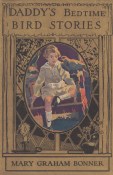
Daddy’s Bedtime Bird Stories – Gutenberg ebooks

By

Mary Graham Bonner

With four illustrations in color by
Florence Choate and Elizabeth Curtis

Daddys Bedtime Story Images


These stories first appeared in the American Press Association Service and the Western Newspaper Union.


Many of the sketches in this volume are the work of Rebecca McCann, creator of the “Cheerful Cherub,” etc.

Daddy's Bedtime Bird Stories by Mary Graham Bonner - 1917

*
Daddy’s Bedtime Bird Stories by Mary Graham Bonner – 1917

*

Links:

Painted Bunting (Passerina ciris) ©©Flickr


  Bird Tales


  Daddy’s Bedtime Bird Stories


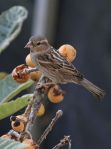
Spanish Sparrow (Passer Hispaniolensis) female ©WikiC


  Wordless Birds


*


 Fringillidae – Finches Family


*

Interesting Things – Dragonfly

Thinking

Here is an interesting video fromYouTube.com – Exploration Films about the Dragonflies. It is very interesting.

Dragonfly by Phil Kwong

Dragonfly by Phil Kwong

Learning from the Dragonfly by Creation Moments

“Scientists studying the dragonfly are learning even more secrets of flight. Our best high-performance aircraft can barely lift themselves off the ground. However, the dragonfly can lift 15 times his own weight into the air.”

The Amazing Mosquito Hawk by Creation Moments

But ask now the beasts, and they shall teach thee; and the fowls of the air, and they shall tell thee: Or speak to the earth, and it shall teach thee: and the fishes of the sea shall declare unto thee. Who knoweth not in all these that the hand of the LORD hath wrought this?
(Job 12:7-9 KJV)

More articles from Creation Moments:

100 Foot Ferns “dragonflies had wingspans of six feet”

The Pre-Flood Atmosphere “dragonflies were the size of hawks”

From Creation Ministries International:

“Dragonflies

Dragonflies are probably the most beautiful of the flying insects. There are about 4,500 different varieties. They begin their life in water, where eggs hatch into rather ugly brown nymphs. The time spent living in water varies from a few weeks to several years, but for all the varieties the day comes when the nymph suddenly has the urge to climb out of the water. It sits for a while at the top of a piece of grass until its skin splits open and out comes a dragonfly! After waiting for its wings to become firm and dry, the dragonfly flies away, its lovely colours glinting in the sunshine.

Although they are very small, dragonflies are wonderfully designed for flying. Their two pairs of wings are very light, but strengthened by a network of tiny veins, which not only carry blood fluid to keep the wings stiff, but also nerves and oxygen. Some dragonflies beat their wings 40 times in one second! Dragonflies are like tiny helicopters—they can even fly backwards! In fact, Igor Sikorsky, who first designed helicopters, for the idea from watching dragonflies.

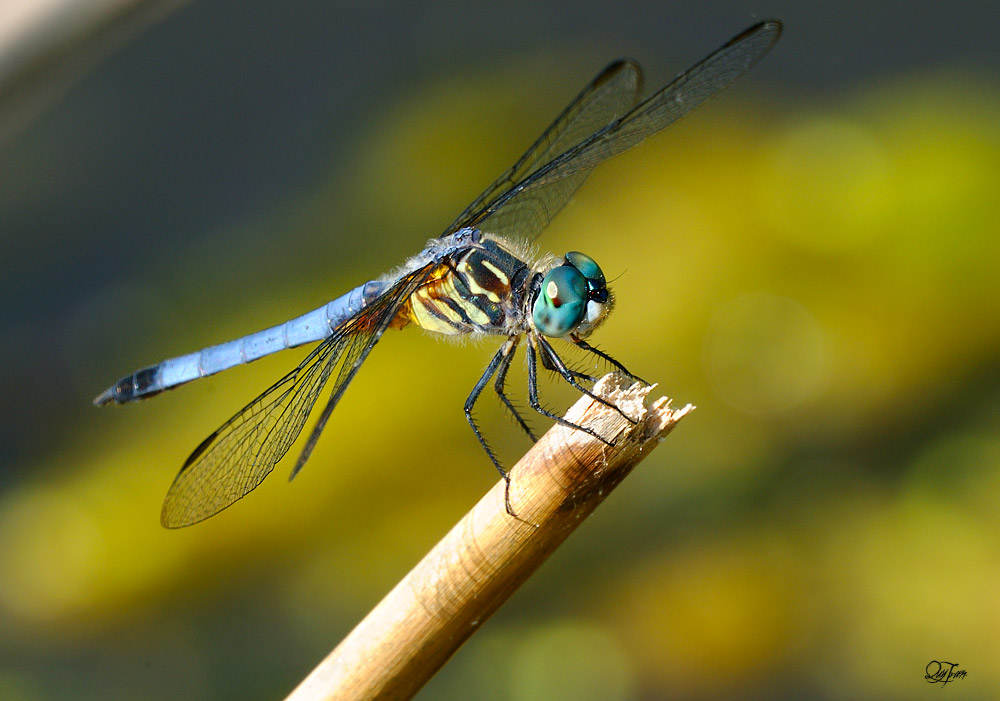
Dragonfly by QuyTran

Dragonfly by QuyTran

Another wonderful thing about dragonflies is their eyes. Each pair of eyes is actually made up of as many as 30,000 separate eyes, each with its own lens! This enables the insect to see what is happening over a wide area, and spot every tiny movement without moving its head.

The supposedly oldest fossil dragonflies are just like dragonflies are now, except that they were much larger—75 centimeters (2.5 feet) from wing-tip to wing-tip! So there is no evidence that they evolved from ancestors without wings. And surely those amazing eyes did not evolve? Dragonflies are another of the many wonders of God’s creation!” From Our World (Answers for Kids.)

Astonishing acrobatics – dragonflies – by Johathan Sarfati

(Updated 4/29/09)

Dragonflies and fighter pilots – what can we learn? by Ken Ham

*

Originally posted in 2009 – this is a duplicate.

More Interesting Things:

Interesting Things – Dragonflies II

*

*