I am like a pelican of the wilderness; I am like an owl of the desert. (Psalms 102:6 NKJV)
They are mentioned 3 times in Scripture. Isaiah 34:11 and Zephaniah 2:14 and the previous verse.
*
*
“Abandoned by his flock, Bigbird the pelican stumbled ashore after a storm and was taken in by the staff of Greystoke Mahale in Tanzania. Watch as Bigbird learns to fly for the first time.”
Mandarin Duck (Aix galericulata) by Dan at Zoo Miami
O Lord GOD, You have begun to show Your servant Your greatness and Your mighty hand, for what god is there in heaven or on earth who can do anything like Your works and Your mighty deeds? (Deuteronomy 3:24 NKJV)
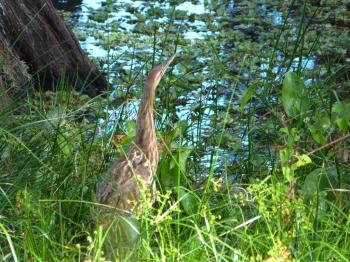
The Bittern is found in the KJV in three verses of Scripture. Some versions translate it differently. But for the sake of this article, here are those verses:
I will also make it a possession for the bittern, and pools of water: and I will sweep it with the besom of destruction, saith the LORD of hosts. (Isaiah 14:23 KJV)
But the cormorant and the bittern shall possess it; the owl also and the raven shall dwell in it: and he shall stretch out upon it the line of confusion, and the stones of emptiness. (Isaiah 34:11 KJV)
And flocks shall lie down in the midst of her, all the beasts of the nations: both the cormorant and the bittern shall lodge in the upper lintels of it; their voice shall sing in the windows; desolation shall be in the thresholds: for he shall uncover the cedar work. (Zephaniah 2:14 KJV)
Acorn Woodpecker (Melanerpes formicivorus) by Raymond Barlow
While working on the El Carpintero – The Woodpeckers article, many Bible verses about “gathering” and “storing” things were found. Following are some of those verses with photos. There is also a video of an Acorn Woodpecker gathering his supply.
We have used the verse about birds teaching us, so let’s see what can be learned this time about gathering and storing. (Job 12:7)
Acorn Woodpecker (Melanerpes formicivorus) with Hoard or Grainary WikiC
He who gathers in summer is a wise son; He who sleeps in harvest is a son who causes shame. (Proverbs 10:5 NKJV)
Provides her supplies in the summer, And gathers her food in the harvest. (Proverbs 6:8 NKJV) (the ant)
Acorn Woodpecker (Melanerpes formicivorus) by Reinier Munguia
Wealth gained hastily will dwindle, but whoever gathers little by little will increase it. (Proverbs 13:11 ESV)
Acorn Woodpecker (Melanerpes formicivorus) by Ian
Wise people store up knowledge, But the mouth of the foolish is near destruction. The rich man’s wealth is his strong city; The destruction of the poor is their poverty. The labor of the righteous leads to life, The wages of the wicked to sin. (Proverbs 10:14-16 NKJV)
Tufted Titmouse (Baeolophus bicolor) by Ray – They will store food for later use.
He stores up sound wisdom for the upright; He is a shield to those who walk uprightly; (Proverbs 2:7 NKJV)
Blue Jay (Cyanocitta cristata) Collecting for Cache
For they do not know to do right,’ Says the LORD, ‘Who store up violence and robbery in their palaces.’ ” (Amos 3:10 NKJV)
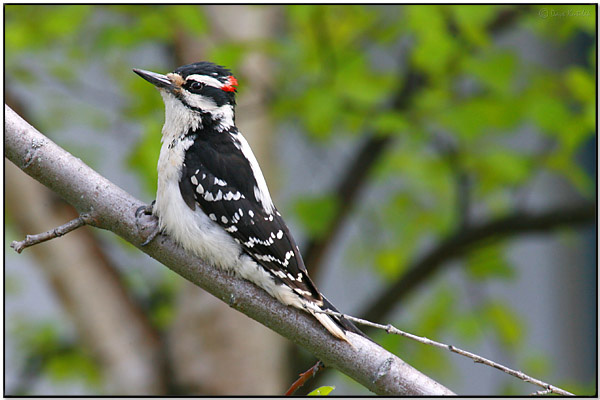
Hairy Woodpecker (Picoides villosus) by Daves BirdingPix
The Woodpeckers Bird Band
The Woodpecker family were around on various trees drumming, drumming on the bark. Mr. Hairy Woodpecker, Mr. Downy Woodpecker, and Mr. Red-Headed Woodpecker were hard at work.
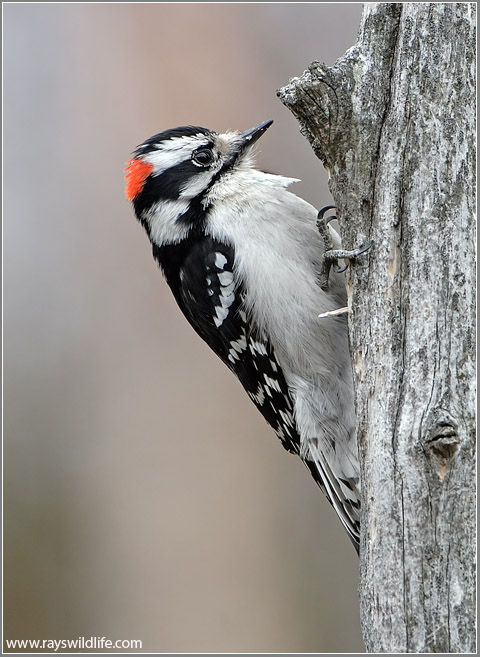
Downy Woodpecker (Picoides pubescens) by Raymond Barlow
“Let’s start a band,” suggested Mr. Hairy Woodpecker.
“What’s that you say?” asked Mr. Red-Headed Woodpecker, who had been so busy at work that he had not heard what Mr. Hairy Woodpecker had been suggesting. “A band,” repeated Mr. Hairy Woodpecker. “What sort of a band?” asked Mr. Red-Headed Woodpecker. “In the first place,” continued Mr. Hairy Woodpecker, “our bills are not only fine tools for the work we have to do getting the insects from the trees, and burrowing for our nests, but they would be splendid to use in beating the drums in a band.” “Where would we get the drums?” asked Mr. Red-Headed Woodpecker. “The trees, of course, you silly!” said Mr. Hairy Woodpecker. “Oh yes, yes,” agreed Mr. Red-Headed Woodpecker. And Mr. Downy Woodpecker said, “Of course, of course. The trees will be our drums.”
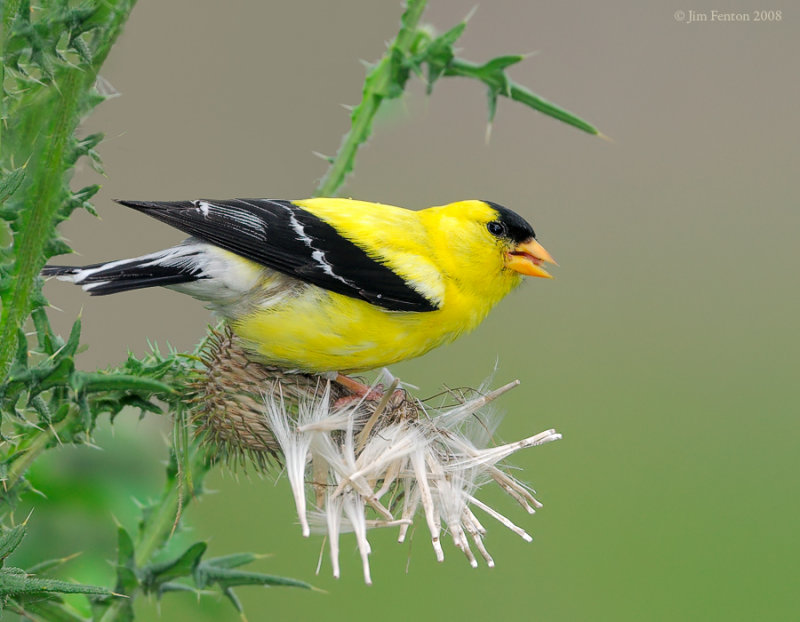
American Goldfinch (Carduelis tristis) on Thistle by Fenton
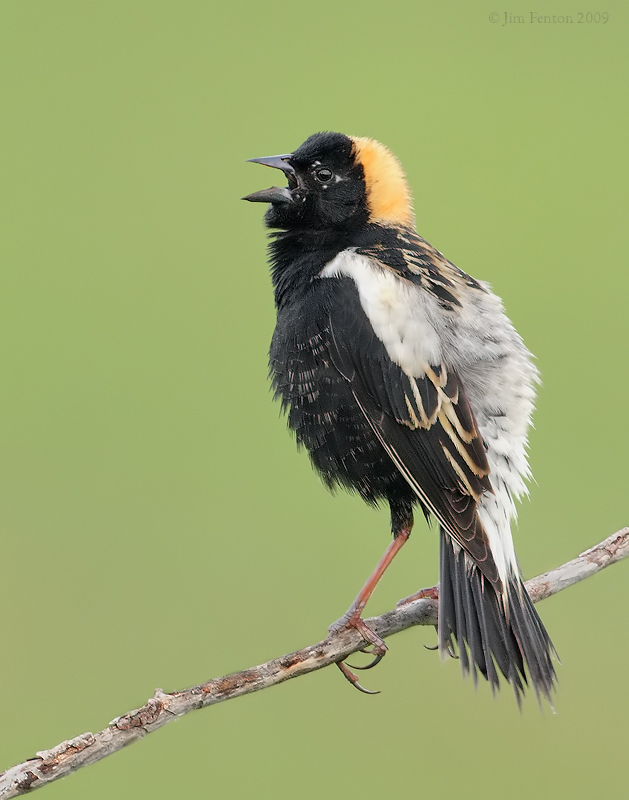
“We’ll get the other birds,” said Mr. Hairy Woodpecker, “to help us. We need something in a band besides the drums. We will ask the goldfinches, the mocking-birds, the bobolinks, the phœbe and chickadee families, all of the warbler and vireo families, and the robins of course. Then I think we’ll ask the orioles, the whippoorwills, the thrush family, and the song sparrows.”
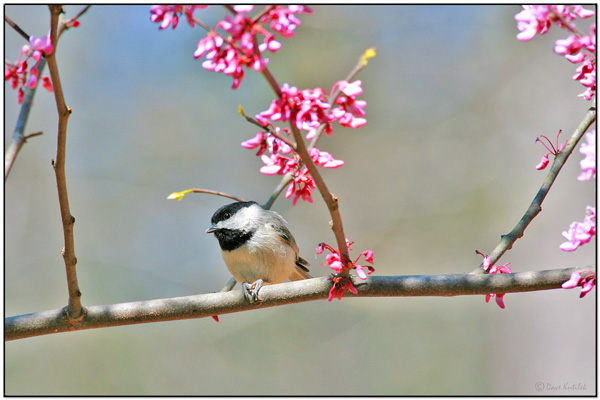
Carolina Chickadee (Poecile carolinensis) by Daves BirdingPix
“Oh,” said Mr. Downy Woodpecker, “that will make a perfect band. We’d better get started right away.” And the woodpeckers began to practise. They made such a noise that the birds came from far and near to see what they were doing. Mr. Sapsucker, Mr. Crested Woodpecker, and Mr. Flicker Woodpecker had all joined in beating the drums too!
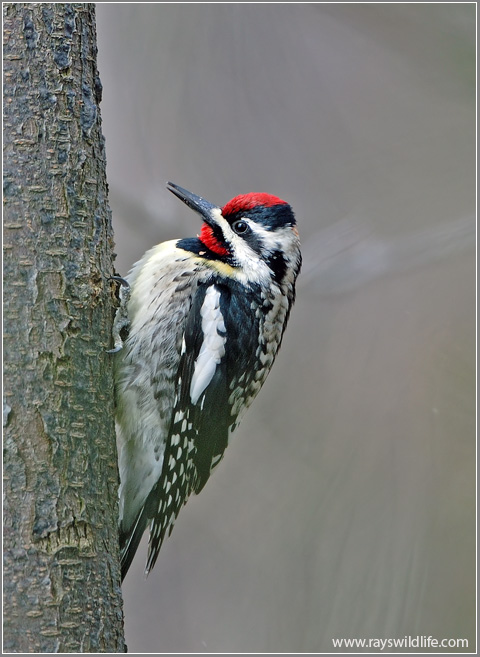
Yellow-bellied Sapsucker (Sphyrapicus varius) by Raymond Barlow
“Why are you making so much noise?” asked the birds as they flew around to the nearby trees to talk to the woodpeckers. “Oh,” said Mr. Hairy Woodpecker, “we were just going to ask you all to join our band. We will beat the drums.”
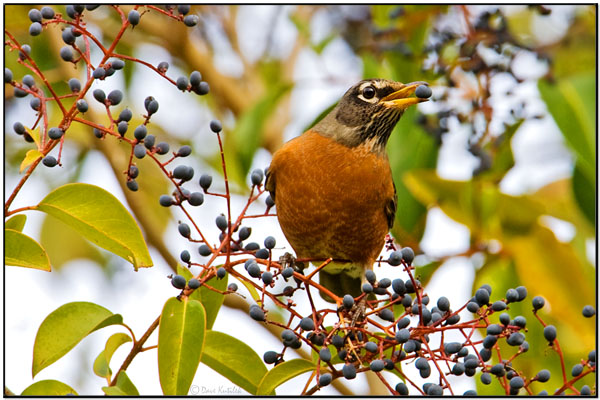
American Robin (Turdus migratorius) by Daves BirdingPix
“And just what do you want us to do?” asked Mr. Robin Redbreast, who was always eager to help. “You must all sing.”
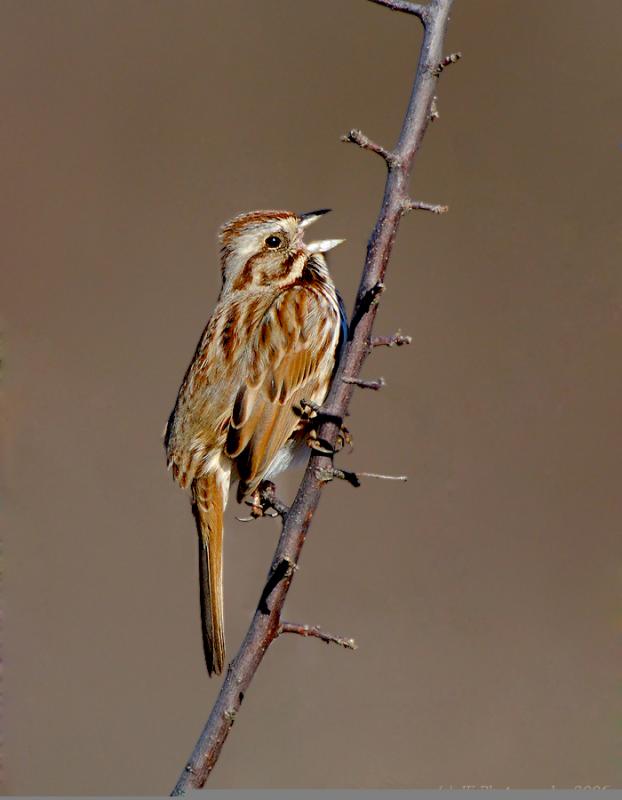
Song Sparrow (Melospiza melodia) by J Fenton
“But we all sing differently,” chirped a song sparrow. “We know different tunes and different songs.” “Oh,” said Mr. Hairy Woodpecker, “I never thought about that. But never mind, you can have little parts to sing alone, and other choruses where you will all sing together. I’m sure it will be a very fine band after we have practised.” And they began pounding the drums again. “Well,” said Mr. Robin Redbreast, “if the bird band isn’t to be the finest in the land, at least we’ll make a cheerful noise!”
With four illustrations in color by Florence Choate and Elizabeth Curtis
These stories first appeared in the American Press Association Service and the Western Newspaper Union.
Many of the sketches in this volume are the work of Rebecca McCann, creator of the “Cheerful Cherub,” etc.
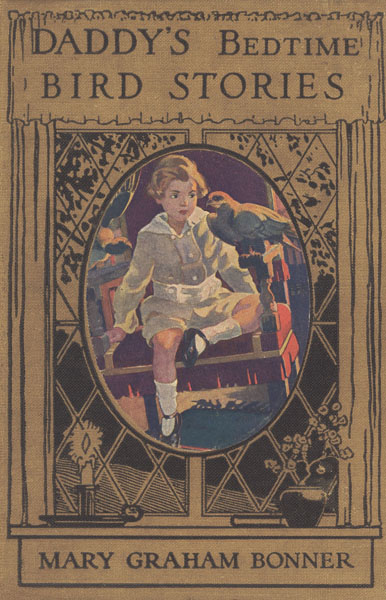
Daddy’s Bedtime Bird Stories by Mary Graham Bonner – 1917
Lee’s Addition:
Psalms 98:4-8 KJV (4) Make a joyful noise unto the LORD, all the earth: make a loud noise, and rejoice, and sing praise. (5) Sing unto the LORD with the harp; with the harp, and the voice of a psalm. (6) With trumpets and sound of cornet make a joyful noise before the LORD, the King. (7) Let the sea roar, and the fulness thereof; the world, and they that dwell therein. (8) Let the floods clap their hands: let the hills be joyful together
Meet the whole band: (a few missed the photo session)
Yellow-breasted Chat (Icteria virens) for Birds Illustrated
From col. F. M. Woodruff.Copyrighted by chicago colortype co.Nature Study Pub. Co., 1897, Chicago.
THE YELLOW-BREASTED CHAT.
I am often heard, but seldom seen. If I were a little boy or a little girl, grown people would tell me I should be seen and not heard. That’s the difference between you and a bird like me, you see.
It would repay you to make my acquaintance. I am such a jolly bird. Sometimes I get all the dogs in my neighborhood howling by whistling just like their masters. Another time I mew like a cat, then again I give some soft sweet notes different from those of any bird you ever heard.
In the spring, when my mate and I begin house-keeping, I do some very funny things, like the clown in a circus. I feel so happy that I go up a tree branch by branch, by short flights and jumps, till I get to the very top. Then I launch myself in the air, as a boy dives when he goes swimming, and you would laugh to see me flirting my tail, and dangling my legs, coming down into the thicket by odd jerks and motions.
It really is so funny that I burst out laughing myself, saying, chatter-chatter, chat-chat-chat-chat! I change my tune sometimes, and it sounds like who who, and tea-boy.
You must be cautious though, if you want to see me go through my performance. Even when I am doing those funny things in the air I have an eye out for my enemies. Should I see you I would hide myself in the bushes and as long as you were in sight I would be angry and say chut, chut! as cross as could be.
Have I any other name?
Yes, I am called the Yellow Mockingbird. But that name belongs to another. His picture was in the June number of Birds, so you know something about him. They say I imitate other birds as he does. But I do more than that. I can throw my voice in one place, while I am in another.
It is a great trick, and I get lots of sport out of it.
Do you know what that trick is called? If not, ask your papa. It is such a long word I am afraid to use it.
About my nest?
Oh, yes, I am coming to that. I arrive in this country about May 1, and leave for the south in the winter. My nest is nothing to boast of; rather big, made of leaves, bark, and dead twigs, and lined with fine grasses and fibrous roots. My mate lays eggs, white in color, and our little ones are, like their papa, very handsome.
Yellow-Breasted Chat (Icteria virens) WikiC
THE YELLOW-BREASTED CHAT.
COMMON name for this bird, the largest of the warblers, is the Yellow Mockingbird. It is found in the eastern United States, north to the Connecticut Valley and Great Lakes; west to the border of the Great Plains; and in winter in eastern Mexico and Guatemala. It frequents the borders of thickets, briar patches, or wherever there is a low, dense growth of bushes—the thornier and more impenetrable the better.
“After an acquaintance of many years,” says Frank M. Chapman, “I frankly confess that the character of the Yellow-Crested Chat is a mystery to me. While listening to his strange medley and watching his peculiar actions, we are certainly justified in calling him eccentric, but that there is a method in his madness no one who studies him can doubt.”
By many observers this bird is dubbed clown or harlequin, so peculiar are his antics or somersaults in the air; and by others “mischief maker,” because of his ventriloquistic and imitating powers, and the variety of his notes. In the latter direction he is surpassed only by the Mockingbird.
The mewing of a cat, the barking of a dog, and the whistling sound produced by a Duck’s wings when flying, though much louder, are common imitations with him. The last can be perfectly imitated by a good whistler, bringing the bird instantly to the spot, where he will dodge in and out among the bushes, uttering, if the whistling be repeated, a deep toned emphatic tac, or hollow, resonant meow.
In the mating season he is the noisiest bird in the woods. At this time he may be observed in his wonderful aerial evolutions, dangling his legs and flirting his tail, singing vociferously the while—a sweet song different from all his jests and jeers—and descending by odd jerks to the thicket. After a few weeks he abandons these clown-like maneuvers and becomes a shy, suspicious haunter of the depths of the thicket, contenting himself in taunting, teasing, and misleading, by his variety of calls, any bird, beast, or human creature within hearing.
All these notes are uttered with vehemence, and with such strange and various modulations as to appear near or distant, in the manner of a ventriloquist. In mild weather, during moonlight nights, his notes are heard regularly, as though the performer were disputing with the echoes of his own voice.
“Perhaps I ought to be ashamed to confess it,” says Mr. Bradford Torrey, after a visit to the Senate and House of Representatives at Washington, “but after all, the congressman in feathers interested me most. I thought indeed, that the Chat might well enough have been elected to the lower house. His volubility and waggish manners would have made him quite at home in that assembly, while his orange colored waistcoat would have given him an agreeable conspicuity. But, to be sure, he would have needed to learn the use of tobacco.”
The nest of the Chat is built in a thicket, usually in a thorny bush or thick vine five feet above the ground. It is bulky, composed exteriorly of dry leaves, strips of loose grape vine bark, and similar materials, and lined with fine grasses and fibrous roots. The eggs are three to five in number, glossy white, thickly spotted with various shades of rich, reddish brown and lilac; some specimens however have a greenish tinge, and others a pale pink.
*
Summary:
YELLOW-BREASTED CHAT.—Icteria virens.
Range—Eastern United States to the Great Plains, north to Ontario and southern New England; south in winter through eastern Mexico to Northern Central America.
Nest—In briar thickets from two to five feet up, of withered leaves, dry grasses, strips of bark, lined with finer grasses.
Eggs—Three or four, white, with a glossy surface.
Yellow-breasted Chat (Icteria virens) by Daves BirdingPix
Lee’s Addition:
Like a crane or a swallow, so I chattered; I mourned like a dove; My eyes fail from looking upward. O LORD, I am oppressed; Undertake for me! (Isa 38:14 NKJV)
Oh, sing to the LORD a new song! Sing to the LORD, all the earth. (Psa 96:1 NKJV)
The Yellow-breasted Chat (Icteria virens) is a large songbird in the Muscicapidae – Chats, Old World Flycatchers Family. They are one of 313 members of that family. Another one of the Lord’s beautiful creatures. I haven’t seen that many, but they would sure be a delight to see.
Identification Tips: From USGS
Length: 6.25 inches
The largest warbler
Thick bill
White spectacles
Yellow throat and breast
Whitish belly and undertail coverts
Olive upperparts
Fairly long tail
Dark legs
Females and males similar in plumage
*
Yellow-Breasted Chat (Icteria virens) USGS
The song of this bird is an odd, variable mixture of cackles, clucks, whistles and hoots. Their calls are harsh chak’s. Unlike most warblers, this species has been known to mimic the calls of other birds. Thus, less experienced field birdwatchers sometimes overlook chats after mistaken their song for species such as Gray Catbirds and Brown Thrashers, which share similar habitat preferences and skulking habits, though are generally much more abundant. During the breeding season, Chats are at their most conspicuous as they will usually sing from exposed locations and even fly in the open while gurgling their songs.
The above article is an article in the monthly serial for October 1897 “designed to promote Knowledge of Bird-Live.” These include Color Photography, as they call them, today they are drawings. There are at least three Volumes that have been digitized by Project Gutenberg.













 Birds of the Bible For Kids