Do You Have Questions About Easter?

Do You Have Questions About Easter?
1. Why is Good Friday good?

The reason “Good Friday” is good isn’t simply because we have a day off work or school or eat candy! Rather, it is because we remember Jesus’ death on the cross which happened two thousand years ago. However, we must be clear: what happened to Jesus was wicked, unfair, and plain not good. He was betrayed by his friends, falsely accused, mocked and tortured, and killed on the cross.

Crucifixion was left for the worst of the worst offenders. It was humiliating, slow, painful, and understood as being under God’s curse (Deuteronomy 21:23).

We all get angry at the wrong things that we see throughout the world: poverty, abuse, cruelty, starvation. It is right to feel angry about what happened to Jesus, which was unjust: Jesus was innocent and didn’t deserve to die (Luke 23:41). More than that, Jesus is the Son of God, the author of life, and so should have been treated with the respect he deserved (Mark 12:6-8). However, instead of worshipping him, he was killed.

If what happened on Good Friday isn’t good at all, then why is it called Good Friday? Well, it’s because of what Jesus accomplished by his death on the cross: We can now be friends with God!

1 Peter 3:18 says: “Christ died once for our sins. An innocent person died for those who are guilty. Christ did this to bring you to God.”

It’s called Good Friday because it’s good for us.

2. Why didn’t Jesus avoid being crucified?

I know if I was the Son of God, I would zap the soldiers and get out of there! Right from the beginning of Jesus’ ministry, he knew that it would lead to his death (Mark 2:20, 8:31, 9:12, 10:33-34)—but, he decided to walk to his death in Jerusalem (Luke 9:51). Rather than encouraging his disciples to defend him from being captured, he told them to do nothing, and went with his accusers (John 18:11). If his disciples weren’t enough, he could have called on twelve armies of angels to rescue him (Matthew 26:53)! But, instead, he did nothing. Even when he was left to die on the cross, he was still in control of the situation (John 10:18).

If this is the case, then why didn’t Jesus avoid being crucified? It’s because Jesus loves us!

John 15:13 says: “The greatest way to show love for friends is to die for them.”

Jesus loves us so much that he was willing to put his actions where his mouth was. Instead of avoiding the cross, he willingly died on it. But, the question remains: “Why was this necessary?”

3. Why did Jesus die?

Have you ever hit someone, like your brother or sister? Or said something mean like, “No one likes you!” Or thought something like, “I wish that person was never born!”

These are examples of sin. Sin stops us from being friends with God, and needs to be fixed.

Jesus, on his way to the cross, asked God if there was any other way we could be friends with him (Matthew 26:39,42). But there was not—the cross is the place where Jesus fixed the problem of sin by taking the punishment on himself.

This happened when Jesus cried out from the cross, “Everything is done!” It is at that point that he had suffered separation from God, and received the punishment we deserve (Mark 15:34; John 19:30). Jesus, who was sinless, died so that we can be friends with God.

2 Corinthians 5:21 says: “Christ [Jesus] never sinned! But God treated him as a sinner, so that Christ could make us acceptable to God.”

We are friends with God because Jesus took our punishment.

4. Did Jesus really die?

Sometimes when I’m playing with my brothers, I’ll pretend to be dead. They jump on me and then leave me alone. You might do the same thing. Did Jesus really die or did he just pretend to be dead?

The Roman soldiers knew how to kill their criminals. Their lives were on the line if they didn’t do their job properly. After Jesus’ death on the cross, Pilate had the people on the crosses checked to see if they were dead.

Check out what John 19:33-35 says: “But when they came to Jesus, they saw that he was already dead, and they did not break his legs. One of the soldiers stuck his spear into Jesus’ side, and blood and water came out. We know this is true, because it was told by someone who saw it happen. Now you can have faith too.”

John says that from the hole in Jesus’ side, blood and water flowed out. When a person dies, the blood and water separate, and so when John says this we know that Jesus was definitely dead.

5. Did Jesus really come back alive?

The first people at Jesus’ tomb were women. Back in Jesus’ day a court of law wouldn’t trust what a woman would say. If you were making up a story of Jesus coming back to life, you wouldn’t have women being the first people to go to the tomb (Mark 16:1-8).

Some people say that the disciples stole Jesus’ body to make it look like he came back to life. The disciples couldn’t steal the body because there were soldiers guarding the tomb (Matthew 27:62-66). Later, many of the disciples died for what they believed. No one would die for a lie.

Jesus also appeared to over 500 people (1 Corinthians 15:6), and he appeared to these people over a period of forty days, giving them proof that he was alive (Acts 1:3).

Jesus coming back to life is really important. Anyone can die and stay dead. Jesus coming back to life proves that he has died to take away your sin. Jesus has beaten death. It shows he is Christ the Lord, the Son of God (Acts 2:36). We have confidence that we will be raised when Jesus returns.

1 Corinthians 15:20 says: “But Christ has been raised to life! And he makes us certain that others will also be raised to life.” Jesus was raised and went to heaven, and so will everyone who trusts in him.

What about you? Have you trusted in Jesus who died for you and rose again? Celebrate this Easter season with Jesus as your Savior by putting your trust in him today!

ABC’s of the Gospel

CEV Version from MWTB.org

The Hamerkop Has It’s Own Family

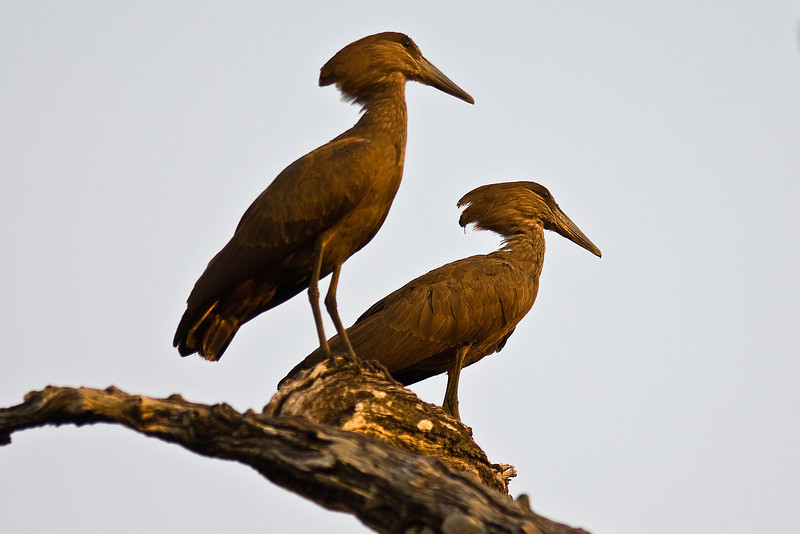
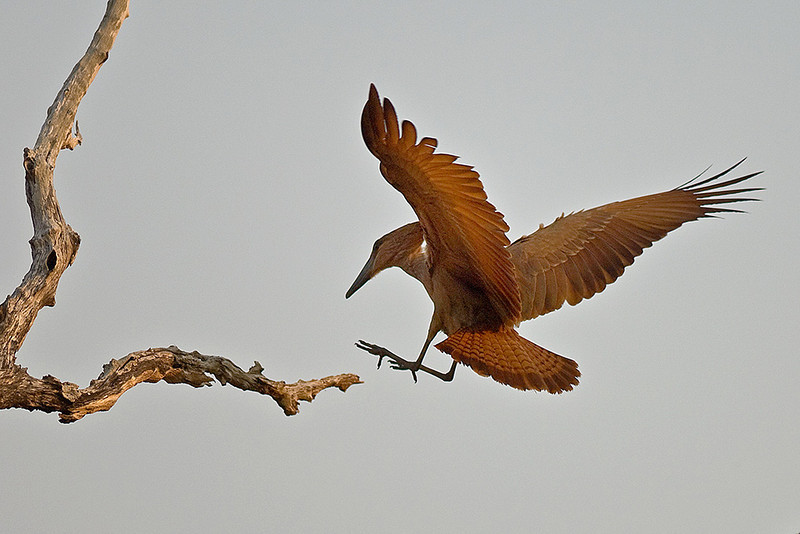
Hamerkop (Scopus umbretta) by Africaddict

“And God blessed them, saying, “Be fruitful and multiply, and fill the waters in the seas, and let birds multiply on the earth.” So the evening and the morning were the fifth day.” (Genesis 1:22-23 NKJV)

What an interesting name for a bird. He is not a policeman (cop), but its head does, sort of, look like a hammer. Don’t you agree?

Goodly Hammer ©Flickr Lenore Edman

Hamerkops are in a family by itself, because the birding authorities are not sure which family to add it to. So, they made a family, called the Scopidae Family.

“The single Hamerkop in this family lives in sub-Saharan Africa and has unique habits and behaviorIt has a few features like those of heronsIt has an odd mix of other habits which are similar to the shoebill, flamingos, and storksIt has ectoparasites that are otherwise found only in ploversGiven this, its origin and relationship to other birds are considered unclear (Roberson 2012), so it is considered here to belong to its own kind.” By Dr. Jean Lightner (See below)

Hamerkop (Scopus umbretta) at NA by Dan

It is found in Africa, Madagascar to Arabia, living in a wide variety of wetlands, including estuaries, lakesides, fish ponds, riverbanks and rocky coasts.

Hamerkop (Scopus umbretta) With Nesting Material ©WikiC

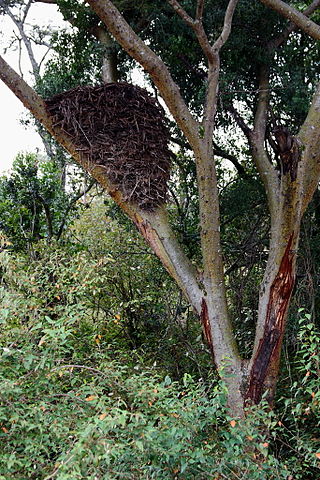
The strangest aspect of hamerkop behaviour is the huge nest, sometimes more than 1.5 metres (4 ft 11 in) across, and strong enough to support a man’s weight. When possible, it is built in the fork of a tree, often over water, but if necessary it is built on a bank, a cliff, a human-built wall or dam, or on the ground. A pair starts by making a platform of sticks held together with mud, then builds walls and a domed roof. A mud-plastered entrance 13–18 centimetres (5.1–7.1 in) wide in the bottom leads through a tunnel up to 60 centimetres (24 in) long to a nesting chamber big enough for the parents and young.

Hamerkop (Scopus umbretta) Nest in Acacia Tree ©WikiC

Nests have been recorded to take between 10 and 14 weeks to build, and one researcher estimated that they would require around 8000 sticks or bunches of grass to complete. Nesting material may still be added by the pair after the nest has been completed and eggs have been laid. Much of the nesting material added after completion is not sticks but an odd collection of random items including bones, hide and human waste.

Hamerkop (Scopus umbretta) by Africaddict

Hamerkop (Scopus umbretta) by Africaddict

This is just another one of The Lord’s Avian Wonders. Just thought you might enjoy reading about this neat bird.

*

Hamerkop’s Scopidae Family

Pelecaniformes Order

Birdwatching the National Aviary – Tropical Forest

An Initial Estimate of Avian Ark Kinds by Dr. Jean Lightner on November 27, 2013

Wordless Toucan

God’s Good News In Colors

Golden Tanager (Tangara arthus goodsoni) ©BirdPhotos.com

The color GOLD reminds us of Heaven. It also makes us think about God, who lives in Heaven.

The Bible teaches us that God made everything, including you and me.

What does God see when He looks at you? Does He see somebody who makes Him happy?

God looked down from Heaven upon the children of men, to see if there were any that … did seek God. Psalm 53:2

Because God can see everything we do, He knows us very well.

The Bible says that when God looks at us, He sees that everyone has done bad things.

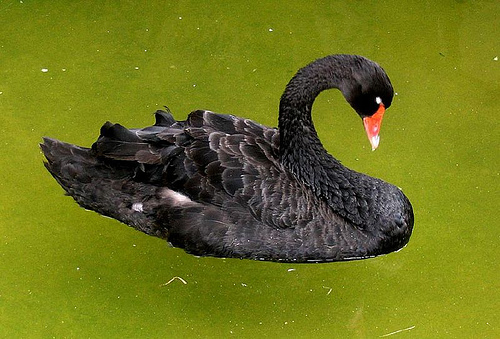
Black Swan (Cygnus atratus) by Kent Nickel

The color BLACK reminds us of these bad things, which God calls sin. Because God is holy, our sin must be judged and paid for.

Every one of them is gone back: they are altogether become filthy; there is none that doeth good, no, not one. Psalm 53:3

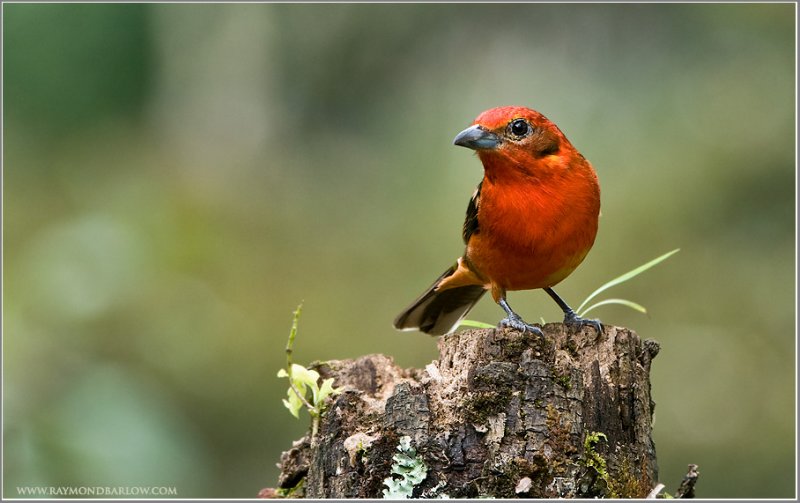
Flame-colored Tanager (Piranga bidentata) (2) by Raymond Barlow

Flame-colored Tanager (Piranga bidentata) (2) by Raymond Barlow

God loves us so much that He sent Jesus, His only son, to pay for our sin.

The color RED reminds us of when Jesus suffered, and bled, and died on a cross for you and me.

Jesus then rose from the dead, proving that He has won the battle over sin and death.

But God commendeth His love toward us, in that, while we were yet sinners, Christ died for us. Romans 5:8

White Dove ©©

White Dove ©©

WHITE makes us think of things that are clean.

The Bible says that we can be clean in God’s sight by admitting that we are sinful, turning to God, and putting our trust in Jesus.

When we do that, He makes us ready for Heaven, and gives us a brand new life to live for Him.

Come now, and let us reason together, saith the Lord: though your sins be as scarlet, they shall be as white as snow. Isaiah 1:18

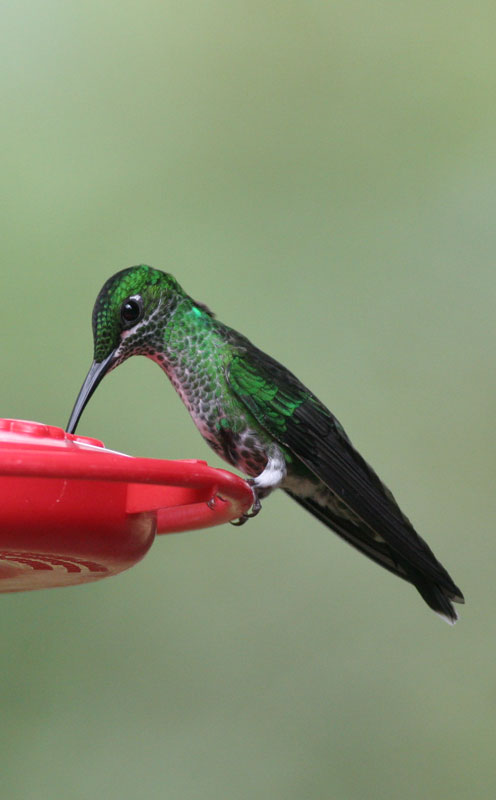
Green-crowned Brilliant (Heliodoxa jacula) by Margaret Sloan

Green-crowned Brilliant (Heliodoxa jacula) by Margaret Sloan

Living things grow. That’s what GREEN reminds us of. God wants us to grow in our new life.

One very important way we grow is by reading the Bible. Another is by speaking with God in prayer.

God also wants us to grow by helping each other and gathering with other Christians.

As newborn babes, desire the sincere milk of the word, that ye may grow thereby. 1 Peter 2:2


God’s good news is that He loves you and wants you to be with Him forever! Remember the message of each color:

GOLD reminds us of God, who lives in Heaven.

BLACK speaks of how our hearts are dark with sin.

RED tells us about Jesus, who died to set us free.

WHITE shows the purity of new life in Christ.

GREEN is all about growing as a Christian.

When God looks at your heart, does He see the darkness of sin, or does He see that you have been washed clean through Jesus Christ? If you would like to have your sins forgiven, now is the time to turn your heart to God and put your trust in Jesus Christ.

“For God so loved the world, that He gave His only begotten Son, that whosoever believeth in Him should not perish, but have everlasting life.” (John 3:16)

Bible Birds – Storks at Zoo Tampa

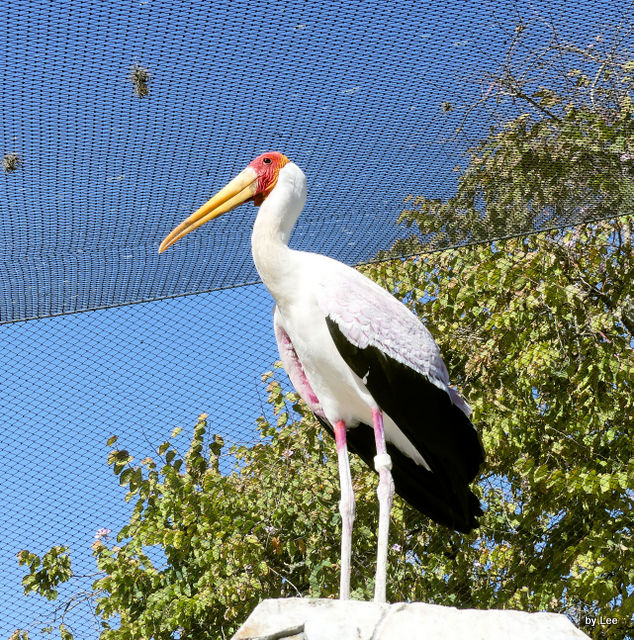
Yellow-billed Stork (Mycteria ibis) LPZ

“Where the birds make their nests: as for the stork, the fir trees are her house.” (Psalms 104:17 KJV)

Bible Birds – Storks at Zoo Tampa

Relocated Here


Chippy, Sweetvoice, and Dotty – Chapter 4

Chipping Sparrow (Spizella passerina) by Quy Tran

Chippy, Sweetvoice, and Dotty

The Chipping, Vesper and Tree Sparrows

The Burgess Bird Book For Children

Relocated – Click Here


Tiny Owl and Giant Shepherd Dog

“A man who has friends must himself be friendly, But there is a friend who sticks closer than a brother.” (Proverbs 18:24 NKJV)

The Lord created these two types of critters, an owlet and a German Shepherd, and He cares much about them.

God created men and women, boys and girls, who are different from these critters, and He provides salvation for us. He is that Friend who sticks closer than a brother.

Bible Birds – Owls

ABC’s of the Gospel

*

Bible Birds – Sea Gull Introduction

Bible Birds – Sea Gulls Introduction

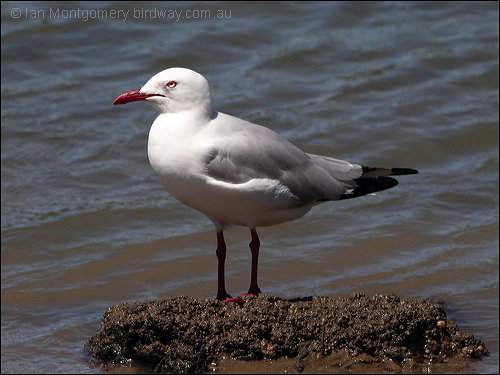
Silver Gull (Chroicocephalus novaehollandiae) by Ian

Bible Birds – Sea Gulls

“the ostrich, the short-eared owl, the sea gull, and the hawk after its kind;” (Leviticus 11:16 NKJV)

“and the ostrich, and the night-hawk, and the sea-mew, and the hawk after its kinds;” (Leviticus 11:16 JPS)

Relocated Here


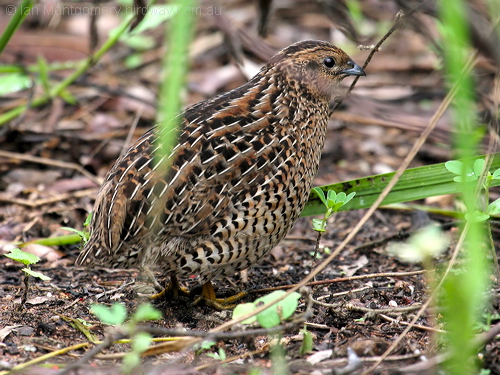
Bible Birds – Quail Introduction

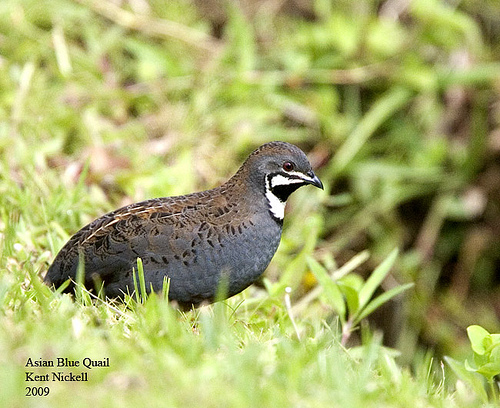
King Quail (Excalfactoria chinensis) Asian Blue by Kent Nickel

King Quail (Excalfactoria chinensis) Asian Blue by Kent Nickel

The Quail is a bird that is mentioned in the Bible in four verses. All the verses tell about the time when the Israelites, in the desert, complained about missing the things that they ate back in Egypt. The LORD was tired of the complaining and sent them some Quail to eat.

Now, are we supposed to complain or grumble about things not going our way? No! Sometimes we do it anyway and the results aren’t what we expected. This is what happened to the Israelites.

“And there went forth a wind from the LORD, and brought quails from the sea, and let them fall by the camp, as it were a day’s journey on this side, and as it were a day’s journey on the other side, round about the camp, and as it were two cubits high [almost 3 feet high] upon the face of the earth. And the people stood up all that day, and all that night, and all the next day, and they gathered the quails: he that gathered least gathered ten homers: and they spread them all abroad for themselves round about the camp.” (Numbers 11:31-32 KJV)

Have you ever eaten something, and then kept eating more, and then more? You should have stopped after the first part, right? This is what they did, sort of. The LORD gave them food, but they ate too much. Have you ever eaten too much and then became sick?

These people became sick and many of them died. It is sin that caused these Israelite to complain and not trust the Lord to take care of their needs. No, you are not going to get sick every time you complain, but you will make your parents and the Lord unhappy. Learn to obey your parents. “Children, obey your parents in all things: for this is well pleasing unto the Lord.” (Colossians 3:20 KJV)

Brown Quail(Coturnixypsilphora) by Ian

What is a Quail?

The Quail are in several families and are mid-sized birds generally placed in the order Galliformes. Old World quail are placed in the family Phasianidae, and New World quail are placed in the family Odontophoridae. Below are just two of the quail from each family.

The King Quail, an Old World quail, often is sold in the pet trade, and within this trade is commonly, though mistakenly, referred to as a “button quail”. Many of the common larger species are farm-raised for table food or egg consumption. In 2007, 40 million quail were produced in the U.S.

The Brown Quail (Coturnix ypsilophora), also an Old World quail and known as the swamp quailsilver quail and Tasmanian quail, is an Australasian true quail of the family Phasianidae. It is a small, ground-dwelling bird and is native to mainland Australia, Tasmania and Papua New Guinea and has been introduced to New Zealand and Fiji. Widespread and common throughout its large range

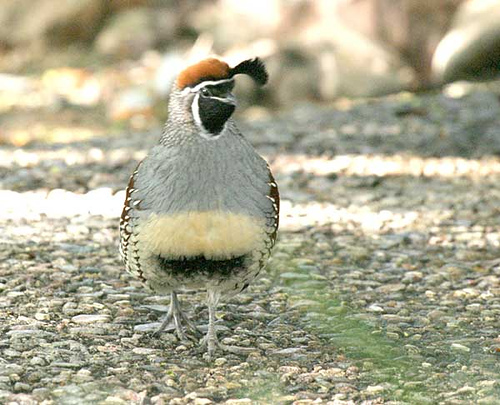
Gambel’s Quail (Callipepla gambelii) by Kent Nickel

The New World Quail Gambel’s quail (Callipepla gambelii) is a small ground-dwelling bird in the New World quail family. It inhabits the desert regions of Arizona, California, Colorado, New Mexico, Nevada, Utah, Texas, and Sonora; also New Mexico-border Chihuahua and the Colorado River region of Baja California. The Gambel’s quail is named in honor of William Gambel, a 19th-century naturalist and explorer of the Southwestern United States. Favorites of mine because of their top feather.]

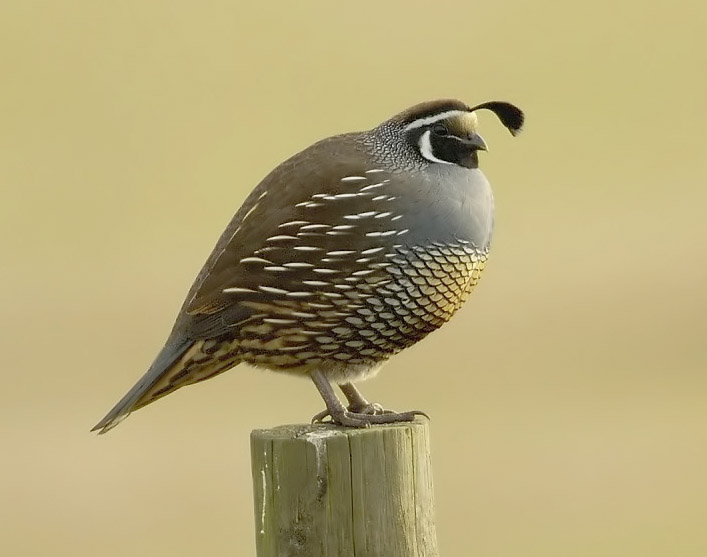
California Quail (Callipepla californica) ©WikiC

The California quail (Callipepla californica), also known as the California valley quail or valley quail, is a small ground-dwelling bird in the New World quail family. These birds have a curving crest or plume, made of six feathers, that droops forward: black in males and brown in females; the flanks are brown with white streaks. Males have a dark brown cap and a black face with a brown back, a grey-blue chest and a light brown belly. Females and immature birds are mainly grey-brown with a light-colored belly. Their closest relative is Gambel’s quail which has a more southerly distribution and, a longer crest at 2.5 in (6.4 cm), a brighter head and a scalier appearance.

The collective noun for a group of quail is a flock, covey or bevy.

Watch for more Bible Birds – Quail posts.

Other Links:


Jenny Has a Good Word for Some Sparrows – Chapter 3

White-throated Sparrow by Ray

Jenny Has a Good Word for Some Sparrows

The Song, White-throated and Fox Sparrows.

The Burgess Bird Book For Children

Relocated – Click Here

The Old Orchard Bully – Chapter 2

House Sparrow (Passer domesticus) by Nikhil

House Sparrow (Passer domesticus) by Nikhil

The Old Orchard Bully

The English or House Sparrow

The Burgess Bird Book For Children

CHAPTER 2. The Old Orchard Bully.

Relocated – Click Here

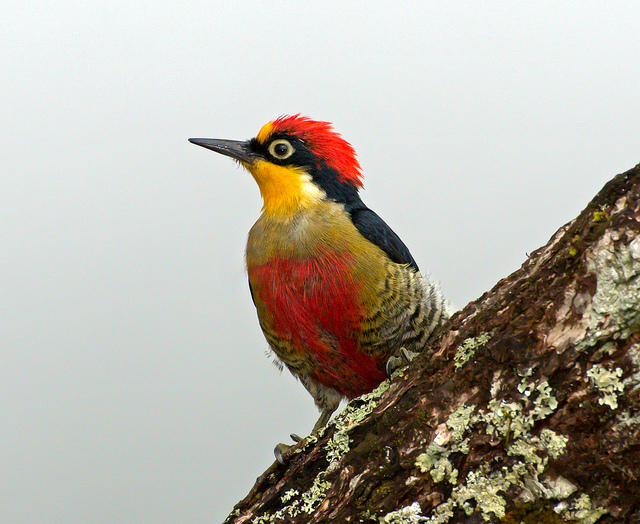
Wordless Woodpecker – Yellow-Fronted

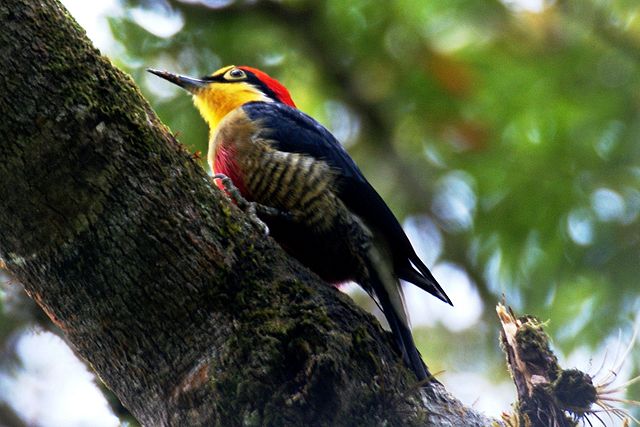
Yellow-fronted Woodpecker (Melanerpes flavifrons) by Dario Sanches

Yellow-fronted Woodpecker (Melanerpes flavifrons) by Dario Sanches

This GOLD reminds us of Heaven. The Bible tells us Heaven has a street of gold! But the best part about Heaven is that God, who created you and me, lives there. The Bible, God’s Word, says: “God so loved the world that He gave His only begotten Son, that whosoever believeth in Him should not perish but have everlasting life.” — John 3:16 Jesus, God the Son, is in Heaven preparing a place for all who put their trust in Him. (John 14:2-3) God is holy and perfect. He cannot allow anything in Heaven that is less than perfect, so there’s one thing that can never be in Heaven. Can you think of what that might be?

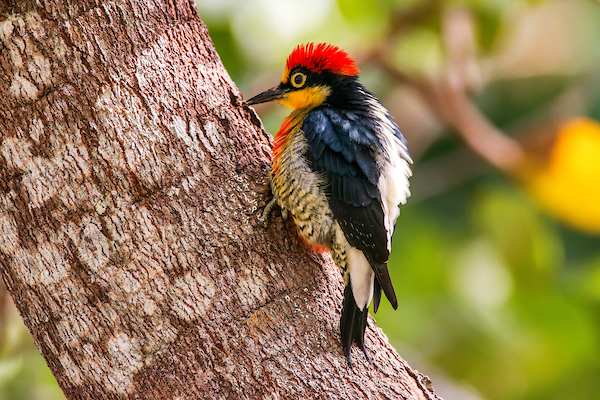
Yellow-fronted Woodpecker (Melanerpes flavifrons) ©WikiC

It is sin! That is what this DARK reminds us of. Sin is anything you think, say, or do that does not please God, like lying, cheating, being selfish, or hurting others. The Bible says: “All have sinned and come short of the glory of God.” — Romans 3:23 That means everyone, big or little, young or old! No matter where you live or who you are, you have sinned. Everyone is born with a “want to” to do wrong. God says that sin must be punished (Romans 6:23), and the punishment for sin is to be separated from God forever in a place of suffering….a place called Hell. But God has a wonderful plan so that you will not have to be punished for your sin!

Yellow-fronted Woodpecker (Melanerpes flavifrons) ©WikiC

God sent Jesus Christ, His perfect Son, to be born as a little baby. Jesus lived a perfect life….He never sinned. When He was grown, wicked men nailed Him to a cross. The bird’s RED reminds us of Jesus’ blood. The Bible says that without the giving of blood there can be no forgiveness of sin (Hebrews 9:22). So Jesus Christ willingly died to take your sin punishment. “…Christ died for our sins according to the Scriptures; and that He was buried, and that He rose again the third day, according to the Scriptures.“— 1 Corinthians 15:3-4 Now, because of what Jesus has done for you, you can have your sins forgiven. Read on to see how!

Yellow-fronted Woodpecker (Melanerpes flavifrons) ©Galo Torquato

The Bible says: “As many as received Him, to them gave He power to become the sons of God, even to them that believed on His name.” — John 1:12 The WHITE reminds us of a CLEAN heart. How can you have a clean heart? A = Admit to God you are a sinner and want to turn away from those sins. B = Believe in Jesus Christ, that He is God’s perfect Son who died for your sin, was buried, and rose again. C = Call on Him to save you from your sin. Would you like to do that right now? He has promised to hear, and once you are His child, He will never leave you (Hebrews 13:5). Take a moment and talk to God right now. It will change your life forever. Only one more color! What can it mean?

Yellow-fronted Woodpecker (Melanerpes flavifrons) by Dario Sanches

Yellow-fronted Woodpecker (Melanerpes flavifrons) by Dario Sanches

The GREEN stands for things that grow. When you ask God to forgive you and save you, you become His child. God wants you to get to know Him better and to grow to become more like Him. These four things will help you grow:

1. PRAY (talk to God every day)
2. READ & OBEY THE BIBLE (to know what He says, then do it)
3. TELL OTHERS ABOUT JESUS
4. GO TO A BIBLE-BELIEVING CHURCH (where you can learn more about pleasing Him)

As a child of God, if you should sin again, stop and tell Him about it. He promises in His Word… “If we confess our sins, He is faithful and just to forgive us our sins and to cleanse us from all unrighteousness.” — 1 John 1:9 Ask God to help you live a life to please Him! Share the Good News of this story with someone else.

The Wordless Book has been used for many years by CEF (Child Evangelism Fellowship). These words are from CEF.

Yellow-fronted Woodpecker (Melanerpes flavifrons) by Dario Sanches

Wordless Woodpecker – [Yellow-fronted Woodpecker (Melanerpes flavifrons) by Dario Sanches]

*

A friend shared with me about someone who uses the Toucan to teach the “Wordless Book.” So, why not a Woodpecker?

Other Wordless Birds:

Wordless Birds

Wordless Birds – With Hummingbirds

The Wordless Book

Story of the Wordless Book

Yellow-fronted Woodpecker – Cornell Neotropical

Feel free to share any of these “Wordless Birds.” All photos are Creative Commons.