Teaching God’s Creatorship to Kids – Reposted

SnowGeese-in-field.Trent

SNOW GEESE at Hagerman N.W.R.   (photo by Trent)

And thou shalt teach them diligently unto thy children, and shalt talk of them when thou sittest in thine house, and when thou walkest by the way, and when thou liest down, and when thou risest up.   (Deuteronomy 6:7)

USING  RECREATION  TO  TEACH  GOD’S  CREATIONSHIP  TO  KIDS

Kids grow with imagination,

Kids learn, too, with recreation;

Moth to watch, ducks to feed,

Songs to sing, books to read

So teach kids about creation, and (in the process) teach them about God’s Creatorship.

Unless the process is “boring”, most kids like to learn.  Furthermore, most young children love to learn about animals — especially mammals and birds.

Child-feeding-ducks.DailyExpress

child feeding ducks (Daily Express photo)

Introducing a young child to birdwatching, therefore, can be one of the most wonderful favors one can do for such a child.  In fact, teaching a child about God’s Creatorship is one of the best “inheritances” that a parent — or a grandparent (or a family friend) — can bestow to a child (Proverbs 13:22).

Birds-Zim.Golden-Guides-series-1956

For an example of a child being introduced to birdwatching, see

Attracted to Genesis by Magnets and a Bird Book

and its uncondensed version at “Appreciating Baltimore Orioles and my First Bird Book“.

(See alsoSnow Goose, Northern Pintail, Northern Shoveler, and More“)


Bible Birds – Holding On With My Feet

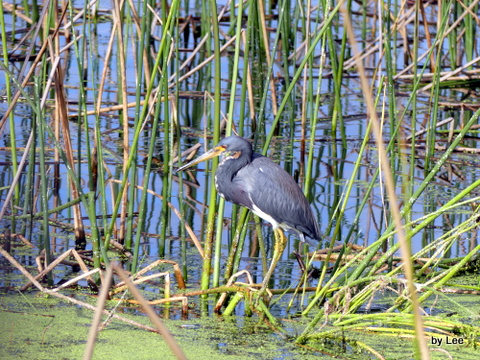
Tricolored Heron (Egretta tricolor) Viera Wetlands 12-26-17

Holding On With My Feet

“I have refrained my feet from every evil way, that I might keep thy word.” (Psalms 119:101 KJV)

Relocated Here

Birdwatching Term – Dabbling Duck

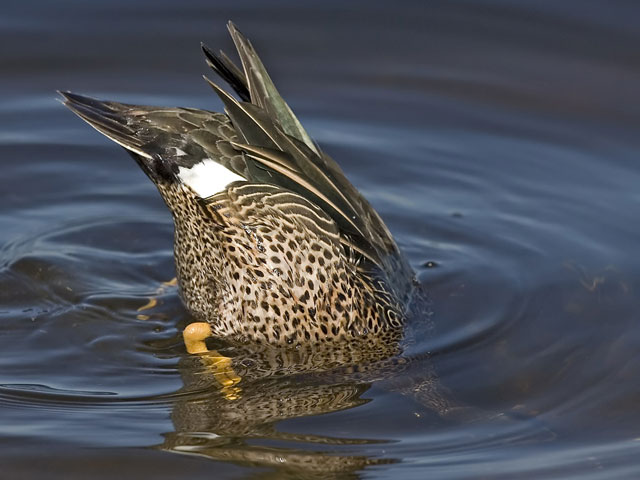
Blue-Winged-Teal-Dabbling ©Flyways USFWS

Blue-Winged-Teal-Dabbling ©Flyways USFWS

Dabbling Duck

What does it mean when a duck “dabbles” or is a “dabbling duck”?

This group of ducks has been so named because its members feed mainly on vegetable matter by upending on the water surface, or grazing, and only rarely dive. These are mostly gregarious ducks of freshwater or estuaries. These birds are strong fliers and northern species are highly migratory. Compared to other types of duck, their legs are placed more towards the centre of their bodies. They walk well on land, and some species feed on land.

Puddle ducks generally feed on the surface of the water or feed on very shallow bottoms. They are not equipped to dive down several feet like their diving counterparts. The most predominant difference between puddle ducks and divers are the size of the feet. A puddle duck’s feet are generally smaller because they do not need the extra propulsion to dive for their forage.

Another distinguishing characteristic of puddle ducks when compared to diving ducks is the way in which they take flight when spooked or are on the move.

Puddle ducks spring straight up from the water, and diving ducks need to gain momentum to take off, so they must run across the water a short distance to gain flight.

These Ducks belong to the Anatine sub-family of the Swans, Geese, and Duck Family.

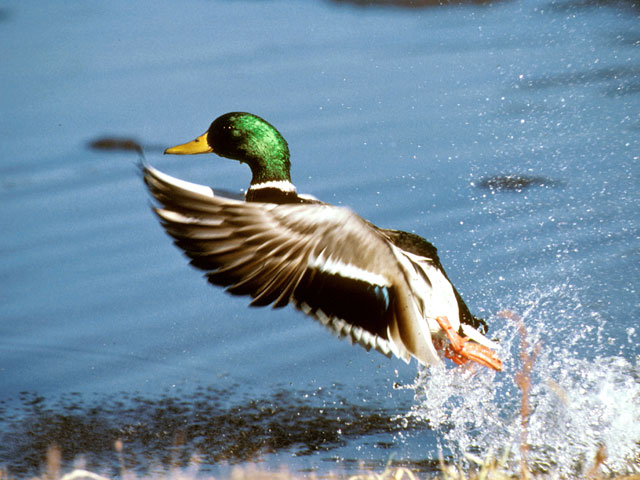
Mallard-Takes-Off ©Flyways USFWS

Mallard-Takes-Off ©Flyways USFWS

For the younger reader:

What does it mean when a duck “dabbles” or is a “dabbling duck”?

They are called that because these ducks feed mainly on vegetable matter (plants) by upending on the water surface (They put their head in the water to eat and their tail section is all that is seen above the water.) or grazing, and only rarely dive.

When they take flight, they spring straight up from the water. The Diving ducks have to sort of run to take-off.

(Wikipedia with editing)

Look at the birds of the air; they neither sow nor reap nor gather into barns, and yet your heavenly Father keeps feeding them. Are you not worth much more than they? (Mat 6:26 AMP)

*

See:

Swans, Geese, and Duck Family.

Dabbling Ducks – Flyways.us

Dabbling Ducks – Wikipedia

More Birdwatching Terms

Wordless Birds

*

Birdwatching Term – Frontal Shield

White-winged Coot (Fulica leucoptera) Cropped ©WikiC

White-winged Coot (Fulica leucoptera) Cropped ©WikiC

Frontal Shield

He shall cover thee with his feathers, and under his wings shalt thou trust: his truth shall be thy shield and buckler. (Psalm 91:4 KJV)

The Coot article mentioned the shield. “Coots have prominent frontal shields or other decoration on the forehead…”

What is a “frontal shield”?

The place above the upper beak (upper mandible) has a plate-like area. It is made of a fleshy material. When the Lord created those birds that have the shield, He gave them each a different looking shield. It is neat to see the variety that the shields have. I am sure that the bird uses them to know which are their kind.

Below are some photos of the various Frontal Shields on the birds. There are more birds that have shield, but this just a sample of these unique birds.

This slideshow requires JavaScript.

“You have also given me the shield of your salvation: and your right hand has held me up, and your gentleness has made me great.” (Psalms 18:35 AKJV)

See:

*


The Burgess Bird Book For Children – Introduction

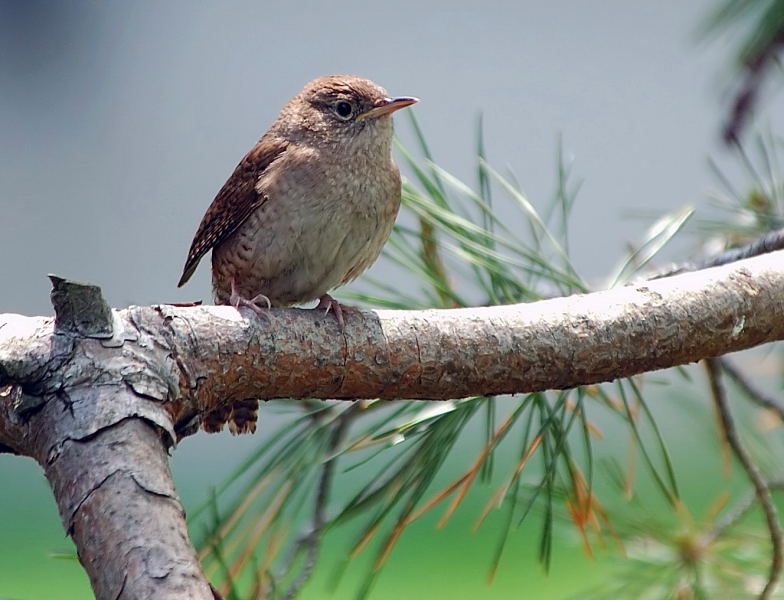
House Wren (Troglodytes aedon) by Ian

House Wren (Troglodytes aedon) by Ian

The Burgess Bird Book For Children

By Thornton W. Burgess

TO THE CHILDREN AND THE BIRDS OF AMERICA THAT THE BONDS OF LOVE AND FRIENDSHIP BETWEEN THEM MAY BE STRENGTHENED THIS BOOK IS DEDICATED


PREFACE

This book was written to supply a definite need. Its preparation was undertaken at the urgent request of booksellers and others who have felt the lack of a satisfactory medium of introduction to bird life for little children. As such, and in no sense whatever as a competitor with the many excellent books on this subject, but rather to supplement these, this volume has been written.

Its primary purpose is to interest the little child in, and to make him acquainted with, those feathered friends he is most likely to see. Because there is no method of approach to the child mind equal to the story, this method of conveying information has been adopted. So far as I am aware the book is unique in this respect. In its preparation an earnest effort has been made to present as far as possible the important facts regarding the appearance, habits and characteristics of our feathered neighbors. It is intended to be at once a story book and an authoritative handbook. While it is intended for little children, it is hoped that children of larger growth may find in it much of both interest and helpfulness.

Mr. Louis Agassiz Fuertes, artist and naturalist, has marvelously supplemented such value as may be in the text by his wonderful drawings in full color. They were made especially for this volume and are so accurate, so true to life, that study of them will enable any one to identify the species shown. I am greatly indebted to Mr. Fuertes for his cooperation in the endeavor to make this book of real assistance to the beginner in the study of our native birds.

It is offered to the reader without apologies of any sort. It was written as a labor of love—love for little children and love for the birds. If as a result of it even a few children are led to a keener interest in and better understanding of our feathered friends, its purpose will have been accomplished.

THORNTON W. BURGESS

CONTENTS

Introduction

  1. Jenny Wren Arrives.  – Introducing the House Wren
  2. The Old Orchard Bully. – The English or House Sparrow.
  3. Jenny Has a Good Word for Some Sparrows. – The Song, White-throated and Fox Sparrows.
  4. Chippy, Sweetvoice, and Dotty. – The Chipping, Vesper and Tree Sparrows.
  5. Peter Learns Something He Hadn’t Guessed. – The Bluebird and the Robin.
  6. An Old Friend In a New Home. – The Phoebe and the Least Flycatcher.
  7. The Watchman of the Old Orchard. – The Kingbird and the Great Crested Flycatcher.
  8. Old Clothes and Old Houses. – The Wood Peewee and Some Nesting Places.
  9. Longbill and Teeter. – The Woodcock and the Spotted Sandpiper.
  10. Redwing and Yellow Wing. – The Red-winged Blackbird and the Golden-winged Flicker.
  11. Drummers and Carpenters. – The Downy, Hairy and Red-headed Woodpeckers.
  12. Some Unlikely Relatives. – The Cowbird and the Baltimore Oriole.
  13. More of the Blackbird Family. – The Orchard Oriole and the Bobolink.
  14. Bob White and Carol the Meadow Lark. – The So-called Quail and the Meadow Lark.
  15. A Swallow and One Who Isn’t. The Tree Swallow and the Chimney Swift.
  16. A Robber in the Old Orchard. – The Purple Martin and the Barn Swallow.
  17. More Robbers. The Crow and the Blue Jay.
  18. Some Homes in the Green Forest. – The Crow, the Oven Bird and the Red-tailed Hawk.
  19. A Maker of Thunder and a Friend in Black. – The Ruffed Grouse and the Crow Blackbird.
  20. A Fisherman Robbed. – The Osprey and the Bald-headed Eagle.
  21. A Fishing Party.The Great Blue Heron and the Kingfisher.
  22. Some Feathered Diggers. – The Bank Swallow, the Kingfisher and the Sparrow Hawk.
  23. Some Big Mouths. – The Nighthawk, the Whip-poor-will and Chuck-wills-widow.
  24. The Warblers Arrive. – The Redstart and the Yellow Warbler.
  25. Three Cousins Quite Unlike. – The Black and White Warbler, the Maryland Yellow-Throat and the Yellow-breasted Chat.
  26. Peter Gets a Lame Neck. – The Parula, Myrtle and Magnolia Warblers.
  27. A New Friend and an Old One. – The Cardinal and the Catbird.
  28. Peter Sees Rosebreast and Finds Redcoat. – The Rose-breasted Grosbeak and the Scarlet Tanager.
  29. The Constant Singers. – The Red-eyed, Warbling and Yellow-throated Vireos.
  30. Jenny Wren’s Cousins. – The Brown Thrasher and the Mockingbird.
  31. Voices of the Dusk. – The Wood, Hermit and Wilson’s Thrushes.
  32. Peter Saves a Friend and Learns Something. – The Towhee and the Indigo Bunting.
  33. A Royal Dresser and a Late Nester. – The Purple Linnet and the Goldfinch.
  34. Mourner the Dove and Cuckoo. – The Mourning Dove and the Yellow-billed Cuckoo.
  35. A Butcher and a Hummer. – The Shrike and the Ruby-throated Hummingbird.
  36. A Stranger and a Dandy. – The English Starling and the Cedar Waxwing.
  37. Farewells and Welcomes. – The Chickadee.
  38. Honker and Dippy Arrive. – The Canada Goose and the Loon.
  39. Peter Discovers Two Old Friends. – The White-breasted Nuthatch and the Brown Creeper.
  40. Some Merry Seed-Eaters. – The Tree Sparrow and the Junco.
  41. More Friends Come With the Snow. – The Snow Bunting and the Horned Lark.
  42. Peter Learns Something About Spooky. – The Screech Owl.
  43. Queer Feet and a Queerer Bill. – The Ruffed Grouse and the Crossbills.
  44. More Folks in Red. – The Pine Grosbeak and the Redpoll.
  45. Peter Sees Two Terrible Feathered Hunters. – The Goshawk and the Great Horned Owl.

Lee’s Addition:

I think you will greatly enjoy this book. Birds and their behaviors are presented in a story, but many birdwatching truths are introduced. Look for questions and Christian principle at the end of the chapters. These are also a good way to read and teach your child or grandchild. Enjoy!

(P.S. – Just found a source for audio for these chapters. They will be attached.)

(The first chapter is being released today)


The Project Gutenberg EBook of The Burgess Bird Book for Children, by Thornton W. Burgess

This eBook is for the use of anyone anywhere at no cost and with almost no restrictions whatsoever. You may copy it, give it away or re-use it under the terms of the Project Gutenberg License included with this eBook or online at http://www.gutenberg.org

Burgess-Bird-Book-for-Children


 Burgess-Bird-Book-for-Children

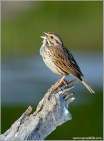
Savannah Sparrow by Ray    Wordless Birds

*

Being and Doing as God Enables – by A. W. Tozer

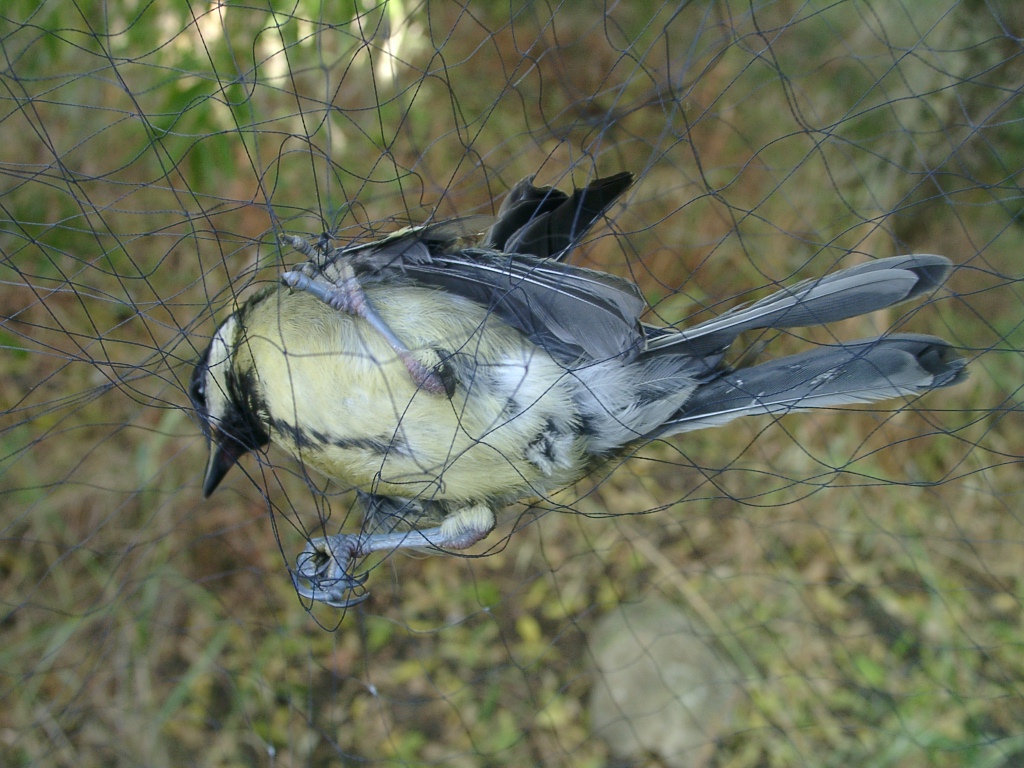
Bird caught in a net

Bird caught in a net

Being and Doing as God Enables – By A.W. Tozer  
(Guest Writer from the Past)

Surely in vain the net is spread in the sight of any bird. (Proverbs 1:17 KJV)

Failing to get ready in time for eternity, and failing to get ready now for the great then that lies out yonder, is a trap in plain sight. There is an odd saying in the Old Testament, “How useless to spread a net in full view of all the birds” (Proverbs 1:17).

When the man of God wrote that, he gave the birds a little credit. It would be silly for a bird watching me set the trap to conveniently fly down and get into it. Yet there are people doing that all the time. People who have to live for eternity fall into that trap set for them in plain sight. It is folly to put off to a tomorrow because you may never see the things that you should do now. It is an act of inexcusable folly to count on help that will never come. It is foolish to ignore God’s help now offered us. Many are guilty of ignoring the help that is presently being extended to them, all the while waiting for help that will never come from others. There is not much that can be said in favor of lazy or careless Christians. God never told anyone to do anything that he or she could not do. Jesus said to the man with the paralyzed arm that hung at his side like a limp piece of flesh, “Stretch out your hand” (Matthew 12:13a). And the man, believing that Jesus was the Christ, stretched out his hand and was healed instantly. God has never asked anyone yet to do anything that He was not enabling the person to do.

See  A.W. Tozer index.

A.W. Tozer (1897 – 1963)

A 20th-century prophet” they called him even in his lifetime. For 31 years he was pastor of Southside Alliance Church in Chicago, where his reputation as a man of God was citywide. Concurrently he became editor of Alliance Life, a responsibility he fulfilled until his death in 1963.

His greatest legacy to the Christian world has been his 30 books. Because A.W. Tozer lived in the presence of God he saw clearly and he spoke as a prophet to the church. He sought for God’s honor with the zeal of Elijah and mourned with Jeremiah at the apostasy of God’s people.

But he was not a prophet of despair. His writings are messages of concern. They warn and exhort. But they are messages of hope as well, for God is always there, ever faithful to restore and to fulfill His Word to those who hear and obey.
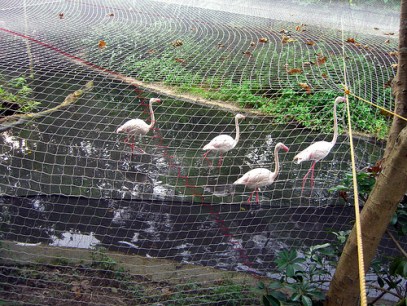

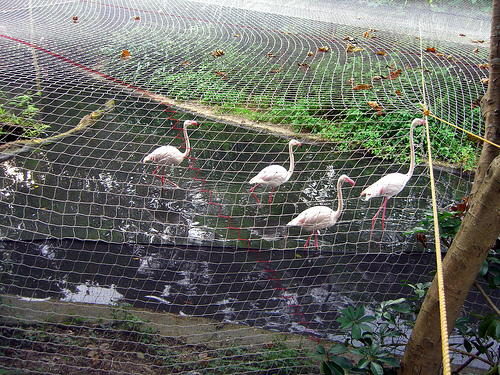
Flamingos Caught in a net©Flickr

Lee’s Addition:

Here is a warning for our Christian young people, including teens and older. “Failing to get ready in time for eternity, and failing to get ready now for the great then that lies out yonder…” Are you applying yourself to your studies? Do you spend too much time playing video games or watching TV, etc.? Are you spending time in God’s Word to help you grow in your spiritual walk with the Lord. Have you prayed for guidance for your future? You are not too young to be asking the Lord to lead you and guide you for your future.

“God has never asked anyone yet to do anything that He was not enabling the person to do.” He will help you with your studies, even though they may be hard. You just might find that later on in life, those studies were part of your “enabling.”

Be aware of what is going on around you and watch out for those nets that can get you tangled up.


The Pursuit of God by A. W. Tozer – ebook

A. W. Tozer – Wikipedia

Birds of the Bible – Bird Catcher

Four Things God Wants You To Know

*

Bible Birds – Swan Introduction

Bible Birds – Swan Introduction

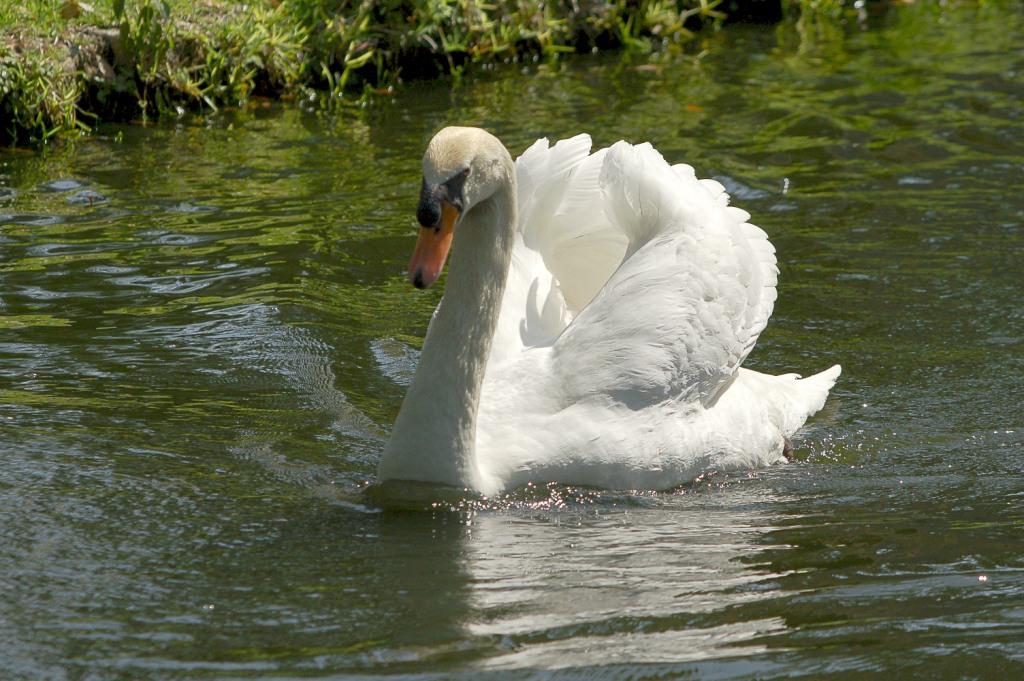
Swan (Cygnus olor)II at Bok Tower By Dan'sPix

Swan (Cygnus olor)II at Bok Tower By Dan’sPix

“And the swan, and the pelican, and the gier eagle,” (Leviticus 11:18 KJV)

“The little owl, and the great owl, and the swan,” (Deuteronomy 14:16 KJV)

Relocated Here

*

Bible Birds – Swallow Introduction

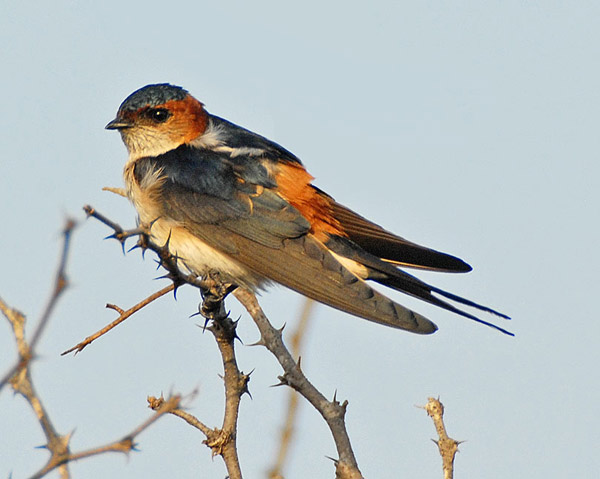
Red-rumped Swallow (Cecropis daurica) by Nikhil Devasar

Red-rumped Swallow (Cecropis daurica) by Nikhil Devasar

Even the stork in the heavens Knows her appointed times; And the turtledove, the swift, and the swallow Observe the time of their coming. But My people do not know the judgment of the LORD. (Jeremiah 8:7 NKJV)

(Relocated)

Bible Birds – Ravens I

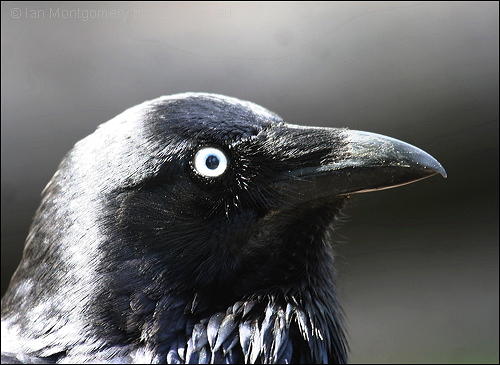
Australian Raven (Corvus coronoides) by Ian

Australian Raven (Corvus coronoides) by Ian

And it came to pass at the end of forty days, that Noah opened the window of the ark which he had made: And he sent forth a raven, which went forth to and fro, until the waters were dried up from off the earth.
(Genesis 8:6-7 KJV)

Did you know that is the first bird in the Bible that we are told its name. In Genesis 1 and 2 we are told that the LORD created the birds or fowls, but we don’t know what their names were. Adam gave them names in Genesis 1, but their names are not mentioned.

Ravens are in 11 verses in the Bible (KJV). We will be telling you about them.

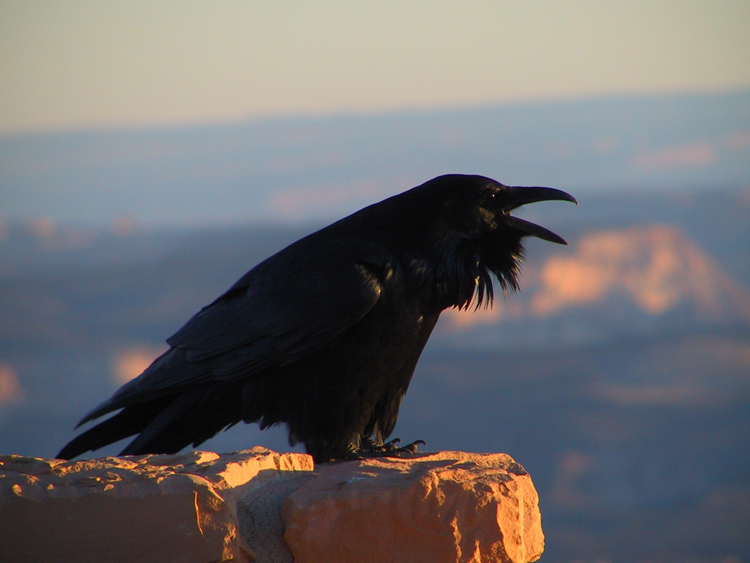
The Raven is the largest bird in the Passerine order (Perching and songbirds), able to grow up to 27.1 inches (69 cm) in length. Males are not much different from the females, though the female might be a bit smaller. Both genders are known for their iridescent (shiny)  black feathers covering their bodies, with a bluish hint in the light. Ravens are distinguished from other birds in the Corvus Genus (such as the crows) by their wedge-like tail, large beak, hackles (shaggy neck feathers), and their tendency to soar in flight.

Northern Raven (Corvus corax) ©CreationWikiC

Northern Raven (Corvus corax) ©CreationWikiC

Did you know that the Ravens fed a prophet? God told them to feed him and they obeyed. I Kings 17 tells us about it. We tell you about it in another article.

How about Ravens not building barns? Luke 12:24

The Lord used the Ravens to do errands for Him. Do you do the errands your parents ask you to do?

Children, obey your parents in all things, for this is well pleasing to the Lord. (Colossians 3:20 NKJV)

See:

Bible Birds – Raven

Bible Birds

Ravens – CreationWiki

*

Bible Birds – Peacocks I

Now Peacocks II

Indian Peafowl (Pavo cristatus) by Nikhil Devasar

Indian Peafowl (Pavo cristatus) by Nikhil Devasar

For the king had at sea a navy of Tharshish with the navy of Hiram: once in three years came the navy of Tharshish, bringing gold, and silver, ivory, and apes, and peacocks. (1 Kings 10:22 KJV)

For the king’s ships went to Tarshish with the servants of Huram: every three years once came the ships of Tarshish bringing gold, and silver, ivory, and apes, and peacocks. (2 Chronicles 9:21 KJV)

Relocated Here