Birdwatching Without Birdwatching

Bald Eagle (close up) LP Zoo by Dan

Bald Eagle (close up) LP Zoo by Dan

But they that wait upon the LORD shall renew their strength; they shall mount up with wings as eagles; they shall run, and not be weary; and they shall walk, and not faint. (Isaiah 40:31 KJV)

Today we were blessed with the sightings of four mature Bald Eagles. Each had their beautiful white heads and their white tails visible. And I wasn’t even out birdwatching. I therefore had no camera with me.

Because I am still under the weather fighting a bad cold and my slipped disc, we have not gone “birdwatching.” So this morning on the way home from therapy, we spotted a Bald Eagle on one of the power poles. A few days ago we had seen one nearby on another street, so this may have been the same one.

I love this time of the year because the eagles start migrating back down to spend the winter with us. Polk County, Florida, where we live, has one of the highest concentrations (in the lower 48) from now through the winter.

Osprey Road by Dan - (Old Bartow Road)

Osprey Road by Dan – (Old Bartow Road)

This evening, we drove to Bartow on the Old Bartow Road, which I have renamed “Osprey” road. I call it that because of all the Ospreys that make nest on the flat platforms that are on the power poles. They were placed there when the Osprey were becoming endangered. Now they are recovering right well. Anyway, most of the Ospreys left within the last month, except for one or two, which we saw this evening. (They come down in late January or early February, make babies, and then leave July to August.)

On the way back, we spotted one Bald Eagle sitting in one of the nest and then up about this end, where the picture was taken, there were two more standing in a nest. So much for traipsing through the woods to find an eagle, they were just right there in plain view.

So, even though I didn’t get to go birdwatching lately, the Lord brought the birdwatching to us. What a Blessing. Thank you Lord for allowing us to see them.

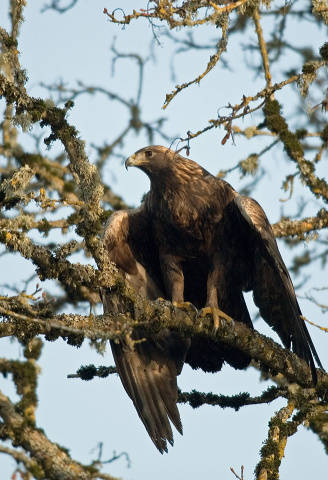
Bald Eagle (Haliaeetus leucocephalus) by Lee at National Aviary

Bald Eagle (Haliaeetus leucocephalus) by Lee at National Aviary

I have seen other birds while we were riding around, but Bald Eagles are very special to me. As that top verse says, I am to be reminded that my strength will be renewed, not be weary or faint. Not so sure about the running though. :)

Birds of the Bible – Eagles

Birds of the Bible

Accipitridae – Kites, Hawks and Eagles

Wordless Birds

*

The Autobiography of a Duck

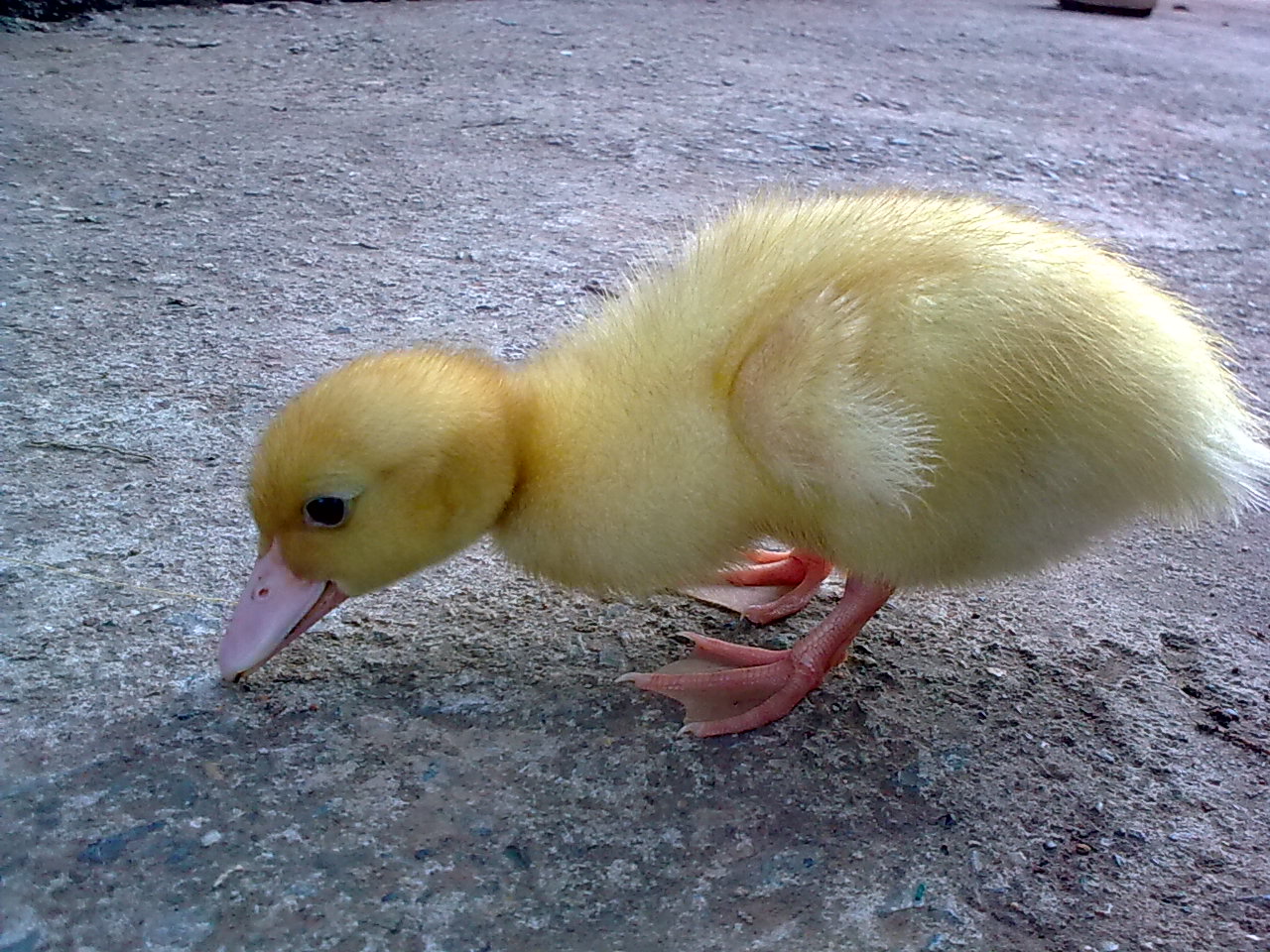
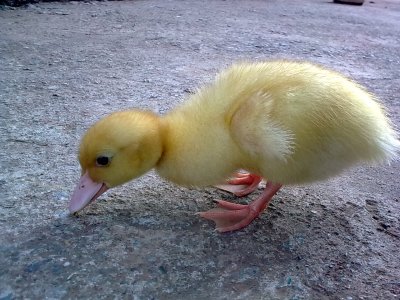
Pecking duckling ©WikiC

Pecking duckling ©WikiC

THE AUTOBIOGRAPHY OF A DUCK.
FOUNDED UPON FACT.

“How queer, my child! what a long, broad mouth you have, and what peculiar feet!”

It was my mother, a big brown hen, who spoke. I had stepped from my egg, only a short while before, and as I was the only one hatched out of the whole thirteen, my poor mother was greatly disappointed.

Now, to add to her troubles, there seemed to be something very peculiar about my appearance.

“Yes,” she went on still watching me critically, “I have raised many families, but never a chick like you. Well! well! don’t cry about it. Your yellow dress is very pretty. It doesn’t pay to be too sensitive, as you will find, I am afraid, when you have lived with these chickens. Some of them are dreadfully trying. Dear! dear! how stiff I am! This setting is tiresome work.”

“I wonder what sort of home we are going to have.”

Our home, into which we moved a few hours later, proved to be an upturned soap box. Seven little chickens were there before us.

“The same old story,” said my mother with a knowing air. “People imagine we hens have no sense. I did not hatch those chickens, but I am expected to care for them, as though I did. Some mothers would peck them so they would be glad to stay away.”

She had too good a heart for this, however, and I was very glad to have these brothers and sisters.
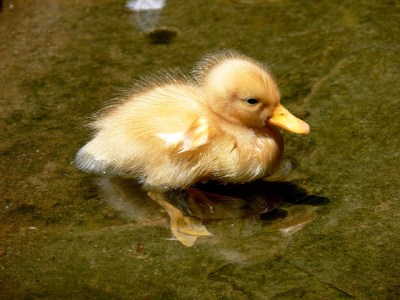
Chick ©PD

Chick ©PD

They were different from me, though, in many ways, principally, in their dislike for water. They hated even to get their feet wet, while I dearly loved to get in the pond, and swim around on its surface, or even dive down to the bottom, where such nice fat worms lived.

My poor mother never could understand my tastes. The first time she saw me on the water, she came rushing towards me, screaming and beating her wings.

“Oh, my child! my child!” she cried, with tears in her eyes. “You will drown! You will drown!”

I loved her, and so could not bear to see her distress. It was hard to be different from all the others.

I had a little yellow sister who was a great comfort to me at these times. I could never persuade her to try the water,—but she always sat upon the edge of the pond while I had my swim. We shared everything with each other; even our troubles.

About this time, my voice began to change. It had been a soft little “peep,” but now it grew so harsh, that some of the old hens made unpleasant remarks about it, and my mother was worried.

“It isn’t talking. It’s quacking,” said an old, brown-headed hen who was always complaining of her nerves.

She was very cross and spent most of her time standing on one leg in a corner and pecking any poor chicken that came in her reach.

“Don’t you know why it’s quacking?” asked a stately Buff Cochin who was a stranger in the yard; having arrived only that morning. “That child isn’t a chicken. She’s a duck.”

“What you giving us?” said a dandified Cock, who was busy pluming his feathers. “Whoever heard of a duck?”

“Not you, I daresay,” answered the Buff with a contemptuous sniff. “It’s easy to see you have never been away from this yard. I have traveled, I would have you understand, and I know a duck, too.”

“Well, I don’t care what you call her,” snapped the cross one. “I only hope she’ll keep her voice out of my hearing. The sound of it gives me nervous prostration.”

Greater White-fronted Goose (Anser albifrons) chick ©USFWS

Greater White-fronted Goose (Anser albifrons) chick ©USFWS

As for poor me,—I stole quietly away, and went up into a corner of the chicken house to cry. I was a duck, alas! and different from all about me. No wonder I was lonely.

My mother asked the cause of my trouble, and when I told her she looked sad and puzzled. “I don’t know what a duck is,” she sighed, “things have been strangely mixed. But cheer up. Whatever comes you are still my child.”

That was indeed a comfort to me. For never had chicken or duck a better mother.

There was consolation also, in what the kind old Buff Cochin told me.

I had nothing to be ashamed of, she said, for ducks were much esteemed by those who knew them.

From her this had more weight, for we all regarded the Buff Cochin as very superior. They were well born, and well bred, and had seen life in many places. Their husband, too, was a thorough gentleman.

However, he also was having his troubles now. He was losing his old feathers, and his new ones were long in coming. Consequently, his appearance was shabby, and he staid away from the hens.

Duck Drawing ©PD

Duck Drawing ©PD

Poor fellow, he looked quite forlorn, leaning up against a sunny corner of the barn, trying to keep warm. I believe he felt the loss of his tail feathers most for the young roosters who strutted by in their fine new coats, made sneering remarks about it.

I was very sorry for him, but my own troubles were getting to be as much as I could bear; for just when I needed a sympathetic mother she was taken from me and her place filled by a big, bare-headed hen as high tempered as she was homely.

“Raising a duck,” she said with a contemptuous sniff at me. “I never supposed I’d come to that. Well, I’ll keep you, but understand one thing, don’t go quacking around me, and don’t bring your wet and mud into the house. I’m not your other mother. My children don’t rule me. I won’t have that Mrs. Redbreast saying my house is dirty. There’s no standing that hen anyhow. I’ll give her my opinion if she puts on her airs around me. There’s too much mixture here. One can’t tell where breed begins or ends.”

It was not many days later, before my mother and Mrs. Redbreast came to words and then blows. The cause was only a worm, but it was enough. Mrs. Redbreast insisted that it was hers. My mother thought otherwise, and with a screech of defiance rushed upon her enemy. Dust and feathers flew. We children withdrew to a safe distance, and with necks stretched watched in fear and trembling.

The fight, though fierce, was short. Our mother was victorious, but she had lost the tail feathers of which she had been so proud, and I am sure she never forgave Mrs. Redbreast.
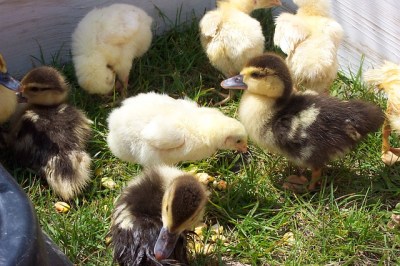
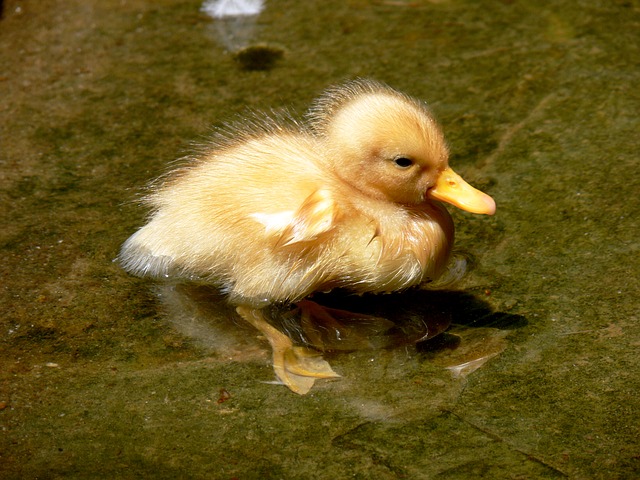
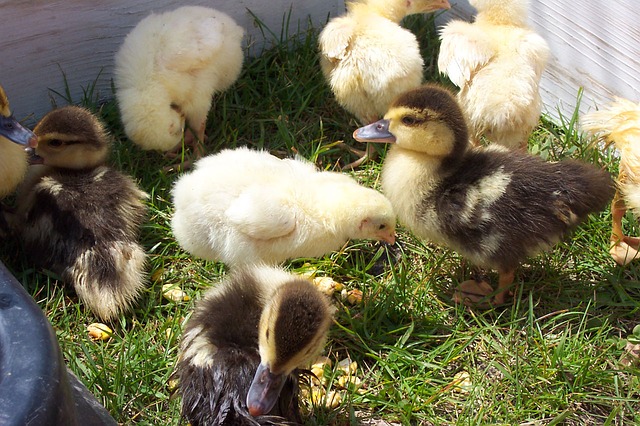
Chicks and Ducklings ©PD

Chicks and Ducklings ©PD

Like children, chickens and ducks grow older and bigger with the passing days.

In time we were taken from our mothers and put to roost with the older hens and cocks. I was not made to roost so I spent my nights alone in a corner of the chicken house.

It was quieter down there—for up above the chickens all fought for best place, and their cackling and fluttering was disturbing.

The old gentleman was very heavy. Not only was it hard for him to fly up to the roost, but equally hard for him to hold on when once there. Yet I could never persuade him to rest on the floor with me. Like his kind, he preferred the discomfort of sleeping on a pole—a taste I cannot understand.
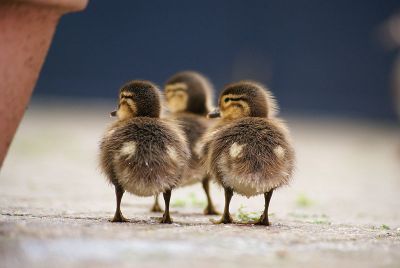
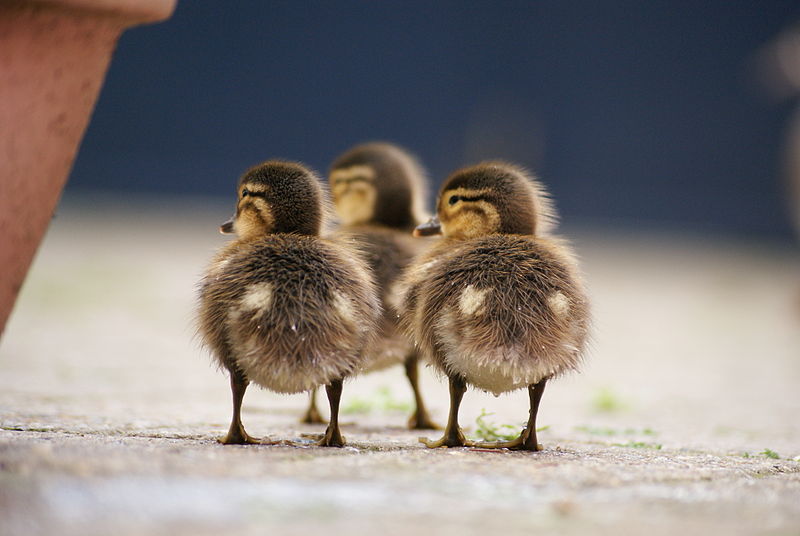
Three Ducklings ©WikiC

Three Ducklings ©WikiC

I was four months old before I saw one of my own kind. Then, one day three ducks were brought into the yard. They did not seem to mind being stared at, but fell to eating corn and talking among themselves.

“Horribly greedy,” said Mrs. Redbreast. “I for one don’t care to associate with them.”

“Now you know what you look like, old quacker,” snapped the cross hen, with a peck at me. “My poor nerves will suffer sadly now.”

These unkind remarks scarcely disturbed me, however. There was a new feeling stirring in my heart. I am afraid you will have to be a duck, and live a long time without other ducks, to understand it. Here were companions, whose natures and tastes were like mine, and I was content.

Louise Jamison.


Lee’s Addition:

A man that hath friends must shew himself friendly: and there is a friend that sticketh closer than a brother. (Proverbs 18:24 KJV)

Trust you enjoyed this delightful bird tale about a duck. This was written by Louise Jamison in the Birds and Nature Vol. X, No. 3, Octorber 1901.

Near the end, when our duckling met up with some of her own and made this remark: “Here were companions, whose natures and tastes were like mine, and I was content.” I couldn’t but think of how we as Christian feel a certain bond when we are around like believers.

God is faithful, by whom ye were called unto the fellowship of his Son Jesus Christ our Lord. (1 Corinthians 1:9 KJV)

that which we have seen and heard we proclaim also to you, so that you too may have fellowship with us; and indeed our fellowship is with the Father and with his Son Jesus Christ. (1 John 1:3 ESV)

This is from Gutenberg’s ebooks.

Kid’s Section

Bird Tales

*

*
In The Hollow Of His Hand

Grasshopper Sparrow (Ammodramus savannarum) by Rat Kirkfield

Grasshopper Sparrow (Ammodramus savannarum) by Rat Kirkfield

Are not two little sparrows sold for a penny? And yet not one of them will fall to the ground without your Father’s leave (consent) and notice. But even the very hairs of your head are all numbered. Fear not, then; you are of more value than many sparrows. (Matthew 10:29-31 AMP)

IN THE HOLLOW OF HIS HAND.
(From an Ornithologist’s Year Book.)

So tiny that a child’s small palm can cover its whole body, inaudible at a few paces’ distance, invisible till it rises at your very feet, such is our yellow-winged sparrow. Yet he is a marvel; his plumage shows an exquisite mimicry of the earth tints, “the upper parts mixed black, rufous-brown, ashy and cream-buff,” with a touch of “yellowish olive-green” for the herbage, and here and there an orange or yellow shade, and a dusky whiteness beneath, to give the effect of light. What could be more perfect? No wonder the wee householders, with a nest of fine-woven grasses, low upon the ground, sits unseen on her “clutch” of wee speckled eggs within reach of your fingers. She knows this well, and will not rise until you are almost upon her retreat. Nor will she fly far. A fence post, a low shrub will serve as her watchtower until danger is over.

Grasshopper Sparrow (Ammodramus savannarum) ©WikiC

Grasshopper Sparrow (Ammodramus savannarum) ©WikiC

Our yellow-tinted sparrow has another name, the “Grasshopper Sparrow,” from its insect-like tremolo and chirp. Its song is a chord or two and a long trill on the insect letter, z. It is sung, to the eye, with a hearty abandon of joy, the head thrown back and mouth open, in a fine pose of ecstasy; yet, unless all around is still, and you listen with attention, not a sound will you hear, so small and fine are the vibrating tones. It is said, in a story of the Highlands, that on certain nights, if a man will but lay a couchant ear close to the breast of the earth, he may hear the fine, fine piping of the fairy tunes played in the underworld. Our bird’s song is one of these faint, sweet voices of the earth, like the music that breathes from every clod or leaf when the old world lies dreaming and dozing in a bit of holiday after work is done on a warm, sunny afternoon in autumn, a musical, tremulous, sweet piping everywhere.

Grasshopper Sparrow (Ammodramus savannarum) ©WikiC

Grasshopper Sparrow (Ammodramus savannarum) ©WikiC

Yet not one of these small creatures is forgotten before its Father. When the frost is in the air, and winter is near, the Divine impulse stirs in its breast, and its little wings will bear it far, far away in the long, mysterious journey over sea to the warm islands of the Atlantic. There it will sing for joy with its fellows in the sun, but when April returns, look well. Is there not a stir in the short grass? And listen. The faint, dream-like thrill throbs again in the throat of the sparrow, and our ground-dweller has returned. It is a parable of God’s care for His little ones.

Ella F. Mosby.

“Are not five sparrows sold for two copper coins? And not one of them is forgotten before God. But the very hairs of your head are all numbered. Do not fear therefore; you are of more value than many sparrows. (Luke 12:6-7 NKJV)

*

This is from Gutenberg’s eBooks.

BIRDS AND NATURE. Vol. X  NOVEMBER, 1901. No. 4

I just found another wealth of great birds tales and information to write about. These are all in the Public Domain.

*

Project Gutenberg eBooks

Grasshopper Sparrow – Wikipedia

Grasshopper Sparrow – All About Birds

Wordless Birds

*

Latest Visitors to Yard

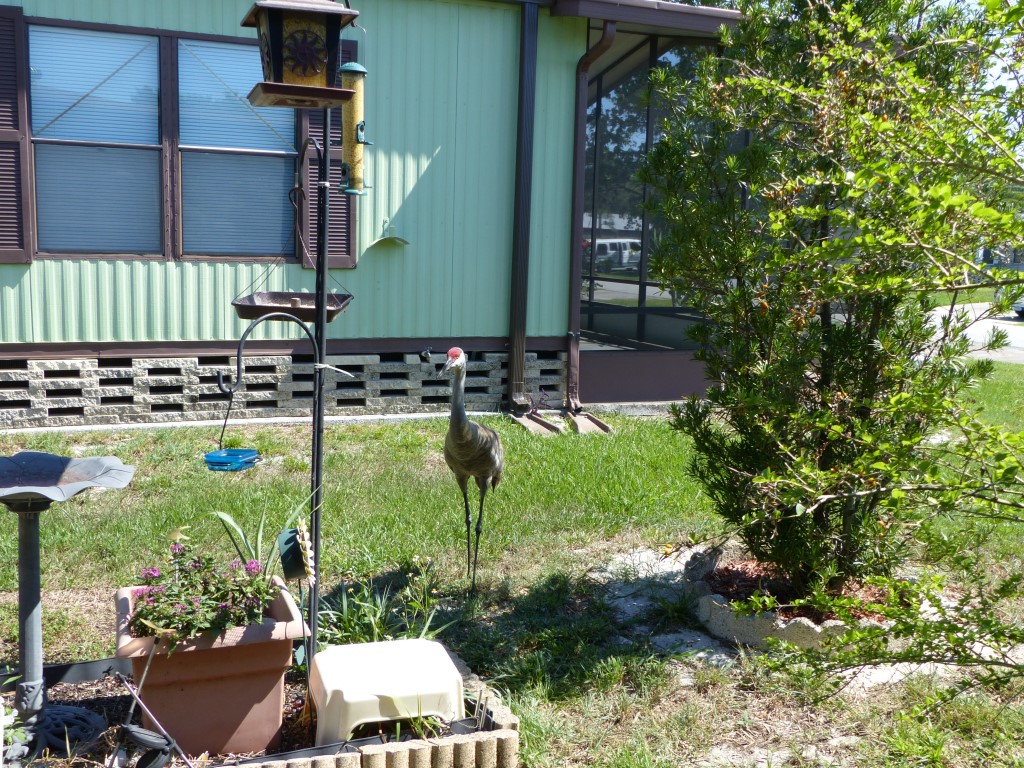
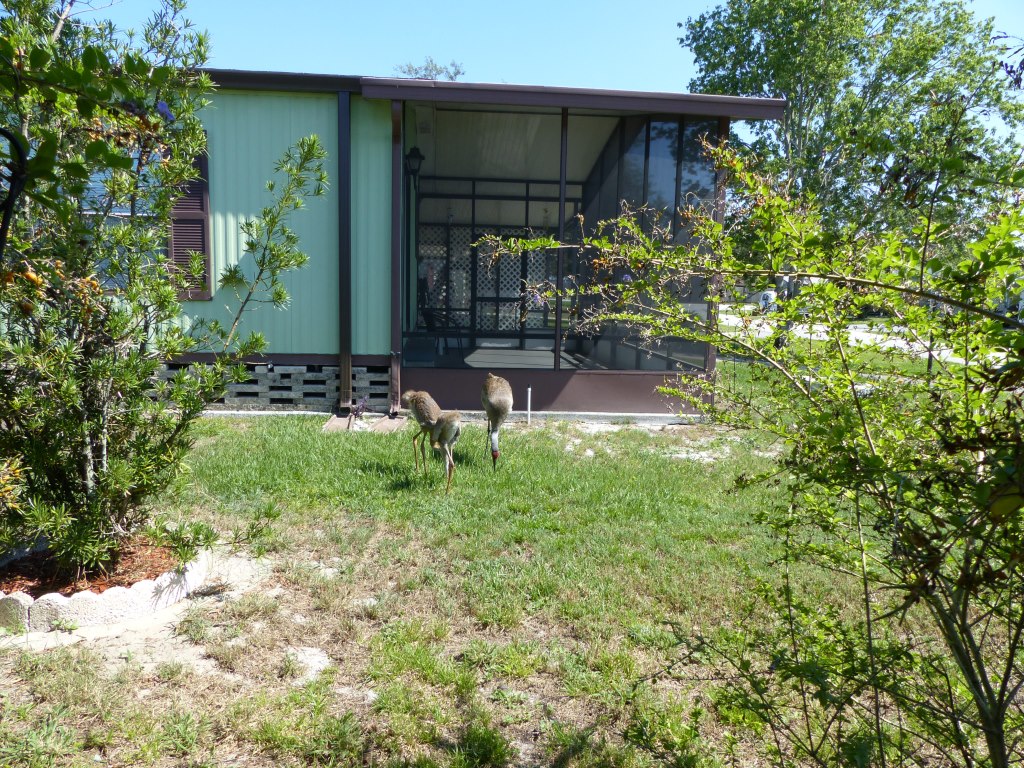
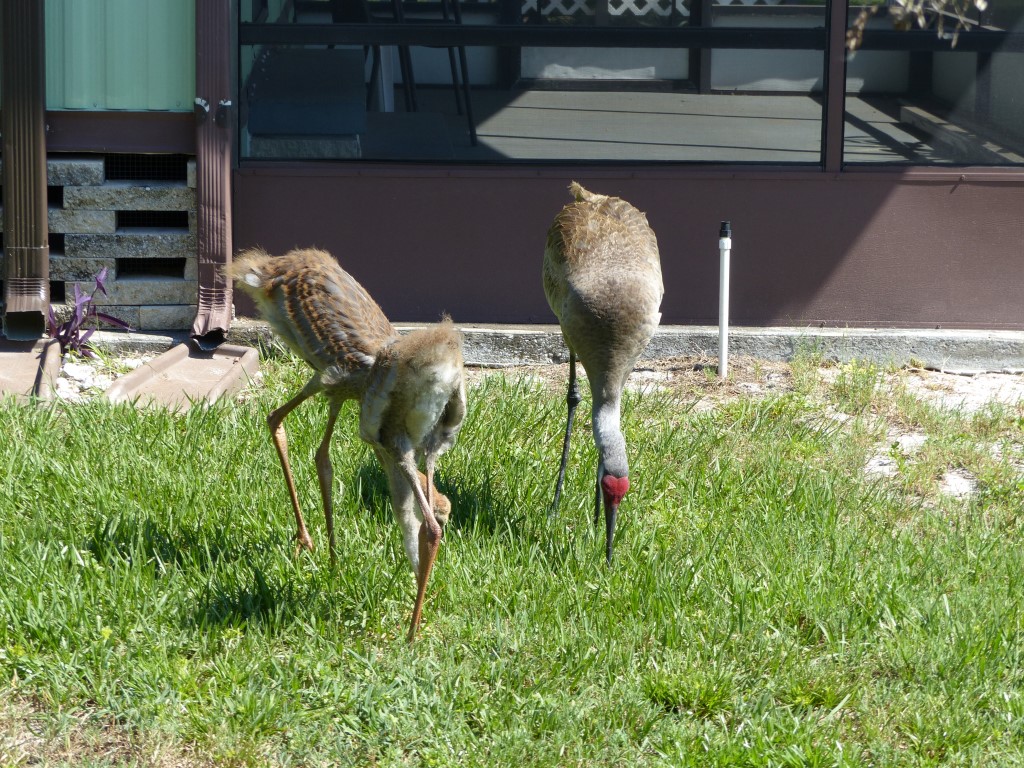
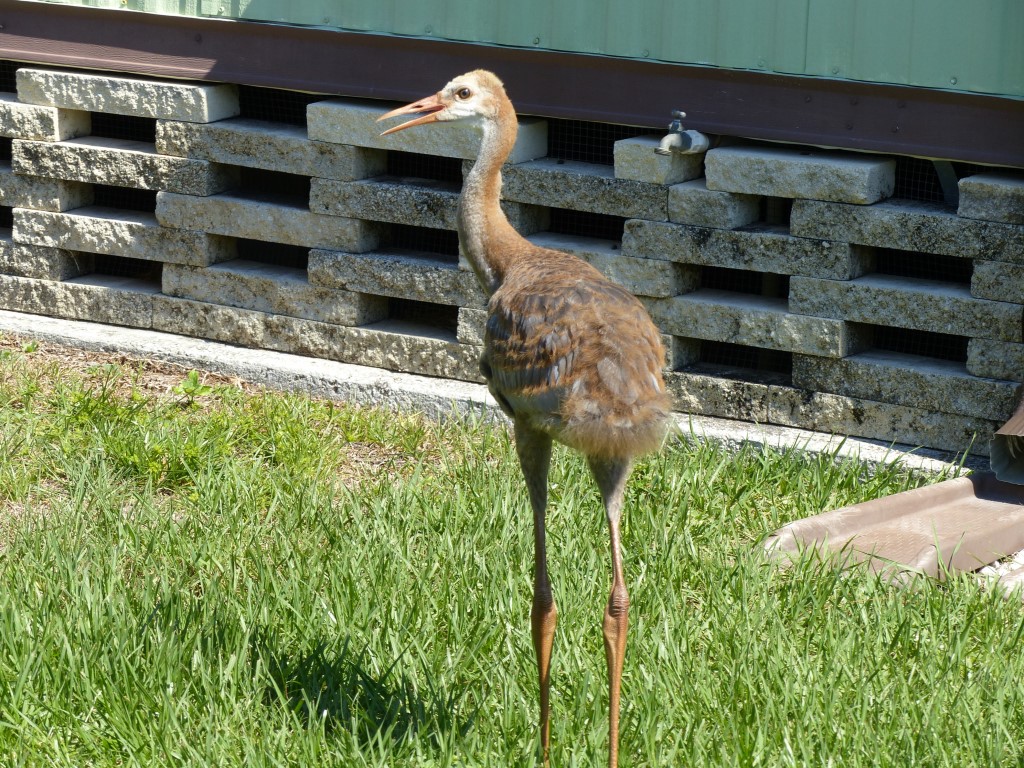
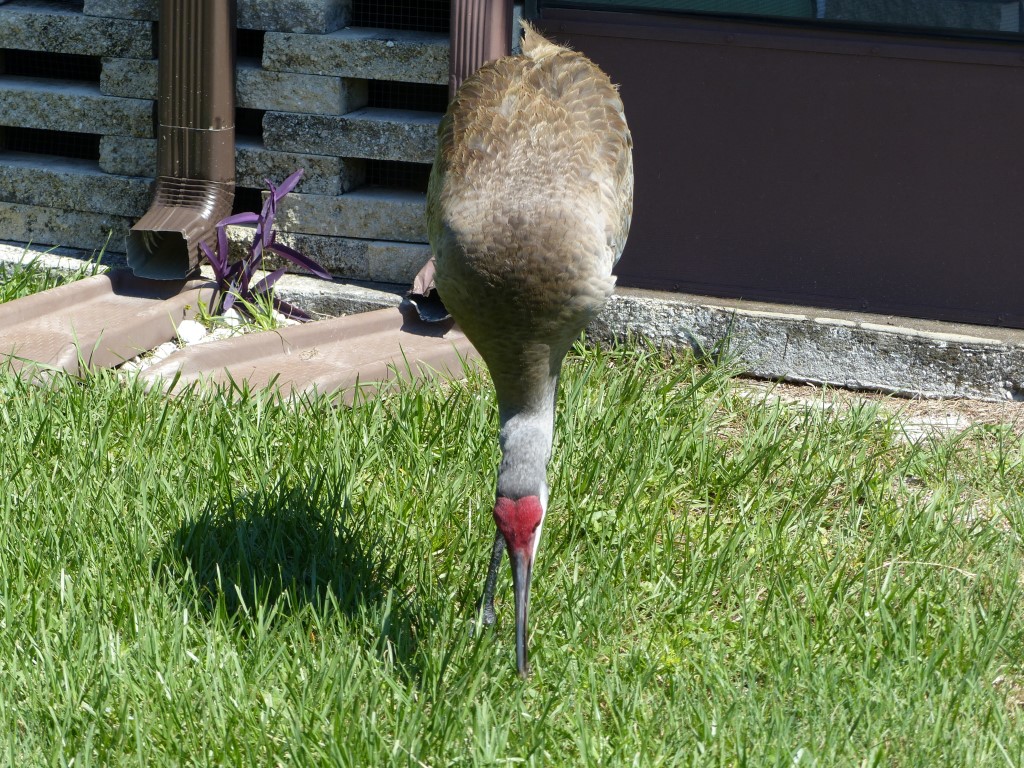
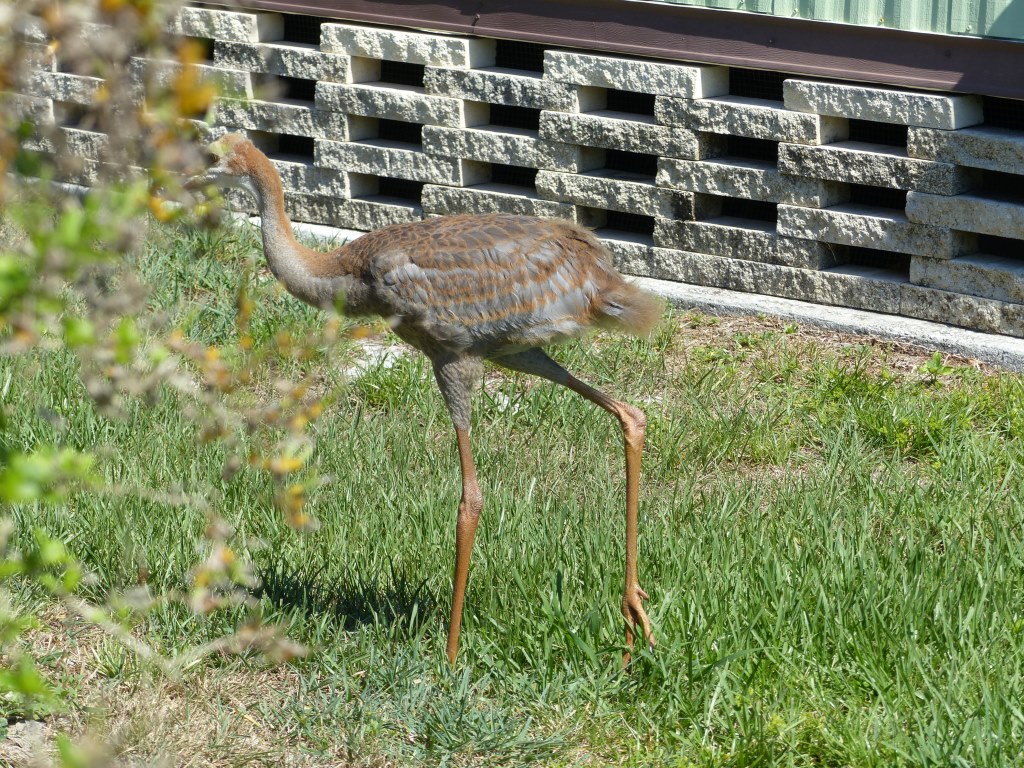
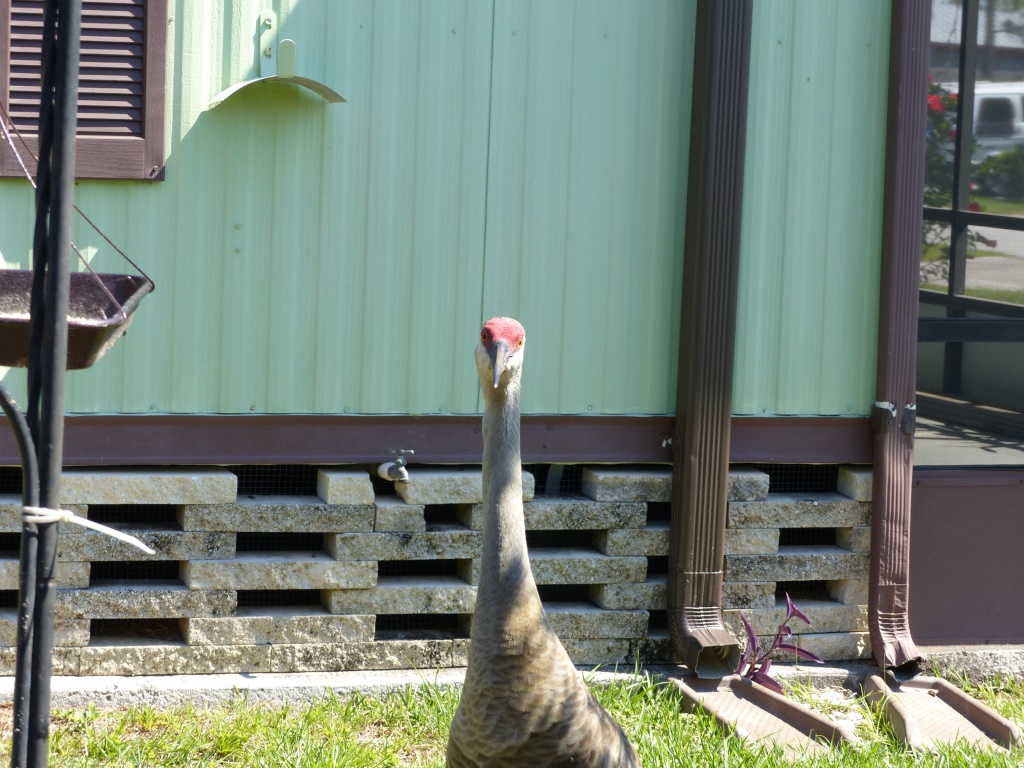
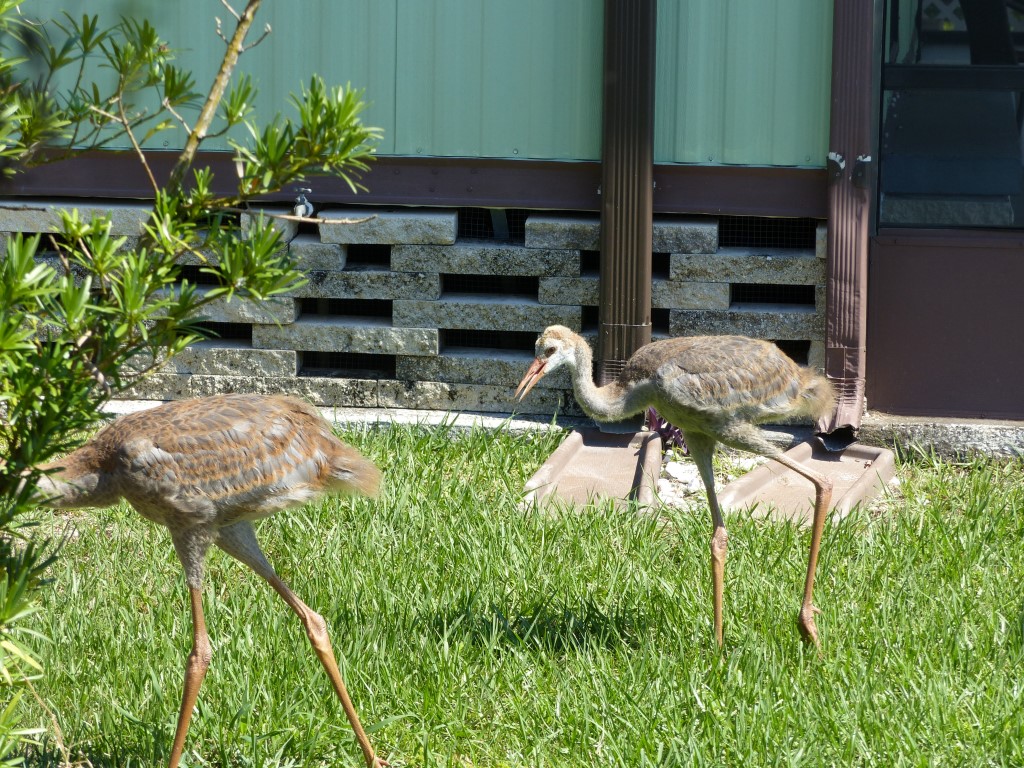
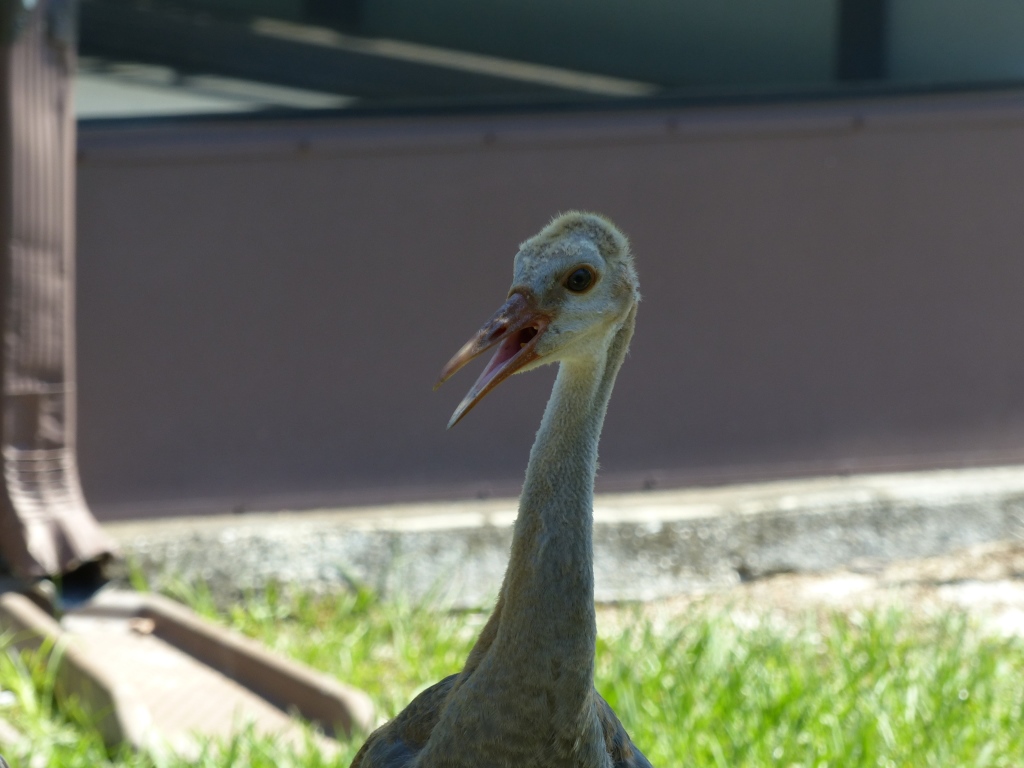
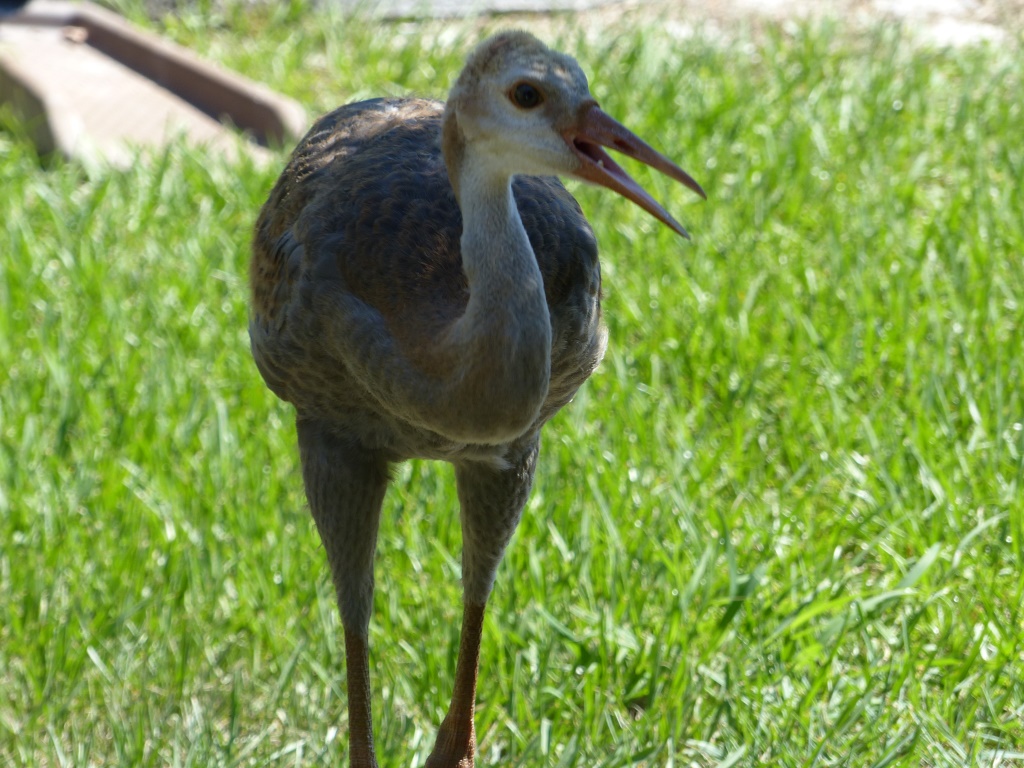
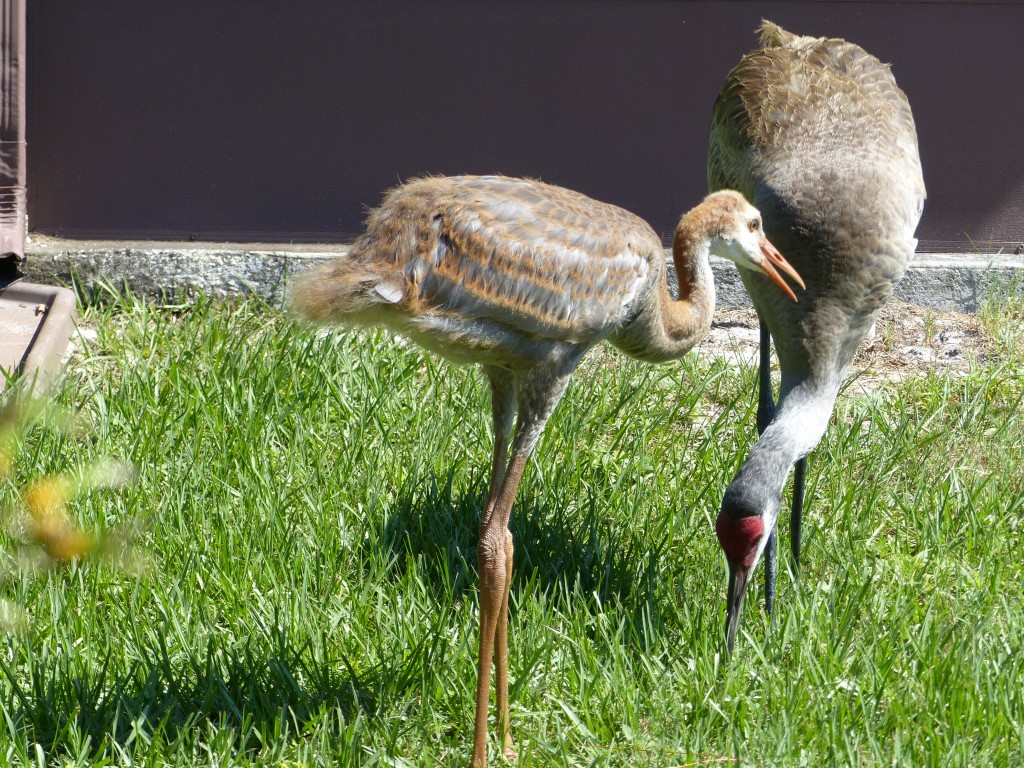
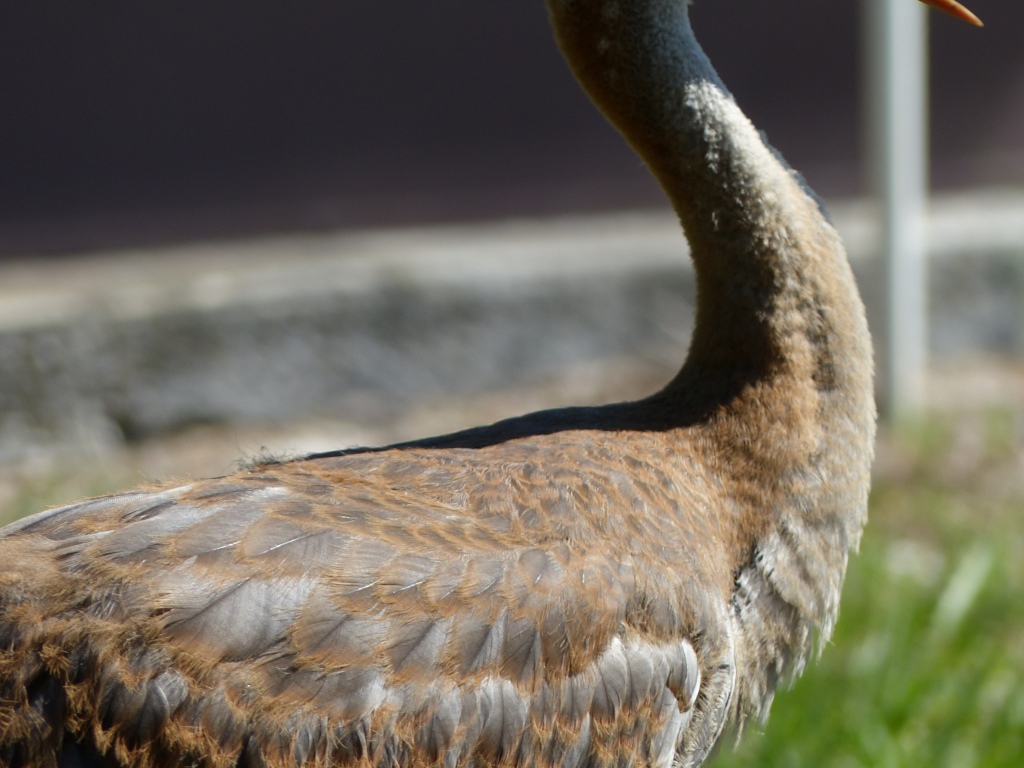
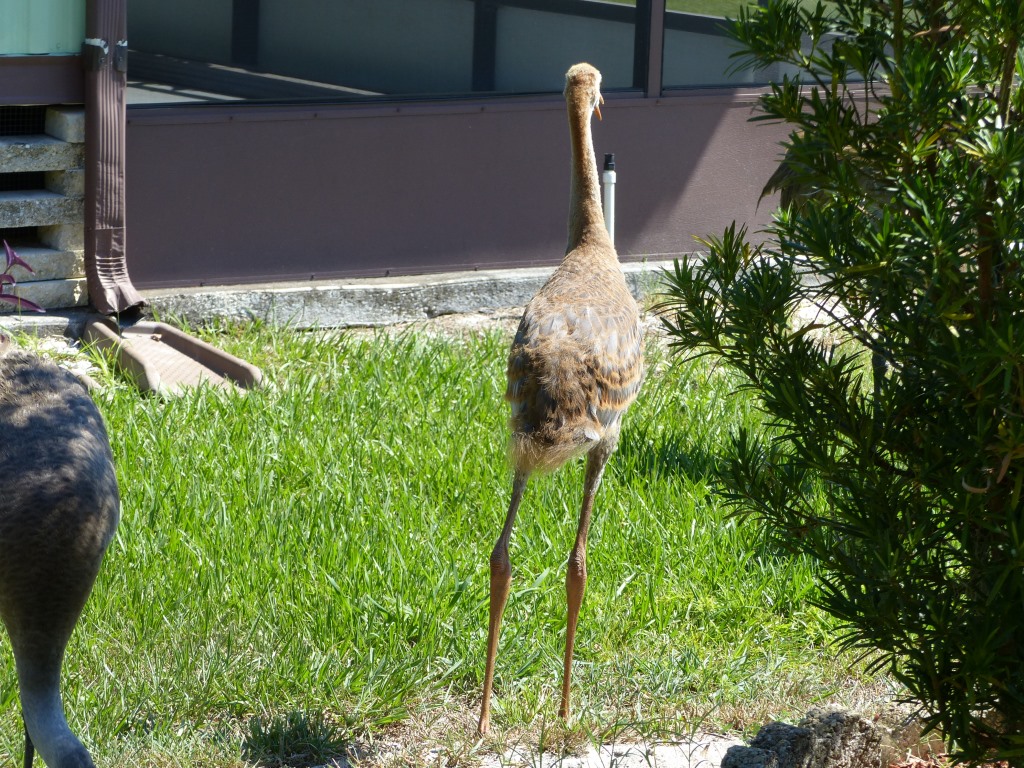
A few days ago while I was filling up my feeders, I looked up and here came Mom and Pop Sandhill Crane with their two latest youngsters. (The 2015 family) Needless to say I stopped and watched them for a while and then remembered to go get my camera. Here are some of those images. I shared a little seed with them. Not suppose to feed cranes, but even if I put seed in that hanging tray for the other birds, they have been known to eat from it. ( I felt sorry for the little ones. :) )

It looks like the little Sandhills need to grow into their knees.

Leaving

Leaving

I always enjoy when the Sandhill Crane parents bring their little ones by to check them out. When you get to watch the Lord’s created critters up close and see how really look and act is enjoyable. The Cranes are mentioned in Scripture and so they are some of our Birds of the Bible.

Like a crane or a swallow, so did I chatter: I did mourn as a dove: mine eyes fail with looking upward: O LORD, I am oppressed; undertake for me. (Isaiah 38:14 KJV)

The parents made some chatter when I got too close to the little ones, but didn’t get it on video. Here is video of them in the yard (The noise is Dan edging the driveway):

https://youtu.be/vBTIeJglpH8&rel=0

*

You can tell by how many articles that I’ve written about that the cranes, that I like them and they visit often:

*

Birds of the Bible – Gifts From Birds

Fish Crow (Corvus ossifragus) at Lake Morton By Dan'sPix

Fish Crow (Corvus ossifragus) at Lake Morton By Dan’sPix

Birds of the Bible articles have been written about Raven’s before. James J S Johnson sent a link to a news story in the BBC News Magazine about Crows that is similar to the Ravens in the Bible.

First the story. A young girl, Gabi Mann, feeds Crows and they bring her “gifts.” (nutshell version). See The girl who gets gifts from birds.

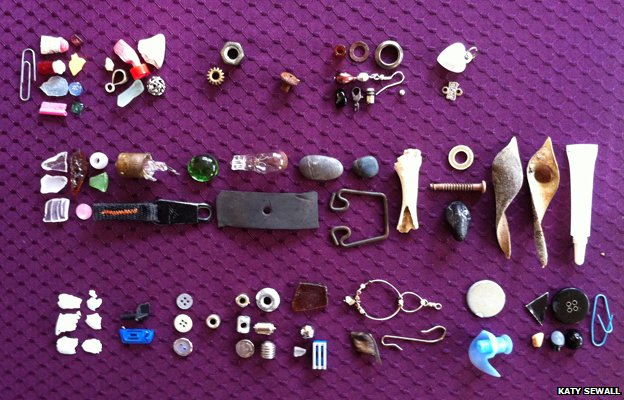
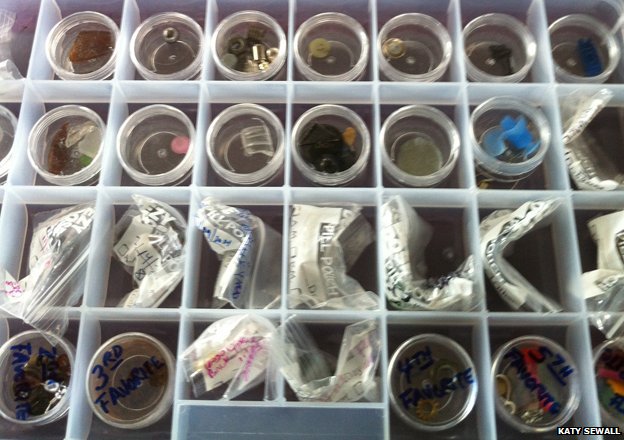
It started when she got out of the car and dropped food from her lap. The Crows grabbed it and each time she came home, they watched for her. It went from that to Gabi and her mother feeding them on a regular basis. Then, the crows started leaving various items, that could fit in their mouths, as “gifts.” Here are some of those items.

Things brought by the crows

Things brought by the crows

*

Things brought by the crows

Things brought by the crows

Does the story bring to mind a similar situation, but with Ravens bringing something to someone?

In I Kings 17, we read about the prophet Elijah who was told by the LORD to get away and hide by the Brook Cherith.

And it will be that you shall drink from the brook, and I have commanded the ravens to feed you there.” So he went and did according to the word of the LORD, for he went and stayed by the Brook Cherith, which flows into the Jordan. The ravens brought him bread and meat in the morning, and bread and meat in the evening; and he drank from the brook. (1 Kings 17:4-6 NKJV)

Ravens and Crows are both in the same family, Corvidae – Crows, Jays, Ravens, which has 130 species presently. “They are considered the most intelligent of the birds, and among the most intelligent of all animals” (Corvidae-Wikipedia).

In the Bible, our passage in I Kings says that the ravens brought him food. Checking the different translations, all the translations, except two, call them Ravens. Those two call them Crows. The ABP+ uses G2876, which Strong says:

G2876

κόραξ
korax
kor’-ax
Perhaps from G2880; a crow (from its voracity): – raven.
Total KJV occurrences: 1

The other, ISV, says, “Crows would bring him bread and meat both in the morning and in the evening, and he would drink from the brook.”

Either way, the point is, the LORD used birds from a very intelligent avian family, that He Created, to feed his prophet. Critics like to find everything they can to disprove the Bible. Yet, the Lord gives us all kinds of reasons to believe his Word, if we just open our eyes.

Those birds could have brought bits of food as well as “trinkets.”

Because that which may be known of God is manifest in them; for God hath shewed it unto them. For the invisible things of him from the creation of the world are clearly seen, being understood by the things that are made, even his eternal power and Godhead; so that they are without excuse: (Romans 1:19-20 KJV)

Fan-tailed Raven (Corvus rhipidurus) ©WikiC

Fan-tailed Raven (Corvus rhipidurus) ©WikiC

*

The girl who gets gifts from birds.

Corvidae – Crows, Jays, Ravens

Birds of the Bible – Ravens

Raven – Wikipedia

Corvidae – Wikipedia

Wordless Birds

*


Bible Birds – Vulture Introduction

Vulture Introduction

Griffon Vulture (Gyps fulvus) WikiC

Griffon Vulture (Gyps fulvus) WikiC

And these you shall regard as an abomination among the birds; they shall not be eaten, they are an abomination: the eagle, the vulture, the buzzard, (Leviticus 11:13 NKJV)

Relocated Here

Dad and Mom its feeding time..

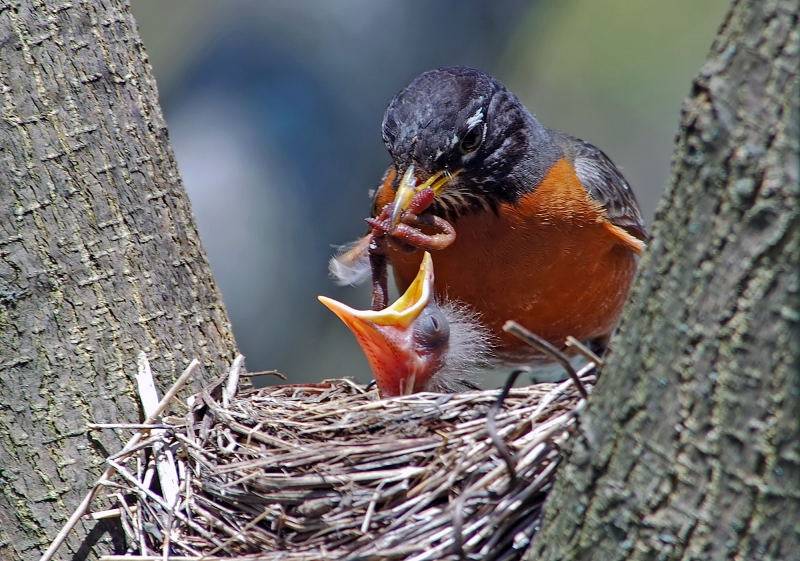
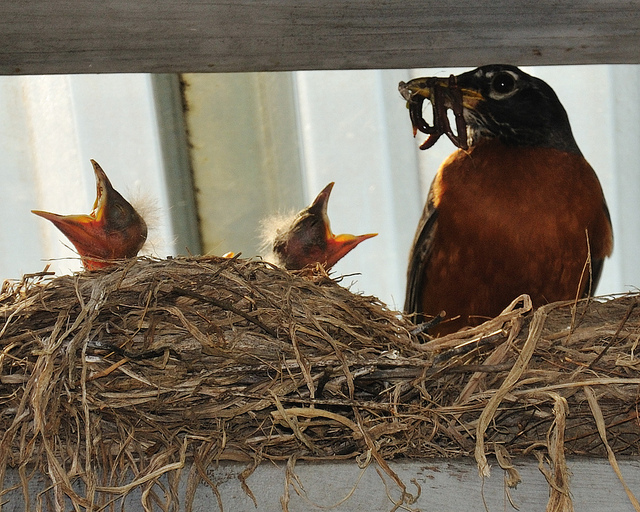
American Robin (Turdus migratorius)with youngsters by Raymond Barlow

American Robin (Turdus migratorius)with youngsters by Raymond Barlow

This is for every blessed parent who so anxiously works hard in raising their kids in the way of the Lord…
And for the kids being fed by their parents.

Birds emerge from the shell blind and so weak
they can’t even hold their heads up.
Parents must feed babies frequently because
baby birds digest their food quickly.

The larger the babies grow, the more food they require.
Baby Crows need at least half their weight in food
every day just to stay alive.
a baby Belted Kingfishers eat 1 to 1 3/4 times
their weight in fish every day.
American Robin (Turdus migratorius) with young in nest

American Robin (Turdus migratorius) with young in nest

On average, a songbird nestling
receives four-12 feedings
of protein-rich insect food every hour.
Young Hawks are fed about once an hour.
Feeding duties aren’t always divided
equally between the sexes.
This varies with the species and
the inclination of the individual bird.
One male House Wren – a single male
whose mate disappeared – fed his nestlings
1,217 times between 4:15 a.m. and 8 p.m.
That’s about one trip every 47 seconds.
It’s astonishing how much a young bird can eat.
In one instance, a young American Robin,
who was supposed to leave the nest that day,
was experimentally fed all the earthworms it would eat.
Each worm was measured.
The Robin ate 14 feet of worms.
Orni-Theology

Orni-Theology

If birds can feed so much to their chicks every day,

how much would God expect us as a parent
to nourish our kids with spiritual food.
Well, do we feed the word of God to our kids every day?
Kids, are you eating well? Are you reading and listening to the Word of God?

“In the beginning was the Word, and the Word was with God, and the Word was God.” John 1:1/blockquote>

Yours in YESHUA,
a j mithra
(Found this on the Kid’s blog. AJ wrote it especially for that blog before joining the Lord in Glory)

*

Birds – The Color That Only God Can Do

Mandarin Duck (Aix galericulata) by

Mandarin Duck (Aix galericulata) by Dan

Great are the works of the LORD, studied by all who delight in them. (Psalms 111:2 ESV)

Here is a neat blog worth looking at to see all the beautiful color that God put in Birds.

via Birds.

Enjoy the beauty of these birds.

Wordless Birds

*

This is by N7QVC’s Christian Blog.

*