

Yesterday’s My Mom And Me – Email blog inspired me to write a new article for the Birds of the Bible For Kids. It is called:”
Bible Birds – Mother Birds and Their Young.
Please check it out. It is geared for a younger audience.
*
Yesterday’s My Mom And Me – Email blog inspired me to write a new article for the Birds of the Bible For Kids. It is called:”
Bible Birds – Mother Birds and Their Young.
Please check it out. It is geared for a younger audience.
*

Mandarin Duck (Aix galericulata) by Dan
Currently, I am reading through Leviticus. When I cam to the Tabernacle, my first thoughts were, “Here we go again” with all the details about how to make it. The LORD gave Moses the details and then he shared those details with all the workers and skilled craftsmen as to how it was supposed to be prepared. It includes down to the number of rings to hold the curtains, like 50 on this side and 50 on that side, etc. The colors Gold, Blue, Purple and Scarlet are constantly mentioned.
Details, details, details. I stopped grumbling when I thought about how the LORD in His creative acts was so, “detailed.” Much of the Bible gives us details about God, the Lord, and the Holy Spirit.It is one of God’s attributes that He is so omnipotent, omniscient, understanding, etc. because He does know all the “details.”
For since the creation of the world His invisible attributes are clearly seen, being understood by the things that are made, even His eternal power and Godhead, so that they are without excuse, (Romans 1:20 NKJV)
We are told to look around us to observe creation and we can see His attributes. Think of just the birds. Are they not each different and made with so much detail. So, here is my attempt to share with you some of the neatly “detailed” birds in a slideshow. My first thoughts were of the Mandarin Duck with its lines and marks. Looks like a paintbrush was used by the Hand of our Creator. I have been trying to think of a bird that is gold, blue, purple and scarlet, but so far, it allude me. (The Mandarin Duck is close)
This slideshow is only featuring the colors and feather designs, but how about all the bills, feet, and other aspects of the birds? Enjoy these beautiful birds. (Thanks to all those who took the photos also.)
*
(I hardly got to the Passerines. Sorry)
See:
*

Sunset Lorikeet (Trichoglossus forsteni) ©WikiC
Now Israel loved Joseph more than all his children, because he was the son of his old age: and he made him a coat of many colours. (Genesis 37:3 KJV)
After I finished the Birds of the World – Kingfishers, Australasian Warblers, White-Eyes and Doves article last week, I decided to finish up the Psittacidae – Parrots Family. I still needed 150 photos or drawings to complete the 363 species needed. Well, last night, it was finished and at 100% for images.
Looking at all those Parrots and others in the family, they definitely have “Coats of Many Colors” also. Just wanted to share their beautifully created plumage also. Most of us are familiar with parrots and parakeets. Many have them as pets or have seen them in the wild. So you are sort of familiar with them, but I am sure as you view the slideshow, you will see many that you haven’t seen before.
I also want to share the only birds I had personally. My preference is that the birds roam free, or are being kept from extinction in zoos or other similar situation. There is nothing wrong with having a pet, but I am just stating my preference. We ended up with two Monk Parakeets when we lived in south Florida. They are wild down there (up here also), but one day the neighbor boys came to my door and told me about an injured Monk Parakeet. A teenager had shot it out of a tree and the smaller boys found it. They said, “You love birds and you will know what to do.” That began the adventure with my bird. I had never kept a bird in my life, but knew that my veterinarian was also a bird vet. Long story short, I ended up with a one-winged bird that could never go back to the wild. My “free bird” ended up costing over $200 for vet bills. (This was over 20 years ago). Dan wanted to call it “One-armed Bandit” because it cost me so much, but I took the “t” off of “Bandit” and it became “Bandi.” I think it was a “she” because she was so sweet.
Well a year later, my friend bought two Monks and told me there was one more, but it had a deformed leg. Another long story short, I bought “Hoppy” for $25 and ended up spending another $200 getting a broken leg repaired. It was an amazing surgery the vet performed. “Hoppy” had to be a male, because he could be mischievous at times, but he learned to talk and was quite enjoyable (most of the time). The picture shows “Hoppy” with the bandage in front and “Bandi” in the background.

Hoppy in front, Bandi in back – Monk Parakeet (Myiopsitta monachus)
The only two verses in Scripture, that I know of, that would apply to this would be:
For every kind of beasts, and of birds, and of serpents, and of things in the sea, is tamed, and hath been tamed of mankind: (James 3:7 KJV)
As a cage is full of birds, so are their houses full of deceit: therefore they are become great, and waxen rich. (Jeremiah 5:27 KJV)
Back to the Coats of Many Colors, below is a slideshow showing some of our beautiful and personable members of the Psittacidae – Parrots Family.
*
See Also:
Psittacidae – Parrots Family
Birds of the Bible – Coat of Many Colors I
*
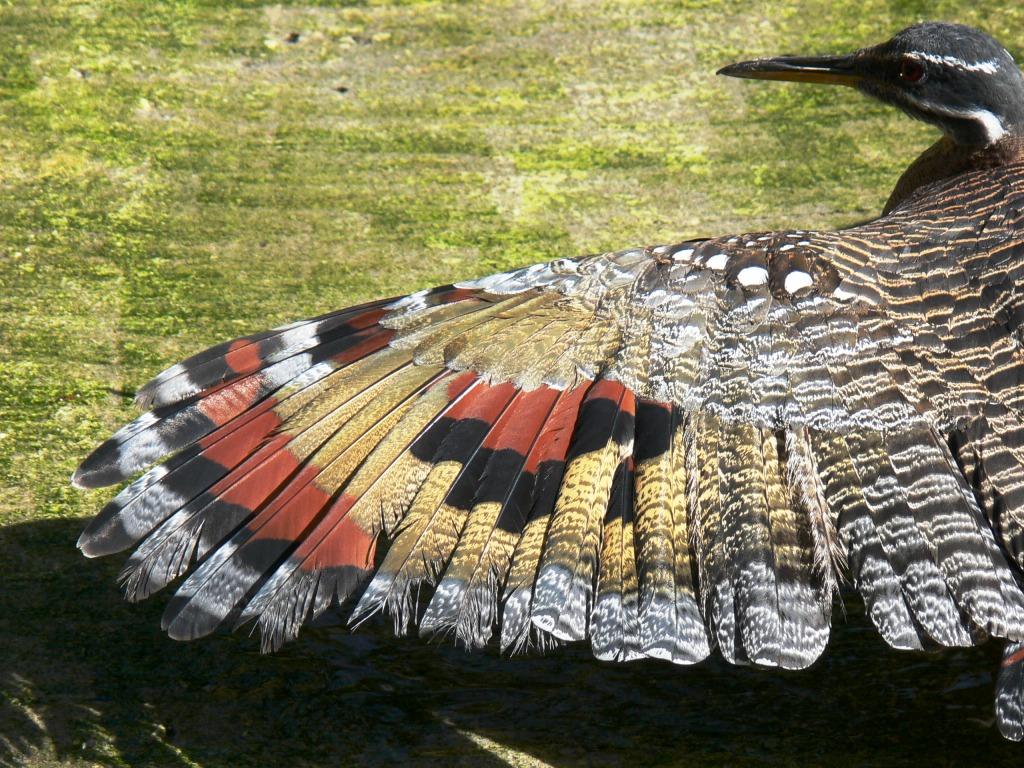
Sunbittern (Eurypyga helias) Left Wing by Lee at Lowry Park Zoo
While reading in Exodus 25 this week, I noticed that the plan for the Ark is written out in quite specific details. The plans for the mercy seat was to be covered by the outstretched wings of the cherubims of gold.
And the cherubims shall stretch forth their wings on high, covering the mercy seat with their wings, and their faces shall look one to another; toward the mercy seat shall the faces of the cherubims be. (Exodus 25:20 KJV)
I wondered if I had written much about “wings”, so I checked and found only three articles, so far:
I am curious about what can be found, so, let’s see what we can find. Of course my e-Sword is fired up and ready for the searching. Searching first with just “wing”, only 6 verses show up. I Kings 6:24, 6:27; 2 Chronicles 3:11-2 all refer to the wing of the cherub. Isaiah 10:14 actually mentions a bird having its eggs taken and not moving its wing, opening its mouth or peeping. It is used as an illustration.
And my hand hath found as a nest the riches of the people: and as one gathereth eggs that are left, have I gathered all the earth; and there was none that moved the wing, or opened the mouth, or peeped. (Isaiah 10:14 KJV)
Ezekiel 17:23 is the verse used in Fowl (Birds) of Every Wing.
Searching again with “wings” this time shows 64 verses (KJV). Again the cherubims are mentioned in Exodus 25:20, 37:9; I Kings 6:26, 8:6, 8:7; 1 Chronicles 28:18; 2 Chronicles 3:11, 3:13, 5:7-8. Cherubim and serephim wings are again mentioned later in the prophecies of Isaiah (Isa 6:2, 8:8, 18:1, and 40:31), Ezekiel (Exe 1:6-11, 1:23-25, 3:13, 10:5-21, 11:22) and Daniel. Ezekiel 17:3 & 7 mention “A great eagle with great wings, longwinged, full of feathers” and “another great eagle with great wings and many feathers” Daniel 7:4 and 6 mention “eagle’s wings” and “wings of a fowl”

Wedge-tailed Eagle (Aquila audax) ©WikiC
Eagles’ wings are mentioned several more times:
Ye have seen what I did unto the Egyptians, and how I bare you on eagles‘ wings, and brought you unto myself. (Exodus 19:4 KJV)
As an eagle stirreth up her nest, fluttereth over her young, spreadeth abroad her wings, taketh them, beareth them on her wings: (Deuteronomy 32:11 KJV)
Wilt thou set thine eyes upon that which is not? for riches certainly make themselves wings; they fly away as an eagle toward heaven. (Proverbs 23:5 KJV)
But they that wait upon the LORD shall renew their strength; they shall mount up with wings as eagles; they shall run, and not be weary; and they shall walk, and not faint. (Isaiah 40:31 KJV)
For thus saith the LORD; Behold, he shall fly as an eagle, and shall spread his wings over Moab. (Jeremiah 48:40 KJV)
Behold, he shall come up and fly as the eagle, and spread his wings over Bozrah: and at that day shall the heart of the mighty men of Edom be as the heart of a woman in her pangs. (Jeremiah 49:22 KJV)

Indian Peafowl (Pavo cristatus) by Nikhil Devasar
Of course other birds are named such as:
Gavest thou the goodly wings unto the peacocks? or wings and feathers unto the ostrich? (Job 39:13 KJV)
Doth the hawk fly by thy wisdom, and stretch her wings toward the south? (Job 39:26 KJV)
And I said, Oh that I had wings like a dove! for then would I fly away, and be at rest. (Psalms 55:6 KJV)
Though ye have lien among the pots, yet shall ye be as the wings of a dove covered with silver, and her feathers with yellow gold. (Psalms 68:13 KJV)
Then lifted I up mine eyes, and looked, and, behold, there came out two women, and the wind was in their wings; for they had wings like the wings of a stork: and they lifted up the ephah between the earth and the heaven. (Zechariah 5:9 KJV)
O Jerusalem, Jerusalem, thou that killest the prophets, and stonest them which are sent unto thee, how often would I have gathered thy children together, even as a hen gathereth her chickens under her wings, and ye would not! (Matthew 23:37 KJV)
O Jerusalem, Jerusalem, which killest the prophets, and stonest them that are sent unto thee; how often would I have gathered thy children together, as a hen doth gather her brood under her wings, and ye would not! (Luke 13:34 KJV)

Baby Chick Peeping Out From Under His Mom’s Wing – ©©
Other references to wings:
That is an interesting survey of the verses with wing or wings in them. Now I will have to get busy and use this information in some future articles. There are definitely some trends that can be seen. Do you see them? Shadow, wind, healing and trust, just to name a few.
*
*

Sandhill Cranes with “Colts”
“Ah, Soul, God does listen to the chattering of cranes! I know He does, for I have read in His Word what is tantamount to that in the text [Isaiah 38:14],
Like a crane or a swallow, so did I chatter: I did mourn as a dove: mine eyes fail with looking upward: O LORD, I am oppressed; undertake for me. (Isaiah 38:14 KJV)

Northern Raven (Corvus corax) by Kent Nickell
“He hears the young ravens when they cry.”
And surely if He hears a raven’s cry and if not a sparrow falls to the ground without our Father, your prayer, though it may be very indistinct and the language, itself, may be very unworthy of the Divine ear, yet it shall command an audience and will bring down a blessing from above!”

American Tree Sparrow (Spizella arborea) w chicks ©USFWS
Above is a quote from C. H. Spurgeon’s Notable Quotes: —Volume 61, Sermon #3468
Give ear to my words, O LORD, consider my meditation. Hearken unto the voice of my cry, my King, and my God: for unto thee will I pray. My voice shalt thou hear in the morning, O LORD; in the morning will I direct my prayer unto thee, and will look up. (Psalms 5:1-3 KJV)
See all the:
*

Laughing Gull landing on Brown Pelican
I am like a pelican of the wilderness; I am like an owl of the desert. (Psalms 102:6 NKJV)
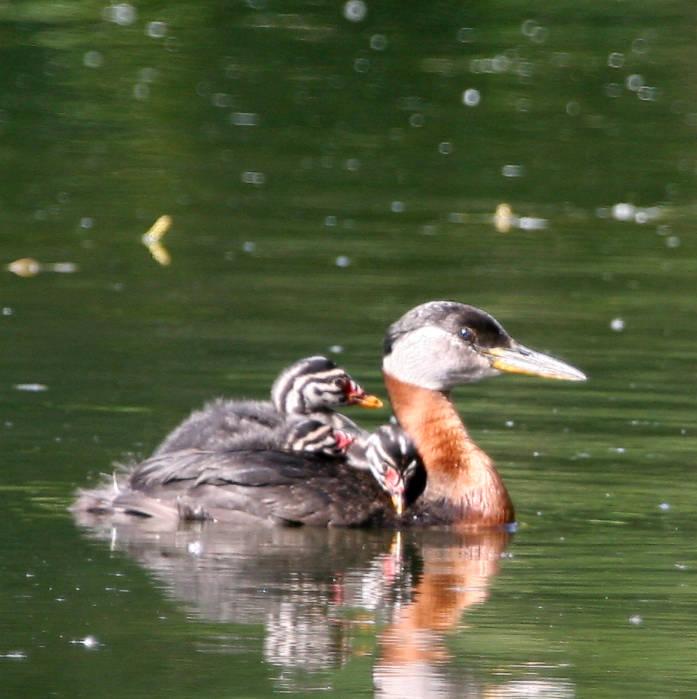
Red-necked Grebe (Podiceps grisegena) young on her wing ©USFWS
The LORD recompense thy work, and a full reward be given thee of the LORD God of Israel, under whose wings thou art come to trust. (Ruth 2:12 KJV)
While searching for “wing” or “wings” in my e-Sword, I discovered this really great verse. Let’s dig into it.
Searching further using “under” and “wing” here are a few more verses that sort of relate to the verse above:
Keep me as the apple of the eye, hide me under the shadow of thy wings, (Psalms 17:8 KJV)
How excellent is thy lovingkindness, O God! therefore the children of men put their trust under the shadow of thy wings. (Psalms 36:7 KJV)
He shall cover thee with his feathers, and under his wings shalt thou trust: his truth shall be thy shield and buckler. (Psalms 91:4 KJV)
Matthew 23:37 and Luke 13:34 mention being gathered under the wing, but they were not willing. Also, in Birds of the Bible – Under His Wing we covered. no pun intended, how birds protect their young under their wings and how God protects us. But the verse above seem to imply our trust.
What is being trusted? Boaz is implying that Ruth is trusting in the “LORD God of Israel.” She is from another country, another culture and religious way of life, but has turned her trust over to the LORD. That is something I did personally way back in 1960. I put my trust in the Lord to be my personal Savior. It was the best decision of my life.

Storks Shadowing Baby in Lakeland by Dan
In the Psalms verses, we can know that the Lord keeps His Eye on His own and we should desire to be the “apple of the eye.” Notice in the other verses that while we are under the wings we are trusting. Who? The Lord or LORD. Why do we trust? Wow! Look around at all the Lord has done just in creation and care of the birds. How about our care? We know through promises all through the Word of God that He cares for us. We know He doesn’t lie or do things for our harm. We also know that He is just and will give judgment when needed. We could go on and on, but you can also see that the Lord Jesus Christ is “trustworthy.”

Baby Chick Peeping Out From Under His Mom’s Wing – ©©
We know the birds trust their parents to protect them while they are under their wings. Should we not trust the Savior while we are under His wings?
Here is a quote from the Believer’s Bible Commentary:
“2:4-12 When Boaz arrived from Bethlehem, he asked the identity of the young woman. Learning that she was Naomi’s daughter-in-law, he cordially invited her to continue gleaning in his fields and to share the water provided for his workers. In praising her for the loyal and selfless step that she had taken, Boaz concluded with a little prayer for her:
The LORD repay your work, and a full reward be given you by the LORD God of Israel, under whose wings you have come for refuge (v. 12).
Leon Morris comments:
In due course, the prayer was answered through him who uttered it. He recognizes the religious aspect of Ruth’s change of country by saying that she has come to trust (AV) under Yahweh’s wings. The imagery is probably that of a tiny bird struggling under the wings of a foster-mother. It gives a vivid picture of trust and security. . . .
From J. Vernon McGee:
“She had come to trust the Lord God. This is the reason she had left the land of Moab and made that radical decision. She had said that the God of Naomi would be her God. She had turned from idolatry to the living and true God. This woman has come to trust God; she was one of His children. Therefore this is the wonderful testimony that she had there in the land of Israel. And Boaz says, “May a full reward be given to you. May you be recompensed for this decision.”
From Matthew Henry:
“(5.) He (Boaz) prayed for her (Ruth_2:12): The Lord recompense thy work. Her strong affection to the commonwealth of Israel, to which she was by birth an alien, was such a work of the divine grace in her as would certainly be crowned with a full reward by him under whose wings she had come to trust. Note, Those that by faith come under the wings of the divine grace, and have a full complacency and confidence in that grace, may be sure of a full recompense of reward for their so doing. From this expression, the Jews describe a proselyte to be one that is gathered under the wings of the divine majesty.”
From John Gill’s Exposition:
“under whose wings thou art come to trust; whom she professed to be her God, and whom she determined to serve and worship; whose grace and favour she expected, and to whose care and protection she committed herself: the allusion is either to fowls, which cover their young with their wings, and thereby keep them warm and comfortable, and shelter and protect them, see Psa_36:7 or to the wings of the cherubim overshadowing the mercy seat, Exo_25:20 and the phrase is now adopted by the Jews to express proselytism; and so the Targum here,”thou art come to be proselyted, and to be hid under the wings of the Shechinah of his glory,”or his glorious Shechinah.”
My all time favorite photo showing this:
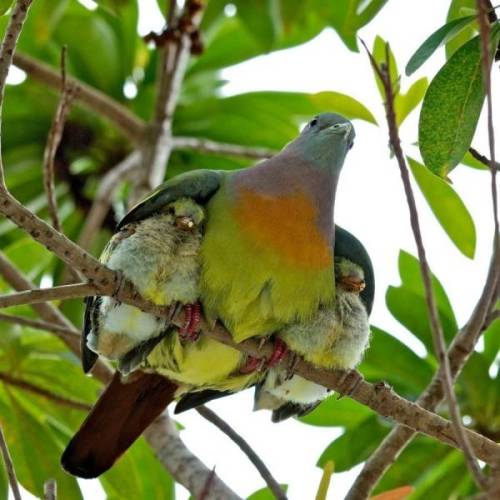
Under His Wings – by Ric Seet
Other Articles to check out:
*

The Mourning Dove for Birds Illustrated by Color Photography, 1897
Dear Young Bird Lovers:
Most every person thinks that, while my actions are very pretty and attractive, and speak much in my favor, I can only really say, Coo-o, Coo-o, which they also think does not mean anything at all. Well, I just thought I would undeceive them by writing you a letter. Many grown up people fancy that we birds cannot express ourselves because we don’t know very much. Of course, there is a good reason why they have this poor opinion of us. They are so busy with their own private concerns that they forget that there are little creatures like ourselves in the world who, if they would take a little time to become acquainted with them, would fill their few hours of leisure with a sweeter recreation than they find in many of their chosen outings. A great English poet, whose writings you will read when you get older, said you should look through Nature up to Nature’s God. What did he mean? I think he had us birds in his mind, for it is through a study of our habits, more perhaps than that of the voiceless trees or the dumb four-footed creatures that roam the fields, that your hearts are opened to see and admire real beauty. We birds are the true teachers of faith, hope, and charity,—faith, because we trust one another; hope, because, even when nature seems unkind, sending the drifting snow and the bitter blasts of winter, we sing a song of summer time; and charity, because we are never fault finders.
I believe, without knowing it, I have been telling you about myself and my mate. We Doves are very sincere, and every one says we are constant.
If you live in the country, children, you must often hear our voices. We are so tender and fond of each other that we are looked upon as models for children, and even grown-up folks. My mate does not build a very nice nest—only uses a few sticks to keep the eggs from falling out—but she is a good mother and nurses the little ones very tenderly. Some people are so kind that they build for us a dove cote, supply us with wheat and corn, and make our lives as free from care and danger as they can. Come and see us some day, and then you can tell whether my picture is a good one. The artist thinks it is and he certainly took lots of pains with it.
Now, if you will be kind to all birds, you will find me, in name only,
From col. F. M. Woodruff. Copyrighted by Nature Study Pub. Co., 1897, Chicago.
*
Summary:
MOURNING DOVE.—Zenaidura macrura. Other names: “Carolina Dove,” “Turtle Dove.”
Range—Whole of temperate North America, south to Panama and the West Indies.
Nest—Rim of twigs sufficient to retain the eggs.
Eggs—Usually two; white.

Mourning Dove (Zenaida macroura) by Quy Tran
Lee’s Addition:
So I said, “Oh, that I had wings like a dove! I would fly away and be at rest. (Psalms 55:6 NKJV)
Doves are mentioned many times throughout Scripture therefore making them on of our Birds of the Bible. Below are the sounds of a song of this Dove and also the sound of the Mourning Dove flying. You can hear how they named it “mourning.”
Dove Song
Wing Sound
The Mourning Dove is a member of the Columbidae – Pigeons, Doves Family. They have over 330 cousin doves and pigeon that are part of the family. Doves and Turtledoves are mentioned 47 times in the NKJV.
“The bird is also called the Turtle Dove or the American Mourning Dove or Rain Dove, and formerly was known as the Carolina Pigeon or Carolina Turtledove. It is one of the most abundant and widespread of all North American birds. It is also the leading gamebird, with more than 20 million birds (up to 70 million in some years) shot annually in the U.S., both for sport and for meat. Its ability to sustain its population under such pressure stems from its prolific breeding: in warm areas, one pair may raise up to six broods a year.
Its plaintive woo-OO-oo-oo-oo call gives the bird its name. The wings can make an unusual whistling sound upon take-off and landing. The bird is a strong flier, capable of speeds up to 55 mph (88 km/h).
Mourning Doves are light grey and brown and generally muted in color. Males and females are similar in appearance. The species is generally monogamous, with two squabs (young) per brood. Both parents incubate and care for the young. Mourning Doves eat almost exclusively seeds, but the young are fed crop milk by their parents.
The Mourning Dove occupies a wide variety of open and semi-open habitats, such as urban areas, farms, prairie, grassland, and lightly wooded areas. It avoids swamps and thick forest. The species has adapted well to areas altered by humans. It commonly nests in trees in cities or near farmsteads.
Most Mourning Doves migrate along flyways over land. On rare occasions, mourning doves have been seen flying over the Gulf of Mexico; but this is exceptional. Spring migration north runs from March to May. Fall migration south runs from September to November, with immatures moving first, followed by adult females and then by adult males. Migration is usually during the day, in flocks, and at low altitudes. However, not all individuals migrate. Even in Canada some mourning doves remain through winter, sustained by the presence of bird feeders.” (Wikipedia)
*
Birds Illustrated by Color Photography – Revisited
The above article is an article in the monthly serial for September 1897 “designed to promote Knowledge of Bird-Live.” These include Color Photography, as they call them, today they are drawings. There are at least three Volumes that have been digitized by Project Gutenberg.
To see the whole series of – Birds Illustrated by Color Photography – Revisited
*
(Information from Wikipedia and other internet sources)
Next Article – How The Birds Secured Their Rights
The Previous Article – The Ruby-Crowned Kinglet
Links:
Bible Birds – Doves and Pigeons
Mourning Dove – Wikipedia
Mourning Dove – All About Birds
Mourning Doves – National Geographic
*

Under His Wings – ( Male Pink-necked Green Pigeon by Rik Seet)
Be merciful to me, O God, be merciful to me! For my soul trusts in You; And in the shadow of Your wings I will make my refuge, Until these calamities have passed by. (Psalms 57:1 NKJV)
In our devotions this morning, we read Psalm 57. The first verse caught my attention because of the shelter from the wings of a bird. Also, I just received again the above picture in an e-mail. Only about the 30th time I have received it. Apparently it is as precious to others as it is to me.
With the Hurricane – Superstorm Sandy just passing by the last few days, this is a good time to remember to put and keep our trust in the Lord.
The beginning of that verse has this title attached: “To the Chief Musician. Set to “Do Not Destroy.” a Michtam of David When He Fled from Saul into the Cave.” David was trying to hide from Saul, just as those up north have been trying to hide from that storm.
“David took refuge under the shelter of God’s wings. He stood “steadfast,” a term indicating firmness, certainty, and determination (v.7). His faith was not blown about by the wind. He clung tenaciously to God. That is why today’s psalm spends more time on the character off God than on the writer’s circumstances.’ (Today in the Word, Day 16, Psalms)
My heart is steadfast, O God, my heart is steadfast; I will sing and give praise. (Psalms 57:7 NKJV)
Another quote, “the prayer (vv 1-4) emphasizes God’s character. He is merciful, protecting, caring, just, and faithful. The enemy may be “ravenous beasts,” but the psalmist can hide beneath His wings as a chick hides beneath a mother bird.”
Be merciful to me, O God, be merciful to me! For my soul trusts in You; And in the shadow of Your wings I will make my refuge, Until these calamities have passed by. I will cry out to God Most High, To God who performs all things for me. He shall send from heaven and save me; He reproaches the one who would swallow me up. Selah. God shall send forth His mercy and His truth. My soul is among lions; I lie among the sons of men Who are set on fire, Whose teeth are spears and arrows, And their tongue a sharp sword. (Psalms 57:1-4 NKJV)

Great Crested Grebe (Podiceps cristatus) babies ©WikiC (Lukasz_Lukasik)
Verses 5 and 11 “focuses our attention on God’s chief attribute–His glory and worthiness to be worshiped”
Be exalted, O God, above the heavens; Let Your glory be above all the earth. (Psalms 57:5 NKJV)
Our prayers and thoughts are with those going through this storm. We have been there in the midst of hurricanes before (Andrew, Charlie, Jean, Frances and those that passed near) and we know it is hard, but there is always a peace that only the Lord can give to get you through. Look to Him.
*

Song Sparrow (Melospiza melodia) by J Fenton
While looking up the word “birds” in the Dictionary section of my e-Sword program, there is an “i” symbol that shows on the tab of the name of a dictionary. That “i” indicates that there is information about your search word. The Smith’s Bible Dictionary had an “i” so I investigated it. This is what I saw:
Birds
Birds. See Sparrow.
So when I went there, this interesting definition of “sparrow” was found and I wanted to share it with you.

Eurasian Chaffinch (Fringilla coelebs) by Ian
Sparrow
Sparrow. (Hebrew, tzippor, from a root signifying to “chirp” or “twitter”, which appears to be a phonetic representation of the call-note of any passerine (sparrow-like) bird). This Hebrew word occurs upwards of forty times in the Old Testament. In all passages, except two, it is rendered by the Authorized Version indifferently as “bird” or “fowl,” and denotes any small bird, both of the sparrow-like species and such as the starling, chaffinch, greenfinch, linnet, goldfinch, corn-bunting, pipits, blackbird, song-thrush, etc. In Psalm 84:3, and Psalm 102:7, it is rendered “sparrow.”

Corn Bunting (Emberiza calandra) ©WikiC
Yea, the sparrow hath found an house, and the swallow a nest for herself, where she may lay her young, even thine altars, O LORD of hosts, my King, and my God. (Psalms 84:3 KJV)
I watch, and am as a sparrow alone upon the house top. (Psalms 102:7 KJV)

Anyone for a Sparrow Snack?
The Greek, stauthion, (Authorized Version, “sparrow”), occurs twice in the New Testament, Matthew 10:29; Luke 12:6-7. (The birds above mentioned are found in great numbers in Palestine, and are of very little value, selling for the merest trifle, and are, thus, strikingly used by our Saviour, Matthew 10:20, as an illustration of our Father’s care for his children. — Editor).
Are not two sparrows sold for a farthing? and one of them shall not fall on the ground without your Father. (Matthew 10:29 KJV)
Are not five sparrows sold for two farthings, and not one of them is forgotten before God? But even the very hairs of your head are all numbered. Fear not therefore: ye are of more value than many sparrows. (Luke 12:6-7 KJV)

Blue Rock Thrush (Monticola solitarius) by Nikhil Devasar
The blue thrush, (Petrocossyphus cyaneus), is probably the bird to which the psalmist alludes in Psa_102:7, as “the sparrow that sitteth alone upon the house-top.” It is a solitary bird, eschewing the society of its own species, and rarely more than a pair are seen together. The English tree-sparrow, (Passer montanus), is also very common, and may be seen in numbers on Mount Olivet, and also about the sacred enclosure of the mosque of Omar. This is, perhaps, the exact species referred to in Psalm 84:3.
Yea, the sparrow hath found an house, and the swallow a nest for herself, where she may lay her young, even thine altars, O LORD of hosts, my King, and my God. (Psalms 84:3 KJV)

House Sparrows visiting NA Parrot Show Outside
Dr. Thompson, in speaking of the great numbers of the house-sparrows and field-sparrows in troublesome and impertinent generation, and nestle just where you do not want them. “They stop your stove — and water-pipes with their rubbish, build in the windows and under the beams of the roof, and would stuff your hat full of stubble in half a day, if they found it hanging in a place to suit them.”
(I added the verses to make it easier and also the “blue thrush, (Petrocossyphus cyaneus)” could not be found. Photos also inserted.)
The Blue Rock Thrush (Monticola solitarius) is a species of chat. This thrush-like Old World flycatcher was formerly placed in the family Turdidae. It is now found in the Muscicapidae family.
Sparrows are found in two families today. The Family – Emberizidae – Buntings, New World Sparrows & Allies and the Family – Passeridae – Old World Sparrows, Snowfinches.
*
Smith’s Bible Dictionary, originally named A Dictionary of the Bible, was a 19th century Bible dictionary containing upwards of four thousand entries that became named after its editor, William Smith. Its popularity was such that condensed dictionaries appropriated the title, “Smith’s Bible Dictionary”.
The original dictionary was published as a three volume set in 1863, in London and Boston, USA. This first edition was followed in 1893 by an expanded four volume version which was published in the United States as A dictionary of the Bible comprising its antiquities, biography, geography, and natural history, edited by Smith and J. M. Fuller.
The original publications are now in the public domain; some derivative, commercial versions are still in copyright.
*

White-tailed Hawk (Buteo albicaudatus) by Daves BirdingPix
In the first Names of Birds, I covered the English names of birds. This time the scientific names are going to be looked at, especially the second one. (The first part of the scientific name is the bird’s genus or group) “Birds normally have a scientific name and a common name. The scientific name is usually Latin-bases and is agreed upon by biologists across the world. The common name will vary by region, culture, and language.” (birding.com) No matter what the bird is called in different countries or by different ornithology groups, the scientific name refers to one specific bird. Birds do migrate many miles and spend time in many countries. This naming system helps keep from having the same bird counted numerous times in lists.
As I have worked with the list of the Birds of the World, I have observed similarities in the naming of the birds. For instance, “alba” is the second part of all of these birds–Western Great Egret, White Cockatoo, Sanderling, White Tern, White Wagtail, African Spoonbill, Phoenix Petrel, Western Barn Owl. Could you figure out what color they all are?
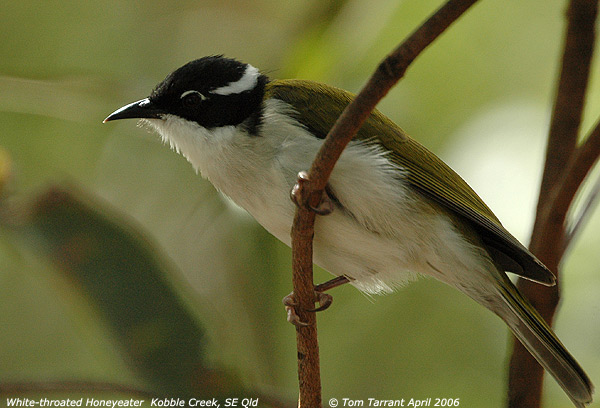
White-throated Honeyeater (Melithreptus albogularis) by Tom Tarrant
How about “albicauda“–White-tailed Shrike-Tyrant, White-tailed Blue Flycatcher, White-tailed Lark, White-tailed Hawk? Or “albogularis“–White-throated Jacamar, Rufous-banded Honeyeater, White-throated Pewee, White-throated Canary, White-throated Laughingthrush, White-throated Screech Owl, White-throated Honeyeater, White-throated Francolin, White-throated Caracara, White-throated Treerunner, White-spotted Fantail, White-throated Seedeater, White-throated Kingbird, White-chested White-eye? That last group was not all “white-throated,” in name, but they have white throats.
We know that Adam named the birds and other critters as the Scripture tells us:
Out of the ground the LORD God formed every beast of the field and every bird of the air, and brought them to Adam to see what he would call them. And whatever Adam called each living creature, that was its name. So Adam gave names to all cattle, to the birds of the air, and to every beast of the field. But for Adam there was not found a helper comparable to him. (Genesis 2:19-20 NKJV)

Blue-throated Bee-eater (Merops viridis) by Ray
Did Adam use scientific names? I doubt it. Adam didn’t have to go though all this. Today the ornithologist (those who study birds) use this method of naming along with a common name in whatever language they speak.
Thought you might find it interesting to see some of the species’ second scientific names:
Colors:
albus/alba, white; cf albino, ater/atra, matt black, brachy-, short (Greek), brunne-, brown, caeruleus, blue, canus, grey, chloro-, green or yellow (Greek), cinerea-, grey or ash-coloured; cf cinders, crocus, cyan, blue, erythro-, red (Greek), flava, yellow, fuscus/fusca, dusky, guttatus, speckled or spotted, haema-, blood-red (Greek); cf haemoglobin, leuco-, white (Greek), lineatus, lined or striped, livia, blue-grey, longi-, long, luteus/lutea, yellow, major, greater, mega-, great (Greek), melas, black (Greek); cf melanistic, minor, lesser, niger/nigra, glossy black; cf negro, punctatus, spotted; cf punctuation, pusilla, tiny, rosea, rosy, ruber, red, rufus/rufa, red, striatus/striata, striped, versicolor, many-collored, varied, viridis, green, albogularis – White-throated
Countries:
abyssinicus, africana, americana, angolensis, antarctica,
Characteristics:
cauda, tail, –cephalus, head (Greek), –ceps, capped, headed, cilla, tail, collis, neck, cristatus, crested, dactyl, finger or toe (Greek), frons, front, i.e. forehead, –gularis, throat, –ops, eye, –opsis, face, ptera, wing (Greek), –rhynchos, bill (Greek), –rostris, bill, torquatus, collared
Names are important and have meaning. Christ was named long before He was born. It was foretold.
Now all this was done, that it might be fulfilled which was spoken of the Lord by the prophet, saying, Behold, a virgin shall be with child, and shall bring forth a son, and they shall call his name Emmanuel, which being interpreted is, God with us. (Matthew 1:22-23 KJV)
After this manner therefore pray ye: Our Father which art in heaven, Hallowed be thy name. (Matthew 6:9 KJV)
And in his name shall the Gentiles trust. (Matthew 12:21 KJV)
And Jesus came and spake unto them, saying, All power is given unto me in heaven and in earth. Go ye therefore, and teach all nations, baptizing them in the name of the Father, and of the Son, and of the Holy Ghost: Teaching them to observe all things whatsoever I have commanded you: and, lo, I am with you alway, even unto the end of the world. Amen.
(Matthew 28:18-20 KJV)
(Some information from Scientific bird names explained and How Do Birds Get Their Names?)
Also see: Story behind the common names of birds
Out of the ground the LORD God formed every beast of the field and every bird of the air, and brought them to Adam to see what he would call them. And whatever Adam called each living creature, that was its name. So Adam gave names to all cattle, to the birds of the air, and to every beast of the field… (Genesis 2:19-20a NKJV)
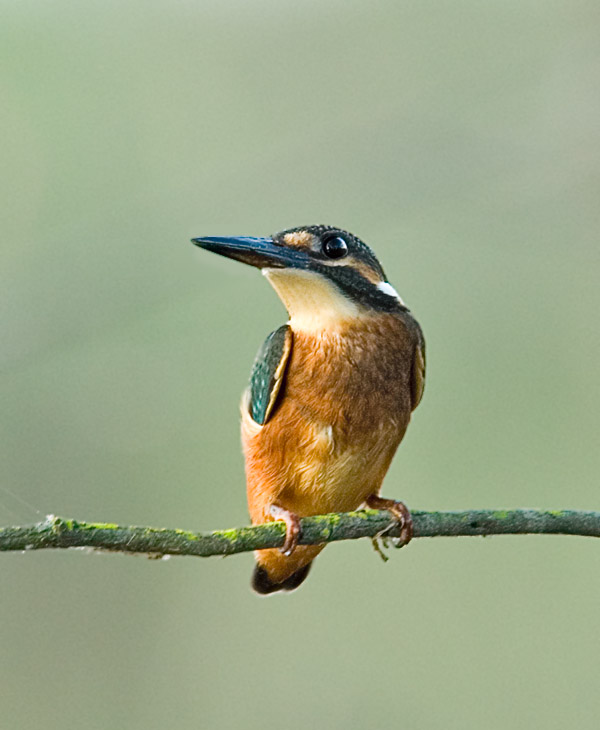
Common Kingfisher by Phil Kwong
It would be nice to know which birds Adam named and what he named them. Today, the birds we see around the world are variations from those original bird kinds. The names that they now have are different, but, if Adam were to name the birds living today, do you think he might use these current names on the birds?
Below are some bird names that have caught my attention and you can almost visualize something about them:
A – Amazon, Antbird, Antpitta, Antshrike, Antvireo, Antwren, Apostlebird, Awlbill
B – Babbler, Bamboowren, Barbtail, Barbthroat, Bare-eye, Barwing, Baywing, Bee-eater, Bellbird, Berryeater, Berrypecker, Bird-of-paradise, Bishop, Blackbird, Blackcap, Blackeye, Black-headed, Blackstart, Blackthroat, Bleeding-heart, Bluebill, Bluewing, Bluebird, Bluebonnet, Bluetail, Bluethroat, Boatbill, Bowerbird, Brilliant, Bristlebill, Bristlebird, Broadbill, Bronzewing, Brushrunner, Bushbird, Bush-hen
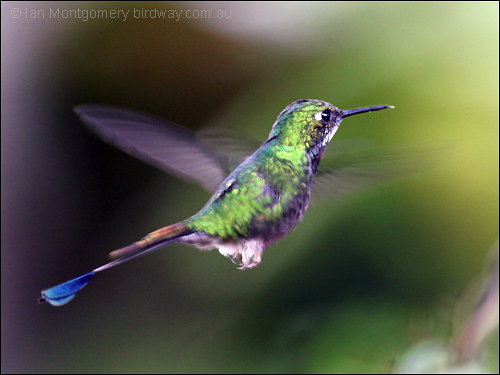
Booted Racket-tail (Ocreatus underwoodii) by Ian
C – Canvasback, Cardinal, Catbird, Chat, Chatterer, Cicadabird, Comet, Conebill, Cowbird, Creeper, Crestentchest, Crimsonwing, Crossbill, Cuckoo
D – Darkeye, Darter, Dipper, Dollarbird, Dove
E – Earthcreeper, Emerald
F – Fairy, Fairy-bluebird, Fairywren, Fantail, Fieldwren, Figbird, Finfoot, Fireback, Firecrest, Firecrown, Fire-eye, Firefinch, Firetail, Firethroat, Flamecrest, Flatbill, Flicker, Flowerpecker, Flowerpiecer, Flufftail, Flycatcher, Foliage-gleaner, Forktail, Friarbird, Frigatebird, Frogmouth, Fruitcrow, Fruiteater, Fruithunter
G – Gnatcatcher, Gnatwren, Go-away-bird, Goldcrest, Goldenback, Goldeneye, Goldenthroat, Goldfinch, Grassbird, Grassquit, Grasswren, Greytail, Groundcreeper, Groundpecker, Guineafowl
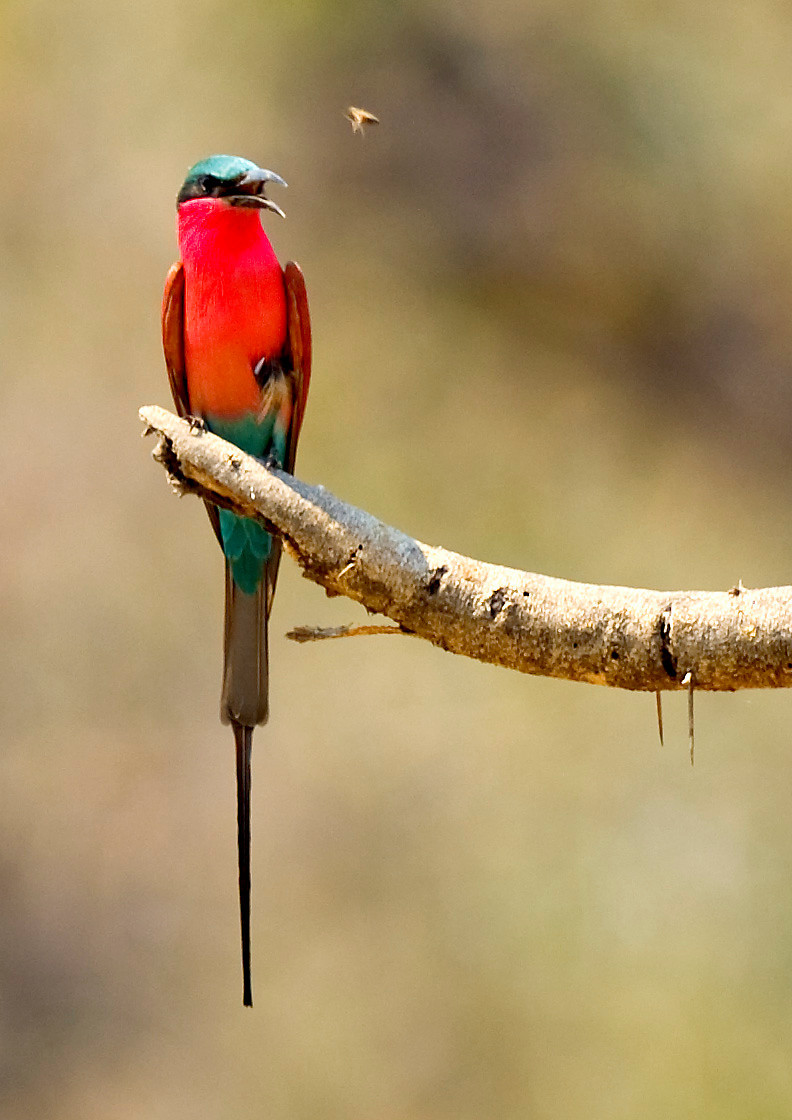
Carmine BeeEater (Merops nubicus or nubicoides) by Marc at Africaddict
H – Hardhead, Helmetcrest, Helmetshrike, Hermit, Hillstar, Hobby, Honeybird, Honeycreeper, Honeyeater, Honeyguide, Hookbill, Hornbill, Hummingbird
J – Jewel-babbler, Jewelfront, Junglefowl
K – Kingbird, Kingfisher, Kite, Knot,
L – Laughingthrush, Leafbird, Leaftosser, Longbill, Longclaw, Longtail, Lovebird
M – Marshbird, Metaltail, Mockingbird, Monarch, Morepork, Mountaingem, Mourner, Mousebird, Mudnester
N – Needletail, Nighthawk, Nunbird, Nutcracker, Nuthatch
O – Oilbird, Openbill, Ovenbird, Oxpecker, Oystercatcher
P – Palmchat, Palmcreeper, Pewee, Pilotbird, Pintail, Prickletail, Puffback, Puffbird, Puffleg
R – Racket-tail, Rail, Razorbill, Recurvebill, Redhead, Redwing, Rockfinch, Rockfowl, Rockjumper, Rockrunner, Rockwarbler, Rockwren, Roller, Rushbird
S – Sabrewing, Saddleback, Sanderling, Sandgrouse, Sandpiper, Sapphire, Sapphirewing, Sapsucker, Screamer, Screech, Scrubbird, Scrubfowl, Scrubtit, Scrubwren, Secretarybird, Seedcracker, Seedeater, Sheathbill, Shieldbill, Shoebill, Shortwing, Shoveler, Sicklebill, Silktail, Silverbird, Skimmer, Snowcock, Snowfinch, Softtail, Solitaire, Spadebill, Spatuletail, Spiderhunter, Spinebill, Spinetail, Spoonbill, Standardwing, Starfrontlet, Starthroat, Stilt, Stichbird, Straightbill, Streamcreeper, Streamertail, Stubtail, Sugarbird, Sunangel, Sunbeam, Sunbird, Sunbittern, Sungem, Surfbird, Swift
T – Tailorbird, Tattler, Thicketbird, Thick-knee, Thistletail, Thornbill, Tinkerbird, Trainbearer, Treecreeper, Treehunter, Treepie, Treerunner, Treeswift, Trembler, Triller, Tropicbird, Trumpeter, Tuftedcheek, Tyrant
U – Umbrellabird
V – Violetear, Visorbearer
W – Wagtail, Wallcreeper, Warbler, Waxbill, Waxwing, Weaver, Weebill, Wheatear, Whipbird, Whistler, White-eye, Whiteface, Whitethroat, Whitetip, Widowbird, Winter, Wiretail, Woodcock, Woodcreeper, Woodhen, Woodhaunter, Woodpecker, Woodstar
Y – Yellowbrow, Yellowhammer, Yellowlegs, Yellowthroat
The slide show has just some of the Passerines (Song Birds) whose names might have been easy. I’ll save the non-Passerines for later. Tried not to use too many colors because that is also for other blogs.
*
*
See Also:
Bird Name Challenges
Variation within Created Kinds
Species and Kinds
Explaining Diversity within Created Kinds
*


 Birds of the Bible For Kids