Hymns With Birds and Creation – We Sing… Verse 2

We Sing the Mighty Power of God – Verse 2

We sing the goodness of the Lord that filled the earth with food;

Green-tailed Sunbird (Aethopyga nipalensis) by Peter Ericsson

he formed the creatures with his word and then pronounced them good.

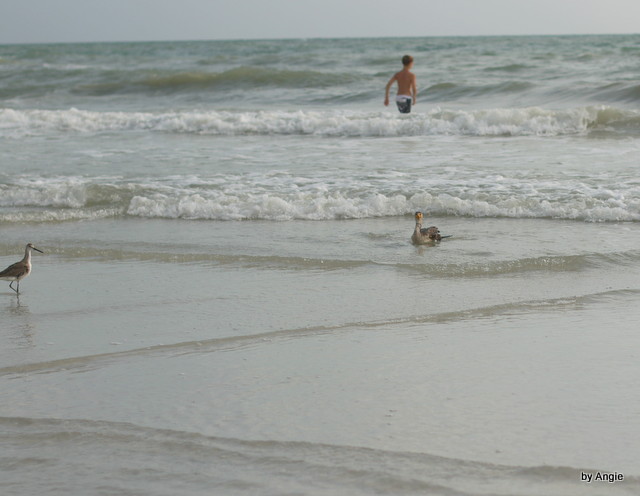
Laughing Gull and Skimmer by Lee

Lord, how your wonders are displayed, where’er we turn our eyes,

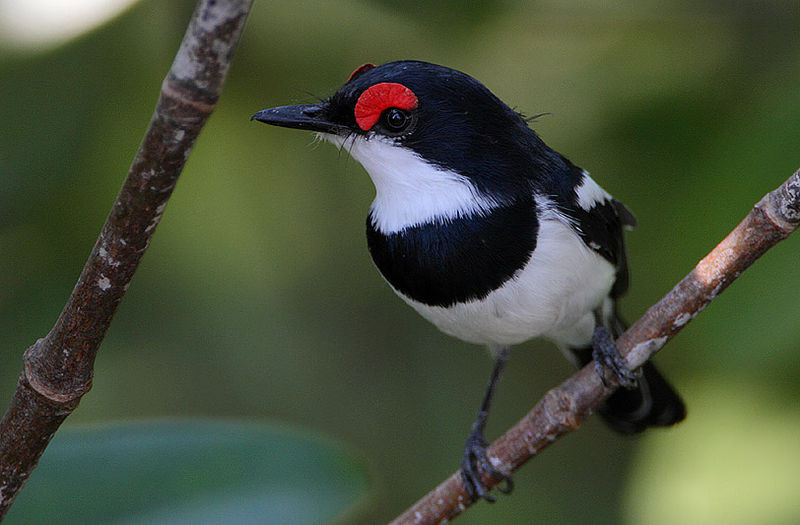
Brown-throated Wattle-eye (Platysteira cyanea) Male ©WikiC

if we survey the ground we tread or gaze upon the skies.

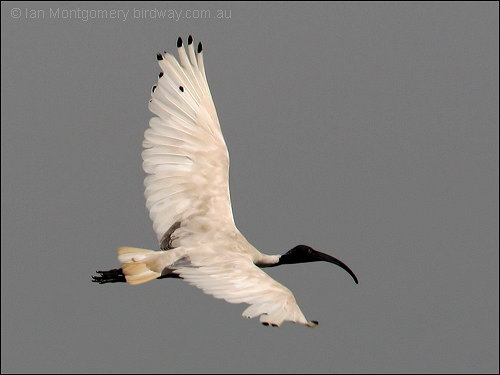
Australian White Ibis (Threskiornis molucca) by Ian

By Isaac Watts

Hymns With Birds and Creation – We Sing… Verse 1

We Sing the Mighty Power of God – Verse 1

We sing the mighty power of God that made the mountains rise, 

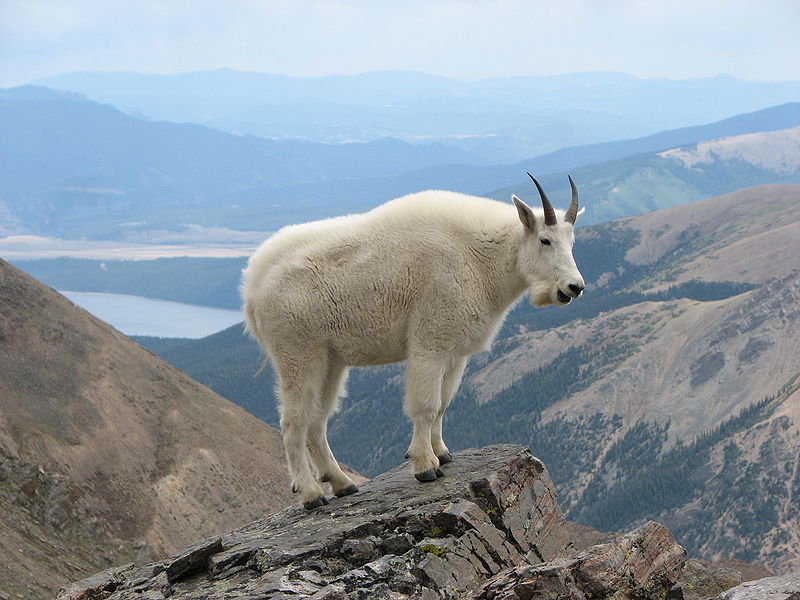
Wild Goat - Mountain Goat Mount Massive CO ©WikiC

Wild Goat – Mountain Goat Mount Massive CO ©WikiC

that spread the flowing seas abroad and built the lofty skies. 

Turkey Vulture flying by - LPP

Turkey Vulture flying by – LPP

We sing the wisdom that ordained the sun to rule the day; 

Sunrise and USS New York at Mayport Naval Base by Lee

the moon shines full at his command, and all the stars obey. 

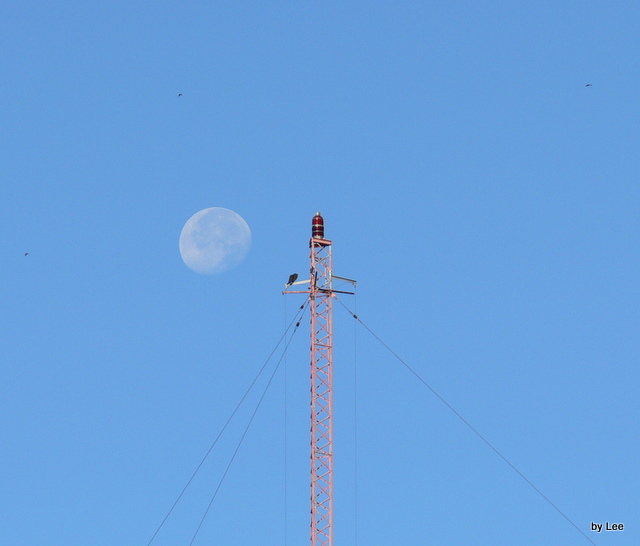
Osprey on Tower with Moon setting behind it- By Lee

Osprey on Tower with Moon setting behind it- By Lee

Stay Tuned for More Verses for this Hymn!

Beautiful Scissor-Tailed Birds

In JJSJ’s [Dr. Jim] article, Scissor-Tailed Flycatcher, Oklahoma’s Long-tailed State Bird, he introduced the beautiful Scissor-Tailed Flycatcher. I would like to show you three more “scissor-tailed” birds.

The word “Scissor” is not mentioned in the Bible, at least that I can find. Yet, God told us in His Word:

“This shall be written for the generation to come: and the people which shall be created shall praise the LORD.” (Psalms 102:18 KJV)

“Let them praise the name of the LORD: for he commanded, and they were created.” (Psalms 148:5 KJV) [Refers to the heavens and these beautiful birds fly in the sky, which was created.


Scissor-tailed Hummingbird (Hylonympha macrocerca)

Scissor-tailed Hummingbird from Speak up for the Voices

Scissor-tailed Hummingbird (Hylonympha macrocerca) Endangered

Speak Up For The Voices Article About Scissor-tailed Hummingbird


Scissor-tailed Kite (Chelictinia riocourii) ©WikiC

Scissor-tailed Kite (Chelictinia riocourii) ©WikiC

Scissor-tailed Kite (Chelictinia riocourii)

Today we rode over to Melbourne, Florida (90 miles) for the one-year checkup of my back surgery. We were blessed to see one of the Scissor-tailed Kites flying along in the field. They are here in Florida for a few months, starting in April or May. We always enjoy watching them, especially when they turn and you get a glimpse of the “scissor” tail.

Scissor-tailed Kite (Chelictinia riocourii) ©Flickr Lawrence C

Scissor-tailed Kite (Chelictinia riocourii) ©Flickr Ron Knight


Scissor-tailed Nightjar (Hydropsalis torquata)

Scissor-tailed Nightjar (Hydropsalis torquata) by ©AGros

Scissor-tailed Nightjar (Hydropsalis torquata) ©WikiC

Scissor-tailed Nightjar (Hydropsalis torquata) ©WikiC


Check these links:

Scissor-tailed Nightjar (Hydropsalis torquata)

Scissor-tailed Hummingbird (Hylonympha macrocerca)

Scissor-tailed Kite (Chelictinia riocourii)

Scissor-tailed Flycatcher (Tyrannus forficatus)

Scarlet Birds

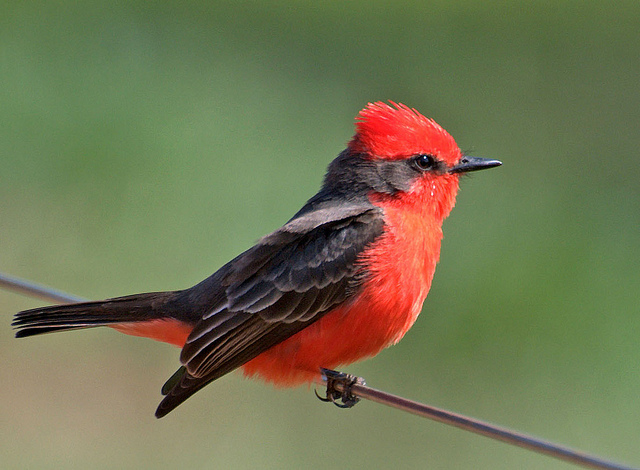
Vermilion Flycatcher (Pyrocephalus rubinus) by Dario Sanches

Scarlet Flycatcher (Pyrocephalus rubinus) by Dario Sanches

She is not afraid of snow for her household, For all her household is clothed with scarlet. (Proverbs 31:21 NKJV)


Avian and Attributes – Scarlet

SC’ARLET, n.
1. A beautiful bright red color, brighter than crimson.
2. Cloth of a scarlet color.
All her household are clothed with scarlet. Prov 31.
SC’ARLET, a. of the color called scarlet; of a bright red color; as a scarlet cloth or thread; a scarlet lip.


Scarlet Birds

Scarlet Finch

Scarlet Finch (Haematospiza sipahi) by Nikhil Devasar

Scarlet Finch (Haematospiza sipahi) by Nikhil Devasar

Scarlet Flycatcher

Scarlet Flycatcher (Pyrocephalus rubinus) by Dario Sanches

Scarlet Ibis

Scarlet Ibis (Eudocimus ruber) ©whm.ac.uk

Scarlet Macaw

Scarlet Macaw (Ara macao) by Lee at Brevard Zoo

Scarlet Macaw (Ara macao) by Lee at Brevard Zoo

Scarlet Minivet

Scarlet Minivet (Pericrocotus speciosus) by Ian

Scarlet Myzomela

Scarlet Honeyeater or Myzolema (Myzomela sanguinolenta) by Tom Tarrant

Scarlet Robin

Scarlet Robin (Petroica boodang) by Ian

Scarlet Robin (Petroica boodang) by Ian

Scarlet Tanager

Scarlet Tanager (Piranga olivacea) by Kent Nickell

Scarlet Tanager (Piranga olivacea) by Kent Nickell

“And they stripped Him and put a scarlet robe on Him. When they had twisted a crown of thorns, they put it on His head, and a reed in His right hand. And they bowed the knee before Him and mocked Him, saying, “Hail, King of the Jews!” (Matthew 27:28-29 NKJV)


More Avian and Attributes

Birds whose first name starts with “S”

Wordless Toucan

*
[Definitions from Webster’s Dictionary of American English (1828), unless noted. Bird info from Wikipedia plus.]

Tangled Up Owls

Here are a couple of videos of two Owls in trouble. It is amazing to watch how they react to the people trying to free them.

The first one is trapped in fishing line.

This Great Horned Owl is caught in a Soccer Net.

Not sure if these owls prayed, but I know these verses are good for us when we are “in a pickle.”

“But You, O LORD, do not be far from Me; O My Strength, hasten to help Me!” (Psalms 22:19 NKJV)

“Behold, the eye of the LORD is on those who fear Him, On those who hope in His mercy, To deliver their soul from death, And to keep them alive in famine. Our soul waits for the LORD; He is our help and our shield. For our heart shall rejoice in Him, Because we have trusted in His holy name. Let Your mercy, O LORD, be upon us, Just as we hope in You.” n(Psalms 33:18-22 NKJV)


Bible Birds – Immature Cormorant

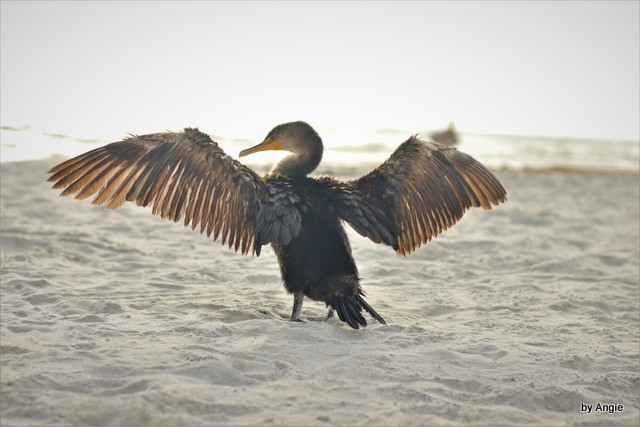
Drying off

The Cormorant is a bird mentioned four times in the Bible. You can read about them in Bible Birds – Cormorant and Birds of the Bible – Cormorants.

“And the little owl, and the cormorant, and the great owl,” (Leviticus 11:17 KJV)

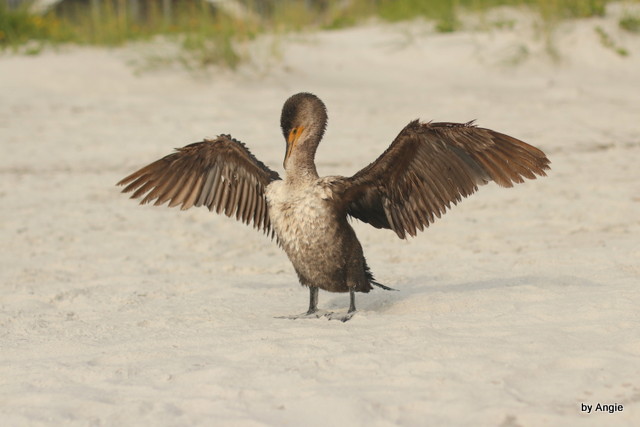
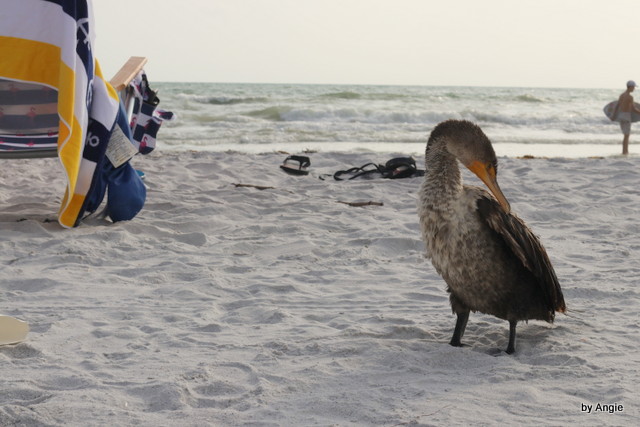
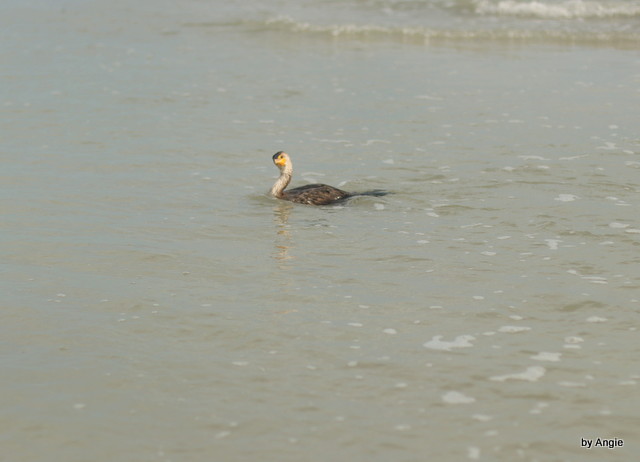
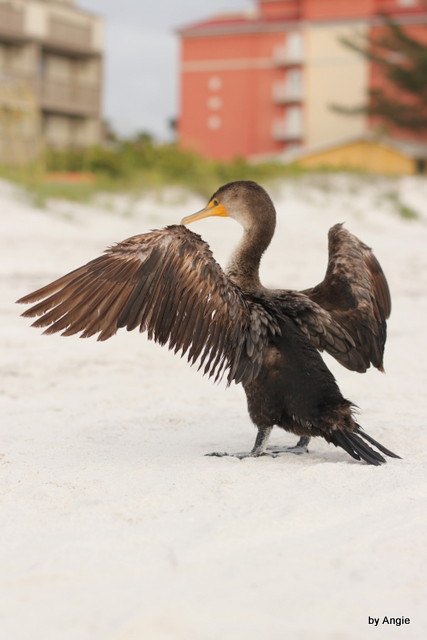
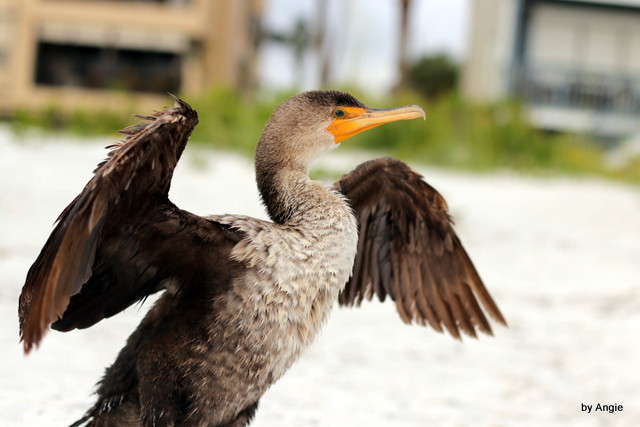
Today, I would like too share some photos of an immature Cormorant who seemed to have become to wet to fly back to land to dry off. It sort of swam to shore and then dried its wings. An experienced Cormorant wouldn’t have waited so long to head to shore.

When we are young, sometimes we forget what we were told, and then find ourselves in trouble.

“Hear my words, O ye wise men; and give ear unto me, ye that have knowledge.” (Job 34:2 KJV)

Looking for dry land

*

Double-crested Cormorant wading in to shore

*

Yeah! I made it! Double-crested Cormorant by Angie at beach

*

Double-crested Cormorant by Angie at beach

*

Drying off

*

Not even concerned about the people nearby

*

Double-crested Cormorant starting to feel better – by Angie at beach

Teach me good judgment and knowledge, For I believe Your commandments.” (Psalms 119:66 NKJV)

Bible Birds – Cormorant

Birds of the Bible – Cormorants

Wordless Birds

What’s For Breakfast?

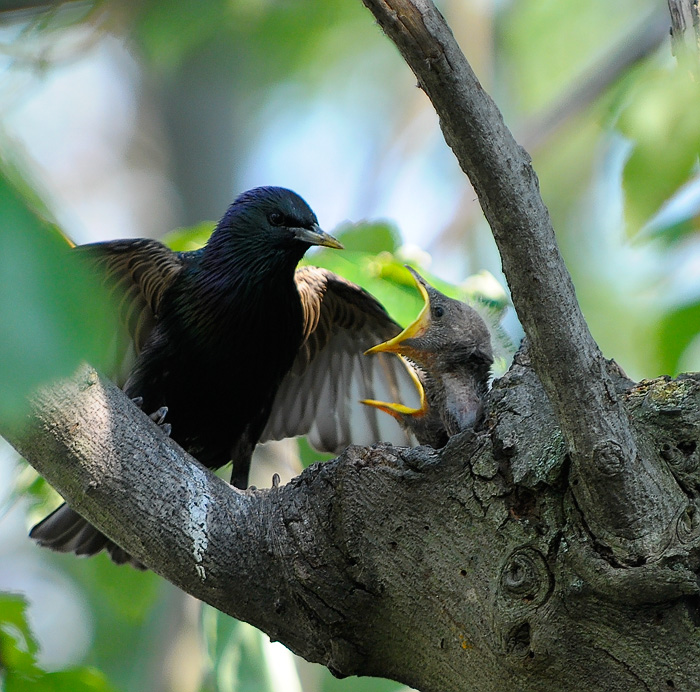
Common Starling (Sturnus vulgaris) at Nest by Anthony747

Common Starling (Sturnus vulgaris) at Nest by Anthony747

*

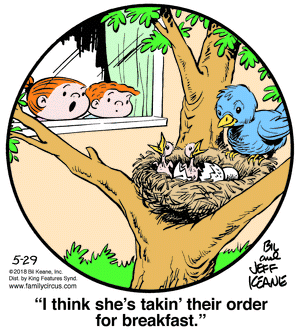
Family Circus - Taking Orders

Family Circus – Taking Orders

*

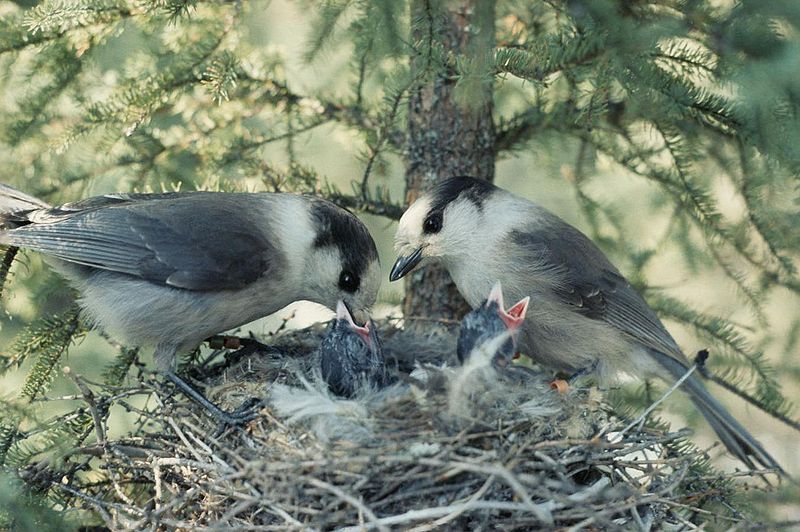
Grey Jay (Perisoreus canadensis) Feeding at Nest WikiC

Grey Jay (Perisoreus canadensis) Feeding at Nest WikiC

“Consider the ravens [birds], for they neither sow nor reap, which have neither storehouse nor barn; and God feeds them. Of how much more value are you than the birds?” (Luke 12:24 NKJV)

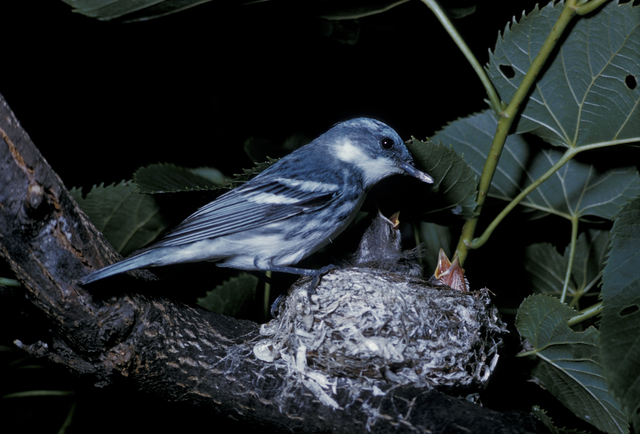
Cerulean Warbler (Setophaga cerulea) at nest ©L Walkinshaw

“I know all the birds of the mountains, And the wild beasts of the field are Mine.” (Psalms 50:11 NKJV)

Wordless Woodpecker

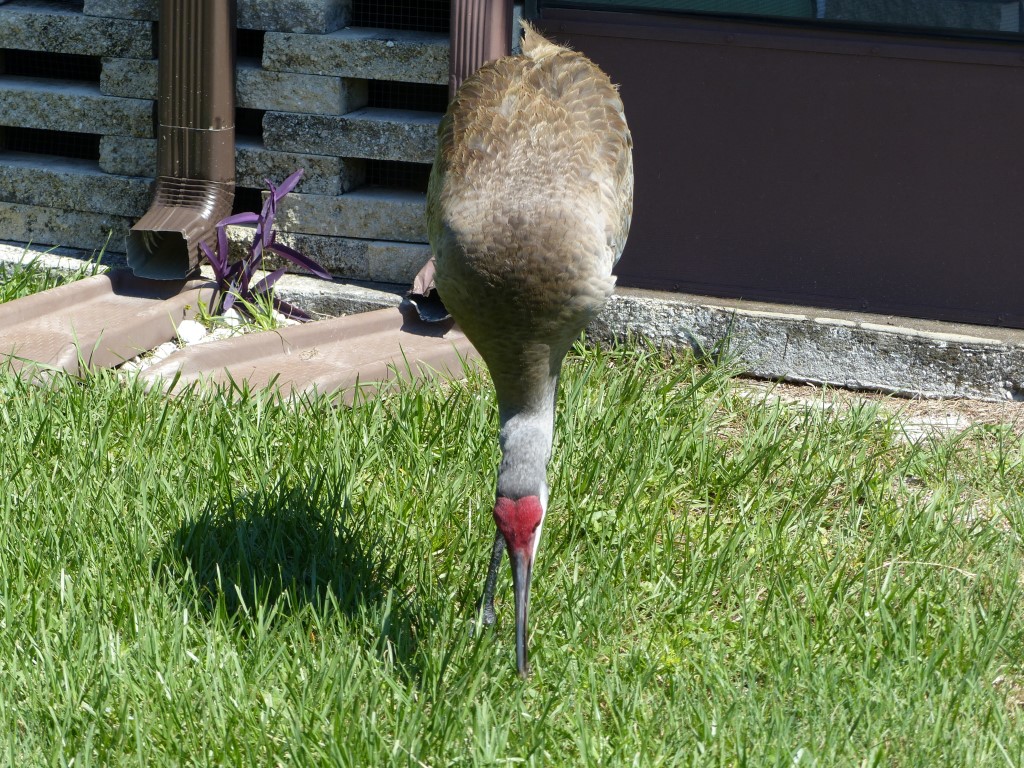
Bible Birds – Sandhill Cranes In The Yard

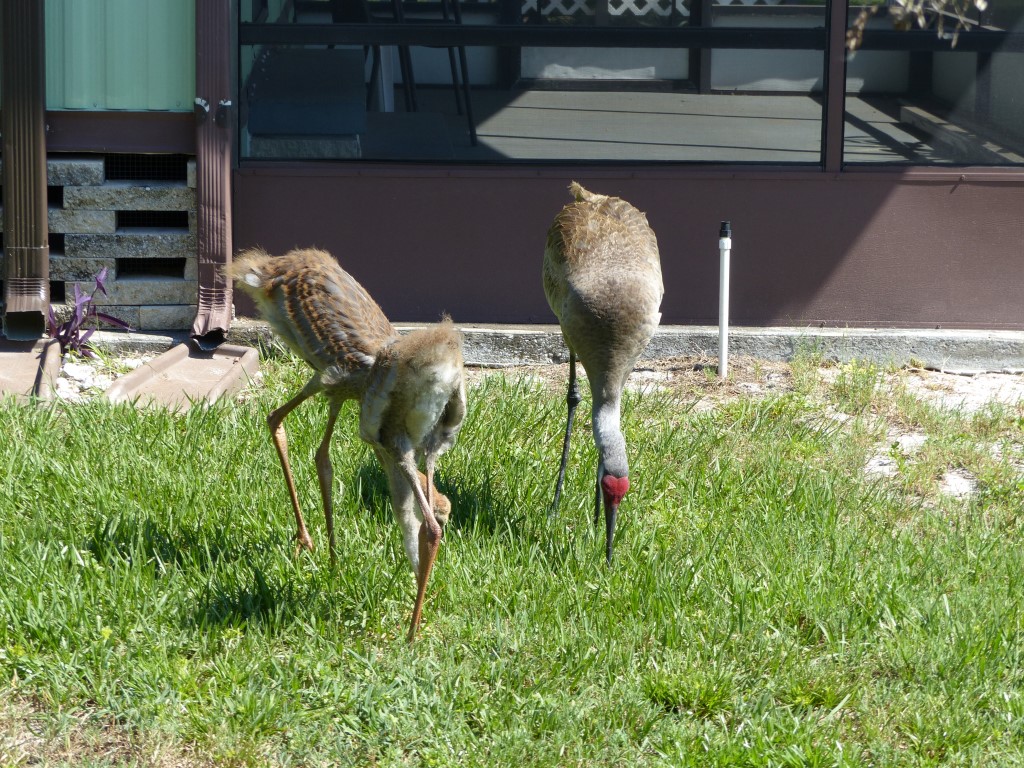
Sandhill Cranes (Grus canadensis) in Sideyard May 1, 2015, by Lee

Like a crane or a swallow, so I chattered; I mourned like a dove; My eyes fail from looking upward. O LORD, I am oppressed; Undertake for me! (Isaiah 38:14 NKJV)

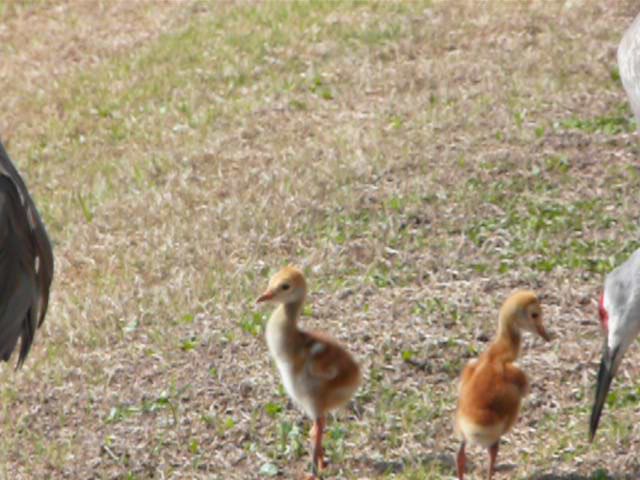
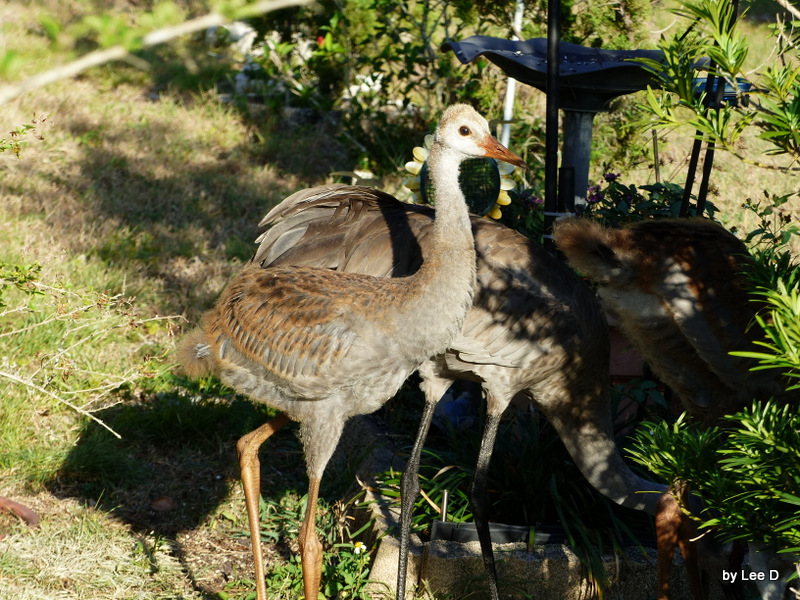
Sandhill Crane “Colts” Taken across the street in our community pond.

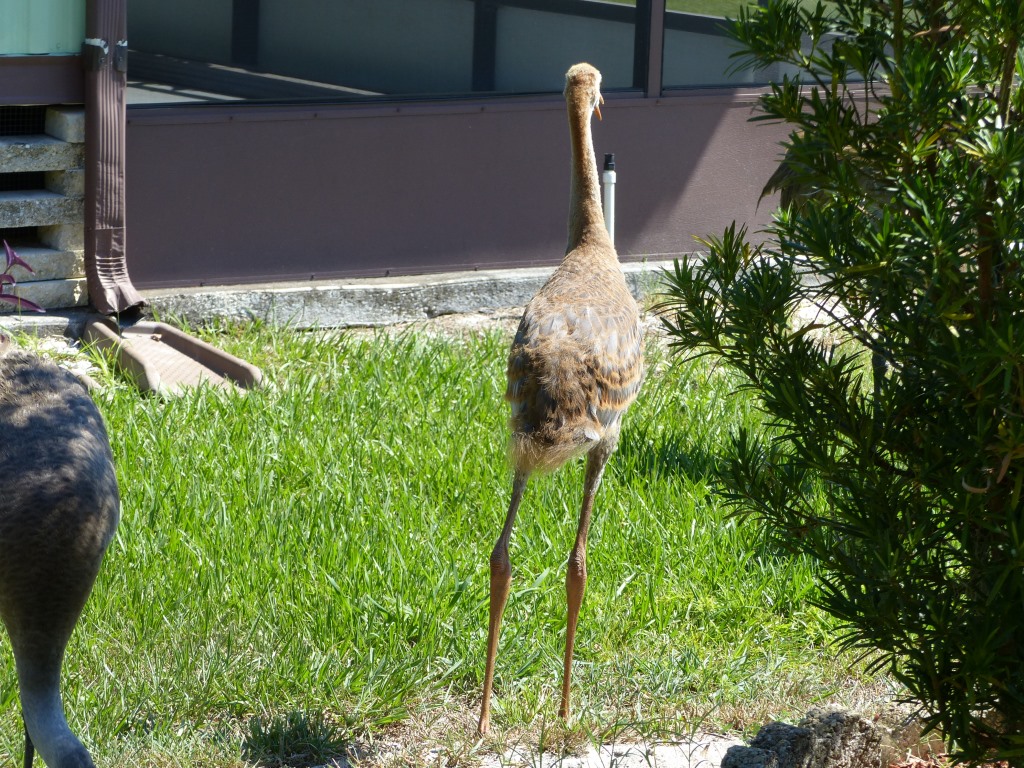
Over the years we have lived here in Central Florida, we have been visited by Sandhill Cranes and their little ones. They are called “colts” when they are young. The ones in the above picture would be considered “juveniles.”

Leaving

It is enjoyable to watch them mature and eventually become red on the top.

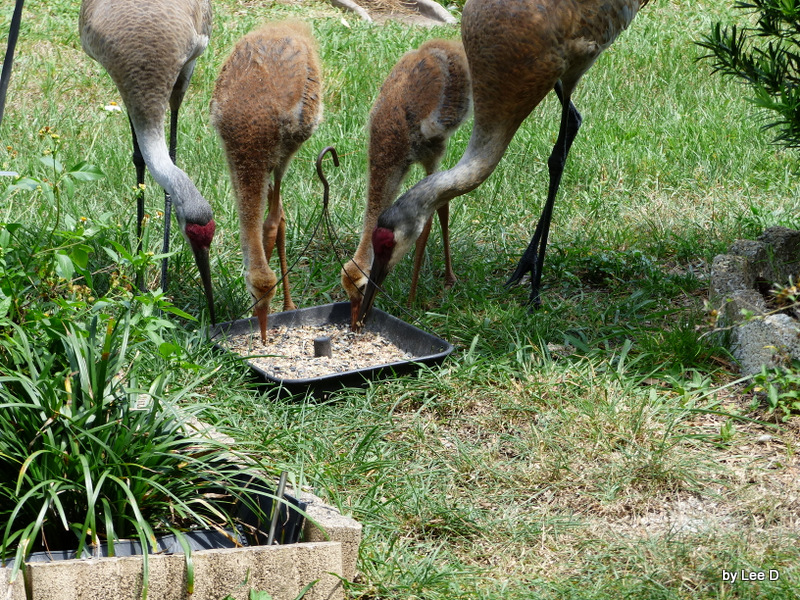
Sandhill Cranes in Sideyard 5-1-15 by Lee

We are not “technically” supposed to feed them, but yet we can feed all the other birds. So how do you keep them out of your feeders. Hide them? No. The Lord made all of His creatures and promised to see that they are fed.

Oh, My, The feeder is down.

My flat feeders hang about 18 inches above the ground and Sandhill Cranes [adults] stand about:

SIZE: Body, 31.5 to 47.2 in; wingspan, 5 to 6 ft”

WEIGHT: 6.5 to 14 lbs

AVERAGE LIFE SPAN IN THE WILD: 20 years (Natl Geo)

Sandhill Cranes with Youngsters 4-26-16

See More:

ABC’s of the Gospel

Most Adorable Eaglet from Decorah Eagles

“Who satisfieth thy mouth with good things; so that thy youth is renewed like the eagle’s.” (Psalms 103:5 KJV)

“Out of the ground the LORD God formed every beast of the field and every bird of the air, and brought them to Adam to see what he would call them. And whatever Adam called each living creature, that was its name.” (Genesis 2:19 NKJV)

What an interesting video! Enjoy!

Repeated Here

God’s Recipe for the Fiery-throated Hummingbird

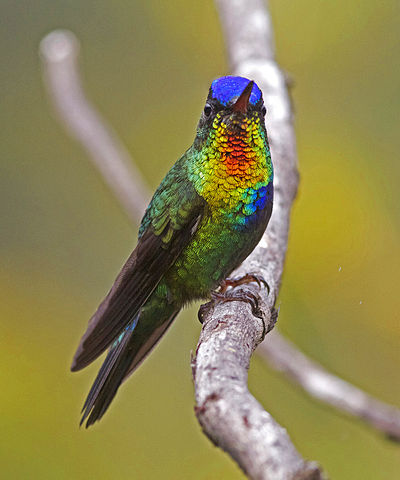
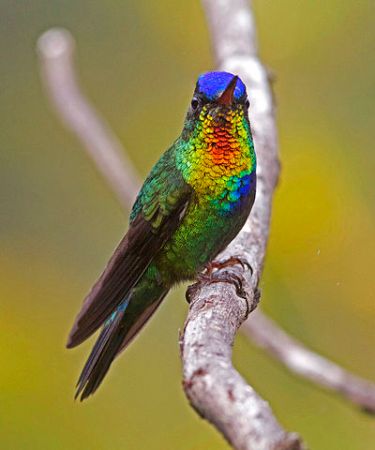
Fiery-throated Hummingbird (Panterpe insignis) ©WikiC

The Fiery-throated Hummingbird (Panterpe insignis) is a medium-sized hummingbird which breeds only in the mountains of Costa Rica and western Panama. It is the only member of the genus Panterpe.

This is a common to abundant bird of montane forest canopy above 1400 m, and also occurs in scrub at the woodland edges and clearings.

This bird is 11 cm long and weighs 5.7 g. It has a straight black bill and dusky feet.
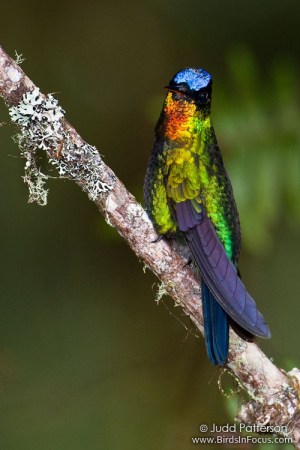
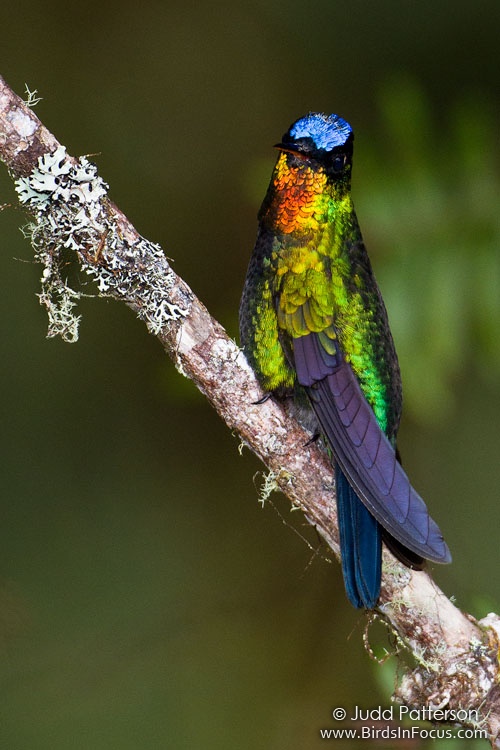
Fiery-throated Hummingbird (Panterpe insignis) by Judd Patterson

Fiery-throated Hummingbird (Panterpe insignis) by Judd Patterson

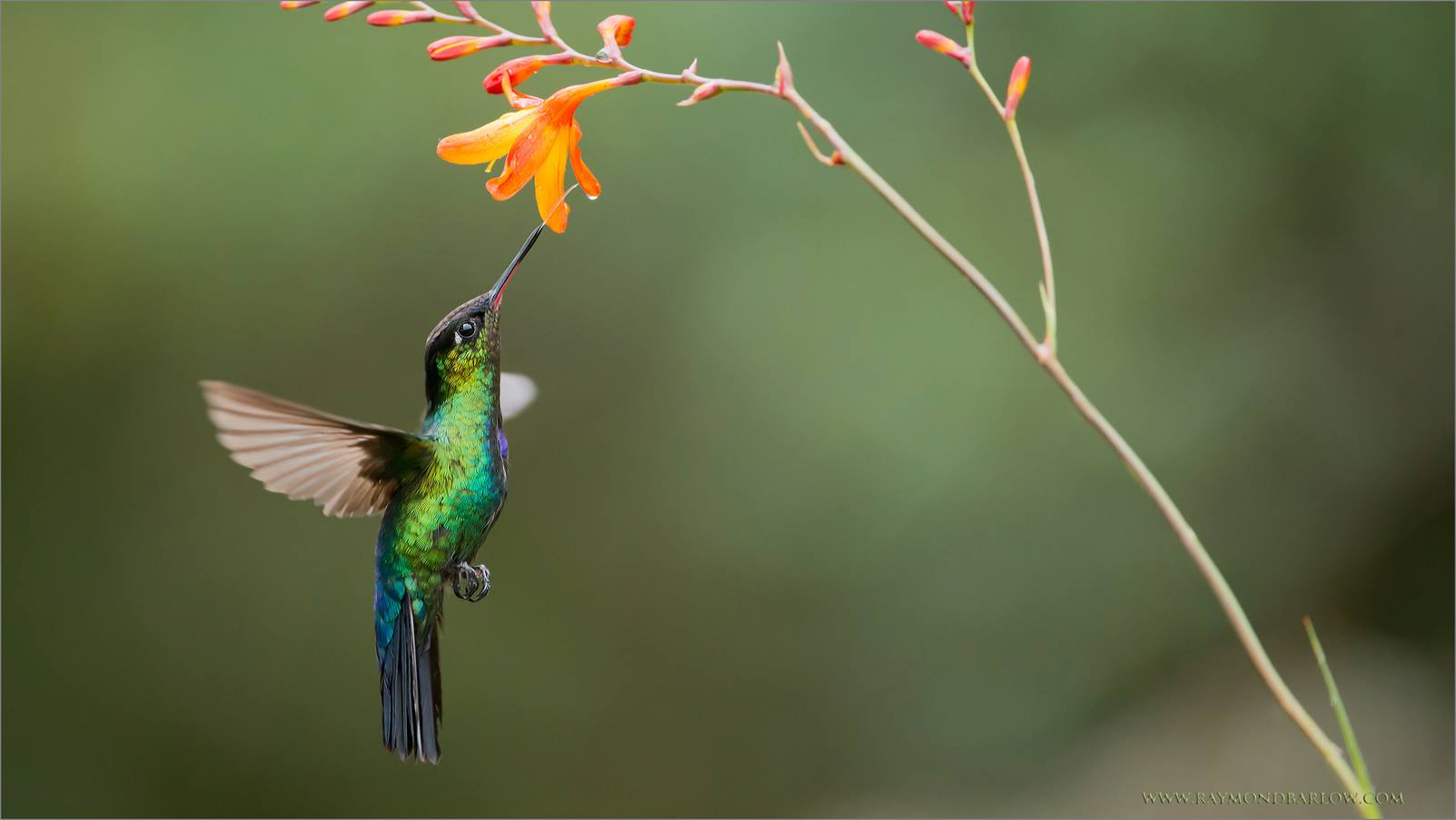
The adult fiery-throated hummingbird has shiny green body plumage, a blue tail, and a white spot behind the eye. It often looks dark, but when the light catches it at the right angle, it shows a brilliant blue crown, yellow-bordered bright orange throat, and violet-blue chest patch. The sexes are similar, but young birds have rufous fringes to the head plumage. The call is a high-pitched twittering.
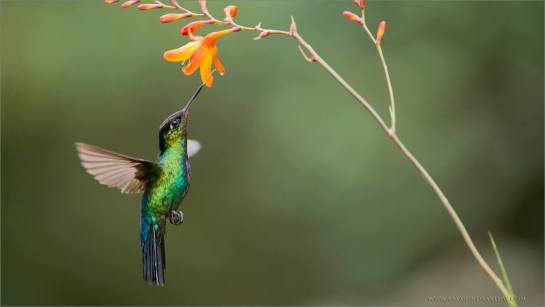
Fiery-throated Hummingbird in Flight ©Raymond Barlow

The female fiery-throated hummingbird is entirely responsible for nest building and incubation. She lays two white eggs in a bulky plant-fibre cup nest 2–4 m high at the end of a descending bamboo stem or on a rootlet under a bank. Incubation takes 15–19 days, and fledging another 20-26.
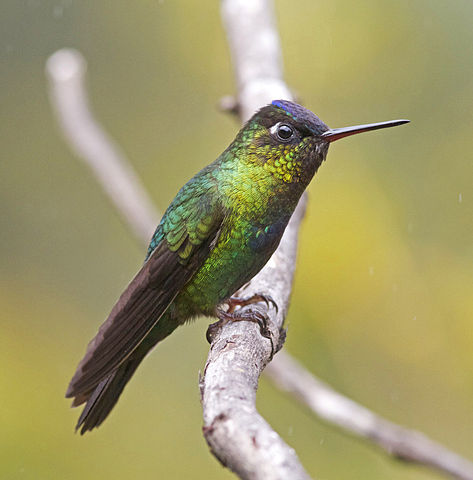
Fiery-throated Hummingbird (Panterpe insignis) Little color from side ©WikiC

The food of this species is nectar, taken from a variety of small flowers, including epiphytic Ericaceae and bromeliads. Like other hummingbirds it also takes small insects as an essential source of protein. Male fiery-throated hummingbirds defend flowers and scrubs in their feeding territories, and are dominant over most other hummingbirds. They will, however, allow females to share their food resources.

“In the beginning God created the heaven and the earth.” (Genesis 1:1 KJV)
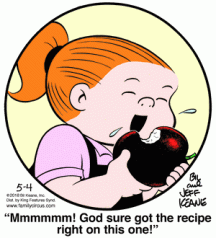
God’s Good Recipe For Birds

The Family Circus Artist surely came up with a great truth in this one. God’s “recipe” was Creation. His [God’s] wisdom is evident in all of his creation, especially the birds.

“For we know that the whole creation groans and suffers the pains of childbirth together until now.” (Romans 8:22 NASB)

What would this beautiful Fiery-throated Hummer look like if it weren’t under the curse of man’s sin?


Fiery-throated Hummingbird Panterpe insignis – Internet Bird Collection

Fiery-throated Hummingbird – Wikipedia

Fiery-throated Hummingbird – Neotropical Birds


Bible Birds – Ibis Introduction
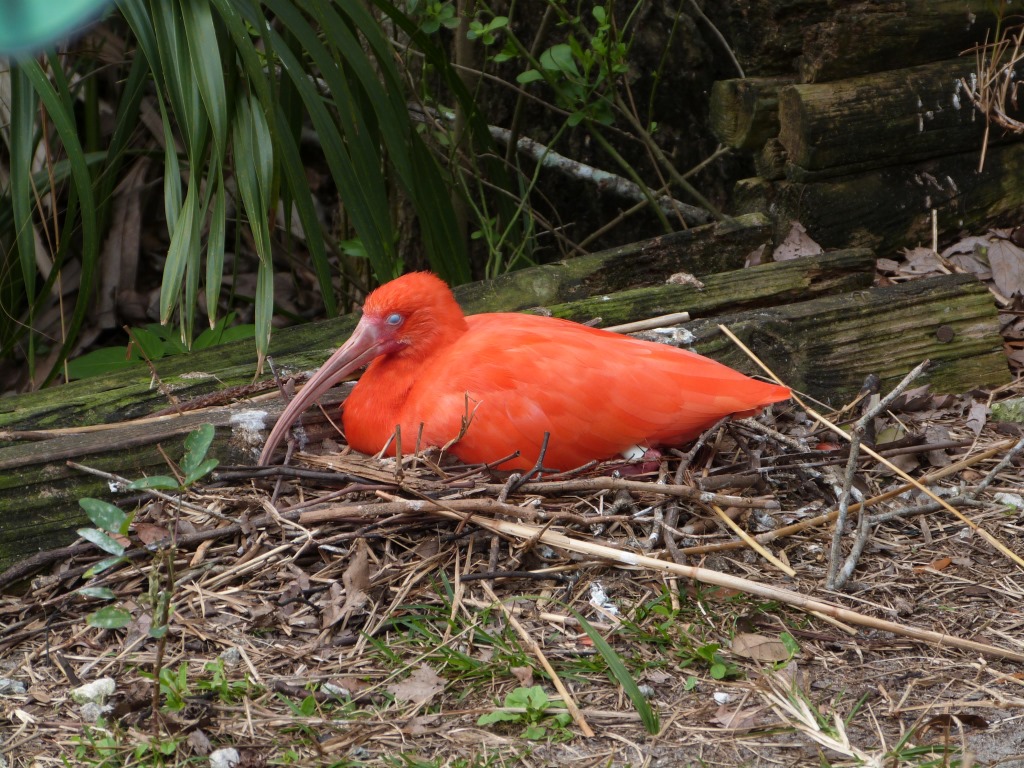
Scarlet Ibis (Eudocimus ruber) by Lee

“and for a long time birds and hedgehogs, and ibises and ravens shall dwell in it: and the measuring line of desolation shall be cast over it, and satyrs shall dwell in it.” (Isaiah 34:11 Brenton)
RELOCATED HERE

I.C.R.’s Days of Praise – Things Not Seen

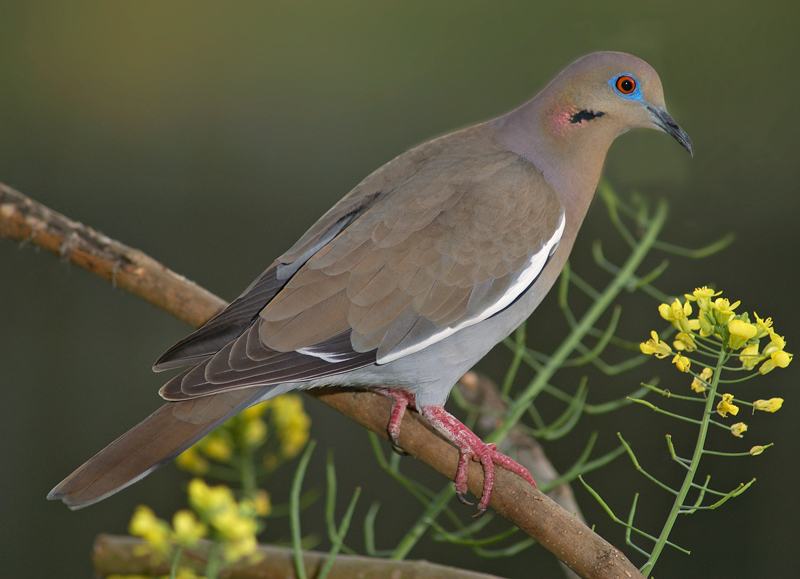
White-winged Dove (Zenaida asiatica) by Reinier Munguia

White-winged Dove (Zenaida asiatica) by Reinier Munguia

Things Not Seen

“By faith Noah, being warned of God of things not seen as yet, moved with fear, prepared an ark to the saving of his house; by the which he condemned the world, and became heir of the righteousness which is by faith.” (Hebrews 11:7)

The little phrase “things not seen” is used three times in the New Testament, and interestingly enough, these refer to the past, present, and future works of God with respect to the things that are seen.

At the beginning of the “faith chapter” of Hebrews occur these remarkable words: “Now faith is . . . the evidence of things not seen. . . . Through faith we understand that the worlds were framed by the word of God, so that things which are seen were not made of things which do appear” (Hebrews 11:1, 3). That is, the material things of this present world were not made of pre-existing materials; they were supernaturally created by the word of the Creator! These things that are now seen provide evidence (or better, the “conviction”) of the things not seen—that is, of God’s creative work completed in the past.

The “processes” that are now seen (as distinct from the “materials”) date especially from the time of the great Flood. The “things not seen as yet” by Noah—that is, the present atmospheric circulation, the present hydrological cycle, the present seasonal changes, and many other key phenomena of the present order—all were instituted in the days of Noah when “the world that then was, being overflowed with water, perished” (2 Peter 3:6).

Finally, “we look not at the things which are seen, but at the things which are not seen: for . . . the things which are not seen are eternal” (2 Corinthians 4:18). Just as surely as the materials and processes of the present world once were unseen but now are easily seen, so the future eternal world will soon be clearly seen when Christ returns. HMM


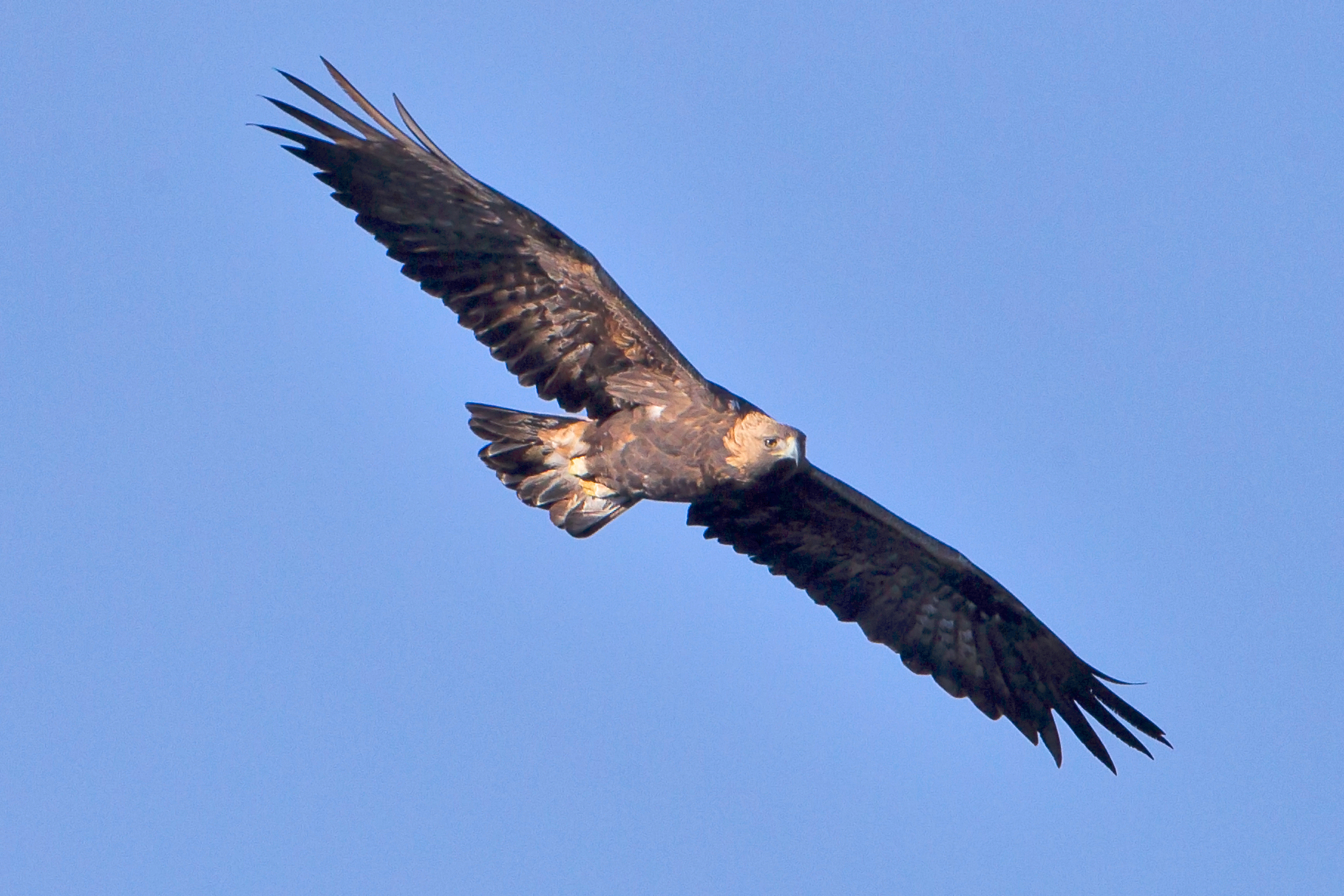
Golden Eagle (Aquila chrysaetos) Flying ©WikiC

Golden Eagle (Aquila chrysaetos) Flying ©WikiC

Lee’s Addition:

God’s Wisdom cannot be seen. As was mentioned in the last blog, God’s Recipe for the Brown-throated Wattle-eye, Creation came about by God speaking things into being. These birds did not evolve from this to that. No, God spoke, and they were. Full, complete, and ready to fly.
Wordless Toucan