Artistic Birds From Their Creator V

Lady Amherst's Pheasant (Chrysolophus amherstiae)

Lady Amherst’s Pheasant (Chrysolophus amherstiae)

“He has made everything beautiful in its time. Also He has put eternity in their hearts, except that no one can find out the work that God does from beginning to end. I know that nothing is better for them than to rejoice, and to do good in their lives,” Ecclesiastes 3:11-12 [NKJV]

The Lady Amherst’s Pheasant (Chrysolophus amherstiae) is a bird of the  Galliformes Order and the family Phasianidae. The genus name is from Ancient Greek khrusolophos, “with golden crest”. The English name and amherstiae commemorates Sarah Amherst, wife of…..

Continue Reading Here

William Wise – Two Suppers

Turkey Vulture; Walton County, Georgia by William Wise

Turkey Vulture; Walton County, Georgia by William Wise

Two Suppers

By William Wise of www.williamwisephoto.com

Revelation 19:17-18  And I saw an angel standing in the sun; and he cried with a loud voice, saying to all the fowls that fly in the midst of heaven, Come and gather yourselves together unto the supper of the great God;  18 That ye may eat the flesh of kings, and the flesh of captains, and the flesh of mighty men, and the flesh of horses, and of them that sit on them, and the flesh of all men, both free and bond, both small and great.

While running a 10K race with my 69-year-old father, I laughed as he looked up and shouted at a group of circling vultures and said, “Go away! I’m not dead yet!” Although they were waiting to dine on him, he wasn’t quite ready to be their supper.

King James Authorized 1611 Pulpit Folio

The Bible tells us (and yes, I believe it) that one day in the future, God is going to host two great suppers, or feasts. The first is the party of the century… no, the party of the millennia… no, the party of the ages! It is called the Marriage Supper of the Lamb. And all the followers of Jesus Christ will be given clean, white garments and enjoy the greatest wedding reception of all time.

Georgia Vultures by William Wise

Georgia Vultures by William Wise

But simultaneously, there is another feast. It is called the Supper of the Great God. Those who did not RSVP for the Marriage Supper of the Lamb, but lived for themselves, will be attendees at this gathering. For it is a gathering of fowls; of carrion crows and vultures to feed upon the slain who turned in battle against returning Messiah. But you need not attend that feast.

Turkey Vulture; Clarke County, Georgia by William Wise

Turkey Vulture; Clarke County, Georgia by William Wise

When you pass a roadside party of vultures dining on last night’s unlucky road crossing, just remind yourself, “I’d rather feast at the Marriage Supper of the Lamb than be feasted upon at the Supper of the Great God.”


We are excited to introduce a new Photographer/Writer to the Lee’s Birdwatching Adventures blog. Not only is he a great Christian photographer, but a blogger who writes about Creation topics also. Welcome, William!

Check out his website at: http://www.williamwisephoto.com/index.html

Artistic Birds From Their Creator IV

1. Himalayan Monal

Himalayan Monal (Lophophorus impejanus)

In the Artistic Birds – Galliformes Order I, you were introduced to some of the birds the Bare-faced Curassow, Crested Guineafowl, Gambel’s Quail, and the beautifully designed Golden Pheasant.

The Himalayan Monal definitely can be described by this verse, relating to the design of the tabernacle.

“He has filled them with skill to do all manner of work of the engraver and the designer and the tapestry maker, in blue, purple, and scarlet thread, and fine linen, and of the weaver—those who do every work and those who design artistic works.” (Exodus 35:35 NKJV) [emphasis added]

If you missed the introduction, we are referring to the Master Designer, the Lord Jesus Christ…..

Continue Reading Here

Artistic Birds From Their Creator III

Golden Pheasant (Chrysolophus pictus) WikiC

Golden Pheasant (Chrysolophus pictus) WikiC

As mentioned, these “Artistic Birds” will be presented in “sort of” the Taxonomic Order. The first few orders do not have any particularly “artistic” birds. They were mostly created to blend in with their environment. Most likely for protection. These first Orders are:

But when we arrive at the Galliformes Order, the Creator’s Artistically Colorful Hand appears on many of these birds. There are five families in this Order…..

Continue Reading Here

Artistic Peafowl From The Creator

Indian Peafowl (Pavo cristatus) by Nikhil Devasar

Gavest thou the goodly wings unto the peacocks? or wings and feathers unto the ostrich?  (Job 39:13)

Before we leave the Phasianidae Family, there is a bird that is very familiar to many that shows God’s Creative and Artistic Hand at work. We always enjoy watching them. The Peacock/Peafowl is also listed as a Bird of the Bible. ….

Continue Reading Here

Bible Birds – Falcon

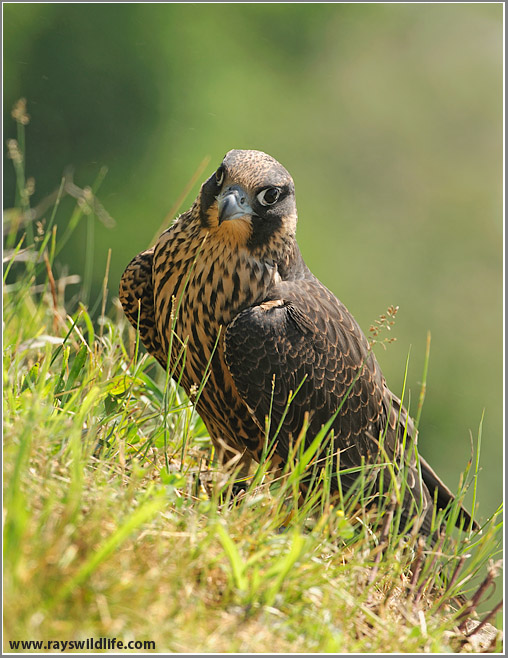
Peregrine Falcon by Ray

Peregrine Falcon by Ray

“And these you shall regard as an abomination among the birds; they shall not be eaten, they are an abomination: the eagle, the vulture, the buzzard, the kite, and the falcon after its kind;” (Leviticus 11:13-14 NKJV)

The Falcon is mentioned in three verses in the New King James Version of the Bible. Leviticus 11:14; [above]; “the red kite, the falcon, and the kite after their kinds;” (Deuteronomy 14:13 NKJV); and “That path no bird knows, Nor has the falcon’s eye seen it.” (Job 28:7 NKJV)

Relocated Here

The Owl – McGuffey’s Second Grade Reader

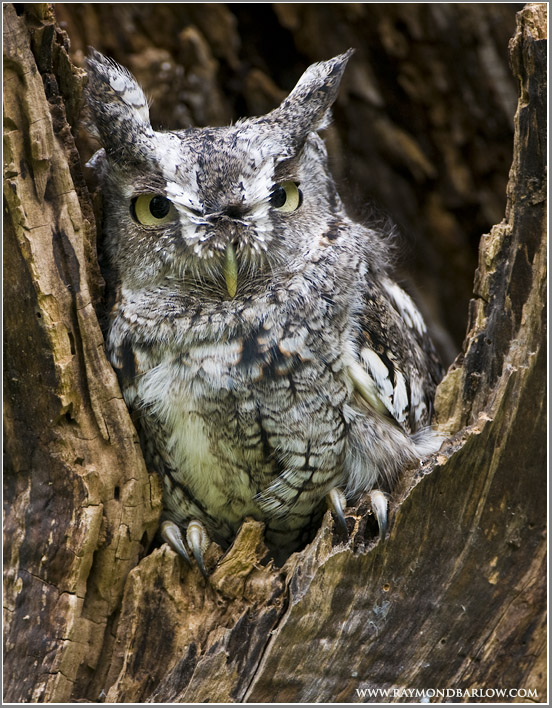
Western Screech Owl (Megascops kennicottii)(captive) by Raymond Barlow

Western Screech Owl (Megascops kennicottii)(captive) by Raymond Barlow

McGuffey Readers were a series of graded primers for grade levels 1-6. They were widely used as textbooks in American schools from the mid-19th century to the mid-20th century, and are still used today in some private schools and in homeschooling.

Relocated Here

McGuffey’s 6th Grade Reader – The Solitary Reaper

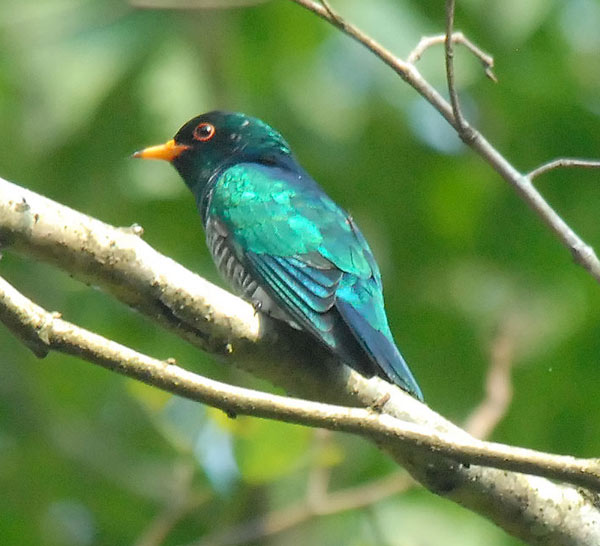
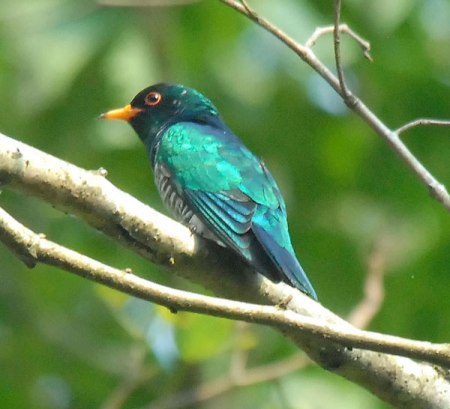
Asian Emerald Cuckoo (Chrysococcyx maculatus) by NikhilDevasar

Asian Emerald Cuckoo (Chrysococcyx maculatus) by NikhilDevasar

McGuffey’s 6th Grade Reader – The Solitary Reaper

William Wordsworth, 1770-1850, the founder of the “Lake School” of poets, was born at Cockermouth, Cumberland, England. From his boyhood he was a great lover and student of nature, and it is to his beautiful descriptions of landscape, largely, that he owes his fame. He was a graduate of Cambridge University, and while there commenced the study of Chaucer, Spenser, Milton, and Shakespeare, as models for his own writings. Two legacies having been bequeathed him, Wordsworth determined to make poetry the aim of his life, and in 1795 located at Racedown with his sister Dorothy, where he commenced the tragedy of “The Borderers.” A visit from Coleridge at this period made the two poets friends for life. In 1802 Wordsworth married Miss Mary Hutchinson, and in 1813 he settled at Rydal Mount, on Lake Windermere, where he passed the remainder of his life.

Wordsworth’s poetry is remarkable for its extreme simplicity of language. At first his efforts were almost universally ridiculed, and in 1819 his entire income from literary work had not amounted to 140 Pounds. In 1830 his merit began to be recognized; in 1839 Oxford University conferred upon him the degree of D. C. L.; and in 1843 he was made poet laureate.

“The Excursion” is by far the most beautiful and the most important of
Wordsworth’s productions. “Salisbury Plain,” “The White Doe of Rylstone,”
“Yarrow Revisited,” and many of his sonnets and minor poems are also much
admired.
###

The Solitary Reaper

Behold her, single in the field,
Yon solitary Highland lass!
Reaping and singing by herself;
Stop here, or gently pass!
Alone she cuts and binds the grain,
And sings a melancholy strain;
Oh listen! for the vale profound
Is overflowing with the sound.
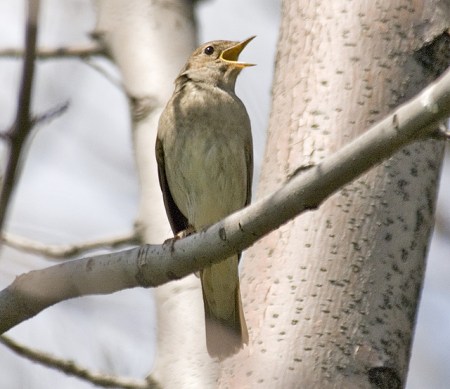
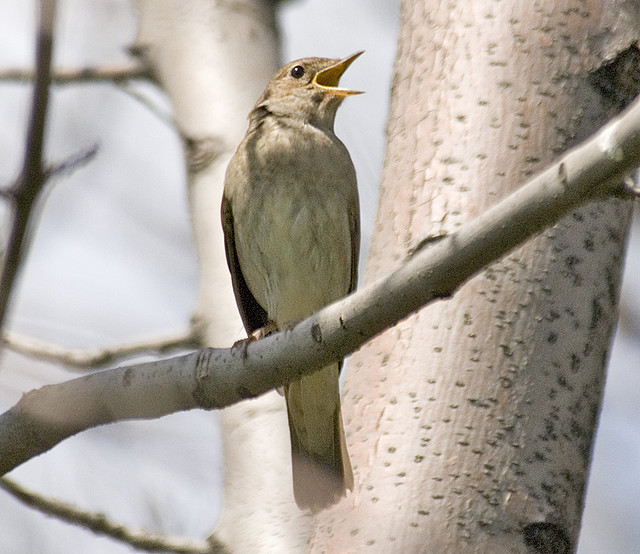
Thrush Nightingale (Luscinia luscinia) ©©SergeyYeliseev

Thrush Nightingale (Luscinia luscinia) ©©SergeyYeliseev

No nightingale did ever chant
More welcome notes to weary bands
Of travelers in some shady haunt,
Among Arabian sands:
A voice so thrilling ne’er was heard
In springtime from the cuckoo bird,
Breaking the silence of the seas
Among the farthest Hebrides.
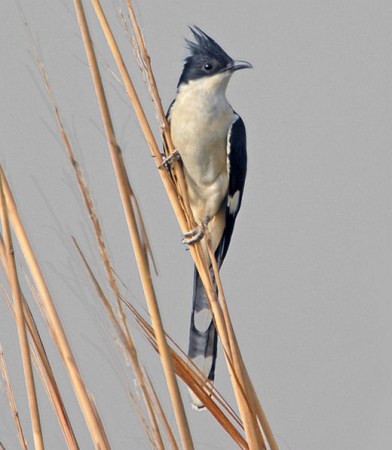
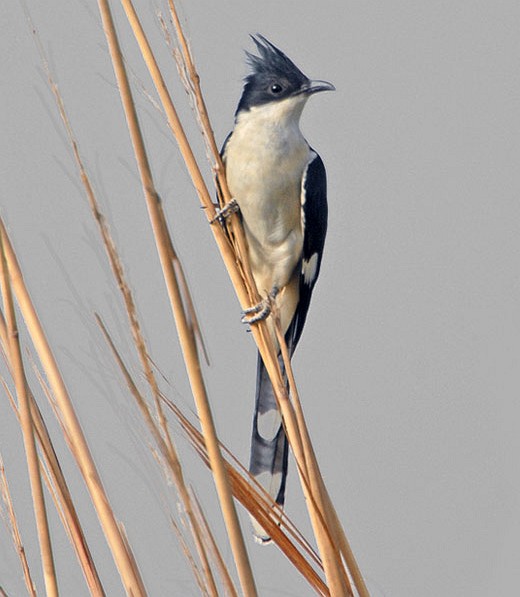
Jacobin Cuckoo (Clamator jacobinus) by Nikhil Devasar

Jacobin Cuckoo (Clamator jacobinus) by Nikhil Devasar

Will no one tell me what she sings?
Perhaps the plaintive numbers flow
For old, unhappy, far-off things,
And battles long ago:
Or is it some more humble lay,
Familiar matter of to-day?
Some natural sorrow, loss, or pain,
That has been, and may be again?
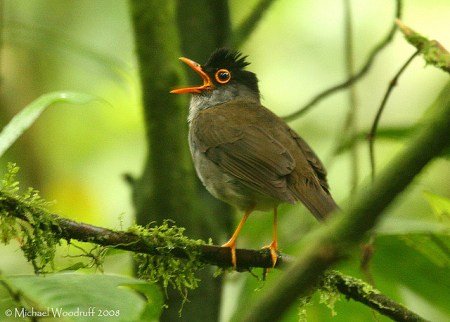
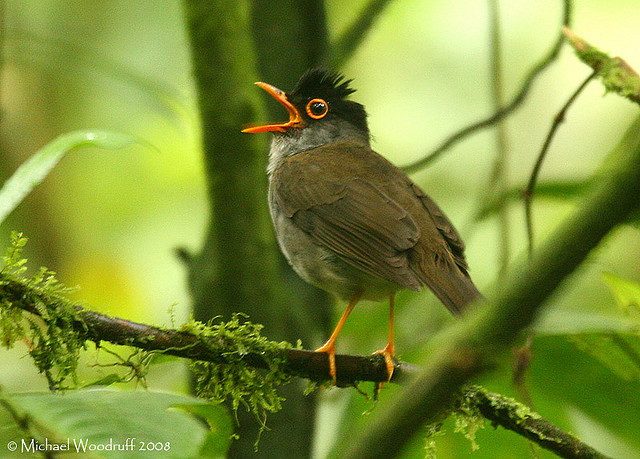
Black-headed Nightingale-Thrush (Catharus mexicanus) by Michael Woodruff

Black-headed Nightingale-Thrush (Catharus mexicanus) by Michael Woodruff

Whate’er the theme, the maiden sang
As if her song could have no ending;
I saw her singing at her work,
And o’er the sickle bending;—
I listened motionless and still;
And, as I mounted up the hill,
The music in my heart I bore,
Long after it was heard no more.

“Speaking to yourselves in psalms and hymns and spiritual songs, singing and making melody in your heart to the Lord; Giving thanks always for all things unto God and the Father in the name of our Lord Jesus Christ;” (Ephesians 5:19-20 KJV)

Please leave a comment about whether these are helpful and enjoyable to you, your children, or your grandchildren. Maybe, even your students.

These are coming from the Gutenberg books online:

Wordless Birds


What Is A Gripe or An Aliet? – Do Not Eat List

Rock Kestrel (Falco rupicolus) ©WikiC

Here are two more birds that are listed on the “Do Not Eat” list. A Gripe and an Aliet.

Leviticus 11:13 These things be of (the) fowls which ye shall not eat, and shall be eschewed of you (and shall be shunned by you); an eagle, and a gripe, [and] an aliet,
Deuteronomy 14:12 (but) eat ye not unclean birds, that is, an eagle, and a gripe, and an aliet,
These verses are in the Wycliffe Bible (WYC) version. “The earliest existing edition is from 1525, but manuscripts of that only have a part of Matthew. Of the whole New Testament, the earliest manuscripts available are from 1526. Old Testament books are from later, 1530’s for some. This means that these two birds mentioned, the Gripe and the Aliet, were the names they were called by back then. Languages change over hundreds of years.

Interesting note about how these birds are listed in the “Do Not Eat List” Here is what the Expositor’s Bible Commentary (Abridged Edition): Old Testament says:

13-19 There was no easy rule of thumb for clean birds. A negative list is given that in cases is difficult to translate with certainty. The different modern versions vary in detail. In general carrion-eating and fish-eating birds were forbidden, just as they are not used for food today. Chickens are not mentioned in the OT. The eating of bird eggs and the mother bird together is forbidden in Deuteronomy 22:6, apparently for conservation reasons. If the eggs are taken, the mother bird will lay more; but if the mother bird is taken, there will be no more eggs! Doves, their eggs, and their young were eaten.

After doing some searching on Google, the Gripe doesn’t seem to be a recognizable bird today. When searching for the Aliet, After just about giving up, this interesting article was found:

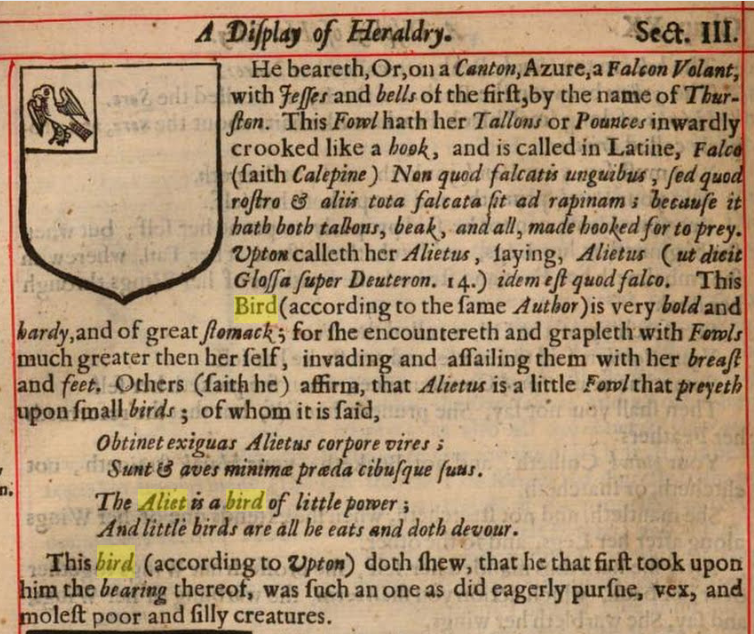
Hearldry is a displaying of different Coats of Arms. The bird in on this Crest or Coat of Arms is the Aliet:

These verses in other translations indicate some type of birds of prey. That is what is article is saying also. If you can read the “old English”, notice that it mentions “This Fowl hath her Tallons or Pounces inwardly crooked like a hook.” That is a good description of a Hawk, Falcon, or some other type of bird of prey. “and is called in Latine [Latin], Falco (faith Calepine). Falco is the genus for Falcons and includes 15 Kestrels, 22 Falcons and 4 Hobbys.

It also mentions the “Alietus is a little Fowl that preyeth upon small birds…”

Peregrine Falcon on Watch! by Ray

Peregrine Falcon on Watch! by Ray

Falcons, Kestrels and Hobbies are part of the Falconidae Family.

  1. Nave’s Topical Bible – Falcon
  2. Falconiformes Order
  3. Bible Birds – Falcons
  4. See More Bible Birds
  5. ABC’s of the Gospel