

Red-shouldered Hawk (Buteo lineatus) ©Lucas Texas
Job 39:26-27
“Doth the hawk fly by thy wisdom, and stretch her wings toward the south? Doth the eagle mount up at thy command, and make her nest on high?”
I remember buying a foot pump to inflate the tires on my first car. My choice was between two pumps. On the cheaper model, the foot operated a piston entering a cylinder in which the air would be compressed and forced through a tube into the tire. When the foot was lifted, valves prevented air getting back into the cylinder from the tire, and, instead, dragged air in from the outside. Each depression of the foot repeated this operation. In a sense, the lungs of mammals and reptiles would resemble two such pumps side by side.
The second model featured two pistons and cylinders angled in opposite directions. Pressing with the foot began the first stage of tire compression as before, but on releasing the foot, the second cylinder pushed air into the tire while the first refilled with external air. The next foot depression allowed cylinder 2 to refill while cylinder 1 pumped. Thus, there was air pumped into the tire on both depression and release of the foot. The two cylinders worked in tandem, in opposite directions. This second continuous pump is like the two lungs in a bird.

Birds Lungs ©Creation Moments PD
Even some well-known evolutionary scientists have pointed out how impossible it would be for one mechanism to evolve into the other because the transitional form would not be able to process air for breathing at all, and would suffocate. So bird lungs could not have evolved from dinosaurs, but, instead, are designed by God for exactly their purpose.
Prayer: Father, when we think about birds, as with all other animals, we acknowledge that You have made them fit for purpose, to be able to live and work the way that You have designed them to do. Amen.
Ref: Quick, D.E and Ruben, J.A., Cardio-Pulmonary Anatomy in Theropod Dinosaurs: Implications From Extant Archosaurs, JOURNAL OF MORPHOLOGY 270:1232–1246 (2009), pp. 1232-1246. Image: Public Domain.
Source: Did Birds’ Lungs Evolve?
See Interesting Things for more articles like this.











 In November 1963, an undersea volcano close to Iceland began to erupt. Emerging lava caused the sea to boil and steam. Gradually, the volcano began to appear above the waves. The eruption continued for three and a half years, causing a new island to emerge, one square mile in area and elevations of 560 feet above the surf. Of course, in the half century since the birth of this new island, erosion has reduced it somewhat – to a mere 506 feet above the sea and an area of only 0.54 square miles.


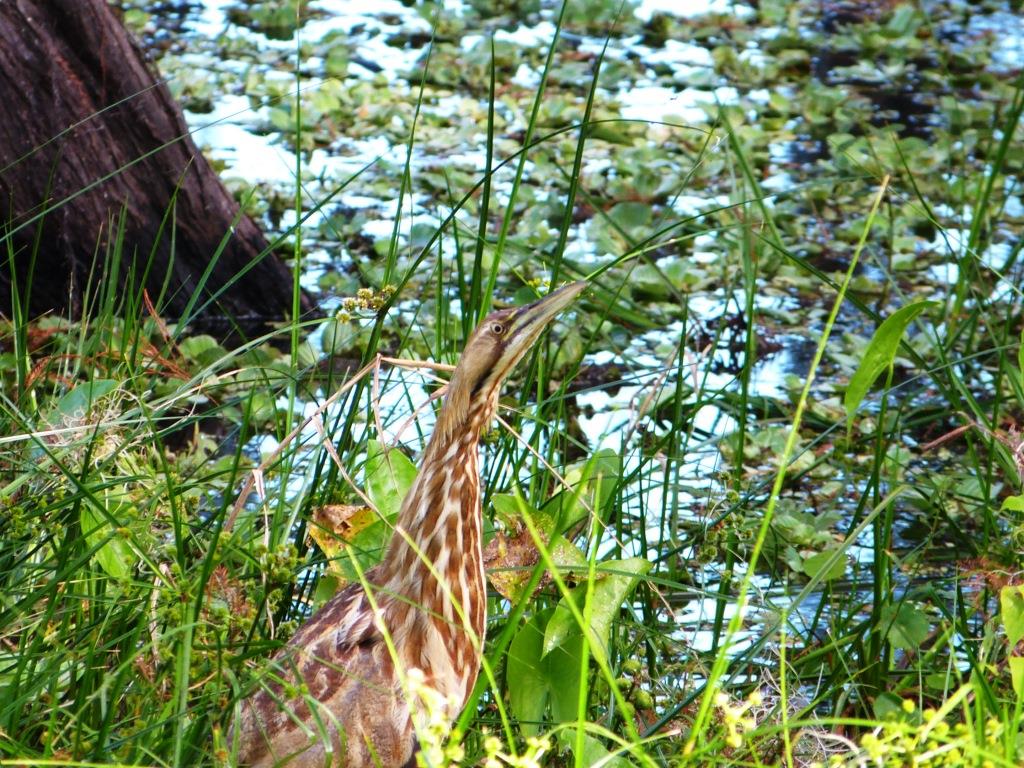





 Birds of the Bible For Kids