Birds – The Color That Only God Can Do

Mandarin Duck (Aix galericulata) by

Mandarin Duck (Aix galericulata) by Dan

Great are the works of the LORD, studied by all who delight in them. (Psalms 111:2 ESV)

Here is a neat blog worth looking at to see all the beautiful color that God put in Birds.

via Birds.

Enjoy the beauty of these birds.

Wordless Birds

*

This is by N7QVC’s Christian Blog.

*

Pelican Learns to Fly – YouTube

Brown Pelican (Pelecanus occidentalis) by Ray

Brown Pelican (Pelecanus occidentalis) by Ray


What an interesting video. Just had to share it.

I am like a pelican of the wilderness; I am like an owl of the desert. (Psalms 102:6 NKJV)

They are mentioned 3 times in Scripture. Isaiah 34:11 and Zephaniah 2:14 and the previous verse.

*

*

“Abandoned by his flock, Bigbird the pelican stumbled ashore after a storm and was taken in by the staff of Greystoke Mahale in Tanzania. Watch as Bigbird learns to fly for the first time.”

*

Bible Birds – Pelicans

*

(Found on Kid’s blog)

*

Birds of the Bible – Alpine Swifts

Alpine Swift (Tachymarptis melba) by Ian

Alpine Swift (Tachymarptis melba) by Ian

Even the stork in the heavens Knows her appointed times; And the turtledove, the swift, and the swallow Observe the time of their coming. But My people do not know the judgment of the LORD. (Jeremiah 8:7 NKJV)

While reading my latest issue of the Birdwatchers Digest, I came across and interesting note about a recent study of the behavior Alpine Swifts that was published in 2013. It was published in the Nature Communications.

“Although observers have claimed that some swifts may stay on the wing for almost their entire lives—except for breeding—there was no solid evidence of this. Then, a team of researchers caught six alpine swifts in Switzerland, tagged them with data loggers (to record the birds’ acceleration and location), and were able to recapture three of them the next year, upon their return from Africa.” (BWD)

After analyzing data, they found that “the swifts appear to fly nonstop when they aren’t breeding. (The swifts eat insects in mid-air, of course, so they don’t starve.) The actual time totals up to a phenomenal 200 days aloft.” (BWD) This posses another question. Do the Swifts actually sleep on the wing? There were indications that this was happening.

The articles go on, but I find this truly amazing. Our Creator used such Wisdom when He made these Swifts. Not only are they able to eat on the wing, but also catch a nap. Wow!

*

Alpine Swift (Tachymarptis melba) by Ian

Alpine Swift (Tachymarptis melba) by Ian

Day unto day uttereth speech, and night unto night sheweth knowledge. (Psalms 19:2 KJV)

Half of brain asleep article – Interesting Things – Not So Bird-Brained

*

*

Birds of the Bible – Woodpecker & Friend’s Storehouse

Acorn Woodpecker (Melanerpes formicivorus) by Raymond Barlow

Acorn Woodpecker (Melanerpes formicivorus) by Raymond Barlow

While working on the El Carpintero – The Woodpeckers article, many Bible verses about “gathering” and “storing” things were found. Following are some of those verses with photos. There is also a video of an Acorn Woodpecker gathering his supply.

We have used the verse about birds teaching us, so let’s see what can be learned this time about gathering and storing. (Job 12:7)

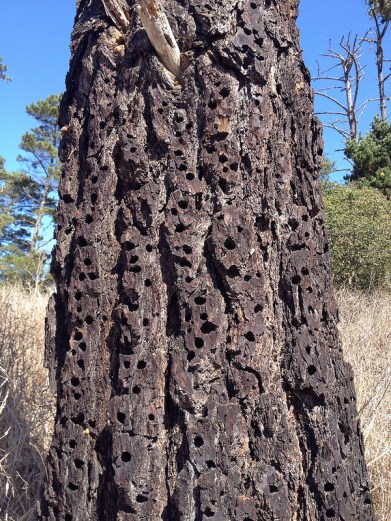
Acorn Woodpecker (Melanerpes formicivorus) with Hoard or Grainary WikiC

Acorn Woodpecker (Melanerpes formicivorus) with Hoard or Grainary WikiC

He who gathers in summer is a wise son; He who sleeps in harvest is a son who causes shame. (Proverbs 10:5 NKJV)

PIC-Pici Acorn Woodpecker Granary Tree holes ©Flickr Ornitholoco

Provides her supplies in the summer, And gathers her food in the harvest. (Proverbs 6:8 NKJV) (the ant)

Acorn Woodpecker (Melanerpes formicivorus) by Reinier Munguia

Acorn Woodpecker (Melanerpes formicivorus) by Reinier Munguia

Wealth gained hastily will dwindle, but whoever gathers little by little will increase it. (Proverbs 13:11 ESV)

Acorn Woodpecker (Melanerpes formicivorus) by Ian

Acorn Woodpecker (Melanerpes formicivorus) by Ian

Wise people store up knowledge, But the mouth of the foolish is near destruction. The rich man’s wealth is his strong city; The destruction of the poor is their poverty. The labor of the righteous leads to life, The wages of the wicked to sin. (Proverbs 10:14-16 NKJV)

Tufted Titmouse (Baeolophus bicolor) by Ray - They will store food for later use.

Tufted Titmouse (Baeolophus bicolor) by Ray – They will store food for later use.

He stores up sound wisdom for the upright; He is a shield to those who walk uprightly; (Proverbs 2:7 NKJV)

Blue Jay (Cyanocitta cristata) Collecting for Cache

Blue Jay (Cyanocitta cristata) Collecting for Cache

For they do not know to do right,’ Says the LORD, ‘Who store up violence and robbery in their palaces.’ ” (Amos 3:10 NKJV)

Western Scrub Jay (Aphelocoma californica) Holding an Acorn ©WikiC

Western Scrub Jay (Aphelocoma californica) Holding an Acorn ©WikiC

storing up for themselves a good foundation for the time to come, that they may lay hold on eternal life. (1 Timothy 6:19 NKJV)

Grey-headed Chickadee (Poecile cinctus) ©WikiC

Grey-headed Chickadee or Siberian Tit (Poecile cinctus, formerly Parus cinctus) May store upto 500,000 items per year ©WikiC

*

*

*

Birds of the Bible – Bird-Nesting (Hastings)

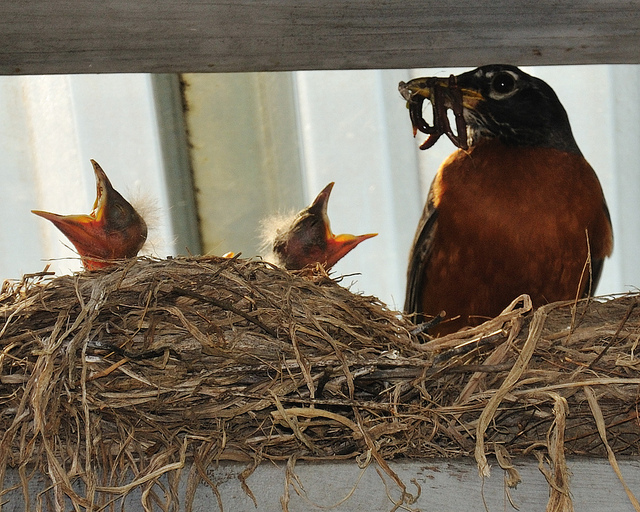
American Robin (Turdus migratorius) with young in nest

American Robin (Turdus migratorius) with young in nest

If a bird’s nest should chance to be before you in the way, in any tree or on the ground, with young ones or eggs, and the mother bird is sitting on the young or on the eggs, you shall not take the mother bird with the young. You shall surely let the mother bird go, and take only the young, that it may be well with you and that you may prolong your days. (Deuteronomy 22:6-7 AMP)

Bird-Nesting

(Just found this interesting Commentary for Children – Children’s Great Texts of the Bible by James Hastings for my e-Sword.)

If a bird’s nest chance to be before thee in the way, in any tree or on the ground, with young ones or eggs, and the dam sitting upon the young, or upon the eggs, thou shalt not take the dam with the young: thou shalt in any wise let the dam go, but the young thou mayest take to thyself; that it may be well with thee, and that thou mayest prolong thy days.—Deu_22:6-7.

You think of the children of Israel, don’t you, as having lived far back in the dark ages? But here is one of the commandments which God gave to them—a little one about a bird’s nest—and the words of it make us feel that those wanderers were just big boys and girls with the same inclinations as we ourselves have today.

We learn from the words that the birds that flew about the Israelites as they journeyed were, in many cases, birds such as those we have now. The people must have been robbing their nests too, else we should not have had this verse at all. Naturally enough, in their wanderings they often came upon a nest by the wayside.

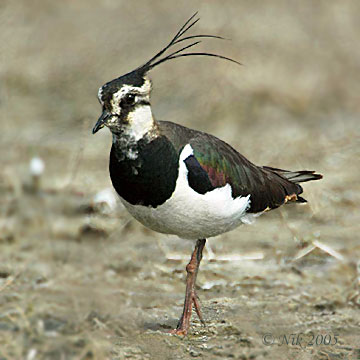
Northern Lapwing (Vanellus vanellus) by Nikhil Devasar

Northern Lapwing (Vanellus vanellus) by Nikhil Devasar

It may be that the Israelitish boys knew the little bird nests which are found in a hollow by the side of a marsh. Perhaps they thoughtlessly scattered the eggs, or perhaps Mr. Lapwing—artful little bird that he is!—lured them away from it with the wonderful antics with which he and his ancestors, generation after generation, have protected their nests. For Mr. Lapwing is the real defender of his nest. The mother bird is generally so frightened that she flies away. But when an enemy approaches the male lapwing practices the tricks his father taught him. Gradually moving farther and farther away from where the precious eggs are, he turns a number of somersaults, or he does other equally extraordinary things. The onlooker becomes so interested that the nest is forgotten.

Mourning Dove (Zenaida macroura) by Reinier Munguia

Mourning Dove (Zenaida macroura) by Reinier Munguia

You remember Noah’s clever scout bird, the dove? She, too, would be known to the Israelites. The dove has a very mournful note. No wonder! Her family has ancient legends of how large numbers of them used to be trapped and taken captive to Jerusalem and then killed. Sacrifice had no meaning to them. It was all a mystery, and they just mourned.

What made me think of the text this morning? Why, just the fact that it is May! And May is the great month for birds’ nests. It is the birds’ busy time.
In trees, in bushes, on house-tops, or on the ground, they have built their little homes. What wonderful architects many of them are. One bird has woven twigs together into a building like an old Gothic church; another has built his house in the shape of a bottle; while one we all love lives in a dear little house made of mud. They were very patient while they gathered their building materials; and when they selected a site for their nest, by some strange instinct they chose it as far out of the reach of boys and girls as possible. But in spite of all their wonderful wisdom, somehow—and I feel ashamed to say it—there are always boys ready to climb up and destroy the little houses on which so much thoughtful care has been bestowed.

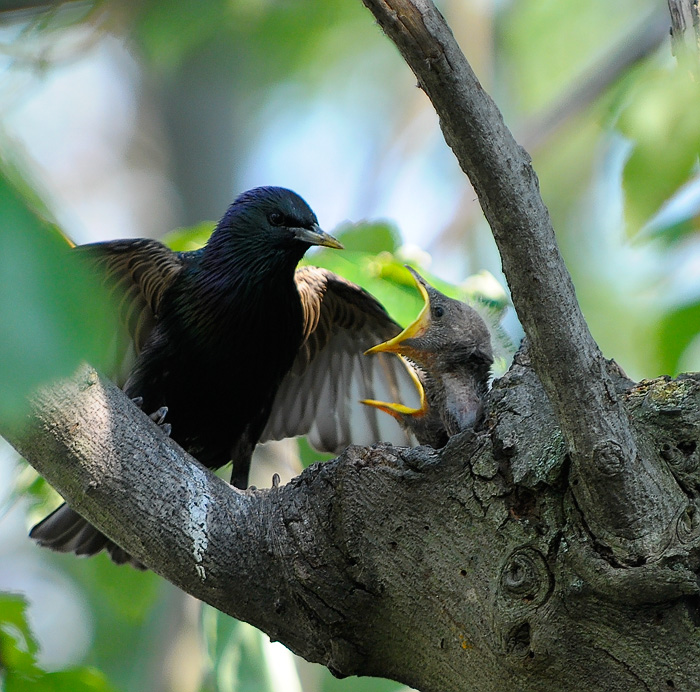
Common Starling (Sturnus vulgaris) at Nest  by Anthony747

Common Starling (Sturnus vulgaris) at Nest by Anthony747

Now I am to give you three reasons why I want you not to disturb a bird’s nest while it’s being used.

1. Because it is cruel and cowardly.—What would you think if anyone were to break open the door of your home and run away with your bed? Think of your mother going out one day and coming home to find that someone had been there and stolen you away! Yet, how often does the poor mother bird come home to find all her children taken from her? If you rob a nest, it is a case of the strong taking advantage of the weak —a cowardly action under any circumstances—you know it is.

2. Because the birds have rights.—Any creature that suffers has rights. Theodore Parker, the great American preacher, when a lad, saw a turtle on a log, and, with stone in hand, he crept up and was about to throw it, when he heard a voice within which made him desist. He asked his mother about it. She told him that it was the protest of the doctrine of rights— the voice of God. Killing an animal for food or clothing is a part of life. But killing an animal for “fun” or “sport” is wrong.

3. Because we ought to love the birds, and love never willfully hurts what it loves. Love was Christ’s great commandment—love in little as well as in big things. God is great, yet He cares for the birds. “Are not two sparrows sold for a farthing? and one of them shall not fall on the ground without your Father.”
What has the song of birds’ not done for many a man and woman? It has cheered them, it has inspired them, it has given them new courage. It has even led them to God.

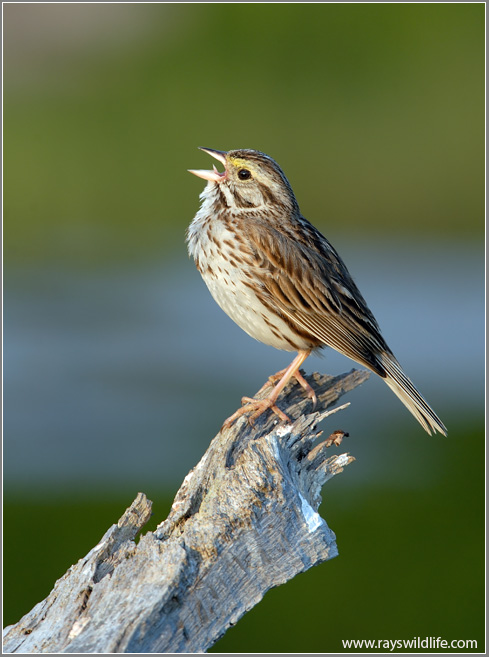
Savannah Sparrow Fifty Point-Canada by Ray Barlow

Savannah Sparrow Fifty Point-Canada by Ray Barlow

Here are some beautiful verses, by the poet George Macdonald, which tell what the song of a bird did for the heart of a man.

A brown bird sang on a blossomy tree,
Sang in the moonshine, merrily,
Three little songs, one, two, and three,
A song for his wife, for himself, and me.

He sang for his wife, sang low, sang high,
Filling the moonlight that filled the sky;
“Thee, thee, I love thee, heart alive!
Thee, thee, thee, and thy round eggs five!”

He sang to himself, “What shall I do
With this life that thrills me through and through!
Glad is so glad that it turns to ache!
Out with it, song, or my heart will break!”

He sang to me, “Man, do not fear
Though the moon goes down and the dark is near
Listen my song and rest thine eyes;
Let the moon go down that the sun may rise!”

I folded me up in the heart of his tune,
And fell asleep with the sinking moon;
I woke with the day’s first golden gleam,
And, lo, I had dreamed a precious dream!

*

By James Hastings’ Children’s Great Texts of the Bible

(I normally do a Birds of the Bible here and adapt it for the Birds of the Bible For Kids website. This time I am sharing one I posted on their site first.)

Birds of the Bible – Here

*

Vol 2, #6 – The Ornithological Congress

My Mom and Me

My Mom and Me (from an e-mail)

THE ORNITHOLOGICAL CONGRESS.

imgw

E had the pleasure of attending the Fifteenth Congress of the American Ornithologists’ Union, which met and held its three days annual session in the American Museum of Natural History, New York City, November 9-11, 1897. Dr. C. Hart Merriam, of the Department of Agriculture, Washington D.C., presided, and there were present about one hundred and fifty of the members, resident in nearly all the states of the Union.

The first paper read was one prepared by J. C. Merrill, entitled “In Memoriam: Charles Emil Bendire.” The character, accomplishments, and achievements of the deceased, whose valuable work in biographizing American birds is so well known to those interested in ornithology, were referred to in so appropriate a manner that the paper, though not elaborate as it is to be hoped it may ultimately be made, will no doubt be published for general circulation. Major Bendire’s services to American ornithology are of indisputable value, and his untimely death eclipsed to some extent, possibly wholly, the conclusion of a series of bird biographies which, so far as they had appeared, were deemed to be adequate, if not perfect.

Mr. Frank M. Chapman, the well known authority on birds, and whose recent books are valuable additions to our literature, had, it may be presumed, a paper to read on the “Experiences of an Ornithologist in Mexico,” though he did not read it. He made, on the contrary, what seemed to be an extemporaneous talk, exceedingly entertaining and sufficiently instructive to warrant a permanent place for it in the Auk, of which he is associate editor. We had the pleasure of examining the advance sheets of a new book from his pen, elaborately illustrated in color, and shortly to be published. Mr. Chapman is a comparatively young man, an enthusiastic student and observer, and destined to be recognized as one of our most scientific thinkers, as many of his published pamphlets already indicate. Our limited space precludes even a reference to them now. His remarks were made the more attractive by the beautiful stuffed specimens with which he illustrated them.

Prof. Elliott Coues, in an address, “Auduboniana, and Other Matters of Present Interest,” engaged the delighted attention of the Congress on the morning of the second day’s session. His audience was large. In a biographical sketch of Audubon the Man, interspersed with anecdote, he said so many interesting things that we regret we omitted to make any notes that would enable us to indicate at least something of his characterization. No doubt just what he said will appear in an appropriate place. Audubon’s portfolio, in which his precious manuscripts and drawings were so long religiously kept, which he had carried with him to London to exhibit to possible publishers, a book so large that two men were required to carry it, though the great naturalist had used it as an indispensable and convenient companion for so many years, was slowly and we thought reverently divested by Dr. Coues of its wrappings and held up to the surprised and grateful gaze of the spectators. It was dramatic. Dr. Coues is an actor. And then came the comedy. He could not resist the inclination to talk a little—not disparagingly, but truthfully, reading a letter never before published, of Swainson to Audubon declining to associate his name with that of Audubon “under the circumstances.” All of which, we apprehend, will duly find a place on the shelves of public libraries.

John James Audubon 1826 ©WikiC

John James Audubon 1826 ©WikiC

We would ourself like to say something of Audubon as a man. To us his life and character have a special charm. His was a beautiful youth, like that of Goethe. His love of nature, for which he was willing to make, and did make, sacrifices, will always be inspiring to the youth of noble and gentle proclivities; his personal beauty, his humanity, his love-life, his domestic virtues, enthrall the ingenuous mind; and his appreciation—shown in his beautiful compositions—of the valleys of the great river, La Belle Rivière, through which its waters, shadowed by the magnificent forests of Ohio and Kentucky, wandered—all of these things have from youth up shed a sweet fragrance over his memory and added greatly to our admiration of and appreciation for the man.

So many subjects came before the Congress that we cannot hope to do more than mention the titles of a few of them. Mr. Sylvester D. Judd discussed the question of “Protective Adaptations of insects from an Ornithological Point of View;” Mr. William C. Rives talked of “Summer Birds of the West Virginia Spruce Belt;” Mr. John N. Clark read a paper entitled “Ten Days among the Birds of Northern New Hampshire;” Harry C. Oberholser talked extemporaneously of “Liberian Birds,” and in a most entertaining and instructive manner, every word he said being worthy of large print and liberal embellishment; Mr. J. A. Allen, editor of The Auk, said a great deal that was new and instructive about the “Origin of Bird Migration;” Mr. O. Widmann read an interesting paper on “The Great Roosts on Gabberet Island, opposite North St. Louis;” J. Harris Reed presented a paper on “The Terns of Gull Island, New York;” A. W. Anthony read of “The Petrels of Southern California,” and Mr. George H. Mackay talked interestingly of “The Terns of Penikese Island, Mass.”

There were other papers of interest and value. “A Naturalist’s Expedition to East Africa,” by D. G. Elliot, was, however, the pièce de résistance of the Congress. The lecture was delivered in the lecture hall of the Museum, on Wednesday at 8 p. m. It was illustrated by stereopticon views, and in the most remarkable manner. The pictures were thrown upon an immense canvas, were marvellously realistic, and were so much admired by the great audience, which overflowed the large lecture hall, that the word demonstrative does not describe their enthusiasm. But the lecture! Description, experience, suffering, adventure, courage, torrid heat, wild beasts, poisonous insects, venomous serpents, half-civilized peoples, thirst,—almost enough of torture to justify the use of Coleridge’s Ancient Mariner in illustration,—and yet a perpetual, quiet, rollicking, jubilant humor, all-pervading, and, at the close, on the lecturer’s return once more to the beginning of civilization, the eloquent picture of the Cross, “full high advanced,” all combined, made this lecture, to us, one of the very few platform addresses entirely worthy of the significance of unfading portraiture.

C. C. Marble.


Silver-breasted Broadbill (Serilophus lunatus) by Peter Ericsson

Silver-breasted Broadbill (Serilophus lunatus) by Peter Ericsson

Lee’s Addition:

And further, by these, my son, be admonished: of making many books there is no end; and much study is a weariness of the flesh. (Ecclesiastes 12:12 KJV)

“The International Ornithologists’ Union, formerly International Ornithological Committee (IOC), is to facilitate worldwide communication in ornithology and conservation based on the up-to-date taxonomy of world birds and recommended English names that follow explicit guidelines for spelling and construction.

To this end we  provide a complete list of world bird species and their subspecies, including recently extinct ones. We update the list regularly to include newly described species,  proposed and accepted splits and lumps, corrections of nomenclature, and changes of names or classification.” (From IOC’s website)

The IOC, or now the IOU is where our list of the Birds of the World come from. Thankfully, these ornithologists get together and try to maintain lists and compare birds from other countries, which are called by different name, to see if they are one-in-the-same. There is much work that goes on by them and their work is much appreciated by birders around the world.

*

Birds Illustrated by Color Photography – Revisited

The above article is an article in the monthly serial for October 1897 “designed to promote Knowledge of Bird-Live.” These include Color Photography, as they call them, today they are drawings. There are at least three Volumes that have been digitized by Project Gutenberg.

To see the whole series of – Birds Illustrated by Color Photography – Revisited

*

(Information from Wikipedia and other internet sources, with editing)

Next Article – The Mountain Bluebird

The Previous Article – Bird Miscellany Plus 

Gospel Message

Links:

International Ornithological Congress

IOC World Bird List

Birds of the World – Lee’s Birdwatching Adventures

*

Birds Of The Bible – Joy And Laughter

Laughing Kookaburra (Dacelo novaeguineae) at LPZoo

Laughing Kookaburra (Dacelo novaeguineae) by Lee

While we were at Lowry Park Zoo last week, we also had the joy of hearing the Laughing Kookaburra (Dacelo novaeguineae) sounding off with its mate. Seems like the Myna birds and the singing dogs were not the only ones in a happy mood. The two Kookaburras got to “laughing” also. They sort of set the tone to put you a joyful mood.

For You, O Lord, have made me glad by Your works; at the deeds of Your hands I joyfully sing. (Psalms 92:4 AMP) Make a joyful noise to the Lord, all the earth; break forth and sing for joy, yes, sing praises! (Psalms 98:4 AMP)

I have always enjoyed seeing the Kookaburras. When we were at the National Aviary I tried recording them, but by the time I got the camera on, they stopped. I recorded them this time but didn’t get the camera focused on them until about half way through. Oh, the challenges of birdwatching! Well, at least trying to get a recording to use on the blog anyway. When you put all the events together; the singing Bali Myna, the singing dogs, and these singing Kookaburras, it brings to mind a story in the Bible. When Paul and Silas where in prison, (behind bars) they were joyful just the same. All of these critters plus the men (Paul and Silas) are behind bars, yet they are joyful and carrying on with their lives. Could there be a lesson there for us to learn and observe?

And at midnight Paul and Silas prayed, and sang praises unto God: and the prisoners heard them. (Acts 16:25 KJV)

Consider it wholly joyful, my brethren, whenever you are enveloped in or encounter trials of any sort or fall into various temptations. (James 1:2 AMP)

We all have things come into our lives, but our attitude affects how well we handle those circumstances. Prayer is one of the best ways to find peace in the midst of trials. Knowing the Lord Jesus Christ as personal Savior is the absolute best way. I trust you know Him.

Gospel Message

*

This video has two of my photos to cover the blurred part, but the sound is the whole recording.

The Laughing Kookaburra (Dacelo novaeguineae) is a carnivorous bird in the kingfisher family Halcyonidae. Native to eastern Australia, it has also been introduced to parts of New Zealand, Tasmania and Western Australia. Male and female adults are similar in plumage, which is predominantly brown and white. A common and familiar bird, this species of kookaburra is well known for its laughing call.

There are actually 6 Kookaburras:

  • Lilac Kingfisher (Cittura cyanotis)
  • Shovel-billed Kookaburra (Clytoceyx rex)
  • Laughing Kookaburra (Dacelo novaeguineae)
  • Blue-winged Kookaburra (Dacelo leachii)
  • Spangled Kookaburra (Dacelo tyro)
  • Rufous-bellied Kookaburra (Dacelo gaudichaud)

See:

Birds of the Bible

Laughing Kookaburra – Wikipedia

Alcedinidae – Kingfishers – Family

*

Birds of the Bible – Heron’s Teaching

Green Heron (Butorides virescens) by Lee

Green Heron (Butorides virescens) by Lee

“But now ask the beasts, and they will teach you; And the birds of the air, and they will tell you; (Job 12:7 NKJV)

I have thinking about that Green Heron in the video I posted a few days ago. (Green Heron Fishing With Bread) The verse above makes me think there has to be some lessons to learn from it. These are just some of my thoughts and I am sure you can come up with some of your own.

One that comes to thought right off is that bird’s patience. Are we?

These wait all upon thee; that thou mayest give them their meat in due season. That thou givest them they gather: thou openest thine hand, they are filled with good. (Psalms 104:27-28 KJV)

The verse used on the article tells how the Lord protects and provides for His creation. Will He not provide for us also. He loves us and wants to meet our needs, just as was provided for this Heron.

Look at the birds of the air, for they neither sow nor reap nor gather into barns; yet your heavenly Father feeds them. Are you not of more value than they? (Matthew 6:26 NKJV)

Another lesson is that the bird is doing something that we wouldn’t think it could do. You wonder where it learned that behavior. For us, the Lord wants us to do something, and if we are willing, we are amazed at what we can do. Things we would never think we had the capacity to do He helps us perform..

Jesus said unto him, If thou canst believe, all things are possible to him that believeth. (Mark 9:23 KJV)

I can do all things through Christ which strengtheneth me. (Philippians 4:13 KJV)

He (the heron) has a goal in mind and isn’t going to give up even though it takes several attempts to accomplish his goal. The Lord tells us to become “fishers of men” and we need to keep trying and not give up. Even when our “bread” is down to hardly anything and you think you might as well give up, you try one more time.

So then neither is he that planteth any thing, neither he that watereth; but God that giveth the increase. Now he that planteth and he that watereth are one: and every man shall receive his own reward according to his own labour. (1 Corinthians 3:7-8 KJV)

On a more light side, I am not so sure that the Heron wasn’t bordering on “gluttony.” Did you see that last part where it is swallowing the fish. Looks like it almost “bit of more than it could chew.”

But put ye on the Lord Jesus Christ, and make not provision for the flesh, to fulfil the lusts thereof. (Romans 13:14 KJV)

These are but a few and if you have some, leave a comment and share them with us.

Birds of the Bible – Herons

Birds of the Bible

Bible Birds

Wordless Birds

*

Thanks to MrBeemBom for taking the video and sharing it on YouTube.

*

Birds of the Bible – Remembering

Bleeding-Heart Pigeon ©WikiC

Bleeding-Heart Pigeon ©WikiC

And God remembered Noah, and every living thing, and all the cattle that was with him in the ark: and God made a wind to pass over the earth, and the waters asswaged; (Genesis 8:1 KJV)

Today, here in the United States, is Memorial Day. A day when we remember those who have given their all in the service of our country. We honor those who we can no longer thank. As this is being written, they are laying a wreath at the tomb of the unknown soldier at Arlington National Cemetary.

My father was one of those who passed away as a result of his being in the trenches in WW I. He suffered for several years from the effects of the “mustard gas” that was sprayed on them. It is good for us to remember things and honor events.

Yesterday, in the morning service, the event of the 12 stones being taken for the Jordon River by the Israelites for a memorial was taught. That was a memorial to remind them of the way the LORD protected them and made a way for them to cross over the Jordon. It is good to remember things and honor events.

And Joshua said unto them, Pass over before the ark of the LORD your God into the midst of Jordan, and take ye up every man of you a stone upon his shoulder, according unto the number of the tribes of the children of Israel: That this may be a sign among you, that when your children ask their fathers in time to come, saying, What mean ye by these stones? Then ye shall answer them, That the waters of Jordan were cut off before the ark of the covenant of the LORD; when it passed over Jordan, the waters of Jordan were cut off: and these stones shall be for a memorial unto the children of Israel for ever. (Joshua 4:5-7 KJV)

Mourning Dove (Zenaida macroura) by Quy Tran

Mourning Dove (Zenaida macroura) by Quy Tran

Our Scripture above is where the God remembered those He was protecting from the flood that were aboard the ark. He did not forget them. In time, the waters went down and they were able to leave the ark.

And it came to pass in the six hundred and first year, in the first month, the first day of the month, that the waters were dried up from the earth; and Noah removed the covering of the ark and looked, and indeed the surface of the ground was dry. And in the second month, on the twenty-seventh day of the month, the earth was dried. Then God spoke to Noah, saying, “Go out of the ark, you and your wife, and your sons and your sons’ wives with you. Bring out with you every living thing of all flesh that is with you: birds and cattle and every creeping thing that creeps on the earth, so that they may abound on the earth, and be fruitful and multiply on the earth.” (Genesis 8:13-17 NKJV)

It does us good to remember what the God has done through His creation and protection during the flood. Just as He provided salvation for them from the flood, and only those in the ark were saved. Today, we have a Savior who said:

Jesus saith unto him, I am the way, the truth, and the life: no man cometh unto the Father, but by me. (John 14:6 KJV)

Bald Eagle Brings Nesting Material by Aesthetic Photos

Bald Eagle Brings Nesting Material by Aesthetic Photos

Happy Memorial Day! Lord Bless your day as you remember.

See:

Gospel Message

Birds of the Bible

Bible Birds

P.S. Check out this article:

‘Sarge, Will You Tell Us About God?’ – The Story of God’s Miraculous Protection of an Entire U. S. Marine Unit, From A Walk In The Word

*