“He causeth the vapours to ascend from the ends of the earth; he maketh lightnings for the rain; he bringeth the wind out of his treasuries.” (Psalms 135:7 KJV)
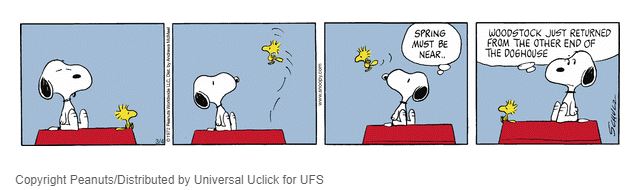
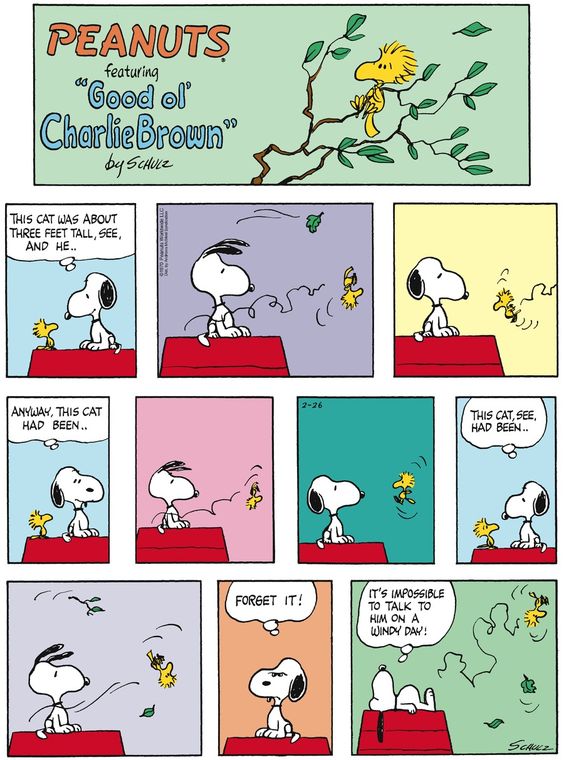
First Woodstock had a Ruffled Feather, now he is grumbling because he is having a Bad Feather Day.
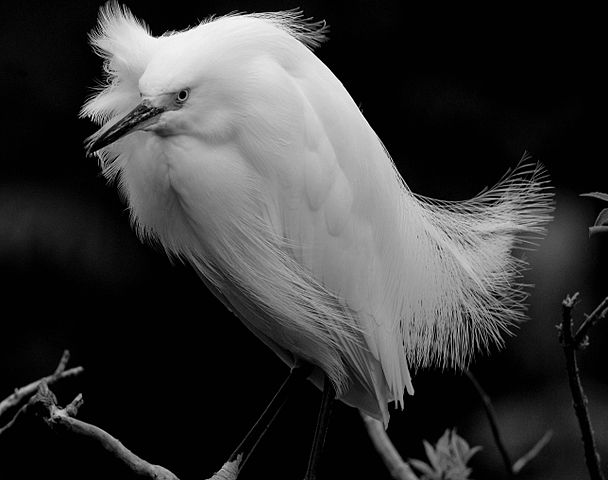
We were at Gatorland on Friday last week and it was quite winding. Some of their feathers were whipping in the breeze also. I did not see Snoopy there with a can of “Feather Spray”. Those bird just had to preen and get thing straighten out.
Great Egret on a windy day at Gatorland by Lee
Great Egret on a windy day at Gatorland
Great Egret on a windy day at Gatorland
Cattle Egret in Breeding Plumage and Wind
Cattle Egret in Breeding Plumage and Wind
Hey! Where’s the Feather Spray?
Great Blue Heron before gust on a windy day at Gatorland
Great Blue Heron with gust on a windy day at Gatorland
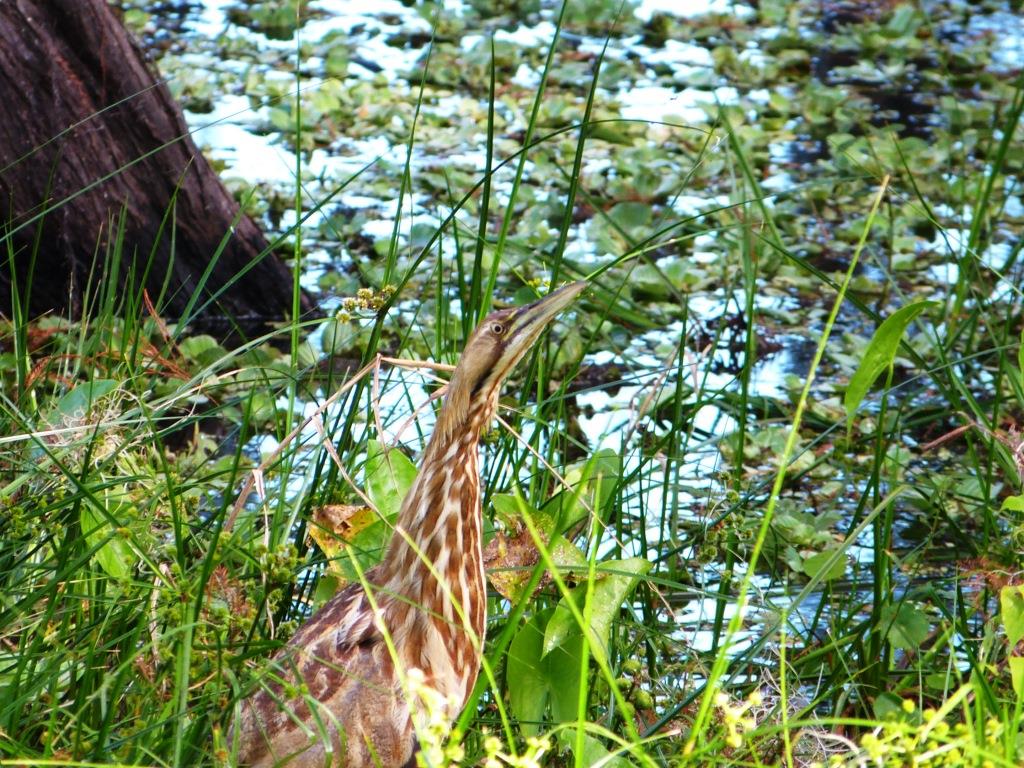
Great Blue Heron doesn’t look to happy about the wind.
Wind is mentioned over a hundred times in the Bible. Here are two verse that show who is in control of the wind:
“Blessed is the man that walketh not in the counsel of the ungodly, nor standeth in the way of sinners, nor sitteth in the seat of the scornful. But his delight is in the law of the LORD; and in his law doth he meditate day and night. And he shall be like a tree planted by the rivers of water, that bringeth forth his fruit in his season; his leaf also shall not wither; and whatsoever he doeth shall prosper. The ungodly are not so: but are like the chaff which the wind driveth away.” (Psalms 1:1-4 KJV)
“And he arose, and rebuked the wind, and said unto the sea, Peace, be still. And the wind ceased, and there was a great calm. And he said unto them, Why are ye so fearful? how is it that ye have no faith? And they feared exceedingly, and said one to another, What manner of man is this, that even the wind and the sea obey him?” (Mark 4:39-41 KJV)
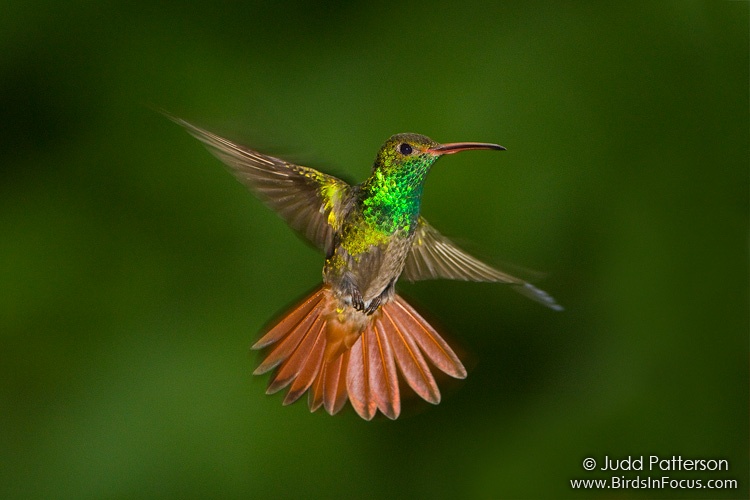
Rufous-tailed Hummingbird (Amazilia tzacatl) by Judd Patterson
“Arise, shine; for thy light is come, and the glory of the LORD is risen upon thee.” (Isaiah 60:1 KJV)
Yesterday’s article, Precious Stones and Birds – Colors, show how light can be changed into different colors as it passes through a prism. Also, that the Lord God, the Creator of all we see here on earth is the source of light. Today you will see how light reflecting on bird’s feathers, especially Hummingbirds, helps demonstrate that fact.
Here are some videos and photos of Hummingbirds showing how the light reflects on these birds.
“For God, who commanded the light to shine out of darkness, hath shined in our hearts, to give the light of the knowledge of the glory of God in the face of Jesus Christ.” (2 Corinthians 4:6 KJV)
*
Here is a Hummingbird being turned so that the light shines on his colors. Watch how the blue appears.
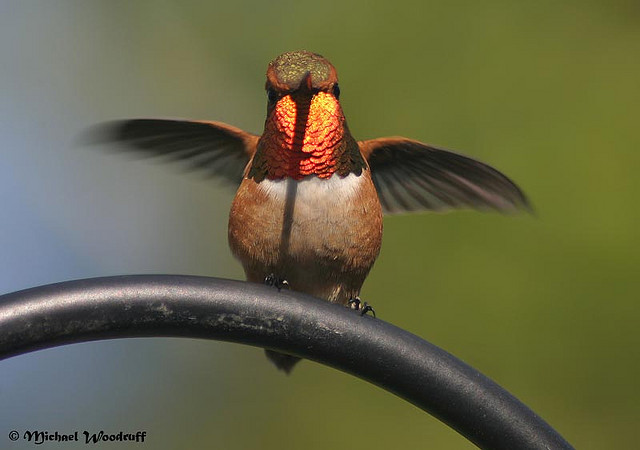
Light reflects off the feathers of Hummingbirds. Here are some photos:
Rufous Hummingbird (Selasphorus rufus) by Michael Woodruff
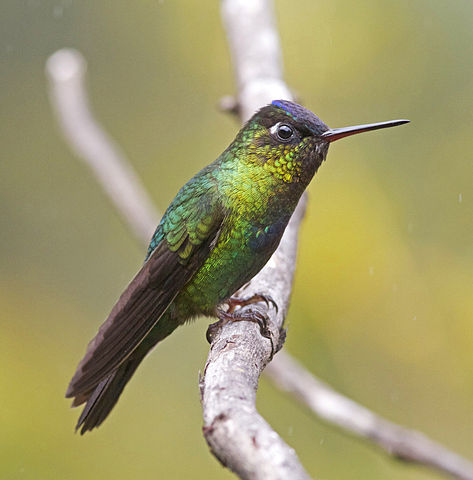
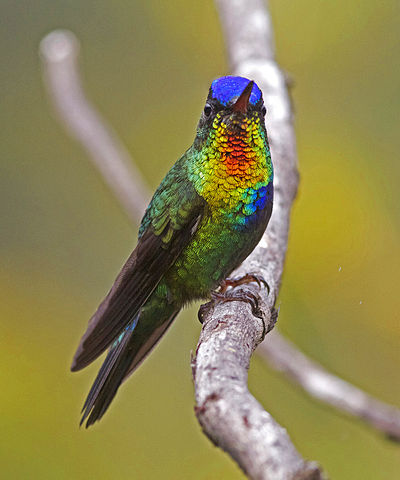
Scintillant Hummingbird (Selasphorus scintilla) by Judd Patterson
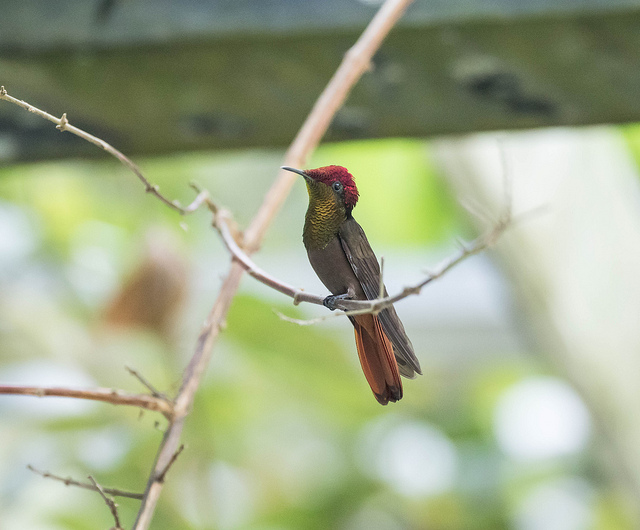
The Ruby-topaz Hummingbird is a nice example of how the light shinning on the hummer.
“Ye are the salt of the earth: but if the salt have lost his savour, wherewith shall it be salted? it is thenceforth good for nothing, but to be cast out, and to be trodden under foot of men. Ye are the light of the world. A city that is set on an hill cannot be hid. Neither do men light a candle, and put it under a bushel, but on a candlestick; and it giveth light unto all that are in the house. Let your light so shine before men, that they may see your good works, and glorify your Father which is in heaven.” (Matthew 5:13-16 KJV)
“Even the stork in the sky Knows her seasons; And the turtledove and the swift and the thrush Observe the time of their migration; But My people do not know The ordinance of the LORD.” (Jeremiah 8:7 NASB)
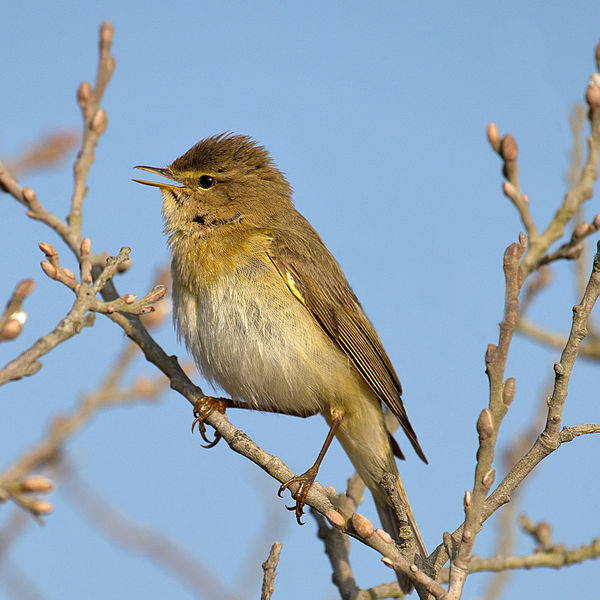
As Spring comes, the birds start their travel back to their normal habitat. It is amazing how far birds travel in their annual migrations. In Why Get In The Ark When You Can Fly?, the Willow Warbler migrates up to 12,000 km each year. [7,456.45 miles].
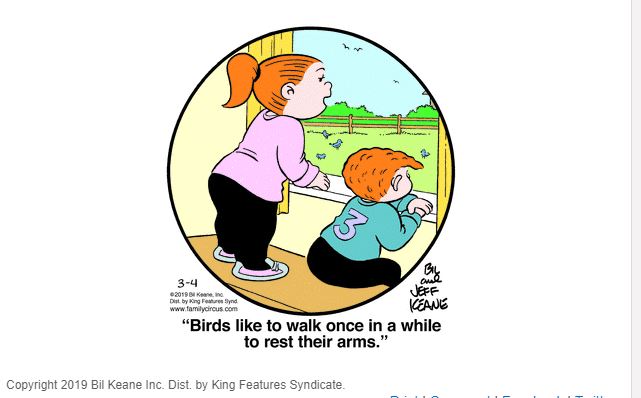
The article, Awaiting A Robin – Dorothy Malcolm, Mrs. Malcolm is waiting for the Robins to stop for a rest in her yard. They will be migrating [traveling] from areas in the south, and going back to their northern homes. The Family Circus today shows the birds resting and eating before they take off again.
An article in the latest issue of Answers in Genesis Magazine, “As The Bird Flies,”, p.20, tells about the Willow Warbler. This little bird weighs only “0.4 ounce (10 g) … and migrate more than 8,000 miles (13,000 km) from eastern Siberia to Kenya and Tanzania in Africa.”
The article goes on to tell how much research has been done with this bird and its migratory habits. The internet has many articles about this fantastic avian wonder from the Lord.
“All populations are highly migratory, with the subspecies P. t. yakutensis migrating up to 12,000 km from eastern Siberia to southern Africa along the Asian – East African Flyway, one of the longest migrations of any for a bird of its size. Approximate timings are:
October to March: wintering in sub Saharan Africa.
Mid March to mid May: migrates and arrives in the breeding range.
Late April to August: breeding season, usually only one brood but rarely two.
August to October: migrates back to Africa.” [Wikipedia – Willow Warbler]
Answers article continues with this remark: “Their surprisingly complex navigational abilities showcase the Creator’s ingenious design”
They then challenge those who sort of believe in creation, but the flood gives them problems. Many only believe in a “Local Flood.” My take on this and theirs is: Why Get In The Ark When You Can Fly? “Why couldn’t the animals just leave the area instead of getting on a ship, especially if a bird that weights less than a few paper clips can trave more than 8,000 miles?”
“In the selfsame day entered Noah, and Shem, and Ham, and Japheth, the sons of Noah, and Noah’s wife, and the three wives of his sons with them, into the ark; They, and every beast after his kind, and all the cattle after their kind, and every creeping thing that creepeth upon the earth after his kind, and every fowl after his kind, every bird of every sort.” (Genesis 7:13-14 KJV)
“And the waters prevailed exceedingly upon the earth; and all the high hills, that were under the whole heaven, were covered. Fifteen cubits upward did the waters prevail; and the mountains were covered. And all flesh died that moved upon the earth, both of fowl, and of cattle, and of beast, and of every creeping thing that creepeth upon the earth, and every man: All in whose nostrils was the breath of life, of all that was in the dry land, died. And every living substance was destroyed which was upon the face of the ground, both man, and cattle, and the creeping things, and the fowl of the heaven; and they were destroyed from the earth: and Noah only remained alive, and they that were with him in the ark.” (Genesis 7:19-23 KJV)
Noah taking the Dove back on board the ark with Olive Branch by Lee at the Ark Encounter
Genesis 8:11
“And the dove came in to him in the evening; and, lo, in her mouth was an olive leaf pluckt off: so Noah knew that the waters were abated from off the earth.”
In November 1963, an undersea volcano close to Iceland began to erupt. Emerging lava caused the sea to boil and steam. Gradually, the volcano began to appear above the waves. The eruption continued for three and a half years, causing a new island to emerge, one square mile in area and elevations of 560 feet above the surf. Of course, in the half century since the birth of this new island, erosion has reduced it somewhat – to a mere 506 feet above the sea and an area of only 0.54 square miles.
When the volcano had cooled, scientists flocked to the area to study what was likely to happen to this new piece of real estate. Biologists were particularly interested in how long it would take for life to colonize this bleak new rocky island. Only a few scientists are allowed to land on Surtsey. Most visitors only see the island from the windows of a plane.
Mosses were seen by 1967 and lichens by 1970. These two types of plants now cover much of the island. In 1998, a small willow bush had been observed to have grown. Limited animal life – such as gulls, puffins and seals – have set up home there. The bird guano is of particular use in fertilizing the soil for further plant growth. Insects, spiders and beetles can also now be found.
Surtsey has provided a living laboratory of how colonization of barren real estate can take place. Such recolonization could readily have happened worldwide after the Genesis Flood.
Prayer: Your grace and power, Lord, are seen – even in the outworking of natural processes – in places like Surtsey and Mount St Helens. Thank you for Your amazing power. Amen.
I found this quote from Surtsey Still Surprises article:
“Birds began nesting on Surtsey in 1970, producing chicks just three years after the lava stopped flowing. These early residents were seabirds such as fulmars and black guillemots, building nests of pebbles, and keeping to the cliffs. But in the summer of 1985, a pair of lesser black-backed gulls arrived and constructed a nest of plant materials on the lava flats. They returned the following year with others, and there is now a permanent gull colony of more than 300 pairs.
Black Guillemot (Cepphus grylle) by Bob-Nan
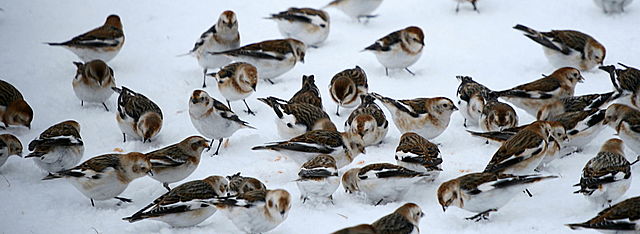
The birds have contributed to Surtsey’s ‘greening’.Snow buntings brought the seeds of bog rosemary from Britain in their gizzards. Combined with bird excreta, seeds grow rapidly—there is now a ‘bright green oasis’ spreading from the gull colony. Geese now graze the island’s vegetation. The cycle continues. The plants support insects which attract birds that bring more plants. Recent arrivals include willow bushes and puffins (see right). According to the Icelandic Institute of Natural History, ‘we now have a fully functioning ecosystem on Surtsey.’” [Bolding mine]
“For, lo, he that formeth the mountains, and createth the wind, and declareth unto man what is his thought, that maketh the morning darkness, and treadeth upon the high places of the earth, The LORD, The God of hosts, is his name.” (Amos 4:13 KJV)
“Ah Lord GOD! behold, thou hast made the heaven and the earth by thy great power and stretched out arm, and there is nothing too hard for thee:” (Jeremiah 32:17 KJV)
It has been 10 years since I’ve seen a robin in my yard. When they came then, it was an amazing sight which I have cherished. Once there was a Baltimore Oriole, however, that was many years ago. In the meantime, there are a variety that come to my feeder and the neighborhood for which I am happy about and keep food out for them.
I sit at a table which always has a puzzle on it, and if I don’t make sudden moves, I enjoy watching them. Of course the Sandhill Cranes walk around the neighborhood, The Cooper’s Hawks and Crows don’t come to my yard, but I see them in the trees as I walk.
The regular visitors are Blue Jays, Red-winged Blackbirds, Red-headed Woodpecker, Turtle Doves, Titmice, and Sparrows.
American Robin)by Raymond Barlow
In my heart I’m longing for the joy of seeing just one Robin. Maybe it will happen this spring.
2/22/19 Dorothy Malcolm
“But I know, that even now, whatsoever thou wilt ask of God, God will give it thee.” (John 11:22 KJV)
Lee’s Addition:
It has been awhile since Dottie (Dorothy) has written an article for us. I asked her if she would like to write another one. Here is her latest birdwatching desire. The verse is one I have used while birdwatching. I have asked the Lord to please have the bird in that bush come out where I can see it better. Maybe even take a photo. Not surprising, some have appeared to my delight. I think the Lord cares about our desires, especially when observing His Creation. Dottie, we are praying that the Lord will let some Robins land in your yard when they start migrating back north this spring. Stay Tuned!
If you have missed some of Dottie (Dorothy’s) stories, they are listed below. She is also Emma Foster’s grandmother. Humm! Wonder if that is where Emma started her interest in her birdwatching tales? Emma’s Stories
“And the foundations of the wall of the city were garnished with all manner of precious stones… (Revelation 21:19a KJV)
I was going to write a new Avian and Attributes article for today. If you read the last post, Heaven’s New Jerusalem and Birds – Introduction,then you are aware that a new series is coming. While studying for the series, might as well produce other articles in the meantime. Right? Might as well do the next Avian and Attributesarticle.
Wouldn’t you know? The next bird in that series to write about is the STONE bird. I wondered what has already been written about stones and birds before? Wow! After searching the blog, here are some of them. I’ll do the next Avian and Attributes soon. I trust these articles will be a blessing as you review them. I know that I’ll be rereading them myself to assist with the Heaven’s New Jerusalem and Birds series.
Have you been able to go birdwatching, or watch birds outside your window on a windy day?
Do they look different?
Do they behave differently?
How did Woodstock act in the cartoon above?
Birds may be small or large, but most of them do not weigh very much. When it is windy, they can be affected quite a bit. Sometimes they really struggle to fly straight. They may appear to be flying sideways.
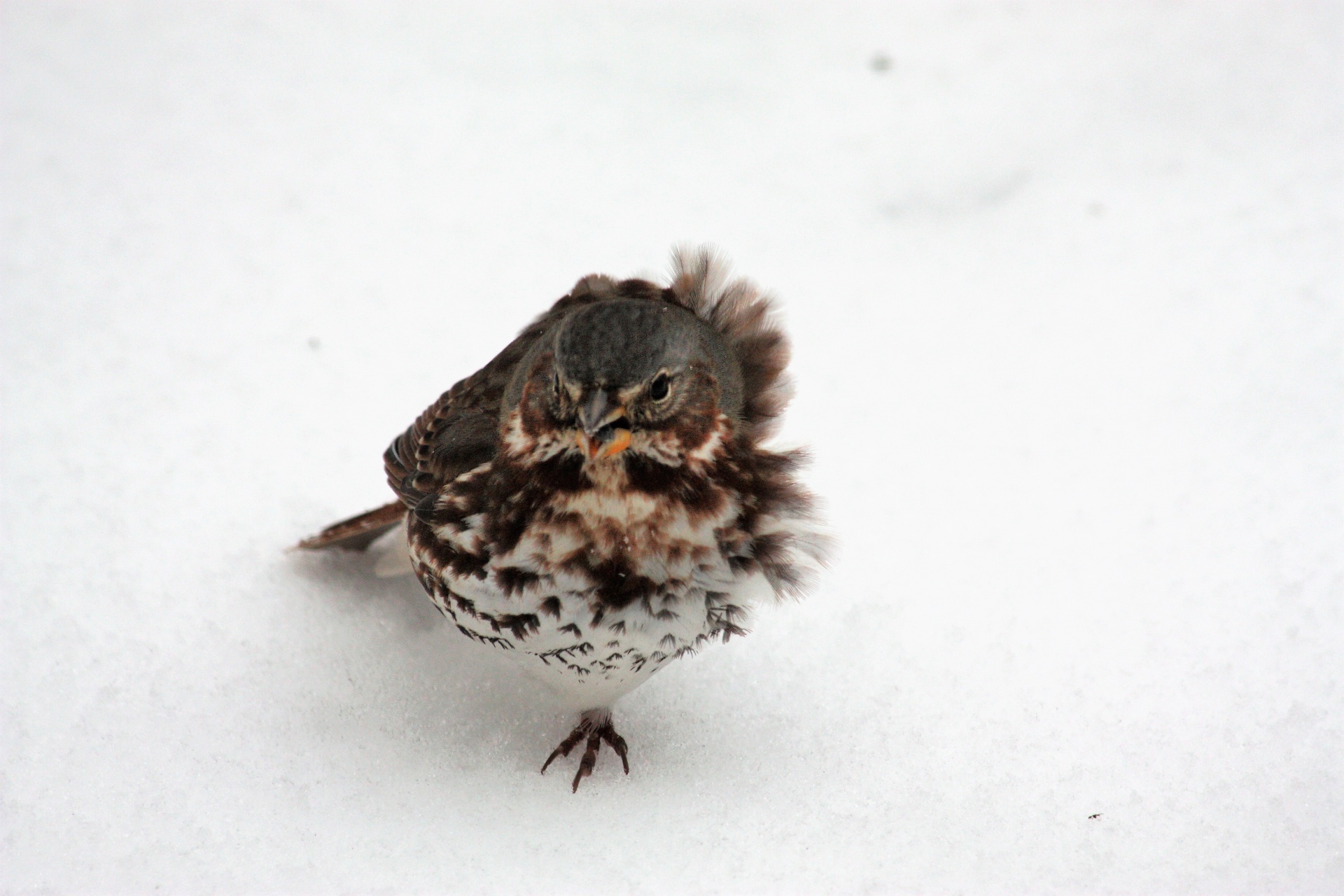
Also, many of them get their “feathers ruffled.” That can be a sight to see. We are not talking about when people get their “feathers ruffled.” Watching the birds in wind is probably where that saying came from.
“A soft answer turns away wrath, But a harsh word stirs up anger. The tongue of the wise uses knowledge rightly, But the mouth of fools pours forth foolishness.” (Proverbs 15:1-2 NKJV)
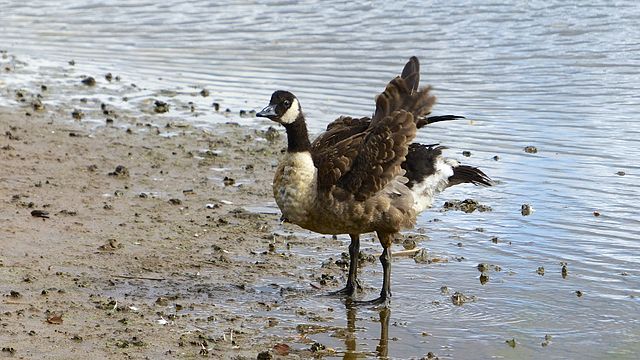
Here are some birds that were trying to deal with a windy day:
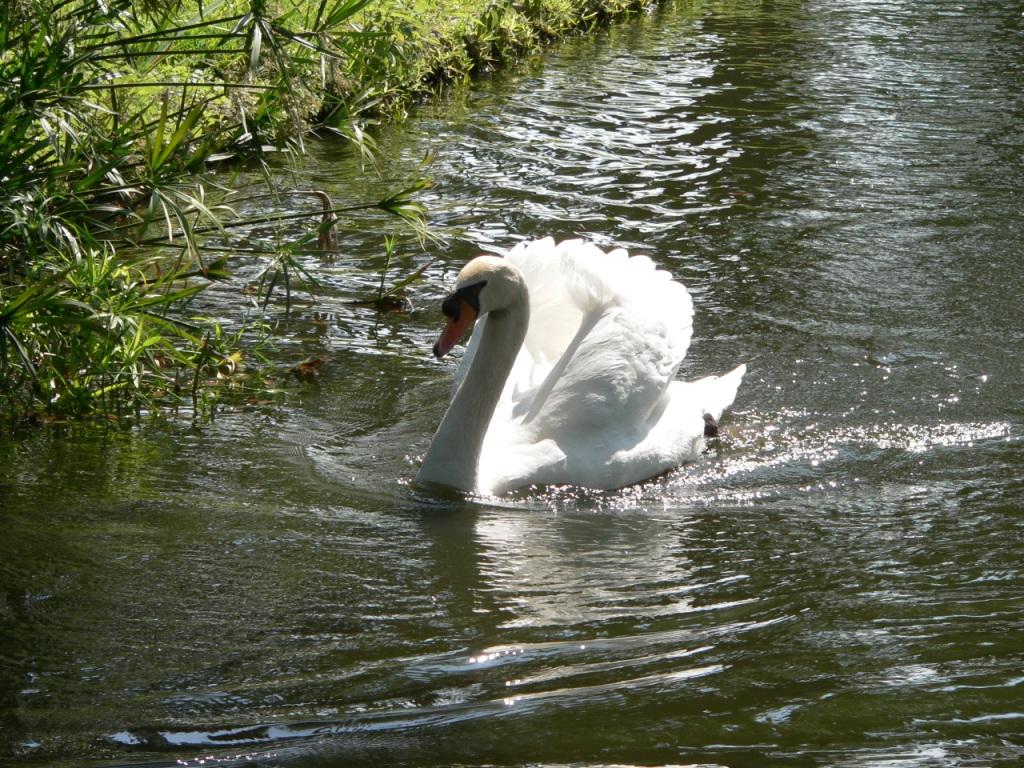
Now this Swan actually had its feathers ruffled because it was upset. They were mowing the grass along the water and it followed the man mowing the grass with this irritated posture.
“And God said, Let the waters bring forth abundantly the moving creature that hath life, and fowl that may fly above the earth in the open firmament of heaven.”
On the fifth day of the Creation Week, God created swarms of sea creatures. He also created flying creatures. In Genesis 1:20, God says: “Let birds fly above the earth across the expanse of the heavens.” The birds were not, in fact, in the firmament. When the KJV translates the phrase as “in the open firmament”, the word open reminds us that the birds are simply seen against the background of the firmament, and are not in it. We heard in the previous Creation Moment that God created whole swarms of sea creatures. It could also be assumed that He created a very large variety of flying creatures.
This brings us to the fact that many translations tell us that God made birds. The KJV refers to fowl. The use of a word other than bird in the KJV is significant. The Hebrew word is ôph (עוֹף). There is another Hebrew word that means birds. It is tsippor(צִפּוֹר). In fact, the word ôph is much wider in meaning than birds and includes all flying creatures. For instance, in Leviticus 11:13-19, the bat is included at the end of a list of birds. But the collective word used in Leviticus 11:13 is ôph, not tsippor. So ôph does not really mean birds – it means flying creatures. Hence, the creation of flying creatures in Genesis 1:20 includes not only birds, but also bats, and, by implication, flying insects also – and pterosaurs – the flying dinosaurs.
Once again, we notice the efficiency and economy of the words used in Genesis 1, which gives far more information than at first we think.
Prayer: Your wonderful book, the Bible, astonishes us again and again as it explains to us how and why You created this world. Thank You for the wide variety of creatures that You put in the world. Amen.
Ref: Sarfati, J. (2015), The Genesis Account, (Powder Springs, GA: CMI), pp. 223-225. Image: Adobe Stock Images, licensed to author.
I trust the last two posts have been informative and a blessing. Eleventh Anniversary and Eleventh Anniversary II. It still amazes me how the Lord would choose to use us in even a small way. If you have followed Lee’s Birdwatching Adventures very long, you know I believe that all these beautiful birds are a gift from the Lord’s Creative hand. They did not evolve from some blob or a dinosaur. The Bible has given us too many proofs of this, unless you have chosen not to believe His Word. I have no problem believing the following verses:
“And God created great whales, and every living creature that moveth, which the waters brought forth abundantly, after their kind, and every winged fowl after his kind: and God saw that it was good. And God blessed them, saying, Be fruitful, and multiply, and fill the waters in the seas, and let fowl multiply in the earth. And the evening and the morning were the fifth day.” (Genesis 1:21-23 KJV)
Watching Birds at MacDill AFB Shore
Nor believing that Adam named those first critters, including the birds:
“Out of the ground the LORD God formed every beast of the field and every bird of the air, and brought them to Adam to see what he would call them. And whatever Adam called each living creature, that was its name. So Adam gave names to all cattle, to the birds of the air, and to every beast of the field. But for Adam there was not found a helper comparable to him.” (Genesis 2:19-20 NKJV)
Of course today, the I.O.C. gets together with many ornithologist from around the world to name birds. Adam didn’t need a committee at that time. He was the only human present. Eve came after the naming. [They, IOC, have increased their numbers by over 400 newly named birds since the Birds of the World section was added.]
Black-capped Foliage-gleaner (Philydor atricapillus) by Dario Sanches
Back to the reviewing of the past eleven years. From the beginning, the Lord’s Word about the birds has been the main part as I tried to find the various birds mentioned in the Bible. From there is has grown in various ways, but always, God’s Words are mentioned. Almost all of our writers, that thankfully add to this blog, believe that these fantastic birds are from God’s Hand.
The Seventh Anniversary in 2015 revealed that there had been 1.3 million visits and there were over 1,100 followers. Wow! By then Golden Eagle, Dr. James J. S. Johnson and Emma Foster were writing articles. Enough to have their own page in the menu [left side].
Must have skipped the 8th and 9th anniversaries, but much was going on. The Birds of the Bible for Kids blog was being re-fired up and most of the articles were move back over to there.
The Tenth anniversary had me Really Kicking Up A Dust Storm, sometime during those years, somehow, this site was hacked. Many of the photos used in post were GONE. The “pipe dream” of having a photo of every bird in the world blew up. This really involved much work to fix all the broken links that caused. Now in the Birds of the World, the list of the birds are there, but with some photos at the end of the page. [This was the only way to fix hundreds of broken links.]
If you have a blog or are thinking about starting one, they are enjoyable, but there can be issues that can “spoil the vines. “Take us the foxes, the little foxes, that spoil the vines: for our vines have tender grapes.” (Song of Solomon 2:15 KJV) Do we throw in the towel, or do we continue? So far, we have continued. Else we wouldn’t be celebrating 11 years of blogging.
The Lord has been very gracious. We have made many friends over the years because of this blog. I feel like I know some of you personally, even though we probably won’t meet until we arrive in heaven. Thanks for all the friendships that have developed over these many years. The Lord truly has been blessing.
Tomorrow, I hope to add at least one more post to this anniversary remembrances.
“Remember His marvelous works which He has done, His wonders, and the judgments of His mouth,” (1 Chronicles 16:12 NKJV)
Yesterday, the Eleventh Anniversary of Blogging About Birds article mentioned our early beginnings for this blog. Today, I’d like to continue with what the Lord has enabled us to do. Over the years, there have been Anniversary articles written. Each one tried to update the latest events, but also, to look back and thank the Lord for His blessings. The Lord wants us to “Remember.” His blessings.
“Remember to magnify His work, Of which men have sung.” (Job 36:24 NKJV)
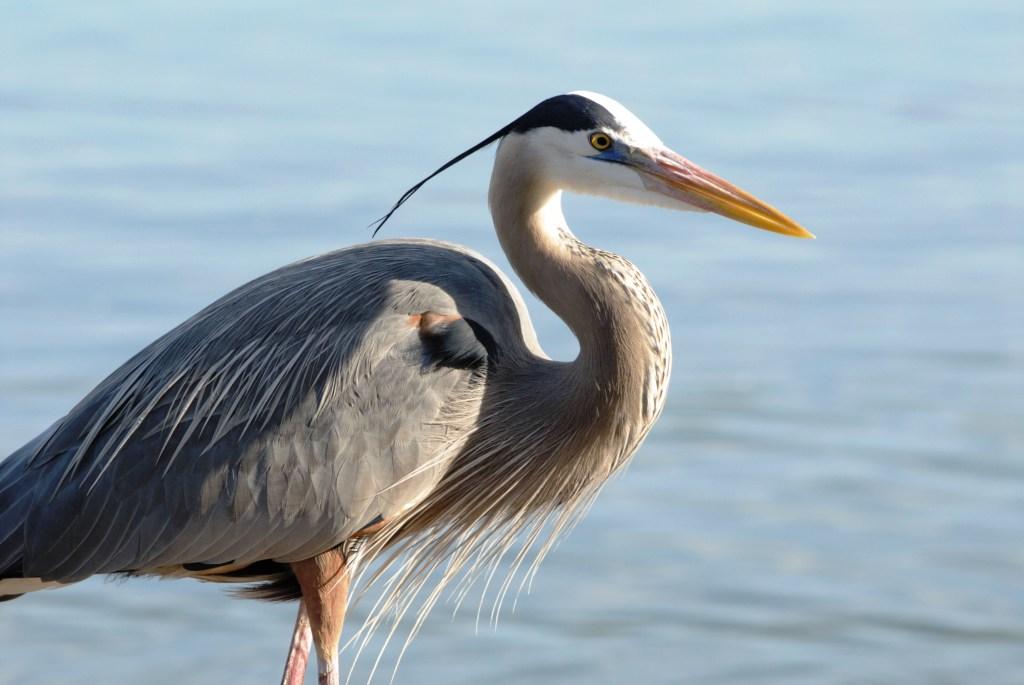
Great Blue Heron (Ardea herodias) by Dan
Here are six of those years:
“I remember the days of old; I meditate on all Your works; I muse on the work of Your hands.” (Psalms 143:5 NKJV)
Actually, yesterday, I used a quotes from Jim Elliot, but was actually thinking of a quote I used in the Happy One Year Anniversary! article. This is what happens as you age. :) Both men were great missionaries and showed tremendous insight in their quotes.
“Our pastor just reminded us of a quote by William Carey, an English Missionary to India:
“Expect great things from God, attempt great things for God.”
It appears that I forgot to produce a Third or Fourth year anniversary article. Plenty was going on. The number of visitors to this blog, for which I am thankful for everyone who visits every time, was up to 250,000 on Apr. 9, 2011. 500,000 visits by Mar. 1, 2012, and about 850,000 by the time the Fifth Anniversary rolled around. Formed by Him started around the beginning of 2012. Also, many very talented photographers allowed me the permission to use their photos. There has been a list of them in the right column for years.
White-throated Sparrow by Ray Barlow
In 2013, I remembered to produce a Fifth Blog Anniversary post. There I mentioned the second blog site, Birds of the Bible for Kids. That website was started to get back to the roots of the whole purpose of blogging. That is, introducing young people to the Birds that are mentioned in the Bible. Like this main blog, it also has had growing pains. It was started, then I killed it and moved all the articles over here. Then last year, I decided to restart it back up. Much of the ups and downs of doing the “kids blog” has been due to my health issues. Right now it is up and running, not full speed, but then, neither am I running at full speed. Though I am much improved from last summer’s back surgery. Let’s hope and pray that the young people’s blog starts producing more articles.
I forgot again on the Sixth anniversary of the blog, but WordPress reminded me. Never Give Up
“The steps of a good man are ordered by the LORD, And He delights in his way. Though he fall, he shall not be utterly cast down; For the LORD upholds him with His hand. I have been young, and now am old; Yet I have not seen the righteous forsaken, Nor his descendants begging bread.” (Psalms 37:23-25 NKJV)
Enough for now. I trust you are enjoying seeing how the Lord leads in our lives. Who ever thought that six years into doing a blog would have lead me to that point. I’ll tell you more in the next part.
Whatever your talent or abilities, if you know the Lord as your Savior, let Him use you. This is just a little blog in the midst of millions, yet the Lord has been using it. That is what I read from your remarks. Thank you for visiting over the years.









 In November 1963, an undersea volcano close to Iceland began to erupt. Emerging lava caused the sea to boil and steam. Gradually, the volcano began to appear above the waves. The eruption continued for three and a half years, causing a new island to emerge, one square mile in area and elevations of 560 feet above the surf. Of course, in the half century since the birth of this new island, erosion has reduced it somewhat – to a mere 506 feet above the sea and an area of only 0.54 square miles.





 On the fifth day of the Creation Week, God created swarms of sea creatures. He also created flying creatures. In Genesis 1:20, God says: “Let birds fly above the earth across the expanse of the heavens.” The birds were not, in fact, in the firmament. When the KJV translates the phrase as “in the open firmament”, the word open reminds us that the birds are simply seen against the background of the firmament, and are not in it. We heard in the previous Creation Moment that God created whole swarms of sea creatures. It could also be assumed that He created a very large variety of flying creatures.




 Birds of the Bible For Kids