Part I – 11 Years of Blogging About Birds

Wood Stork by Lee

“But now ask the beasts, and they will teach you; And the birds of the air, and they will tell you;” Job 12:7

This is being shared from Lee’s Birdwatching Adventures Plus. It is the home blog of this website.

The idea for the Birds of the Bible lessons began when we were members of Bethany Baptist Church in Avon Park, Florida. I used to carry a laptop into a junior Sunday School class, and for five minutes each week, present a different bird mentioned in the Bible.

Then, we moved up to Winter Haven and began attending Faith Baptist Church, where we are still members. For two years there was no outlet for me to present my birds. When Stephen, the assistant to the pastor, at that time, became aware of what I did, he offered me a chance to post on The Fountain. [The church’s blog] I have written about this before, but am still surprised at how the Lord has allowed me to continue this adventure for so long. On February 15th, 2019, it will be eleven years since this began.

The Fountain was/is on the Blogger platform where I cut my “blogging teeth.” They stopped using the blog in 2013, but have kept all their post. So, all my beginning blogs are still there, along with my learning process. Lee’s Birdwatching Adventure was begun so I could learn how to layout articles for the church blog.

My first blog in February, 2008: Birds of the Bible – Introduction (by Lee Dusing)

American White Pelicans at Lake Hollingsworth

On July 05, 2008, Lee’s Birdwatching Adventures Plus was created on the WordPress platform, where it still is today. All those original articles were moved over to the new blog and removed from the old one. What they look like on the church’s blog is how they looked originally.

When all this began, it never crossed my mind that the Lord would allow it to grow to where it is today.  Our pastor is always challenging us to give the Lord whatever talent or ability we have. Let Him decide how it is to be used, and be willing to let Him use us.

“So God created great sea creatures and every living thing that moves, with which the waters abounded, according to their kind, and every winged bird according to its kind. And God saw that it was good. And God blessed them, saying, “Be fruitful and multiply, and fill the waters in the seas, and let birds multiply on the earth.” So the evening and the morning were the fifth day.” (Genesis 1:21-23 NKJV)

Thank you Lord for letting me love you and your created critters, especially the birds of the air. Another saying our pastor uses is from Missionary Jim Elliot: “He is no fool who gives what he cannot keep to gain that which he cannot lose.” There has been many hours given, and I won’t know until heaven to find out what rewards these efforts may have earned.

Looking through Jim Elliot’s quotes on that link, I found these also:

“Wherever you are, be all there! Live to the hilt every situation you believe to be the will of God. ― Jim Elliot

“God always gives his best to those who leave the choice with him.” ― Jim Elliot

“Oh, the fullness, pleasure, sheer excitement of knowing God on earth!”― Jim Elliot

“Lord, make my way prosperous not that I achieve high station, but that my life be an exhibit to the value of knowing God.”― Jim Elliot

“I couldn’t have asked for more than God in deliberate grace has surprised me with!”― Jim Elliot

I am so thankful for the various writers that have contributed to this blog over the years. Two have already gone on to heaven, A J Mithra, and April Lorier. Currently, Ian Montgomery, Dr. James J. S. Johnson, Emma Foster, Golden Eagle, and others are contributing to the blog.

Again, all of these efforts would be of no avail, if you, the reader, had not stopped by to read these articles. Thank you for all your visits over the years. We trust you will continue to stop in to see what new Birdwatching Adventures we have written about.

One of my most favorite videos was on the Eagles post, which isn’t currently working on the Fountain post, The Birds of the Bible ~ Eagles

but here it is:

“Now my days are swifter than a runner; They flee away, they see no good. They pass by like swift ships, Like an eagle swooping on its prey.” (Job 9:25-26 NKJV)

Here are some of the first Birds of the Bible articles on The Fountain:

February 2008

March 2008

April 2008

Looking through the Blog Archive [right side] on the Fountain, you will find others also.

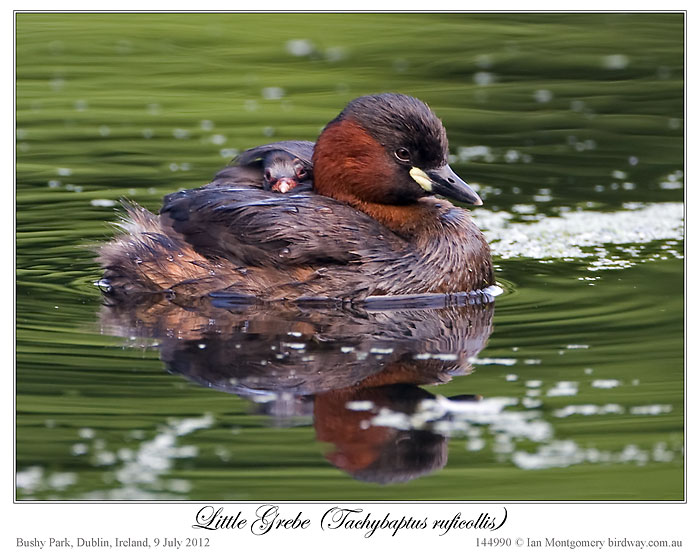
Safely Under The Wing Of A Grebe

Little Grebe (Tachybaptus ruficollis) by Ian Montgomery

“Keep me as the apple of the eye, hide me under the shadow of thy wings,” (Psalms 17:8 KJV)

Ian’s photo of the Little Grebe with a “little” Grebe safely under the wing of its parent.

(Taken from Ian’s Bird of the Moment – Australian Grebe)

Wordless Birds

How To Set A Scientist Humming – Creation Moments

“So Adam gave names to all cattle, to the birds of the air, and to every beast of the field.” Genesis 2:20a

For over a century, textbooks have used the Galapagos Island finches as an example of evolution in action. The facts are that the differences between these finches are less than the differences in the human population – and nobody claims that we are evolving! A lesser-known example of evolution in action was recently challenged in the scientific literature concerning certain hummingbirds found on the island of St. Lucia in the Caribbean. For a long time it was claimed that one species of hummingbird was diverging and becoming another species. However, it now turns out that the birds were nothing more than the male and the female of the same species! The male of the species has a relatively straight bill perfectly designed to allow efficient feeding of the nectar from the red and orange blooms of a flower related to the bird of paradise. The female bird, on the other hand, has a longer, sharply curved bill that is perfect for feeding on the green flowers of a different plant, also related to the bird of paradise.

Those who believe in evolution point to such differences and argue that it is the environment that has caused these differences to develop. The creationist would certainly agree but point out that those variations are strictly limited. Giving one of these variations another species name does not make it a different species and, thus, cannot be used as evidence for evolution in action. Again, to use the human example, humans come in different colors but no one now applies different names or claims that we are evolving.

Prayer: Lord, help me understand how Your hand is revealed in Your creation. Amen.

Ref: Science News, 7/22/00, pp. 52‑53, “Flowers, not flirting, makes sexes differ.”

How To Set A Scientist To Humming

Creation Moments ©2019 Used with permission

Woodstock’s High-rise Dwelling

Woodstock’s Highrise Nest

Woodstock is not the only bird to live in a nest complex. Birds in this area, central Florida, have at least one bird, the Monk Parakeet, or Quaker Parakeet that makes an “apartment” nest.

Monk Parakeet and Nest

Monk Parakeet and Nest – Near South Lake Howard Nature Park

We used to own two Monk Parakeets, so I was familiar with them when we moved here. In South Florida, where we lived in the past, they were wild there also. In fact, Bandi, our first Monk parakeet had been shot out of the tree next door by teenagers. Some neighbor kids brought her to me and long story short, her wing had to be amputated. So, she never went back to the wild.
Monk Parakeet (Myiopsitta monachus) Hoppy & Bandi

Hoppy in front, Bandi in back – Monk Parakeet (Myiopsitta monachus)

Hoppy, our second one, had a broken leg, which our vet fixed up. That is the bandage on his leg. Back to the Highrise.

Sociable Weaver nest (Philetairus socius) © Ingo Arndt-NPL

The Sociable Weaver (Philetairus socius) is a great example of building a “Highrise.” [from 16 Most Amazing Bird Nest ]

Weaverbirds Nests are Like Huts has a great photo of an elaborate “homestead.” Also, it is a very interesting article about how they make the nest.

Sociable Weaver nest (Philetairus socius) ©Dillon Marsh

Then again, maybe Woodstock would like to visit the Montezuma Orpendola and select one of the higher nest apartments.

Montezuma Oropendola (Psarocolius montezuma) Nest Complex ©WikiC

There are many more examples of how the Lord, in His Wisdom, has given the birds the knowledge to build these nest and also, to know that “community” can aid in their protection.

The book of Ecclesiastes has great words of wisdom from Solomon when he refers to one person, versus two or more:

“There is one alone, without companion: He has neither son nor brother. Yet there is no end to all his labors, Nor is his eye satisfied with riches. But he never asks, “For whom do I toil and deprive myself of good?” This also is vanity and a grave misfortune. Two are better than one, Because they have a good reward for their labor. For if they fall, one will lift up his companion. But woe to him who is alone when he falls, For he has no one to help him up. Again, if two lie down together, they will keep warm; But how can one be warm alone? Though one may be overpowered by another, two can withstand him. And a threefold cord is not quickly broken.” (Ecclesiastes 4:8-12 NKJV)


Protecting The Birds In Zoos From Extreme Cold

House Finch in Snow ©WikiC

“But now ask the beasts, and they will teach you; And the birds of the air, and they will tell you;” (Job 12:7 NKJV)

The last few days, the northern states of the United States and Canada have been experiencing extreme cold temperatures. Watching the news today, our Manatees, here in Florida, are heading in to the warmer waterways. But how about the birds?

Checking articles about how the Zoos protect their avian wonders during this severe cold snap, there were several interesting things that are being done to protect the birds.

In Chicago, they actually closed the “Lincoln Park Zoo …closed at 3 p.m. on Tuesday and was to remain shut on Wednesday, when temperatures are expected to reach a daytime high of around 14 degrees below zero. Brookfield Zoo planed to close its doors Wednesday and Thursday.” [edited to make it past tense, written Jan 28, 2019]

“To ensure the safety of our animals and staff, the zoo will only have a skeleton crew on site who will provide basic core functions, including animal care and to check on the facilities,” said Stuart Strahl, president and CEO of the Chicago Zoological Society, which manages Brookfield Zoo, in a statement.

That zoo has closed just three other times in its 85-year history: Feb. 2, 2011, due to a snowstorm; and Sept. 14, 2018 and April 18, 2013, because of significant flooding.”

“Lincoln Park Zoo spokesperson Jillian Braun said the zoo has closed just one other time due to extreme weather in recent memory. ”

Chicago Zoos to Close in Anticipation of Extreme Cold

Swallows Keeping Warm in Cold and Snow ©WTTW

Another article by the same source “Shiver, Fluff and Cuddle: How Birds Keep Warm in the Winter

Even the Penguins in Canada aren’t too sure about this cold weather. See:

These Zoo Penguins Are Clearly Not Enjoying Canada’s Cold Winter

“The Calgary Zoo in Alberta had to bring its penguins inside after the weather dropped to -25 degrees below zero Celsius.

Calgary Zoo – Gentoo Penguins ©Inside Edition

The zoo’s 51 Gentoo penguins, Humboldt penguins, king penguins and rockhopper penguins, are usually brought in at some point every year.

“The keepers are able to call the penguins in and they have an instinct to want to be indoors when it gets that cold as well. We do this every winter when the temperature plummets to where it was a few days ago,” a zoo official told InsideEdition.com. “They are cold weather birds, but the temperatures were colder than they prefer.”

Another Zoo, Saskatoon zoo works to keep animals safe in extreme cold weather, says, “The species that might be tropical or from regions that never see minus temperatures have to come inside at the beginning of the winter season.”

Dunlins in Snow

The St. Louis Zoo in Missouri says, “On one of the coldest days in over 20 years, employees at the St. Louis Zoo are busy making sure animals are being cared for and protected from the dangerously cold weather….

“A lot of times you’ll see those animals adapted to cold weather actually being more active in the cooler weather than you would in the summer heat,” Anne Tieber, curator of birds. In the historic buildings that house the birds, monkeys, and reptiles, zookeepers keep the temperature around 70 degrees, with a little of humidly for the tropical plants and some animals.”

“One surprisingly warm place the zoo is the Penguin and Puffin Coast, the building is kept at a balmy 45 degrees year-round.  So, right now it seems incredibly warm to the 7 degrees outside but flips to feeling cold in the summer.”

Enjoy these articles, plus a few more that tell how the wild birds also survive these extreme cold days and nights.

Chicago Zoos to Close in Anticipation of Extreme Cold

Shiver, Fluff and Cuddle: How Birds Keep Warm in the Winter

These Zoo Penguins Are Clearly Not Enjoying Canada’s Cold Winter

Saskatoon zoo works to keep animals safe in extreme cold weather

St. Louis Zoo in Missouri

More:

COLD-WEATHER SKILLS OF FEATHERED FRIENDS – Zoo Atlanta

Keeping Warm in Winter is for the Birds

Do Animals Hate the Bitter Cold?

How Does Extreme Winter Weather Affect Wildlife?

How Canada’s zoos protect their animals from the bitter cold

Wordless Birds


Cold Day For Birdwatching – Willets

Willet at Ding Darling NWR by Lee 01-26-2019

“But now ask the beasts, and they will teach you; And the birds of the air, and they will tell you;” (Job 12:7 NKJV)

Previously, we were at Merritt Island NWR and had seen some Willets and I needed help identifying some birds. One of them turned out to be a Willet. I have seen them before, but not very often. Today, we went to Ding Darling NWR over on Sanibel Island, right nearby Fort Myers, Florida.

Today was very cool, around 48-50 degrees, overcast, and very windy. Not a great day for birdwatching, if you have a small temperature range like I do. :) My range is between 65 and 80 degrees. Anyway, back to the adventure.

The birds were few and not really close in. Most of my photos were taken using my zoom. The Willets were feeding and I happened to be standing by a lady with a nice camera that had a long lens on it. Wanting to show of my new Willet identity skills, I said, “those are Willets, right.?” [That is how you ask when you really aren’t 100% sure.]

“Yes, they are.” Then she said, “I am a biologist and a Shorebird specialists.” About that time, one of the Willets from another group flew by us and she told me that the black and white wing bars are a great clue. Also, they are one of the largest shorebirds in this area.

Willet (Tringa semipalmata) at Ding Darling NWR by Lee 01-26-2019

One of the great things about birdwatching is the helpfulness of other birders. Most are willing to share their experience and knowledge about these Avian Wonders from our Creator. Now I have another way to help figure out that I am looking at a Willet. We should always be willing to learn new things about birds, or any topic.

Here are a few more photos as he flew by:

Willet (Tringa semipalmata) at Ding Darling NWR by Lee

Willet (Tringa semipalmata) at Ding Darling NWR

Willet (Tringa semipalmata) at Ding Darling NWR

Willet (Tringa semipalmata) at Ding Darling NWR by Lee

When the bird landed, you could still see the black at the back of its wings. [far left bird]

As we continued to watch and talk, a group of the Willets flew over and landed. It was nice to see all those black and white markings. Once they settled down, close their wings, all that “clue” is again hid. Oh, the joys and challenges of birdwatching.

Willet (Tringa semipalmata) at Ding Darling NWR by Lee 01-26-2019

Willet (Tringa semipalmata) at Ding Darling NWR by Lee 01-26-2019

By the way, looking back over previous photos, we were last at Ding Darling in July of 2008. It has been some time since we were there and there were many more birds. Could it be because it was in July and WARMER???

The verse quoted above, “But now ask the beasts, and they will teach you; And the birds of the air, and they will tell you;” (Job 12:7 NKJV), reminds us that the Lord has made each species just a bit different. If we study them, “they will tell us.”


Ding Darling NWR – FWS

Ding Darling NWR – Wikipedia

Willet – All About Birds

  • Because they find prey using the sensitive tips of their bills, and not just eyesight, Willets can feed both during the day and at night.

Willet – Wikipedia

Willet (Tringa semipalmata) ©WikiC

Updating Birds of the World

Japanese White-eye now the Warbling White-eye (Zosterops japonicus) by W Kwong

“The hearing ear, and the seeing eye, the LORD hath made even both of them.” (Proverbs 20:12 KJV)

Because of updating the Birds of the World section on the other site, there hasn’t been any new posts here. Twice a year, the international group of birding organizations get together and update the list of ALL the birds of the world.

This year, because of more DNA studies and other reasons, the total number of birds was raised from 10,711 to 10,738 extant species and 158 extinct species of birds of the world (Version 9.1), with subspecies (20,046). These are classified into 40 Orders, 245 Families (plus 1 Incertae sedis), in 2313 Genera. That is 27 “new species.” This is a larger increase than most updates. These birds did not just appear, most of the new birds were subspecies that were raised to full species status. By the way, “Incertae sedis” means that they really do not know which family to place those birds in.

Barking Boobook (Ninox connivens) by Ian

In the Birds of the World Section, there is a list of all of these 10,738 birds. (These were being updated.) They are arranged by Orders. They are arranged by Families. They are also listed by names, with a choice of First name, then last name, or Last name, and then, the first name.

If you have to do a report for school, the various lists of birds might help you find just the right bird for that assignment.

Here are the last articles written about the newest updates, and links to the list of birds.

World Bird Names – I.O.C. Version 9.1

Woodstock and the I.O.C. 9.1 Update

White-Eye Changes from I.O.C. Ver 9.1

Birds of the World:

The Wise Owl

Bible Birds – Mountain Birds Part II

Bar-headed Goose (Anser indicus) by Lee LPZ

Bar-headed Goose (Anser indicus) Lowry Park Zoo by Lee

While you were reading Bible Birds – Mountain Birds in Psalm 50:11 – Part I, did you notice where the birds/fowls are? Go to the last article and scroll through the verses. See if you find the ones listed below. Did you find any that I missed?

Most of them are from the mountains. Where else are they mentioned?

They are:

  • “in the mountains”
  • “of the mountains”
  • “on the mountains”
  • “of the hills”
  • “upon the mountains”
  • “living in the fields”
  • “every mountain bird”
  • “of the air”
  • “in the sky”
  • flying over the mountains” [more on this later]
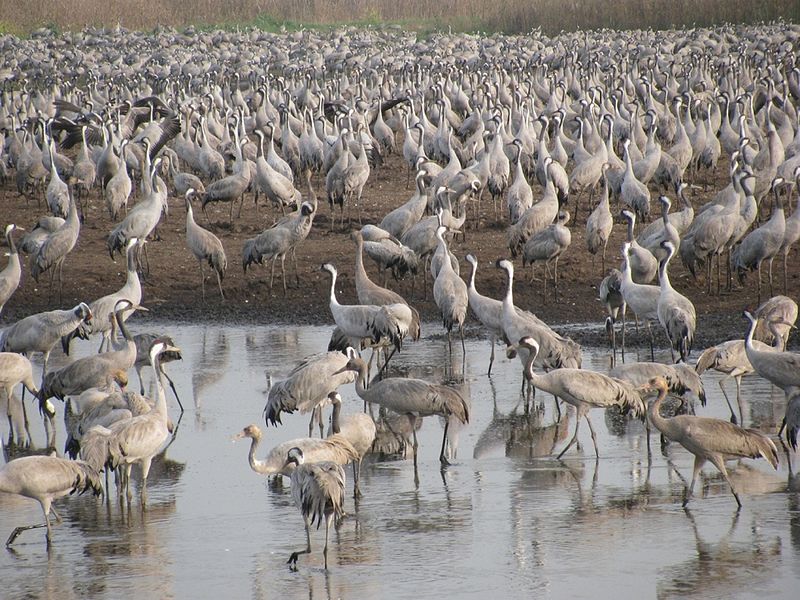
Common Cranes in Israel. Many species of crane gather in large groups during migration and on their wintering grounds

Common Cranes in Israel. Many species of crane gather in large groups during migration and on their wintering grounds

Common Crane (Grus grus) by Nikhil Devasar

Common Crane (Grus grus) by Nikhil Devasar

Whose birds are they? What did the Creator say about these birds? Do the same again, before you look at this list. See what the Creator said about the birds.

  • “I know all the birds, every bird”
  • “I know and am acquainted with all the birds”
  • “all the wild birds are mine”
  • “I keep track of every bird”
  • “I know every movement of the birds”
  • “I have known every fowl”
  • “I see all the birds”
  • “I know every mountain bird by name”

This reminds us of “Are not two sparrows sold for a copper coin? And not one of them falls to the ground apart from your Father’s will.”
(Matthew 10:29 NKJV) Do you know of any other verses that tells us about how God cares about the birds?

At the end of these verses from Psalm 50:11, what does the Word say about them?

  • “are/is mine/Mine”
  • “are Mine and are with Me, in My mind”
  • “is in my care”
  • “is with me”
  • “indeed, everything that moves… is mine”
  • “All creation and its bounty are mine…”
  • “belong to me”
  • “are at my commandment”
  • “are in my sight”
  • “is in my thoughts. The entire world and everything it contains is mine.”
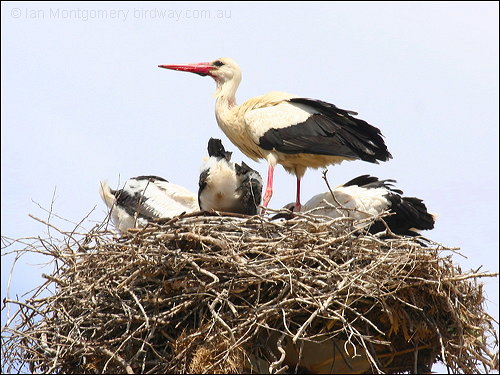
White Stork (Ciconia ciconia) by Ian

White Stork (Ciconia ciconia) by Ian

WOW! 

As my pastor would say, let those words sink in. If God, the Creator, cares that much about the birds and animals, how much more does He care about us.

Psalm 50:11 refers to all the birds living in and around the mountains. One of those translations caught my attention when it mentioned the birds “flying over the mountains“. I have never heard of the VOICE translation, but this is how it reads:

Bar-headed Goose (Anser indicus) Zoo Miami by Lee

Bar-headed Goose (Anser indicus) Zoo Miami by Lee

Every bird flying over the mountains I know; every animal roaming over the fields belongs to Me.”

Yes, all the mountain birds all fly over the mountains, but the Bar-headed Goose, that we saw at the zoo, is known to fly over the “peaks of the Himalayas on their migratory path.” At an altitude of 29,000 feet/8,800 meters. But this Goose isn’t the highest flying bird.

An article from Institute for Creation Research mentions high flying birds. “What about high-flying birds that have no such oxygen mask? How can they survive elevations of 15,000 feet and sometimes higher without a supplemental source of oxygen? Many bird migrations occur at extremely high elevations: 21,000 feet for the mallard duck, 27,000 feet for swans, even 36,000 feet for vultures!The article goes on to explain about the Creators design of such birds:

“A bird’s lungs function according to the through-flow principle: the inspired [inhaled] air collects in the bird’s posterior air-sacs and flows through the lungs to the anterior air-sacs before it passes back out. In the lungs the blood is oxygenated by fine air capillaries, where air and blood flow in opposite directions. Owing to this counterflow, the oxygenated blood that leaves the bird lung acquires a higher oxygen concentration than that corresponding to the oxygen pressure in the expired [exhaled] air.

In addition to flow-through lungs, birds have hearts that are proportionately larger to their bodies than those of mammals—from 0.8 to 1.5% of total body mass, compared to mammals, which average around 0.6%. The birds’ larger hearts enable speedy blood transport and intensive oxygen renewal.”

Which is the highest flying bird? The Ruppell’s Vulture (Gyps rueppellii). One was hit by a plane at 11,300 metres (37,100 feet).

Rüppell’s Vulture (Gyps rueppellii) ©WikiC

Check out Top 10 Highest Flying Birds in the World – TMW. You might be surprised how high those birds can fly.

Do you have a tendency, at times, to just read a verse and then move on? Yet, sometimes it is good to check out some of the other translations. The last article showed photos of some of the birds that live in the mountains, but how about these that fly over the mountains. Only a Creator could design them to be able to fly that high.. Chance molecules, evolution, or whatever theory man comes up with will not explain the Wisdom that comes Only from the Lord Jesus Christ, their Creator.


High Altitude Flying For Birds – I.C.R.

List of Birds by Flight Heights – Wikipedia

Top 10 Highest Flying Birds in the World – TMW

Bible Birds

Birds of the Bible

Bible Birds – Mountain Birds in Psalm 50:11 – Part I,

Wordless Toucan

Bible Birds – Mountain Birds in Psalm 50:11 – Part I

Mountain Wheatear (Myrmecocichla monticola) ©WikiC

“I know all the birds of the mountains, And the wild beasts of the field are Mine.” (Psalm 50:11) NKJV

Hooded Mountain Tanager (Buthraupis montana) ©BirdPhotos.com

This is Part I. Shown are the many translations of Psalm 50:11. God is speaking and telling us that He knows all these birds and cares about them. How much more does God the Creator care about us?
In the next post, there will be more facts about the Birds of the Mountains.
This list of verses came from the Bible Gateway when searching for Birds of the “mountain/s”. Psalm 50:11 was one of them., this is a list of all their translations for that verse. The version links will take you to the verse in that translation.
I know all the fowls of the mountains, and the wild beasts of the field are Mine.
I know all the birds of the mountains; And the wild beasts of the field are mine.
“I know every bird of the mountains, And everything that moves in the field is Mine.
I know and am acquainted with all the birds of the mountains, and the wild animals of the field are Mine and are with Me, in My mind.

Mountain Blackeye (Chlorocharis emiliae) ©WikiC

I know all the fowls of the mountains: and the wild beasts of the field are mine.
I know every bird of the mountains, and the creatures of the field are mine.
I know every mountain bird; even the insects in the fields are mine.
I know all the birds in the mountains; whatever moves in the fields is mine.

Mountain Bluebird (Sialia currucoides) ©Elaine R Wilson WikiC

I know all the birds in the mountains, and every wild creature is in my care.
I know all the fowl of the mountains, and the roaming creatures of the field are mine:
I know every bird in the mountains. Everything that moves in the fields is mine.
I know every bird in the mountains, and everything that moves in the field is with me.

Mountain Bamboo Partridge (Bambusicola fytchii) by Lee Zoo Miami

I know all the birds of the hills, and all that moves in the field is mine.
I know every bird on the mountains, and every living thing in the fields is mine.
I know all the fowls on the mountains, and the wild beasts of the field are mine.

Mountain Quail (Oreortyx pictus) ©WikiC

I know every bird in the mountains. Everything that moves in the fields is mine.
All the wild birds are mine and all living things in the fields.
I know every bird of the mountains, and the creatures of the field are Mine.
I know every bird on the mountains. Every living thing in the fields is mine.

Rufous-bellied Mountain Saltator (Saltator rufiventris)©Flickr Ron Knight

I know all the birds in the mountains; indeed, everything that moves in the field is mine.
I know all the fowls of the mountains; and the wild beasts of the field are with me.
I know all the fowls of the mountains: and the wild beasts of the field are mine.
I know all the fowls of the mountains: and the wild beasts of the field are mine.

Tucuman Mountain Finch (Compsospiza baeri) ©Flickr Ron Knight

I know every bird of the mountains, and every moving creature in the field is mine.
For all the animals of field and forest are mine! The cattle on a thousand hills! And all the birds upon the mountains!
“…Every creature in the forest is mine, the wild animals on all the mountains. I know every mountain bird by name; the scampering field mice are my friends. If I get hungry, do you think I’d tell you? All creation and its bounty are mine….”
I know every bird of the mountains, and the creatures that move in the field are Mine.

Blue-winged Mountain Tanager (Anisognathus somptuosus) ©Flickr Lip Kee Yap

I know every bird in the mountains. Everything that moves in the fields is mine.
I know every bird in the heights; whatever moves in the wild is mine.
“I know every bird of the mountains, And everything that moves in the field is Mine.
I know every bird on the mountains, and every living thing in the fields is mine.

Scarlet-bellied Mountain Tanager (Anisognathus igniventris) ©Flickr Joao Quental

I keep track of every bird in the hills, and the insects of the field are mine.
I own every bird in the mountains. The insects in the fields belong to me.
I know every bird in the mountains, and the insects in the fields are mine.

Mountain Tailorbird (Phyllergates cucullatus) by© Wiki

I know all the birds of the mountains, And the wild beasts of the field are Mine.
I know every bird of the mountains. And all things that move in the field are Mine.
I know every bird on the mountains, and all the animals of the field are mine.
I know all the birds of the air, and all that moves in the field is mine.
Mountain Pygmy Owl (Glaucidium gnoma) ©WikiC

Mountain Pygmy Owl (Glaucidium gnoma) ©WikiC

I know all the birds of the air, and all that moves in the field is mine.
I know kol oph (every bird) of the harim; and the animals of the wild are Mine.
Mountain Caracara (Phalcoboenus megalopterus) ©WikiC

Mountain Caracara (Phalcoboenus megalopterus) ©WikiC

Every animal of field and forest belongs to me, the Creator. I know every movement of the birds in the sky, and every animal of the field is in my thoughts. The entire world and everything it contains is mine.
I know all the birds of the air, and all that moves in the field is mine.
I know every bird of the mountains. Everything moving in the field is Mine.
Mountain Imperial-Pigeon (Ducula badia) by Ian

Mountain Imperial-Pigeon (Ducula badia) by Ian

Every bird flying over the mountains I know; every animal roaming over the fields belongs to Me.
I know all the birds of the mountains. The wild animals of the field are mine.
I have known all the volatiles of the firmament; and the fairness of the field is with me. (I know all the birds on those hills; and the wild beasts of the fields be mine.)
I have known every fowl of the mountains, And the wild beast of the field [is] with Me.

Green-crowned Brilliant and Purple-throated Mountain-Gem by Ray

Additional Psalms 50:11 verses from e-Sword versions loaded [no links]:
(ACV)  I know all the birds of the mountains, and the wild beasts of the field are mine.
(AKJV)  I know all the fowls of the mountains: and the wild beasts of the field are mine.
(ASV)  I know all the birds of the mountains; And the wild beasts of the field are mine.
(BBE)  I see all the birds of the mountains, and the beasts of the field are mine.
Mountain Hawk-Eagle (Nisaetus nipalensis) by Peter Ericsson

Mountain Hawk-Eagle (Nisaetus nipalensis) by Peter Ericsson

(Bishops)  I knowe all the foules vpon the mountaynes: and the wylde beastes of the fielde are at my commaundement.
(Brenton)  I know all the birds of the sky; and the beauty of the field is mine.
(DRB)  I know all the fowls of the air: and with me is the beauty of the field.
(ECB)  I know all the flyers of the mountains and the creatures of the field with me.
Mountain Chiffchaff (Phylloscopus sindianus) by Nikhil Devasar

Mountain Chiffchaff (Phylloscopus sindianus) by Nikhil Devasar

(Geneva)  I knowe all the foules on the mountaines: and the wilde beastes of the fielde are mine..
(HRB)  I know all the birds of the mountains; and all moving in My fields are Mine;
(IAV)  I know all the fowls of the mountains: and the wild beasts of the field are mine.
(Phillips) No verse
Brandt's Mountain Finch (Leucosticte brandti) by Nikhil

Brandt’s Mountain Finch (Leucosticte brandti) by Nikhil

(LITV-TSP)  I know all the birds of the mountains; and all moving in My fields are Mine;
(JPS)  I know all the fowls of the mountains; and the wild beasts of the field are Mine.
(KJ2000)  I know all the fowls of the mountains: and the wild beasts of the field are mine.
(KJV)  I know all the fowls of the mountains: and the wild beasts of the field are mine.
White-throated Mountaingem (Lampornis castaneoventris) by Ian

White-throated Mountaingem (Lampornis castaneoventris) by Ian

(KJV-1611)  I know all the foules of the mountaines: and the wild beasts of the field are mine.
(KJVA)  I know all the fowls of the mountains: and the wild beasts of the field are mine.
(KJV-BRG)  I know all the fowls of the mountains: and the wild beasts of the field are mine.
(LITV)  I know all the birds of the mountains; and all moving in My fields are Mine;
Mountain Thornbill (Acanthiza katherina) by Ian

Mountain Thornbill (Acanthiza katherina) by Ian

(MKJV)  I know all the birds of the mountains; and the wild beasts of the field are Mine.
(NAS77)  “I know every bird of the mountains, And everything that moves in the field is Mine.
(RV)  I know all the fowls of the mountains: and the wild beasts of the field are mine.
(The Disciple’s Bible)  I know all the birds of the mountains; And the wild beasts of the field are mine.
Plate-billed Mountain Toucan (Andigena laminirostris) by Michael Woodruff

Plate-billed Mountain Toucan (Andigena laminirostris) by Michael Woodruff

(TRC)  I know all the fowls upon the mountains, and the wild beasts of the field are in my sight.
(TS2009)  “I know all the birds of the mountains, And all moving in My field are Mine.
(UKJV)  I know all the fowls of the mountains: and the wild beasts of the field are mine.
(Webster)  I know all the fowls of the mountains: and the wild beasts of the field are mine.

Colombian Mountain Grackle (Macroagelaius subalaris) ©WikiC

Birds of the Bible – Birds of the What??

Bible Birds

Birds of the Bible

Wordless Woodpecker

Creation Moment’s – The First Beak

The First Beak Bird – from Creations Moments

Genesis 1:20

“And God said, Let the waters bring forth abundantly the moving creature that hath life, and fowl that may fly above the earth in the open firmament of heaven.”

Hardly a week goes by without a new news story about the supposed evolution of birds. In the week that I wrote this script, evolutionary paleontologists announced that they had discovered the world’s oldest beak. This beak was attached to a bird called ichthyornis (or fish-bird), and the fossil was actually already in the possession of Yale University. Researchers from that institution examined the fossil, which included a complete skull. One researcher said:

The fossil record provides our only direct evidence of the evolutionary transformations that have given rise to modern forms. This extraordinary new specimen reveals the surprisingly late retention of dinosaur-like features in the skull of Ichthyornis – one of the closest-known relatives of modern birds from the Age of Reptiles.

Bird Beaks from Wikipedia

One has to ask how such a skull constitutes “direct evidence of evolutionary transformations”. We do not see the beak being transformed from a dinosaur skull. Indeed, even in the popular-level articles from which this information was gleaned, we see some startling problems. For example, ichthyornis is thought to have died out 83.5 million years ago. Yet, velociraptors – a potential therapod precursor to birds – was claimed not to have appeared until 75 million years ago, about 8 million years after the creature into which it is supposed to have evolved. Even allowing for these problems with timescales, creationist researchers have noted that the evolutionary distance from ichthyornis to modern birds is less than that alleged to exist between many modern birds. One must conclude that ichthyornis has been assigned the world’s oldest beak merely because of an a priori commitment and bias to evolutionary theory.

Lord God, we see evidence of Your unique designs in all the creatures You have made. Thank You that You have made all things well. Amen.

Ref: Yale University. “Scientists find the first bird beak, right under their noses.” ScienceDaily, 2 May 2018. <www.sciencedaily.com/releases/2018/05/180502131859.htm>. Image: CC BY-SA 4.0.

Creation Moments ©2019, used with permission


Here we go again with the evolutionary theories.

Interesting Things

Snowy Egret Showing Off Yellow Feet

Snowy Egret at Merritt Island NWR 1-1-2019 by Lee

We went over to the east coast of Florida during the New Year holiday. We were able to do some birdwatching at Viera Wetlands in Viera, Florida and also went to Merritt Island National Wildlife Reserve’s Black Point Dr. That is where I captured this Snowy Egret strutting with his yellow feet showing. We also saw the Snowy Egrets at Viera.

Happy New Year and these verses refer to walking. Good reminders as we start the new year off. Here are a few of those verses:

“But as for me, I will walk in mine integrity: redeem me, and be merciful unto me.” (Psalms 26:11 KJV)

Snowy Egret Viera Wetlands – 12-31-2018 by Lee

“For the LORD God is a sun and shield: the LORD will give grace and glory: no good thing will he withhold from them that walk uprightly. O LORD of hosts, blessed is the man that trusteth in thee.” (Psalms 84:11-12 KJV)

“Teach me thy way, O LORD; I will walk in thy truth: unite my heart to fear thy name. I will praise thee, O Lord my God, with all my heart: and I will glorify thy name for evermore.” (Psalms 86:11-12 KJV)

Snowy Egret Viera Wetlands – 12-31-2018 by Lee

“They also do no iniquity: they walk in his ways.” (Psalms 119:3 KJV)

“Then shalt thou walk in thy way safely, and thy foot shall not stumble.” (Proverbs 3:23 KJV)

Snowy Egret Viera Wetlands – 12-31-2018 by Lee

“Thus saith God the LORD, he that created the heavens, and stretched them out; he that spread forth the earth, and that which cometh out of it; he that giveth breath unto the people upon it, and spirit to them that walk therein:” (Isaiah 42:5 KJV)

“For we are his workmanship, created in Christ Jesus unto good works, which God hath before ordained that we should walk in them.” (Ephesians 2:10 KJV)

Do you see the different ways to walk? Can you find more ways to walk in these verses?

Beautiful Frigatebirds Over the Beach

Magnificent Frigatebird over shore by Patrick AFB by Lee

“The birds of the air, And the fish of the sea That pass through the paths of the seas. O LORD, our Lord, How excellent is Your name in all the earth!” (Psalms 8:8-9 NKJV)

Today while trying to enter Patrick AFB in Florida, we spotted three Magnificent Frigatebirds skimming over the edge of the Atlantic Ocean. Wow!! We very seldom spot these birds. The size of their wingspan is amazing and are a sight to see.

Since this was New Year’s Eve day, we discovered that the A1A entrance was closed. So, we had to turn around and go back to the other gate.

Two Magnificent Frigatebird over shore by Patrick AFB by Lee

“Dan, wait while I get my camera out of the case. Maybe, we can spot them again, because they were heading south originally while we were going north.” Yeah! We spotted the three and also a fourth one. These photos were taken through the front windshield while Dan was driving. So, they are less than perfect. But, it does prove we saw them.

Magnificent Frigatebird over shore by Patrick AFB by Lee

I have a Dr. appointment over here, so we came a day or so early. We birdwatched a Viera Wetlands a bit on the way into the area. Plan on covering more of the wetlands before heading back home.

Now for some better photos of this magnificent Magnificent Frigatebird.

Magnificent Frigatebird by NOAA

While checking for information on these birds, I found several interesting articles you might want to check out. The one talks about how they stay at sea for days and weeks on end. They tested their sleeping ability to sleep while aloft. See: Frigatebirds can sleep while flying.

Magnificent Frigatebird (Fregata magnificens) Female ©WikiC

“The 7-foot wingspan of a magnificent frigatebird is unmistakable. They dwarf other birds as they glide on air currents above coastal Florida. Our state hosts the largest frigatebird species and the only nesting colony in the United States, located in the Dry Tortugas. Their summer breeding season brings the open-ocean species in to the shore where males can show off their distinctive red pouch to potential mates.

Magnificent Frigatebird pair on nest ©Jim Burns

Frigatebirds rarely land on the ground due to their short legs and wing shape. Their thin “bent elbow” wings are ideal for soaring hundreds of miles without a single wing flap, but can’t generate enough lift to get the large birds off of the ground. They land and nest in high places, free diving off of them before catching the breeze and flying on.

It’s just as uncommon to find a frigatebird on the water. Their feathers lack oil that keep their seafaring neighbors like pelicans and gulls afloat. Water would quickly soak the frigate’s feathers and make it nearly impossible to escape.” This is from Nature’s Academy’s article.

We have had several articles here over the years about the Frigatebirds:

Fregatidae – Frigatebirds Family

Sunday Inspiration – Frigatebirds, Gannets and the Booby

“F” is for Flamingos and Frigatebirds: “F” Birds, Part 1

Ian’s Bird of the Week – Great Frigatebird

Ian’s Bird of the Week – Lesser Frigatebird