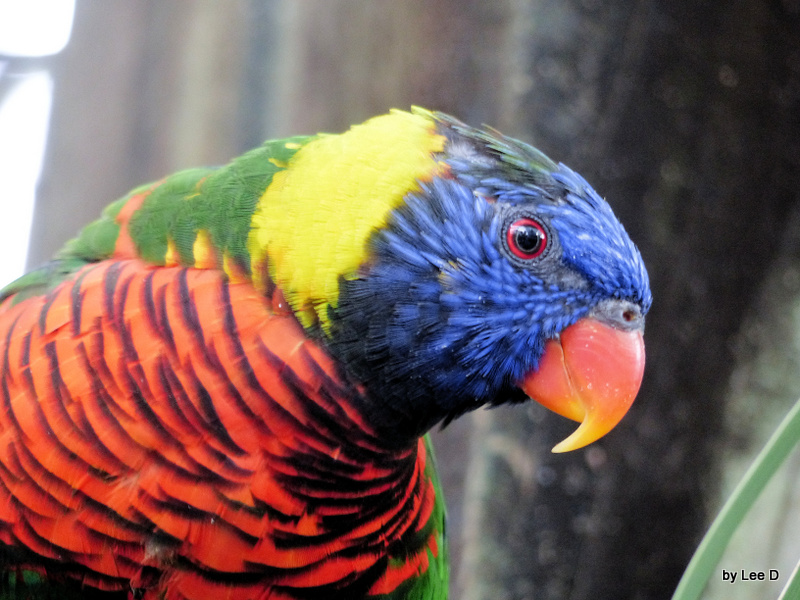
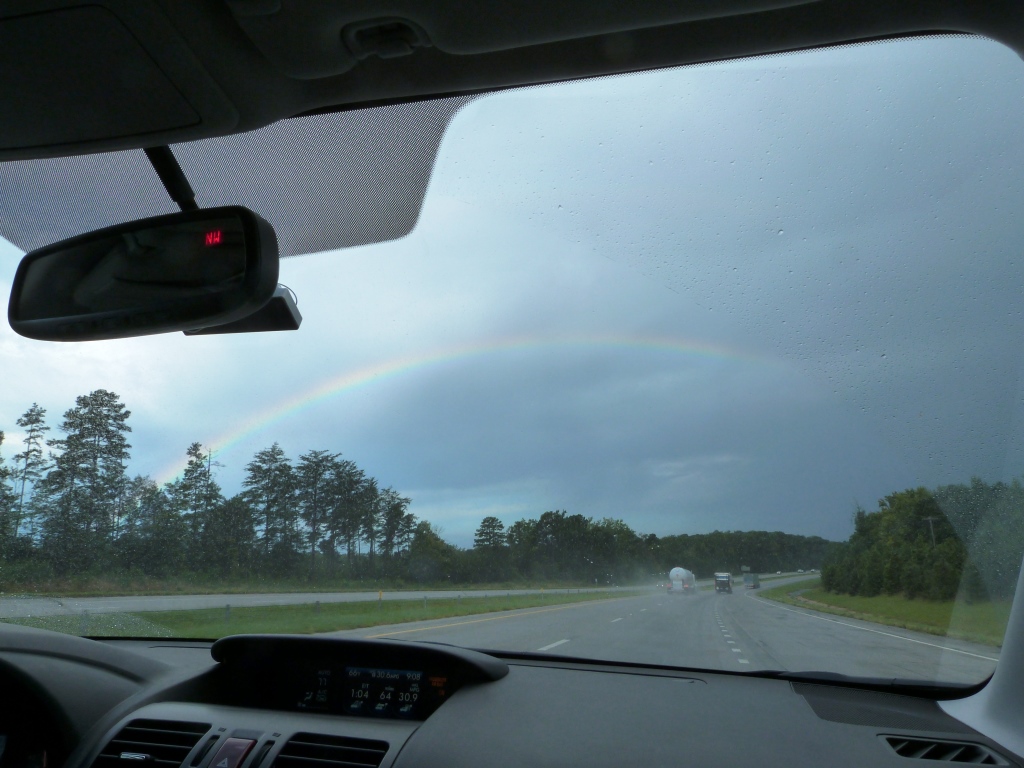
The friendly Rainbow Lorikeet at Lowry Park Zoo has been shown here before, along with the rainbow we saw on our trip through South Carolina several years ago.
Carolina rainbow spotted on Vacation 9-3-2013
This rainbow is much brighter and it’s a double rainbow. I enjoy seeing rainbows because they are a reminder of God’s promise to never totally flood the earth. There is no need today to build another Ark to save righteous people and the many animals and birds.
“And God said: “This is the sign of the covenant which I make between Me and you, and every living creature that is with you, for perpetual generations: I set My rainbow in the cloud, and it shall be for the sign of the covenant between Me and the earth. It shall be, when I bring a cloud over the earth, that the rainbow shall be seen in the cloud; and I will remember My covenant which is between Me and you and every living creature of all flesh; the waters shall never again become a flood to destroy all flesh.” (Genesis 9:12-15 NKJV)
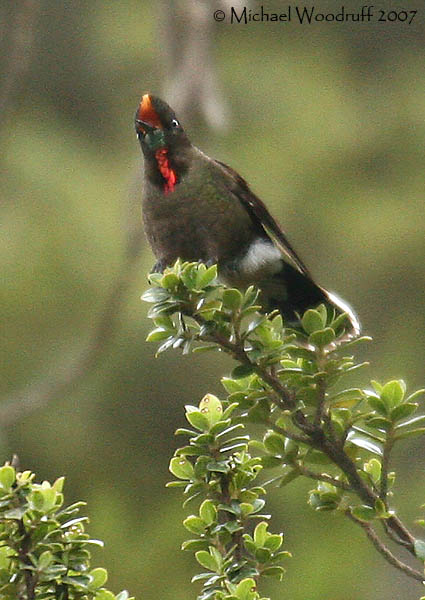
Here is another bird with Rainbow in its name. The Rainbow-bearded Thornbill (Chalcostigma herrani). Michael Woodruff took this photo, but was not real close to it.
Rainbow-bearded Thornbill (Chalcostigma herrani) by Michael Woodruff
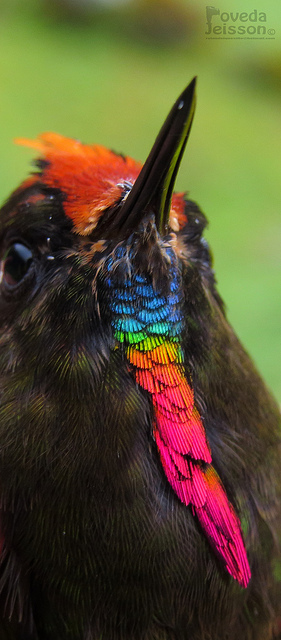
Look at this one! Wow! This is a closeup of the Rainbow-bearded Thornbill.
The Rainbow-bearded Thornbill (Chalcostigma herrani) is a species of hummingbird in the family Trochilidae. It is found in Colombia, Ecuador, and Peru. Its natural habitat is subtropical or tropical high-altitude grassland.
Learn more about one of
God’s most unusual creatures by watching our video
“Double Life of the Hummingbird”
Who doesn’t love the beautiful hummingbird? You’ll love them even more after viewing our “Double Life of the Hummingbird” video! That’s because you’ll about the unique abilities their Designer has given them. Truly, hummingbirds bear evidence of God’s creative hand!
This Week’s Creation Action Moment
1. Watch our “Double Life of the Hummingbird” video by clicking on the picture above.
2. Then check out our Moments with God’s Creation 3-DVD set to add this video and more than 70 others like it to your home DVD collection. Your whole family will enjoy watching videos like these:
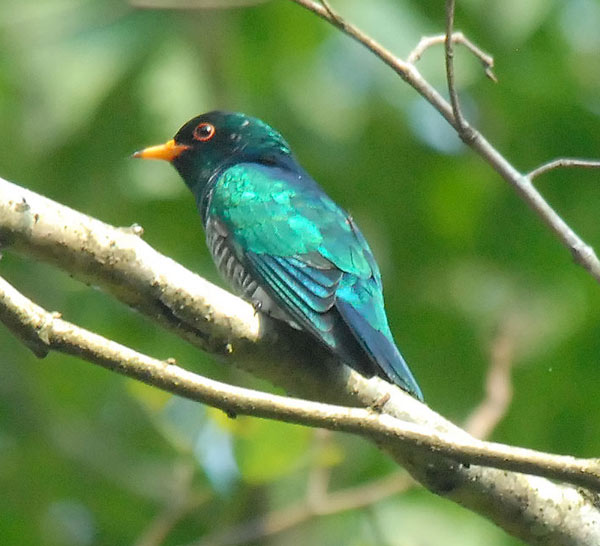
Asian Emerald Cuckoo (Chrysococcyx maculatus) by NikhilDevasar
McGuffey’s 6th Grade Reader – The Solitary Reaper
William Wordsworth, 1770-1850, the founder of the “Lake School” of poets, was born at Cockermouth, Cumberland, England. From his boyhood he was a great lover and student of nature, and it is to his beautiful descriptions of landscape, largely, that he owes his fame. He was a graduate of Cambridge University, and while there commenced the study of Chaucer, Spenser, Milton, and Shakespeare, as models for his own writings. Two legacies having been bequeathed him, Wordsworth determined to make poetry the aim of his life, and in 1795 located at Racedown with his sister Dorothy, where he commenced the tragedy of “The Borderers.” A visit from Coleridge at this period made the two poets friends for life. In 1802 Wordsworth married Miss Mary Hutchinson, and in 1813 he settled at Rydal Mount, on Lake Windermere, where he passed the remainder of his life.
Wordsworth’s poetry is remarkable for its extreme simplicity of language. At first his efforts were almost universally ridiculed, and in 1819 his entire income from literary work had not amounted to 140 Pounds. In 1830 his merit began to be recognized; in 1839 Oxford University conferred upon him the degree of D. C. L.; and in 1843 he was made poet laureate.
“The Excursion” is by far the most beautiful and the most important of
Wordsworth’s productions. “Salisbury Plain,” “The White Doe of Rylstone,”
“Yarrow Revisited,” and many of his sonnets and minor poems are also much
admired.
###
The Solitary Reaper
Behold her, single in the field,
Yon solitary Highland lass!
Reaping and singing by herself;
Stop here, or gently pass!
Alone she cuts and binds the grain,
And sings a melancholy strain;
Oh listen! for the vale profound
Is overflowing with the sound.
No nightingale did ever chant
More welcome notes to weary bands
Of travelers in some shady haunt,
Among Arabian sands:
A voice so thrilling ne’er was heard
In springtime from the cuckoo bird,
Breaking the silence of the seas
Among the farthest Hebrides.
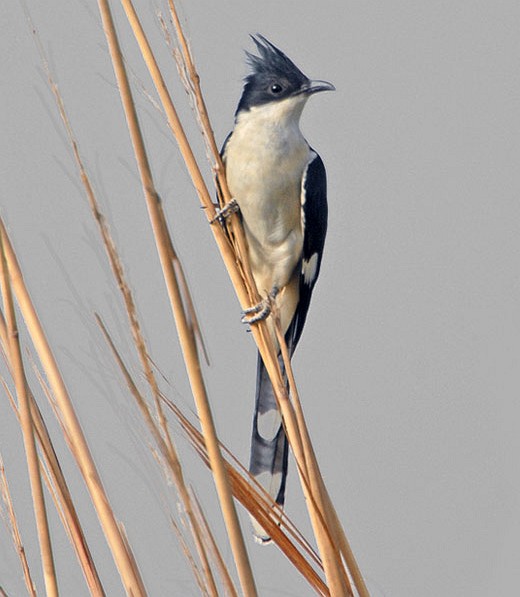
Jacobin Cuckoo (Clamator jacobinus) by Nikhil Devasar
Will no one tell me what she sings?
Perhaps the plaintive numbers flow
For old, unhappy, far-off things,
And battles long ago:
Or is it some more humble lay,
Familiar matter of to-day?
Some natural sorrow, loss, or pain,
That has been, and may be again?
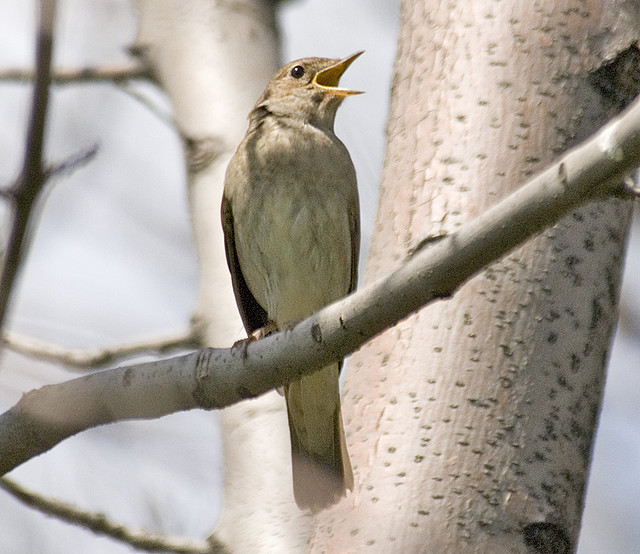
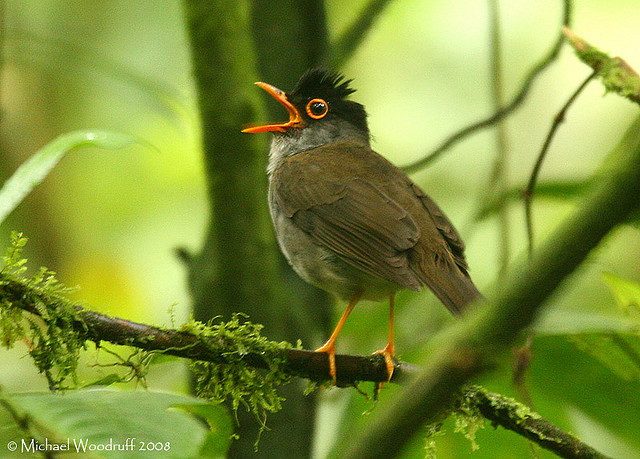
Black-headed Nightingale-Thrush (Catharus mexicanus) by Michael Woodruff
Whate’er the theme, the maiden sang
As if her song could have no ending;
I saw her singing at her work,
And o’er the sickle bending;—
I listened motionless and still;
And, as I mounted up the hill,
The music in my heart I bore,
Long after it was heard no more.
“Speaking to yourselves in psalms and hymns and spiritual songs, singing and making melody in your heart to the Lord; Giving thanks always for all things unto God and the Father in the name of our Lord Jesus Christ;” (Ephesians 5:19-20 KJV)
Please leave a comment about whether these are helpful and enjoyable to you, your children, or your grandchildren. Maybe, even your students.
Originally entitled Yankee Doodle, this is one of several versions of a scene painted by A. M. Willard that came to be known as The Spirit of ’76
During the American Revolution, the legal separation of the Thirteen Colonies from Great Britain in 1776 actually occurred on July 2, when the Second Continental Congress voted to approve a resolution of independence that had been proposed in June by Richard Henry Lee of Virginia declaring the United States independent from Great Britain’s rule. After voting for independence, Congress turned its attention to the Declaration of Independence, a statement explaining this decision, which had been prepared by a Committee of Five, with Thomas Jefferson as its principal author. Congress debated and revised the wording of the Declaration, finally approving it two days later on July 4. [Some debate the actual date – Wikipedia]
It is time for another holiday here in the United States of America. This is one of the most important celebrations for the country because of what it represents. Once this Declaration of Independence was signed, the real growth of America began. God has blessed our country with one of the most freedoms for personal liberty and freedom of religion. [Unfortunately, many of these freedoms are being taken away. Christians have less and less freedom to worship the Lord as we once had. Our country was founded on Christian principles, but now some are trying to remove all traces of our founding truths.
I try not to get political on this site, but it does make us sad what is going on currently. With that said, I will be silent on the political side.
One of my favorite Red birds! A visitor to our feeders.
White Ibis on Table by Lee
A very common White bird that walked through our yard today.
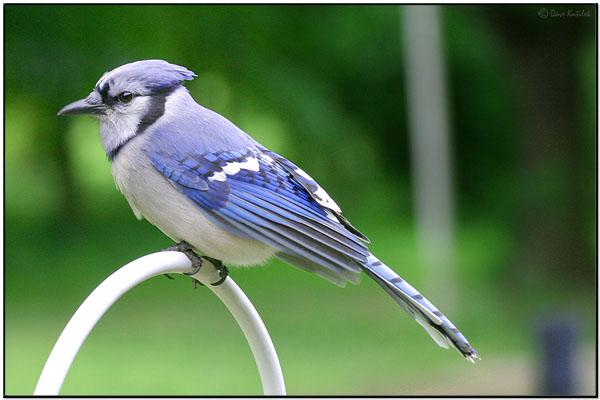
And the Blue Jay, another regular visitor to our feeders:
Blue Jay (Cyanocitta cristata) by Daves BirdingPix
This refers to Abraham, but it is still very true today:
“All these died in faith, without receiving the promises, but having seen them and having welcomed them from a distance, and having confessed that they were strangers and exiles on the earth. For those who say such things make it clear that they are seeking a country of their own. And indeed if they had been thinking of that country from which they went out, they would have had opportunity to return. But as it is, they desire a better country, that is, a heavenly one. Therefore God is not ashamed to be called their God; for He has prepared a city for them.” (Hebrews 11:13-16 NASB)
PS: Keep me in your prayers. Tomorrow morning I am having a Cataract implant surgery. That is one reason this is a few days early for the holiday. Will be off the computer for a few days. I had the left eye implant completed several years ago and all went well. We are praying that the same will be true for this right eye. All the more to see the Lord’s Avian Wonders – BETTER!
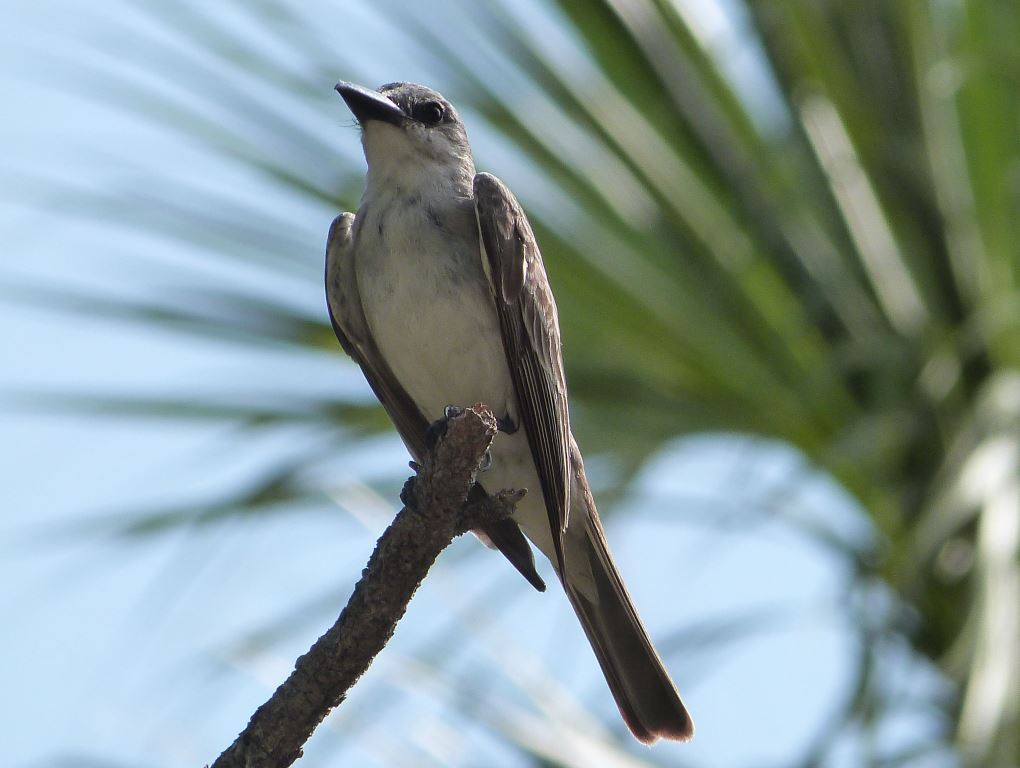
Grey Kingbird (Tyrannus dominicensis) by Lee at Honeymoon Is SP
McGuffey Readers were a series of graded primers for grade levels 1-6. They were widely used as textbooks in American schools from the mid-19th century to the mid-20th century, and are still used today in some private schools and in homeschooling. [Posting these for young readers to enjoy and practice reading while school is out.]
Here are two more birds that are listed on the “Do Not Eat” list. A Gripe and an Aliet.
Leviticus 11:13 These things be of (the) fowls which ye shall not eat, and shall be eschewed of you (and shall be shunned by you); an eagle, and a gripe, [and] an aliet,
Deuteronomy 14:12 (but) eat ye not unclean birds, that is, an eagle, and a gripe, and an aliet,
–
These verses are in the Wycliffe Bible (WYC) version. “The earliest existing edition is from 1525, but manuscripts of that only have a part of Matthew. Of the whole New Testament, the earliest manuscripts available are from 1526. Old Testament books are from later, 1530’s for some. This means that these two birds mentioned, the Gripe and the Aliet, were the names they were called by back then. Languages change over hundreds of years.
Interesting note about how these birds are listed in the “Do Not Eat List” Here is what the Expositor’s Bible Commentary (Abridged Edition): Old Testament says:
“13-19 There was no easy rule of thumb for clean birds. A negative list is given that in cases is difficult to translate with certainty. The different modern versions vary in detail. In general carrion-eating and fish-eating birds were forbidden, just as they are not used for food today. Chickens are not mentioned in the OT. The eating of bird eggs and the mother bird together is forbidden in Deuteronomy 22:6, apparently for conservation reasons. If the eggs are taken, the mother bird will lay more; but if the mother bird is taken, there will be no more eggs! Doves, their eggs, and their young were eaten.
After doing some searching on Google, the Gripe doesn’t seem to be a recognizable bird today. When searching for the Aliet, After just about giving up, this interesting article was found:
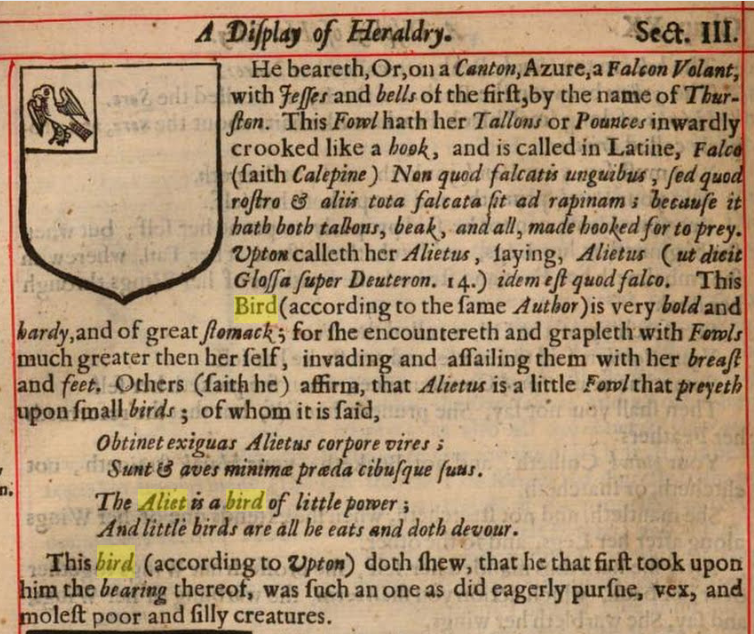
Hearldry is a displaying of different Coats of Arms. The bird in on this Crest or Coat of Arms is the Aliet:
These verses in other translations indicate some type of birds of prey. That is what is article is saying also. If you can read the “old English”, notice that it mentions “This Fowl hath her Tallons or Pounces inwardly crooked like a hook.” That is a good description of a Hawk, Falcon, or some other type of bird of prey. “and is called in Latine [Latin], Falco (faith Calepine). Falco is the genus for Falcons and includes 15 Kestrels, 22 Falcons and 4 Hobbys.
It also mentions the “Alietus is a little Fowl that preyeth upon small birds…”
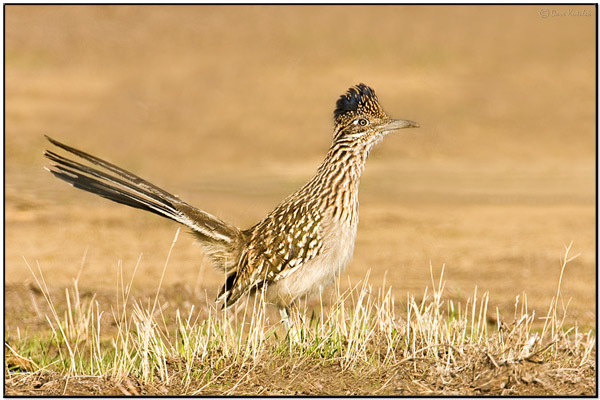
Greater Roadrunner (Geococcyx californianus) by Daves BirdingPix
“Do you not know that those who run in a race all run, but one receives the prize? Run in such a way that you may obtain it.” 1 Corinthians 9:24 (NKJV)
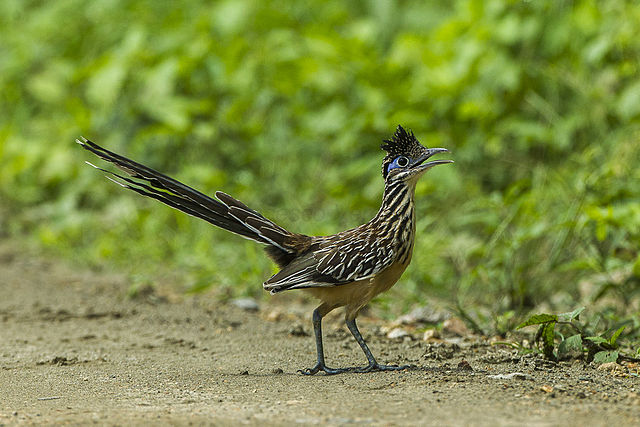
Have you ever wondered what kinds of birds can run fast? We read about how fast birds can fly, but what about when they are on the ground. The bird pictured above is one that you might have thought of. That is the Greater Roadrunner. He chases lizards and other speedy critters so they need speed and agility. There are other birds that run fast, but we will check them out later.
“The roadrunners (genus Geococcyx), also known as chaparral birds or chaparral cocks, are two species of fast-running ground cuckoos with long tails and crests. They are found in the southwestern United States and Mexico, usually in the desert. Some have been clocked at 20 miles per hour (32 km/h) while a few have also been clocked up to 27 miles per hour.”
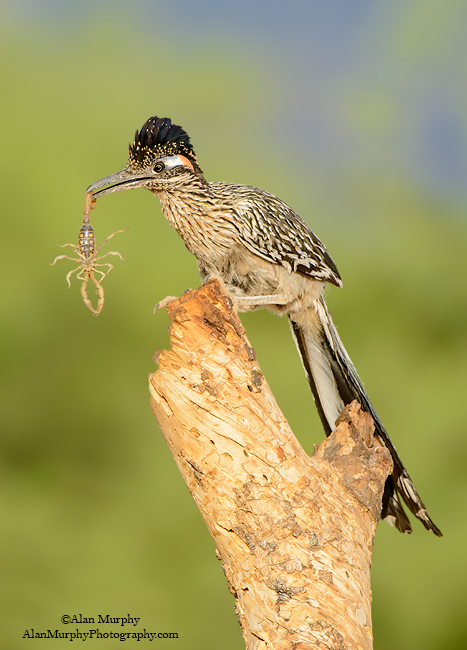
“The roadrunner forages on the ground and, when hunting, usually runs after prey from under cover. It may leap to catch insects, and commonly batters certain prey against the ground. Because of its quickness, the roadrunner is one of the few animals that preys upon rattlesnakes; it is also the only real predator of tarantula hawk wasps.” Wikipedia – Roadrunners
The Bible tells us, that after we accept the Lord as our Savior, we are supposed to do certain things. We should read God’s Word, talk to Him in prayer, obey our parents, be kind to others, and so on. Most times, you and I know when we do something we shouldn’t. We also know how we feel when we do do the things we know are right.
Living as a Christian is sort of like being in a race. We want to do our best and hopefully win. Others will be watching, and cheering us on to do our best. If we trip and fall, do we stay down, or get up and keep going?
Again, the Bible tells us that we need to ask forgiveness when we do wrong (sin). If you misbehaved, wouldn’t you ask your parents to forgive you? [That is if you meant it.] Get rid of those bad behaviors and run the race [do your best]. The same is true with the Lord Jesus Christ. We should do our best to please and serve Him.
“Therefore we also, since we are surrounded by so great a cloud of witnesses, let us lay aside every weight, and the sin which so easily ensnares us, and let us run with endurance the race that is set before us,” Hebrews 12:1 (NKJV)
Is The Porphyrion On The Do Not Eat List? When the Birds of the Bible articles were written several years ago, I used my e-Sword program to search for the names of different species of birds on the “Do Not Eat List.” Now, the BibleGateway Bibles are also available for me to use. Time to check these new resources to see if any other name of bird is in one of their Bible translations.
I started with Leviticus 11:18 and Deuteronomy 14:17 [The beginning of the “Do Not Eat List” of birds] Looking through the list, Porphyrion caught my attention.
When I first started searching this word out on Google, here is what came up: “In Greek mythology, Porphyrion (Ancient Greek: Πορφυρίων) was one of the Gigantes (Giants)…” Whoa! That’s not a bird, but a Greek Mythology character, and not a very nice one. That is the reason for this title.
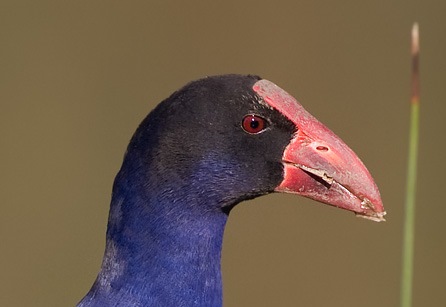
Ah! But further researching found that the Porphyrion is actually another name for the Swamphen. Notice the scientific name in the photo.
Porphyrio porphyrio. That is most likely why the Douay-Rheims 1899 [American edition DRA] translated it that way. They are the only English Bible that translates the bird this way.
They translated the two verses as:
“And the swan, and the bittern, and the porphyrion,” Leviticus 11:18 DRA
“And the cormorant, the porphyrion, and the night crow,” Deuteronomy 14:17 DRA
also
“and a dipper, a porphyrio, and a rearmouse, a cormorant,” WYC [Here’s a verse to check out :) ]
Purple Gallinule at Lake Hollingsworth by Lee
Here is a bit about this Swamphen family:
“Porphyrio is the swamphen or swamp hen bird genus in the rail family. It includes some smaller species which are usually called “purple gallinules”, and which are sometimes separated as genus Porphyrula or united with the gallinules proper (or “moorhens”) in Gallinula. The Porphyrio gallinules are distributed in the warmer regions of the world.
The genus Porphyrio was introduced by the French zoologist Mathurin Jacques Brisson in 1760 with the western swamphen (Porphyrio porphyrio) as the type species. The genus name Porphyrio is the Latin name for “swamphen”, meaning “purple“. [Wikipedia – Swamphen]
Stay tuned for more searches of the Birds of the Bible – Do Not Eat list!
[Yes, I believe in using the main translations of the Bible; like KJV, NKJV, and NASB, but these searches are for just finding different birds to write about. God created all the birds, and I find it interesting to see how these birds are translated.]
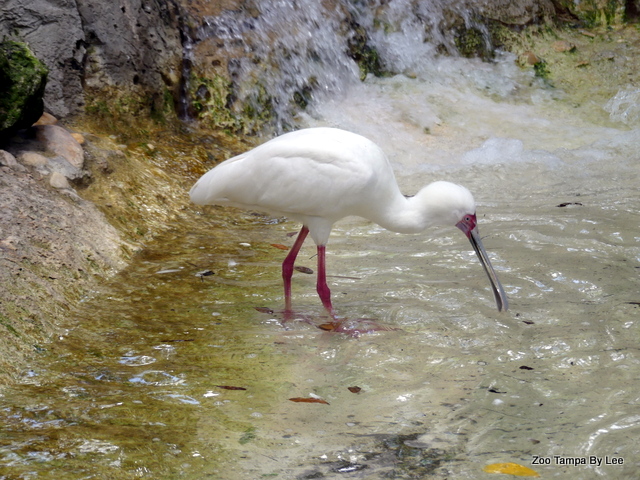
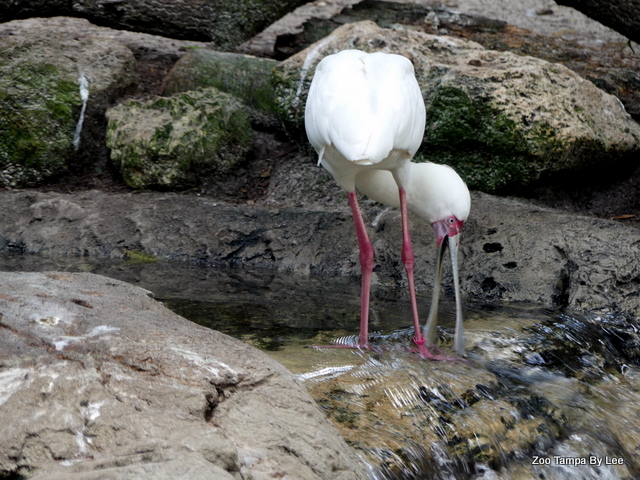
The Spoonbill family has a unique or uncommon way of feeding. They swing their beak back and forth in the water to find food. The inside of the “spoon” is very sensitive. When they feel a “goodie,” their beak snaps shut. They then swallow their food.
I have been trying to capture this action on video for some time, and finally, watched this African Spoonbill catch his food. This was taken at Zoo Tampa (Lowry Park Zoo) in their aviary.
“For who makes you differ from another? And what do you have that you did not receive? Now if you did indeed receive it, why do you boast as if you had not received it?” (1 Corinthians 4:7 NKJV)
Just as the Spoonbills eat differently from other species of birds, it was the Creator that made them this way. You were created different than anyone else. Enjoy your uniqueness, because God made you the way your are. You were given different talents and abilities than someone else. What are you going to do with what the Lord has given?
African Spoonbill Zoo Tampa by Lee
The Spoonbills are using their uniqueness very well!
“Who provideth for the raven his food? when his young ones cry unto God, they wander for lack of meat.” (Job 38:41)
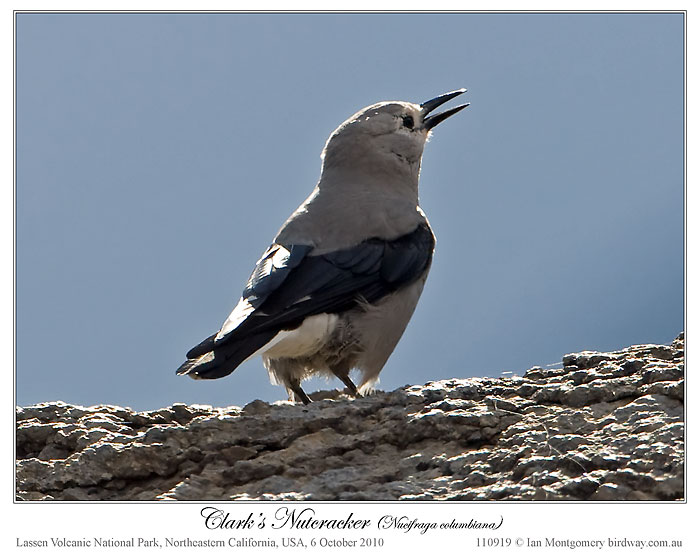
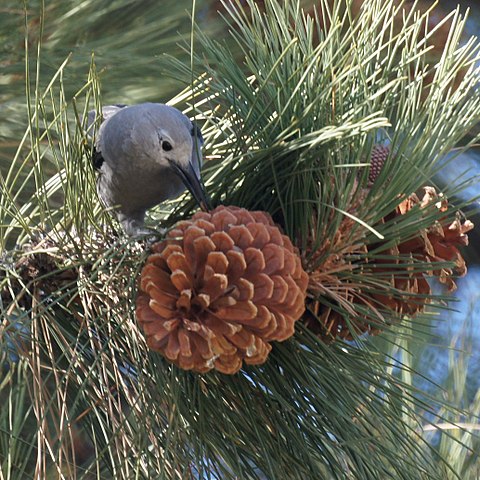
The shy bird called Clark’s nutcracker collects food during the growing season and stores it for the cold winter months. In one year, a bird will store between 22,000 and 33,000 seeds in as many as 2,500 locations, which can be more than ten miles apart. But does the little bird remember where he put all those seeds?
Clark’s Nutcracker (Nucifraga columbiana) by Ian
Biologists tracked the activity of Clark’s nutcrackers in the San Francisco Peaks in northern Arizona. A small army of researchers tracked the birds’ seed gathering and storing activities. One of the first things they discovered was that the birds quickly figured out that they were being observed. Some refused to store food when researchers were watching them. Others faked storing seeds when they were watched. Back in the lab, researchers studied the storing activity of Eurasian nutcrackers. After the birds stored seeds in a large sand floor, the birds were removed. Then the seeds they stored were dug up. When the birds were allowed to return, they quickly discovered that their seeds had been stolen, so they refused to store any more seeds. In the end, researchers concluded that the nutcrackers recover as many as two-thirds of their stored seeds within 13 months.
Green-tailed Sunbird (Aethopyga nipalensis) by Peter Ericsson
The green-tailed sunbird (Aethopyga nipalensis) or Nepal yellow-backed sunbird is a species of bird in the family Nectariniidae.
It is found in the northern regions of the Indian subcontinent, stretching eastwards into parts of Southeast Asia.
Its natural habitats are temperate forests and subtropical or tropical moist montane forests. In southeast Szechwan and Yunnan, it lives in open mountain woods with moss-covered trees, from 1825 to 3350 meters elevation.
When viewing this bird, the Wordless Book/Wordless Birds came to mind. Let’s see if we can find all the colors need.
There is definitely Gold/yellow on this beautifully created Sunbird from our Creator.
“This GOLD bird reminds us of Heaven. The Bible tells us Heaven has a street of gold! But the best part about Heaven is that God, who created you and me, lives there. The Bible, God’s Word, says: “God so loved the world that He gave His only begotten Son, that whosoever believeth in Him should not perish but have everlasting life.” — John 3:16 Jesus, God the Son, is in Heaven preparing a place for all who put their trust in Him. (John 14:2-3) God is holy and perfect. He cannot allow anything in Heaven that is less than perfect, so there’s one thing that can never be in Heaven. Can you think of what that might be?”
Black/Dark is the next color in the Wordless Book/Birds
It is sin! That is what this DARK bird reminds us of. Sin is anything you think, say, or do that does not please God, like lying, cheating, being selfish, or hurting others. The Bible says: “All have sinned and come short of the glory of God.” — Romans 3:23 That means everyone, big or little, young or old! No matter where you live or who you are, you have sinned. Everyone is born with a “want to” to do wrong. God says that sin must be punished (Romans 6:23), and the punishment for sin is to be separated from God forever in a place of suffering….a place called Hell. But God has a wonderful plan so that you will not have to be punished for your sin!
Red is next which stands for Sin
Green-tailed Sunbird (Aethopyga nipalensis) by Peter Ericsson
God sent Jesus Christ, His perfect Son, to be born as a little baby. Jesus lived a perfect life….He never sinned. When He was grown, wicked men nailed Him to a cross. This bird is RED reminding us of Jesus’ blood. The Bible says that without the giving of blood there can be no forgiveness of sin (Hebrews 9:22). So Jesus Christ willingly died to take your sin punishment. “…Christ died for our sins according to the Scriptures; and that He was buried, and that He rose again the third day, according to the Scriptures.“— 1 Corinthians 15:3-4 Now, because of what Jesus has done for you, you can have your sins forgiven. Read on to see how!
White is a little harder to find on the Green-backed Sunbird, but this Lovely Sunbird has plenty of white. It is in the same family.
The Bible says: “As many as received Him, to them gave He power to become the sons of God, even to them that believed on His name.” — John 1:12 The WHITE bird reminds us of a CLEAN heart. How can you have a clean heart? A = Admit to God you are a sinner and want to turn away from those sins. B = Believe in Jesus Christ, that He is God’s perfect Son who died for your sin, was buried, and rose again. C = Call on Him to save you from your sin. Would you like to do that right now? He has promised to hear, and once you are His child, He will never leave you (Hebrews 13:5). Take a moment and talk to God right now. It will change your life forever. Only one more color! What can it mean?
Green is for Growth after you accept the Lord as your personal Savior.
Green-tailed Sunbird (Aethopyga nipalensis) by Peter Ericsson
The GREEN bird stands for things that grow. When you ask God to forgive you and save you, you become His child. God wants you to get to know Him better and to grow to become more like Him. These four things will help you grow:
1. PRAY (talk to God every day) 2. READ & OBEY THE BIBLE (to know what He says, then do it) 3. TELL OTHERS ABOUT JESUS 4. GO TO A BIBLE-BELIEVING CHURCH (where you can learn more about pleasing Him)
As a child of God, if you should sin again, stop and tell Him about it. He promises in His Word… “If we confess our sins, He is faithful and just to forgive us our sins and to cleanse us from all unrighteousness.” — 1 John 1:9 Ask God to help you live a life to please Him! Share the Good News of this story with someone else.
The Wordless Book has been used for many years by CEF (Child Evangelism Fellowship). These words are from CEF.
“So Adam gave names to all cattle, to the birds of the air, and to every beast of the field. …” (Genesis 2:20a NKJV)
While posting Emma Foster’s latest tale about birds, the Greater Necklaced Laughingthrush (Garrulax pectoralis) was used. I picked this bird because of the “necklaced” part of its name. Where actually do they live and what can we find out about them?
I have always enjoyed the Laughingthrush every since we saw the ones in Zoo Miami’s Aviary.
Red-tailed Laughingthrush by Dan at Wings of Asia Zoo Miami
The Greater Necklaced Laughingthrush doesn’t have much written about it in Wikipedia. Here is their information:
The Greater Necklaced Laughingthrush (Pterorhinus pectoralis) is a species of passerine bird in the family Leiothrichidae. It is found in Bangladesh, Bhutan, China, India, Laos, Myanmar, Nepal, Thailand and Vietnam. It is introduced to the United States. Its natural habitats are subtropical or tropical moist lowland forest and subtropical or tropical moist montane forest.
This species was formerly placed in the genus Garrulax but following the publication of a comprehensive molecular phylogenetic study in 2018, it was moved to the resurrected genus Pterorhinus.
Greater necklaced laughingthrush, Garrulax pectoralis (formerly; Ianthocincla pectoralis ), also known as the necklaced laughingthrush or the black-gorgeted laughingthrush, photographed at Hong Kong, China.
An adult Greater Necklaced Laughingthrush, (Garrulax pectoralis). This species can be identified by the silvery streaked ear coverts encircled by a black band. This distinguishes it from the similarly-appearing Lesser Necklaced Laughingthrush (but that species is pale and has none of the ear covert markings).
The Greater Necklaced Laughingthrush is a member of a large family of passerines known as the the Old World babblers (Timaliidae). This family is quite diverse in size and coloration, but are characterised by soft fluffy plumage — a really lame way to classify them, in my opinion, since there’s a LOT of passerines with “soft fluffy plumage” that are not included in this taxonomic family. Ho-hum.
One weird fact: the American wrentit was recently placed into the Old World babblers but that enigmatic species probably doesn’t belong there.
Another weird fact: there are two groups of birds in the world that are known as “babblers”: the timaliids are one and the other is the (unrelated) Australasian babblers of the family, Pomatostomidae. The pomatostomids are now sometimes known as the pseudo-babblers, because they deceived naturalists, ornithologists and birders for so bloody long.
Video of the Greater Necklaced Laughingthrushes of Bann Song Nok, south of Bangkok. By Wazooland
Okay, so what about these Lesser Necklaced? They look so similar that you really need to look hard to distinguish them. Look real close, and then notice the color of the eyes. Which is which? Lesser has a yellow eye and the greater has a black eye. Oh, and the “necklace” is supposed to be narrower. It is hard to tell that. The “ear covert markings” help, but those eyes are the clincher!
“They came, both men and women, as many as had a willing heart, and brought earrings and nose rings, rings and necklaces, all jewelry of gold, that is, every man who made an offering of gold to the LORD.” (Exodus 35:22 NKJV)




















 Birds of the Bible For Kids