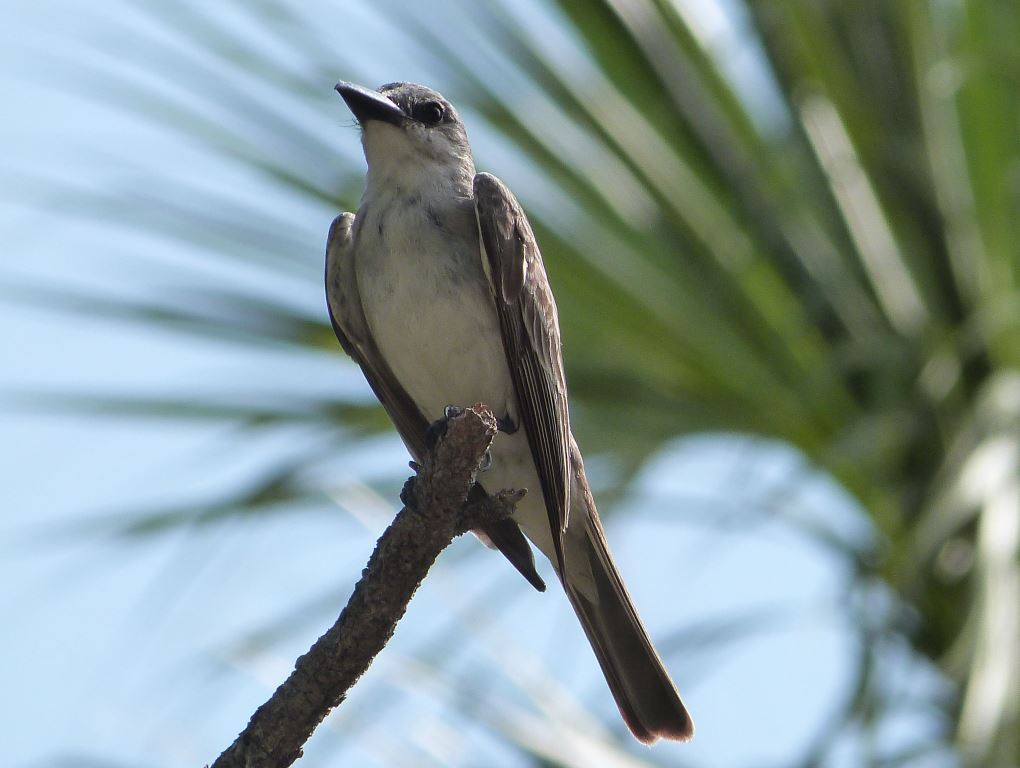
Grey Kingbird (Tyrannus dominicensis) by Lee at Honeymoon Is SP
McGuffey Readers were a series of graded primers for grade levels 1-6. They were widely used as textbooks in American schools from the mid-19th century to the mid-20th century, and are still used today in some private schools and in homeschooling. [Posting these for young readers to enjoy and practice reading while school is out.]
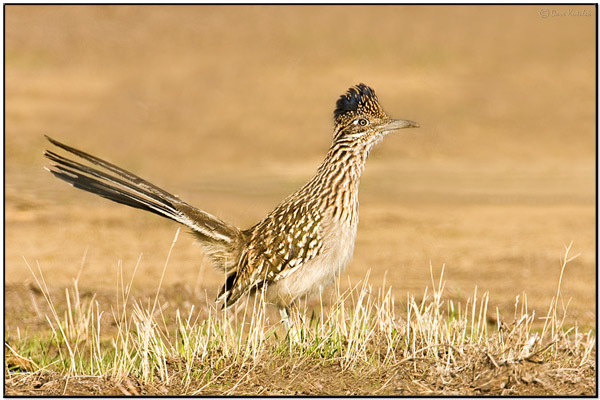
Greater Roadrunner (Geococcyx californianus) by Daves BirdingPix
“Do you not know that those who run in a race all run, but one receives the prize? Run in such a way that you may obtain it.” 1 Corinthians 9:24 (NKJV)
Have you ever wondered what kinds of birds can run fast? We read about how fast birds can fly, but what about when they are on the ground. The bird pictured above is one that you might have thought of. That is the Greater Roadrunner. He chases lizards and other speedy critters so they need speed and agility. There are other birds that run fast, but we will check them out later.
“The roadrunners (genus Geococcyx), also known as chaparral birds or chaparral cocks, are two species of fast-running ground cuckoos with long tails and crests. They are found in the southwestern United States and Mexico, usually in the desert. Some have been clocked at 20 miles per hour (32 km/h) while a few have also been clocked up to 27 miles per hour.”
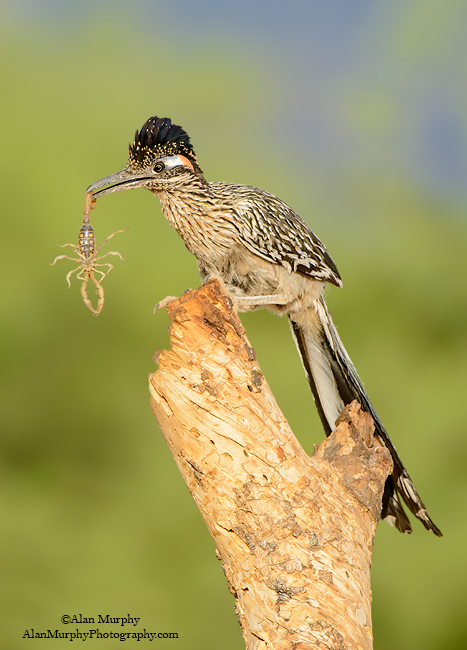
“The roadrunner forages on the ground and, when hunting, usually runs after prey from under cover. It may leap to catch insects, and commonly batters certain prey against the ground. Because of its quickness, the roadrunner is one of the few animals that preys upon rattlesnakes; it is also the only real predator of tarantula hawk wasps.” Wikipedia – Roadrunners
The Bible tells us, that after we accept the Lord as our Savior, we are supposed to do certain things. We should read God’s Word, talk to Him in prayer, obey our parents, be kind to others, and so on. Most times, you and I know when we do something we shouldn’t. We also know how we feel when we do do the things we know are right.
Living as a Christian is sort of like being in a race. We want to do our best and hopefully win. Others will be watching, and cheering us on to do our best. If we trip and fall, do we stay down, or get up and keep going?
Again, the Bible tells us that we need to ask forgiveness when we do wrong (sin). If you misbehaved, wouldn’t you ask your parents to forgive you? [That is if you meant it.] Get rid of those bad behaviors and run the race [do your best]. The same is true with the Lord Jesus Christ. We should do our best to please and serve Him.
“Therefore we also, since we are surrounded by so great a cloud of witnesses, let us lay aside every weight, and the sin which so easily ensnares us, and let us run with endurance the race that is set before us,” Hebrews 12:1 (NKJV)
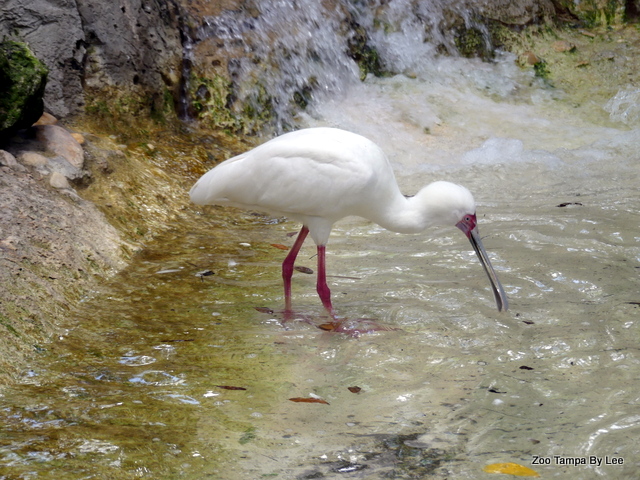
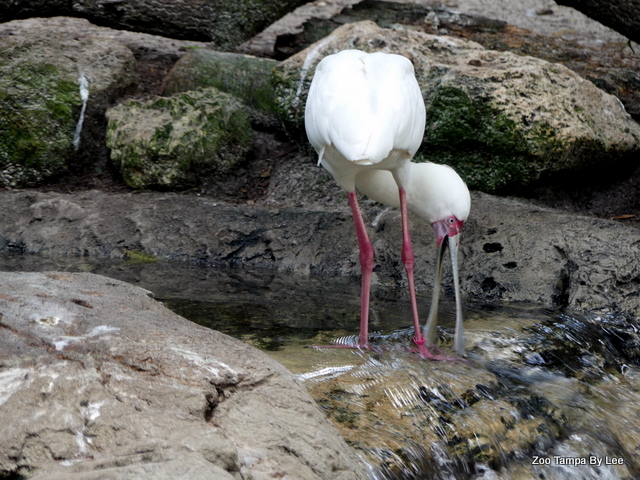
The Spoonbill family has a unique or uncommon way of feeding. They swing their beak back and forth in the water to find food. The inside of the “spoon” is very sensitive. When they feel a “goodie,” their beak snaps shut. They then swallow their food.
I have been trying to capture this action on video for some time, and finally, watched this African Spoonbill catch his food. This was taken at Zoo Tampa (Lowry Park Zoo) in their aviary.
“For who makes you differ from another? And what do you have that you did not receive? Now if you did indeed receive it, why do you boast as if you had not received it?” (1 Corinthians 4:7 NKJV)
Just as the Spoonbills eat differently from other species of birds, it was the Creator that made them this way. You were created different than anyone else. Enjoy your uniqueness, because God made you the way your are. You were given different talents and abilities than someone else. What are you going to do with what the Lord has given?
African Spoonbill Zoo Tampa by Lee
The Spoonbills are using their uniqueness very well!
Green-tailed Sunbird (Aethopyga nipalensis) by Peter Ericsson
The green-tailed sunbird (Aethopyga nipalensis) or Nepal yellow-backed sunbird is a species of bird in the family Nectariniidae.
It is found in the northern regions of the Indian subcontinent, stretching eastwards into parts of Southeast Asia.
Its natural habitats are temperate forests and subtropical or tropical moist montane forests. In southeast Szechwan and Yunnan, it lives in open mountain woods with moss-covered trees, from 1825 to 3350 meters elevation.
When viewing this bird, the Wordless Book/Wordless Birds came to mind. Let’s see if we can find all the colors need.
There is definitely Gold/yellow on this beautifully created Sunbird from our Creator.
“This GOLD bird reminds us of Heaven. The Bible tells us Heaven has a street of gold! But the best part about Heaven is that God, who created you and me, lives there. The Bible, God’s Word, says: “God so loved the world that He gave His only begotten Son, that whosoever believeth in Him should not perish but have everlasting life.” — John 3:16 Jesus, God the Son, is in Heaven preparing a place for all who put their trust in Him. (John 14:2-3) God is holy and perfect. He cannot allow anything in Heaven that is less than perfect, so there’s one thing that can never be in Heaven. Can you think of what that might be?”
Black/Dark is the next color in the Wordless Book/Birds
It is sin! That is what this DARK bird reminds us of. Sin is anything you think, say, or do that does not please God, like lying, cheating, being selfish, or hurting others. The Bible says: “All have sinned and come short of the glory of God.” — Romans 3:23 That means everyone, big or little, young or old! No matter where you live or who you are, you have sinned. Everyone is born with a “want to” to do wrong. God says that sin must be punished (Romans 6:23), and the punishment for sin is to be separated from God forever in a place of suffering….a place called Hell. But God has a wonderful plan so that you will not have to be punished for your sin!
Red is next which stands for Sin
Green-tailed Sunbird (Aethopyga nipalensis) by Peter Ericsson
God sent Jesus Christ, His perfect Son, to be born as a little baby. Jesus lived a perfect life….He never sinned. When He was grown, wicked men nailed Him to a cross. This bird is RED reminding us of Jesus’ blood. The Bible says that without the giving of blood there can be no forgiveness of sin (Hebrews 9:22). So Jesus Christ willingly died to take your sin punishment. “…Christ died for our sins according to the Scriptures; and that He was buried, and that He rose again the third day, according to the Scriptures.“— 1 Corinthians 15:3-4 Now, because of what Jesus has done for you, you can have your sins forgiven. Read on to see how!
White is a little harder to find on the Green-backed Sunbird, but this Lovely Sunbird has plenty of white. It is in the same family.
The Bible says: “As many as received Him, to them gave He power to become the sons of God, even to them that believed on His name.” — John 1:12 The WHITE bird reminds us of a CLEAN heart. How can you have a clean heart? A = Admit to God you are a sinner and want to turn away from those sins. B = Believe in Jesus Christ, that He is God’s perfect Son who died for your sin, was buried, and rose again. C = Call on Him to save you from your sin. Would you like to do that right now? He has promised to hear, and once you are His child, He will never leave you (Hebrews 13:5). Take a moment and talk to God right now. It will change your life forever. Only one more color! What can it mean?
Green is for Growth after you accept the Lord as your personal Savior.
Green-tailed Sunbird (Aethopyga nipalensis) by Peter Ericsson
The GREEN bird stands for things that grow. When you ask God to forgive you and save you, you become His child. God wants you to get to know Him better and to grow to become more like Him. These four things will help you grow:
1. PRAY (talk to God every day) 2. READ & OBEY THE BIBLE (to know what He says, then do it) 3. TELL OTHERS ABOUT JESUS 4. GO TO A BIBLE-BELIEVING CHURCH (where you can learn more about pleasing Him)
As a child of God, if you should sin again, stop and tell Him about it. He promises in His Word… “If we confess our sins, He is faithful and just to forgive us our sins and to cleanse us from all unrighteousness.” — 1 John 1:9 Ask God to help you live a life to please Him! Share the Good News of this story with someone else.
The Wordless Book has been used for many years by CEF (Child Evangelism Fellowship). These words are from CEF.
“So Adam gave names to all cattle, to the birds of the air, and to every beast of the field. …” (Genesis 2:20a NKJV)
While posting Emma Foster’s latest tale about birds, the Greater Necklaced Laughingthrush (Garrulax pectoralis) was used. I picked this bird because of the “necklaced” part of its name. Where actually do they live and what can we find out about them?
I have always enjoyed the Laughingthrush every since we saw the ones in Zoo Miami’s Aviary.
Red-tailed Laughingthrush by Dan at Wings of Asia Zoo Miami
The Greater Necklaced Laughingthrush doesn’t have much written about it in Wikipedia. Here is their information:
The Greater Necklaced Laughingthrush (Pterorhinus pectoralis) is a species of passerine bird in the family Leiothrichidae. It is found in Bangladesh, Bhutan, China, India, Laos, Myanmar, Nepal, Thailand and Vietnam. It is introduced to the United States. Its natural habitats are subtropical or tropical moist lowland forest and subtropical or tropical moist montane forest.
This species was formerly placed in the genus Garrulax but following the publication of a comprehensive molecular phylogenetic study in 2018, it was moved to the resurrected genus Pterorhinus.
Greater necklaced laughingthrush, Garrulax pectoralis (formerly; Ianthocincla pectoralis ), also known as the necklaced laughingthrush or the black-gorgeted laughingthrush, photographed at Hong Kong, China.
An adult Greater Necklaced Laughingthrush, (Garrulax pectoralis). This species can be identified by the silvery streaked ear coverts encircled by a black band. This distinguishes it from the similarly-appearing Lesser Necklaced Laughingthrush (but that species is pale and has none of the ear covert markings).
The Greater Necklaced Laughingthrush is a member of a large family of passerines known as the the Old World babblers (Timaliidae). This family is quite diverse in size and coloration, but are characterised by soft fluffy plumage — a really lame way to classify them, in my opinion, since there’s a LOT of passerines with “soft fluffy plumage” that are not included in this taxonomic family. Ho-hum.
One weird fact: the American wrentit was recently placed into the Old World babblers but that enigmatic species probably doesn’t belong there.
Another weird fact: there are two groups of birds in the world that are known as “babblers”: the timaliids are one and the other is the (unrelated) Australasian babblers of the family, Pomatostomidae. The pomatostomids are now sometimes known as the pseudo-babblers, because they deceived naturalists, ornithologists and birders for so bloody long.
Video of the Greater Necklaced Laughingthrushes of Bann Song Nok, south of Bangkok. By Wazooland
Okay, so what about these Lesser Necklaced? They look so similar that you really need to look hard to distinguish them. Look real close, and then notice the color of the eyes. Which is which? Lesser has a yellow eye and the greater has a black eye. Oh, and the “necklace” is supposed to be narrower. It is hard to tell that. The “ear covert markings” help, but those eyes are the clincher!
“They came, both men and women, as many as had a willing heart, and brought earrings and nose rings, rings and necklaces, all jewelry of gold, that is, every man who made an offering of gold to the LORD.” (Exodus 35:22 NKJV)
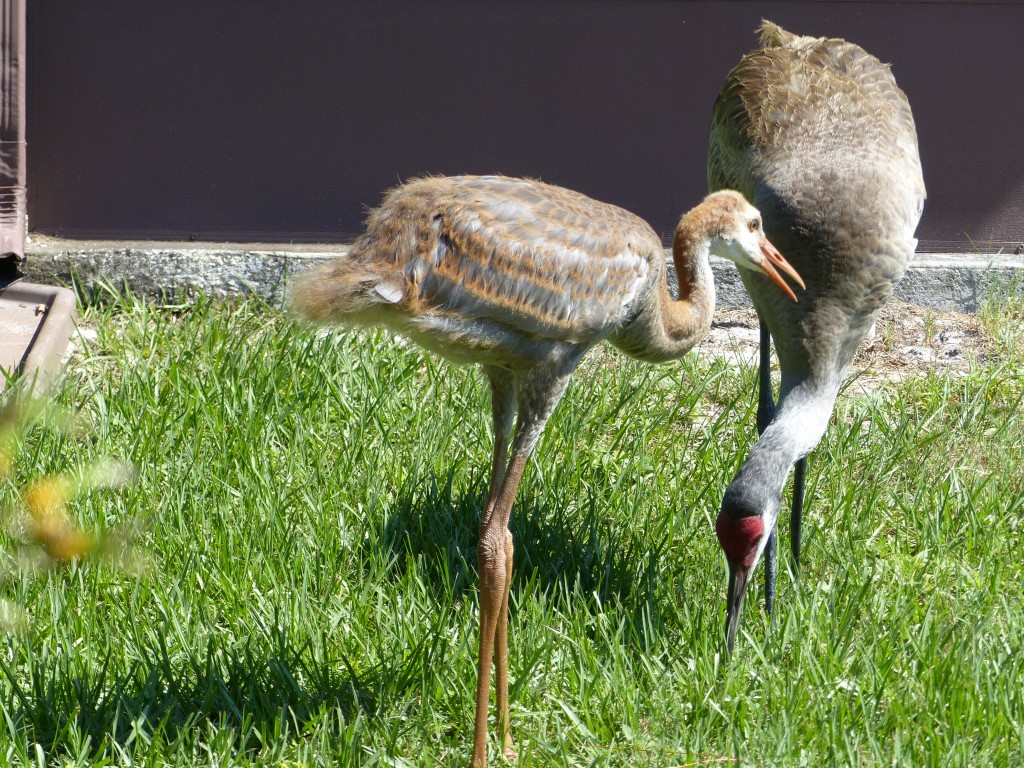
Sandhill Cranes in side yard – The Guard Sandhill watching
“I have fought a good fight, I have finished my course, I have kept the faith:” (2 Timothy 4:7 KJV)
Dan and I have been re-reading “Things I Have Learned” by Dr. Bob Jones, Sr. One of his messages was about “Rabbit Chasers.” It has to do with a “Possum” dog getting sidetracked by a Rabbit. [More about that later.]
The day after reading that part, I was looking out our kitchen window and spotted the four Sandhill Cranes in our side yard. They come by frequently. It is a mom, dad, and two juveniles.
About that time a rabbit appeared close to the house next door. [He was in our front yard on Easter Morning when we back out on the way to church. Yeah! The Easter Bunny!, I told Dan.] The rabbit was minding his own business when the “guard” Sandhill took out after him. Now, I call that Sandhill a “rabbit chaser.”
This is not the first time we have watched a Sandhill take-off after an animal. Years, ago, we were watching several Sandhill Cranes walking through the travel-trailer park where we were staying. A small kitten, thought he would “take on” one of these tall birds. The Sandhill opened up his wings, making him look “really big” and took two steps toward the small cat. Haven’t seen a cat run that fast in a long time. :)
Back to the book and the “Rabbit Chasers.” To shorten the message, it was about what a good “Possum” dog does, compared to a “Rabbit Chaser.” A good dog will go over hill and dale, through water, etc. and never gets off of the trail until he either trees his opossum, or he loses it. On the other hand, a dog that starts on the scent of his prey, comes across the trail of a rabbit, and changes course to follow the rabbit, is a “Rabbit Chaser.”
This Dog Adopted His Opossum. Back to the drawing board.
Dr. Bob takes that story and tells the students in chapel, to finish what they started. [“Finish The Job” was another of his saying.] The student starts college and then they meet a girl or boy, they start wavering about finishing. There are other things to get us off-track also. [Sound familiar] He mentions other things, but basically, he was challenging the students to stay on course and finish what they started. A very good lesson for all of us. I had hoped to find an online version to share a link to, but it doesn’t seem to be available. The book is still available. Things I Have Learned at the school.
“The Son of God came all the way from heaven to this earth. I am speaking reverently. He got on the trail of His Father’s will. Everything tried to stop Him, but He stayed on the trail.” … “One day He hung on the cross in agony and blood. After awhile He cried, ‘It is finished.’ He stayed on the trail. He never got off. He said, ‘I came to do My Father’s will, and now it is done.’ He died for us. And my Bible says, ‘He shall see the travail of His soul, and shall be satisfied.’ ..”You will never be happy off the trail.” [From Things I Have Learned, p106.]
There is much more I would love to share about that message, but, I’ll leave you to read the book if you would like.
“But none of these things move me, neither count I my life dear unto myself, so that I might finish my course with joy, and the ministry, which I have received of the Lord Jesus, to testify the gospel of the grace of God.” (Acts 20:24 KJV)
Sandhill Cranes in Sideyard 5-1-15 by Lee
Let’s make this practical for you younger students who are still in High School, Elementary School, or are being Homeschooled. Do you stick with your assignments, or do you get sidetracked to play a game, watch TV, or check the internet. Do you start working on a math problem, and then when it gets tough, you close the book and do something else? Maybe it’s another subject you don’t care for.
Your mother or father may give you an errand or project to do; like take out the trash, clean your room, or something else. Do you start, and then get “sidetracked”? Are you a “Rabbit Chaser”? Isn’t nice when you FINISH something you started?
Just do your best!
Here are some of his many sayings that Dr Bob Jones Sr. shared with students [of which we both were at one time].
“It is a sin to do less than your best.”
“The door to the room of success swings on the hinges of opposition.”
“It is no disgrace to fail; it is a disgrace to do less than your best to keep from failing.”
“God will not do for you what He has given you strength to do for yourself.”
“Don’t sacrifice the permanent on the altar of the immediate.”
Today is Mother’s Day here in America. I wonder if the beautiful, hard-working avian mother’s have a special day. Maybe, it is the day the little one fledge and finally have “Flown The Coop.”
Seriously, I would like to wish all of my readers a Happy Mother’s Day with this little tribute.
Also, Make Sure You Wish Your Mother A Happy Mother’s Day.
Black-breasted Buzzard (Hamirostra melanosternon) juvenile by Ian
Avian mother’s are finished with that batch. Unlike human mothers whose work has just begun, and will continue through every stage of their children’s lives, even into their grandchildren’s lives.
Happy Mother’s Day!!
“Listen to your father who begot you, And do not despise your mother when she is old.” (Proverbs 23:22 NKJV)
“A wise son makes a father glad, But a foolish man despises his mother.” (Proverbs 15:20 NKJV)
The twelve gates were twelve pearls: each individual gate was of one pearl. And the street of the city was pure gold, like transparent glass. (Revelation 21:21 NKJV)












 Birds of the Bible For Kids