My friend at Donkey Whisperer shared this and thought you also might enjoy it.
“Make a joyful noise unto the LORD, all the earth: make a loud noise, and rejoice, and sing praise. Sing unto the LORD with the harp; with the harp, and the voice of a psalm. With trumpets and sound of cornet make a joyful noise before the LORD, the King. Let the sea roar, and the fulness thereof; the world, and they that dwell therein. Let the floods clap their hands: let the hills be joyful together” (Psalms 98:4-8 KJV)
If the floods can clap, the sea roar, and the hills be joyful. why couldn’t a donkey sing praises to his Creator?
“And God said, Let the waters bring forth abundantly the moving creature that hath life, and fowl that may fly above the earth in the open firmament of heaven.”
Hardly a week goes by without a new news story about the supposed evolution of birds. In the week that I wrote this script, evolutionary paleontologists announced that they had discovered the world’s oldest beak. This beak was attached to a bird called ichthyornis (or fish-bird), and the fossil was actually already in the possession of Yale University. Researchers from that institution examined the fossil, which included a complete skull. One researcher said:
The fossil record provides our only direct evidence of the evolutionary transformations that have given rise to modern forms. This extraordinary new specimen reveals the surprisingly late retention of dinosaur-like features in the skull of Ichthyornis – one of the closest-known relatives of modern birds from the Age of Reptiles.
Bird Beaks from Wikipedia
One has to ask how such a skull constitutes “direct evidence of evolutionary transformations”. We do not see the beak being transformed from a dinosaur skull. Indeed, even in the popular-level articles from which this information was gleaned, we see some startling problems. For example, ichthyornis is thought to have died out 83.5 million years ago. Yet, velociraptors – a potential therapod precursor to birds – was claimed not to have appeared until 75 million years ago, about 8 million years after the creature into which it is supposed to have evolved. Even allowing for these problems with timescales, creationist researchers have noted that the evolutionary distance from ichthyornis to modern birds is less than that alleged to exist between many modern birds. One must conclude that ichthyornis has been assigned the world’s oldest beak merely because of an a priori commitment and bias to evolutionary theory.
Lord God, we see evidence of Your unique designs in all the creatures You have made. Thank You that You have made all things well. Amen.
We went over to the east coast of Florida during the New Year holiday. We were able to do some birdwatching at Viera Wetlands in Viera, Florida and also went to Merritt Island National Wildlife Reserve’s Black Point Dr. That is where I captured this Snowy Egret strutting with his yellow feet showing. We also saw the Snowy Egrets at Viera.
Happy New Year and these verses refer to walking. Good reminders as we start the new year off. Here are a few of those verses:
“But as for me, I will walk in mine integrity: redeem me, and be merciful unto me.” (Psalms 26:11 KJV)
Snowy Egret Viera Wetlands – 12-31-2018 by Lee
“For the LORD God is a sun and shield: the LORD will give grace and glory: no good thing will he withhold from them that walk uprightly. O LORD of hosts, blessed is the man that trusteth in thee.” (Psalms 84:11-12 KJV)
“Teach me thy way, O LORD; I will walk in thy truth: unite my heart to fear thy name. I will praise thee, O Lord my God, with all my heart: and I will glorify thy name for evermore.” (Psalms 86:11-12 KJV)
Snowy Egret Viera Wetlands – 12-31-2018 by Lee
“They also do no iniquity: they walk in his ways.” (Psalms 119:3 KJV)
“Then shalt thou walk in thy way safely, and thy foot shall not stumble.” (Proverbs 3:23 KJV)
Snowy Egret Viera Wetlands – 12-31-2018 by Lee
“Thus saith God the LORD, he that created the heavens, and stretched them out; he that spread forth the earth, and that which cometh out of it; he that giveth breath unto the people upon it, and spirit to them that walk therein:” (Isaiah 42:5 KJV)
“For we are his workmanship, created in Christ Jesus unto good works, which God hath before ordained that we should walk in them.” (Ephesians 2:10 KJV)
Do you see the different ways to walk? Can you find more ways to walk in these verses?
Magnificent Frigatebird over shore by Patrick AFB by Lee
“The birds of the air, And the fish of the sea That pass through the paths of the seas. O LORD, our Lord, How excellent is Your name in all the earth!” (Psalms 8:8-9 NKJV)
Today while trying to enter Patrick AFB in Florida, we spotted three Magnificent Frigatebirds skimming over the edge of the Atlantic Ocean. Wow!! We very seldom spot these birds. The size of their wingspan is amazing and are a sight to see.
Since this was New Year’s Eve day, we discovered that the A1A entrance was closed. So, we had to turn around and go back to the other gate.
Two Magnificent Frigatebird over shore by Patrick AFB by Lee
“Dan, wait while I get my camera out of the case. Maybe, we can spot them again, because they were heading south originally while we were going north.” Yeah! We spotted the three and also a fourth one. These photos were taken through the front windshield while Dan was driving. So, they are less than perfect. But, it does prove we saw them.
Magnificent Frigatebird over shore by Patrick AFB by Lee
I have a Dr. appointment over here, so we came a day or so early. We birdwatched a Viera Wetlands a bit on the way into the area. Plan on covering more of the wetlands before heading back home.
Now for some better photos of this magnificent Magnificent Frigatebird.
Magnificent Frigatebird by NOAA
While checking for information on these birds, I found several interesting articles you might want to check out. The one talks about how they stay at sea for days and weeks on end. They tested their sleeping ability to sleep while aloft. See: Frigatebirds can sleep while flying.
“The 7-foot wingspan of a magnificent frigatebird is unmistakable. They dwarf other birds as they glide on air currents above coastal Florida. Our state hosts the largest frigatebird species and the only nesting colony in the United States, located in the Dry Tortugas. Their summer breeding season brings the open-ocean species in to the shore where males can show off their distinctive red pouch to potential mates.
Frigatebirds rarely land on the ground due to their short legs and wing shape. Their thin “bent elbow” wings are ideal for soaring hundreds of miles without a single wing flap, but can’t generate enough lift to get the large birds off of the ground. They land and nest in high places, free diving off of them before catching the breeze and flying on.
It’s just as uncommon to find a frigatebird on the water. Their feathers lack oil that keep their seafaring neighbors like pelicans and gulls afloat. Water would quickly soak the frigate’s feathers and make it nearly impossible to escape.” This is from Nature’s Academy’s article.
We have had several articles here over the years about the Frigatebirds:
“The rainbow shall be in the cloud, and I will look on it to remember the everlasting covenant between God and every living creature of all flesh that is on the earth.” (Genesis 9:16 NKJV)
Recently a friend posted a video of beautifully colored Finches. They didn’t tell what they were and others were writing and asking where they were from. So, after posting it to my page, I thought it would be interesting to find out more about the beautiful creations from our Lord.
Here is the link to that video. Animal & Nature page on Facebook. WordPress can’t insert it.
The video below is by LesleytheBirdNerd on YouTube and she explains much about the colorful finches:
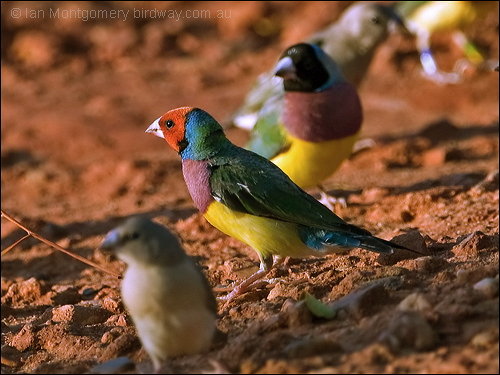
“The Gouldian finch (Erythrura gouldiae), also known as the Lady Gouldian finch, Gould’s finch or the rainbow finch, is a colourful passerine bird which is native to Australia.
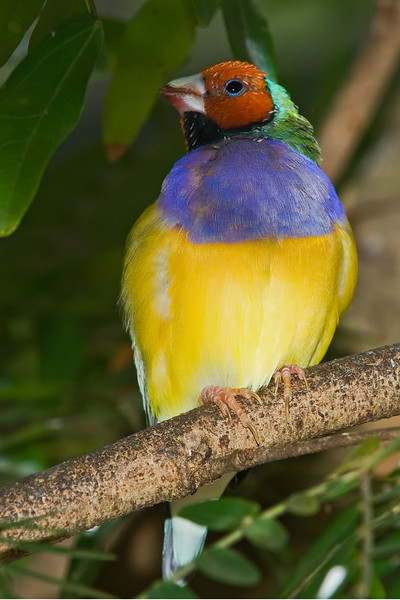
Both sexes are brightly coloured with black, green, yellow, and red markings. The females tend to be less brightly coloured. One major difference between the sexes is that the male’s chest is purple, while the female’s is a lighter mauve.
Gouldian Finch (Erythrura gouldiae) by Africaddict
Gouldian finches are about 125–140 mm long. Gouldian finches’ heads may be red, black, or yellow. Formerly considered three different kinds of finches, it is now known that these are colour variants that exist in the wild. Selective breeding has also developed mutations (blue, yellow and silver instead of a green back) in both body and breast colour.
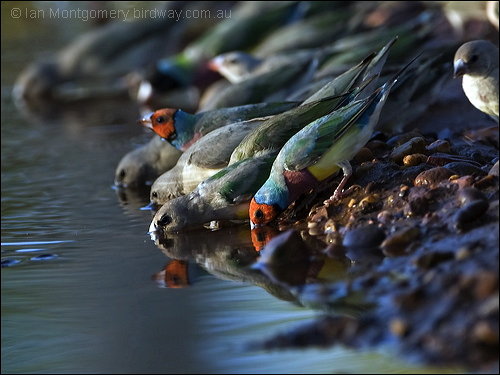
Outside the breeding season, Gouldian finches often join mixed flocks consisting of long-tailed finches and masked finches. Flocks can consist of up to 1,000–2,000 individuals. During the breeding season, they are normally found on rough scree slopes where vegetation is sparse. In the dry season, they are much more nomadic and will move to wherever there food and water can be found.” [Wikipedia with editing]
I wonder if the Lord thought that having “little rainbows” [Gouldian Finches] down here, might help us remember his promise? The rainbow shall be in the cloud, and I will look on it to remember the everlasting covenant between God and every living creature of all flesh that is on the earth.”
(Genesis 9:16 NKJV)
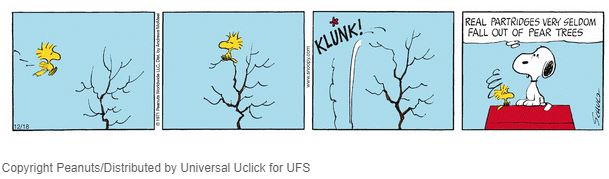
Woodstock really has his issues with trying to be a bird. Then again, Snoopy’s analysis of the adventures of Woodstock can be rather entertaining. Here is the latest from the two.
Mountain Bamboo Partridge (Bambusicola fytchii) by Lee Zoo Miami
As the partridge sitteth on eggs, and hatcheth them not; so he that getteth riches, and not by right, shall leave them in the midst of his days, and at his end shall be a fool. (Jeremiah 17:11 KJV)
Partridges are medium-sized non-migratory gamebirds, with a wide native distribution throughout the Old World, including Europe, Asia, and parts of Africa. They are sometimes grouped in the Perdicinae subfamily of the Phasianidae (pheasants, quail, etc.). However, molecular research suggests that partridges are not a distinct taxon within the family Phasianidae, but that some species are closer to the pheasants, while others are closer to the junglefowl. Partridges are also one of our Birds of the Bible. See the Bible Birds – Partridge.
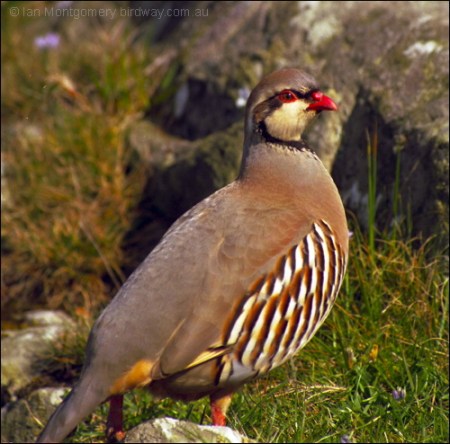
Chukar Partridge (Alectoris chukar) by Ian
These are medium-sized birds, intermediate between the larger pheasants and the smaller quail. Partridges are native to the grassy steppes of Europe, Asia, Africa and the Middle East. Nowadays they are often found nesting on agricultural land. They nest on the ground and have a diet consisting of seeds, grapes and insects. Species such as the grey partridge and the red-legged partridge are popular as game birds, and are often reared in captivity and released for the purpose of hunting. For the same reason, they have been introduced into large areas of North America.
A famous reference to the partridge is in the Christmas carol, “The Twelve Days of Christmas”. The first gift listed is “a partridge in a pear tree”, and these words end each verse. Since partridges are unlikely to be seen in pear-trees (they are ground-nesting birds) it has been suggested that the text “a pear tree” is a corruption of the French “une perdrix” [a partridge]. [Wikipedia with editing]
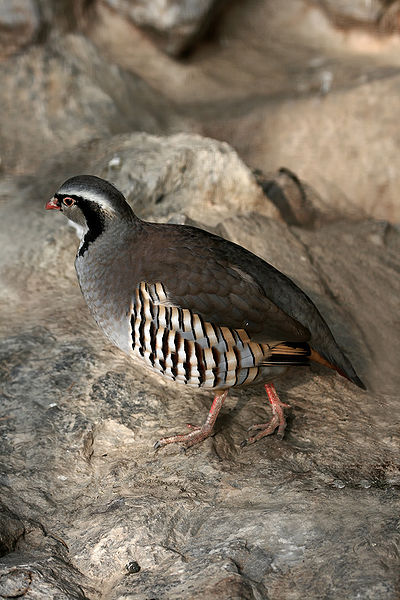
Rock Partridge (Alectoris graeca) WikiC
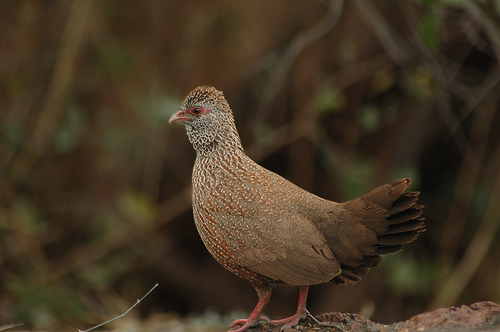
Here are some of the many Partridges from around the world. Our Creator has provided many partridges around the world for us to enjoy.
A Psalm for Solomon. Give the king thy judgments, O God, and thy righteousness unto the king’s son. He shall judge thy people with righteousness, and thy poor with judgment. (Psalms 72:1-2 KJV)
Words by James Montgomery (1771-1854), 1821
[This hymn] is a metrical version of the Seventy-second Psalm. It was written as a Christmas hymn and was first sung on Christmas Day, 1821, at a great convocation of the Moravians in their settlement at Fulneck. At a Wesleyan missionary meeting, held in Liverpool on April 14 of the following year, 1822, when Doctor Adam Clarke presided, Montgomery made an address and closed it by the recital of this hymn with all of its verses…Doctor Clarke later used it in his famous Commentary in connection with his discussion of the Seventy-second Psalm.
Music: Ellacombe, Gesangbuch der Herzogl. Wirtembergischen Katholischen Hofkapelle (Württemberg, Germany: 1784); adapted & harmonized by William H. Monk in the 1868 appendix to Hymns Ancient and Modern, number 366
Birds in Christmas Hymns
Hail to the Lord’s Anointed
Hail to the Lord’s anointed, great David’s greater Son!
Hail in the time appointed, His reign on earth begun!
He comes to break oppression, to set the captive free;
To take away transgression and rule in equity.
He comes in succor speedy to those who suffer wrong;
To help the poor and needy, and bid the weak be strong;
To give them songs for sighing, their darkness turn to light,
Whose souls, condemned and dying, were precious in His sight.
By such shall He be fearèd while sun and moon endure;
Beloved, obeyed, reverèd; for He shall judge the poor
Through changing generations, with justice, mercy, truth,
While stars maintain their stations, or moons renew their youth.
He shall come down like showers upon the fruitful earth;
Love, joy, and hope, like flowers, spring in His path to birth.
Before Him, on the mountains, shall peace, the herald, go,
And righteousness, in fountains, from hill to valley flow.
Arabia’s desert ranger to Him shall bow the knee;
The Ethiopian stranger His glory come to see;
With offerings of devotion ships from the isles shall meet,
To pour the wealth of oceans in tribute at His feet.
Kings shall fall down before Him, and gold and incense bring;
All nations shall adore Him, His praise all people sing;
For He shall have dominion o’er river, sea and shore, Far as the eagle’s pinion or dove’s light wing can soar.
For Him shall prayer unceasing and daily vows ascend;
His kingdom still increasing, a kingdom without end:
The mountain dews shall nourish a seed in weakness sown,
Whose fruit shall spread and flourish and shake like Lebanon.
O’er every foe victorious, He on His throne shall rest;
From age to age more glorious, all blessing and all blest.
The tide of time shall never His covenant remove;
His name shall stand forever, His name to us is Love.
American Yellow Warbler (Dendroica aestiva) singing by J Fenton
And the angel said unto them, Fear not: for, behold, I bring you good tidings of great joy, which shall be to all people. For unto you is born this day in the city of David a Saviour, which is Christ the Lord. (Luke 2:10-11)
Written as – El Cant Dels Ocells – Traditional Catalonian Carol
Translator Unknown
Carol of the Birds
1. Upon this holy night,
When God’s great star appears,
And floods the earth with brightness Birds’ voices rise in song
And warbling all night long
Express their glad heart’s lightness Birds’ voices rise in song
And warbling all night long
Express their glad heart’s lightness
Black-headed Nightingale-Thrush (Catharus mexicanus) by Michael Woodruff
2. The Nightingale is first
To bring his song of cheer,
And tell us of His glad – ness:
Jesus, our Lord, is born
To free us from all sin
And banish ev’ry sadness!
Jesus, our Lord is born
To free us from all sin
And banish ev’ry sadness!
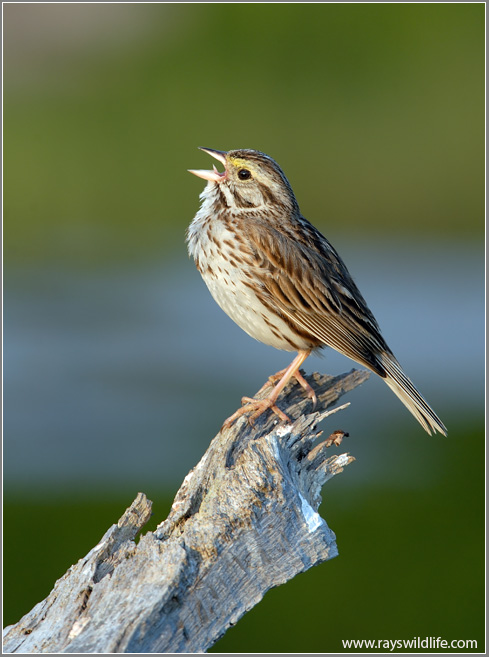
Savannah Sparrow singing by Ray
3. The answ’ring Sparrow cries:
“God comes to earth this day
Amid the angels flying.”
Trilling in sweetest tones,
The Finch his Lord now owns:
“To Him be all thanksgiving.”
Trilling in sweetest tones,
The Finch his Lord now owns:
“To Him be all thanksgiving.”
Barbary Partridge (Alectoris barbara koenigi) Pixdaus
4. The Partridge adds his note:
“To Bethlehem I’ll fly,
Where in the stall He’s lying.
There, near the manger blest,
I’ll build myself a nest,
And sing my love undying.
There, near the manger blest,
I’ll build myself a nest,
And sing my love undying.
Photo
*
Found another version of the Carol of the Birds and it appears to be Australian Birds.
The Carol of the Birds
(Wheeler/James)
Brolga (Grus rubicunda) by Ian
Out on the plains the brolgas are dancing
Lifting their feet like warhorses prancing
Up to the sun the woodlarks go winging
Faint in the dawn light echoes their singing
Crana! Orana! Orana to Christmas Day.
Crested Bellbird (Oreoica gutturalis) by Ian
Down where the tree ferns grow by the river
There where the waters sparkle and quiver
Deep in the gullies bell-birds are chiming
Softly and sweetly their lyric notes rhyming
Orana! Orana! Orana to Christmas Day.
Silver-crowned Friarbird (Philemon argenticeps) by Ian
Friar birds sip the nectar of flowers Currawongs chant in wattle tree bowers
In the blue ranges lorikeets calling
Carols of bush birds rising and falling
Orana! Orana! Orana to Christmas Day.
*
I always enjoy the reactions between these two. But, OH! the ruffled feathers that we have seen on birds. Maybe they should stop by Snoopy for some help.
“Everyone helped his neighbor, And said to his brother, “Be of good courage!” (Isaiah 41:6 NKJV)












 Birds of the Bible For Kids