The McGuffey’s Reader Posts

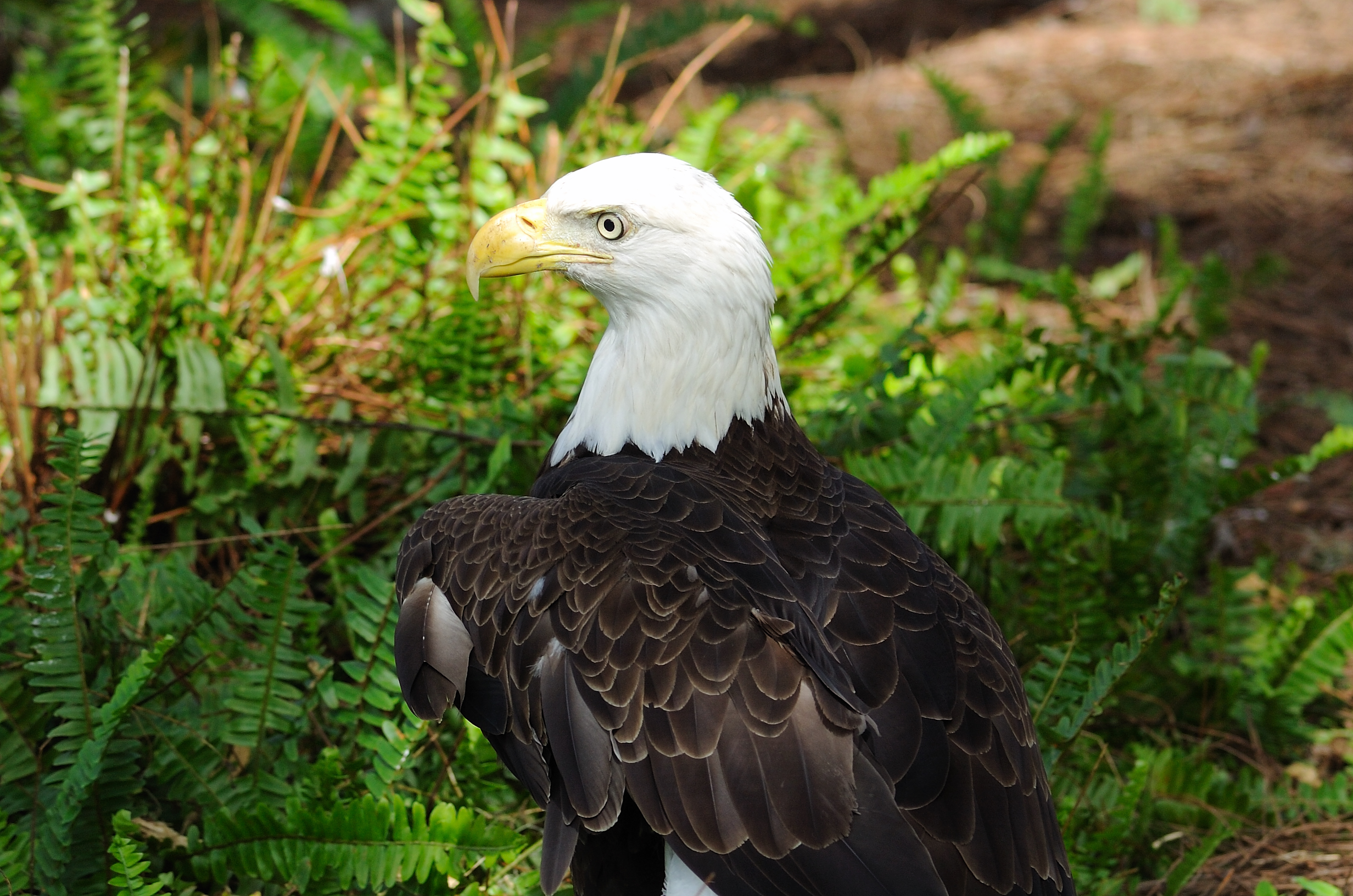
Bald Eagle (close up) LP Zoo by Lee

Bald Eagle (close up) LP Zoo by Lee

If you have stopped by recently, you have noticed the different articles from the McGuffey’s Readers. So far, there have been posts from the Second Grade, Third Grade, Fourth Grade and the Sixth Grade Readers.

McGuffey Readers were a series of graded primers for grade levels 1-6. They were widely used as textbooks in American schools from the mid-19th century to the mid-20th century, and are still used today in some private schools and in homeschooling.

My question is would you like more of these posted? School will be starting soon and your young readers may find these useful for reading practice. Then again, they may be so busy they do not have time to read extra stories.

These all have good tales to tell, and I have been busy finding the BIRD stories, of course. I have found many more articles that can be made from the McGuffey’s Readers. They are full of stories that have good morals to them. Here they are updated with current neat bird pictures and Scripture verses.
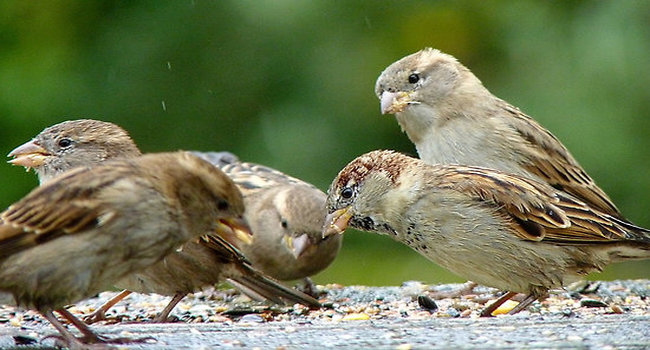
House Sparrow (Passer domesticus) Five ©Indiatoday

House Sparrow (Passer domesticus) Five ©Indiatoday

Please leave a comment about whether these are helpful and enjoyable to you, your children, or your grandchildren. Maybe, even your students.

These are coming from the Gutenberg books online:

Yes, I have plans to do First Grade and Fifth Grade stories, if the answers are positive.

“Iron sharpens iron; so a man sharpens the countenance of his friend [to show rage or worthy purpose].” (Proverbs 27:17 AMP)

Wordless Birds

The Sandpiper – Fourth Grade McGuffey’s Reader

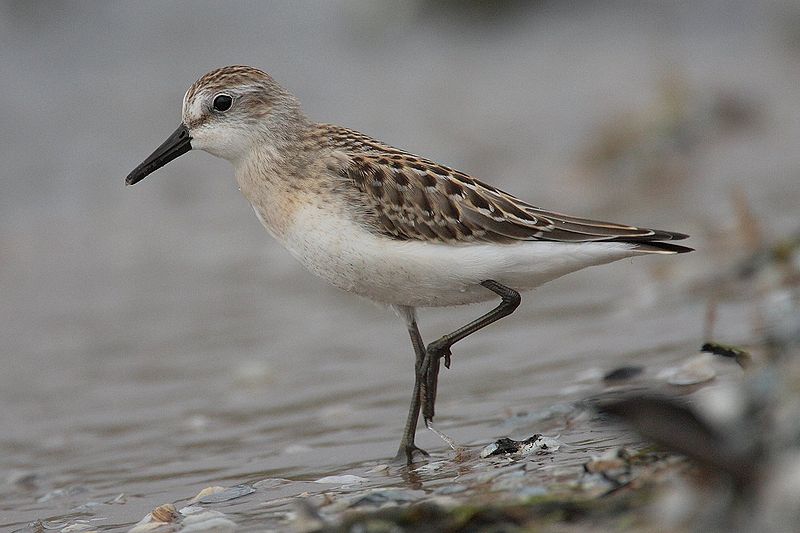
Semipalmated Sandpiper (Calidris pusilla) ©WikiC
Semipalmated Sandpiper (Calidris pusilla) ©WikiC

McGuffey Readers were a series of graded primers for grade levels 1-6. They were widely used as textbooks in American schools from the mid-19th century to the mid-20th century, and are still used today in some private schools and in homeschooling.

Here is a story of The Eagle from the Fourth Grade Reader. (From Gutenberg) Pictures are current photos.

Relocated Here

McGuffey’s 6th Grade Reader – The Morning Oratorio

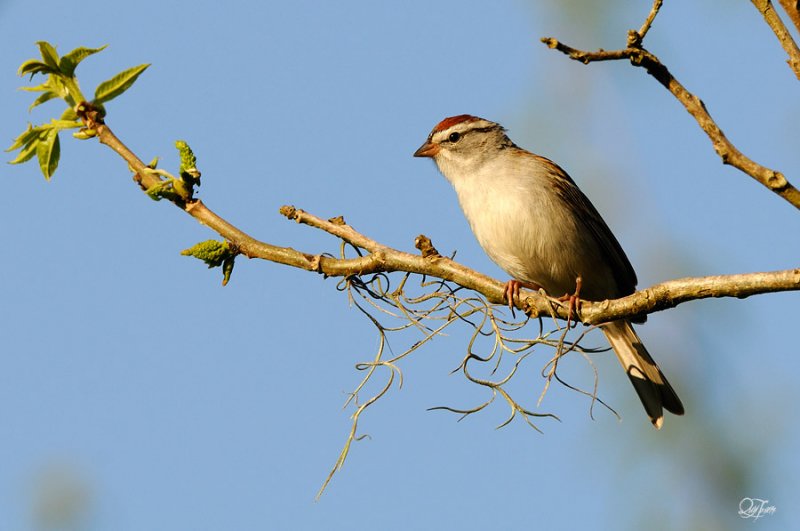
Chipping Sparrow (Spizella passerina) by Quy Tran

Chipping Sparrow (Spizella passerina) by Quy Tran

“He sends forth springs in the valleys; They flow between the mountains; They give drink to every beast of the field; The wild donkeys quench their thirst. Beside them the birds of the heavens dwell; They lift up their voices among the branches.” (Psalms 104:10-12 NASB)

Relocated Here


Circle B Bar Reserve – A Favorite Birding Place

This is by one of the photographers that visits Circle B Bar Reserve in Lakeland, Florida. It is only a few miles from our house “as the crow flies.” We have spent many enjoyable trips there. This was from Dennis Hollingsworth.

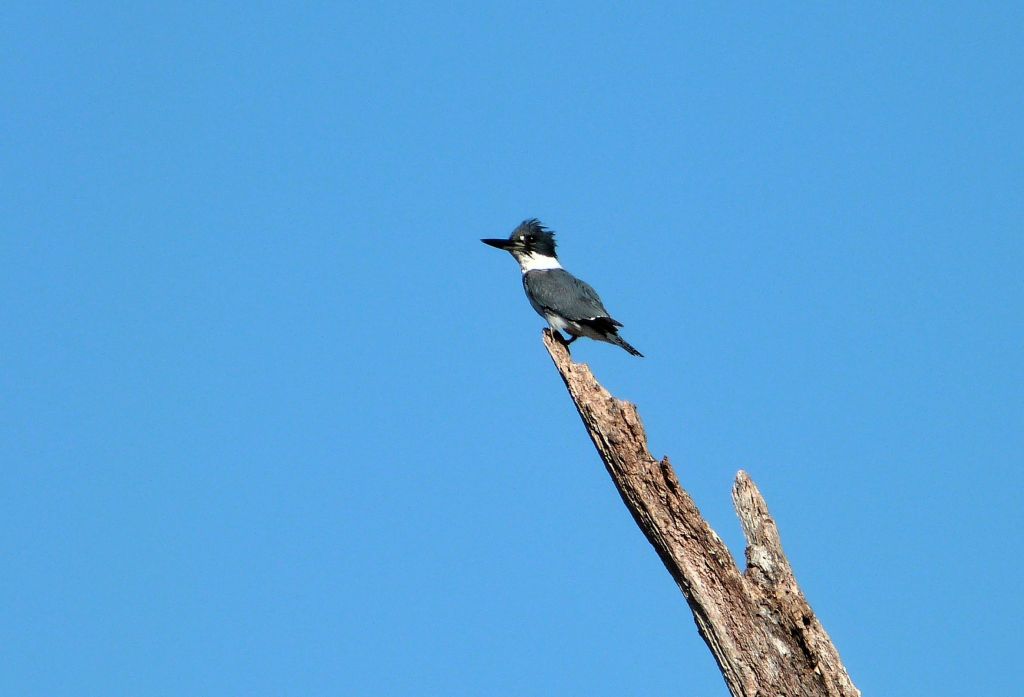
Belted Kingfisher (Megaceryle alcyon) by Lee Circle B

Belted Kingfisher (Megaceryle alcyon) by Lee Circle B

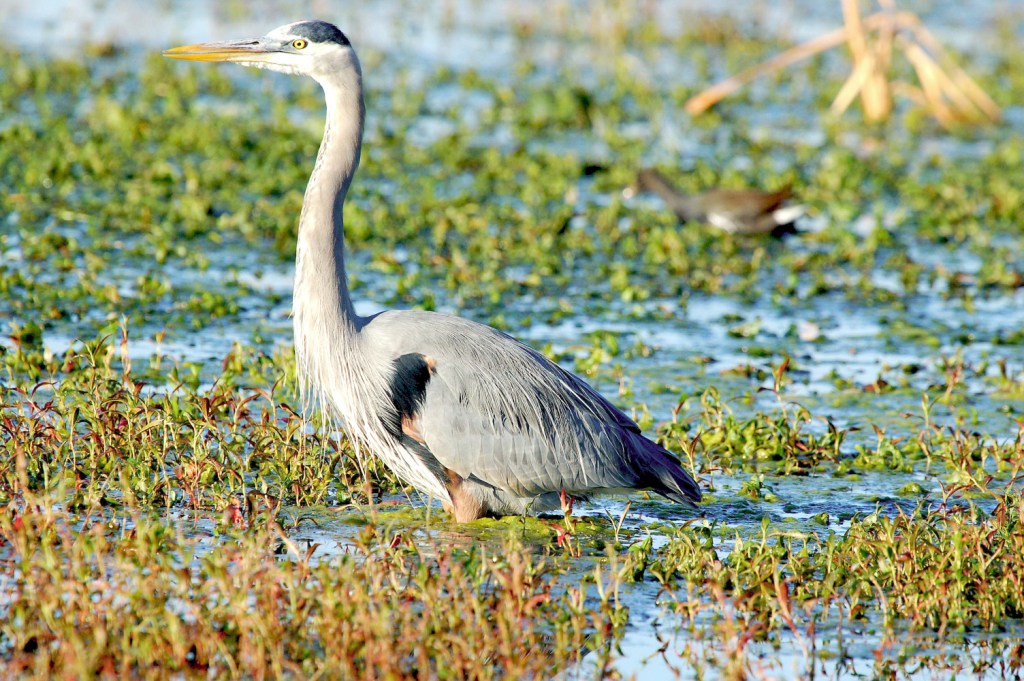
Great Blue Heron (Ardea herodias) at Circle B By Dan'sPix

Bible Birds – Herons

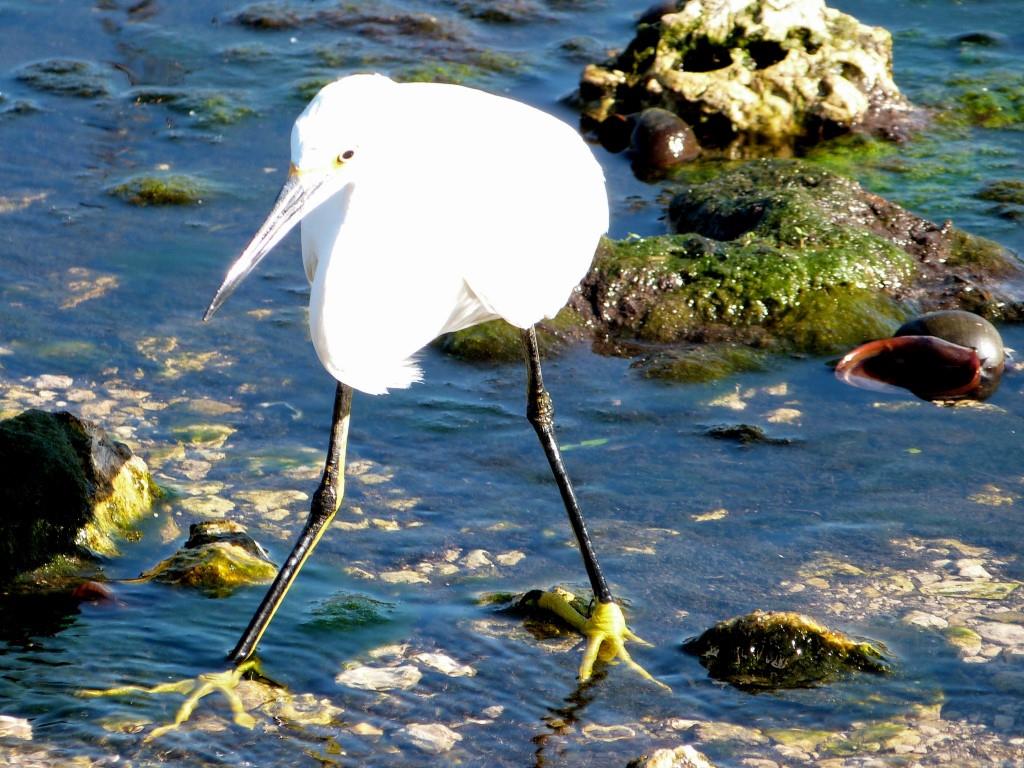
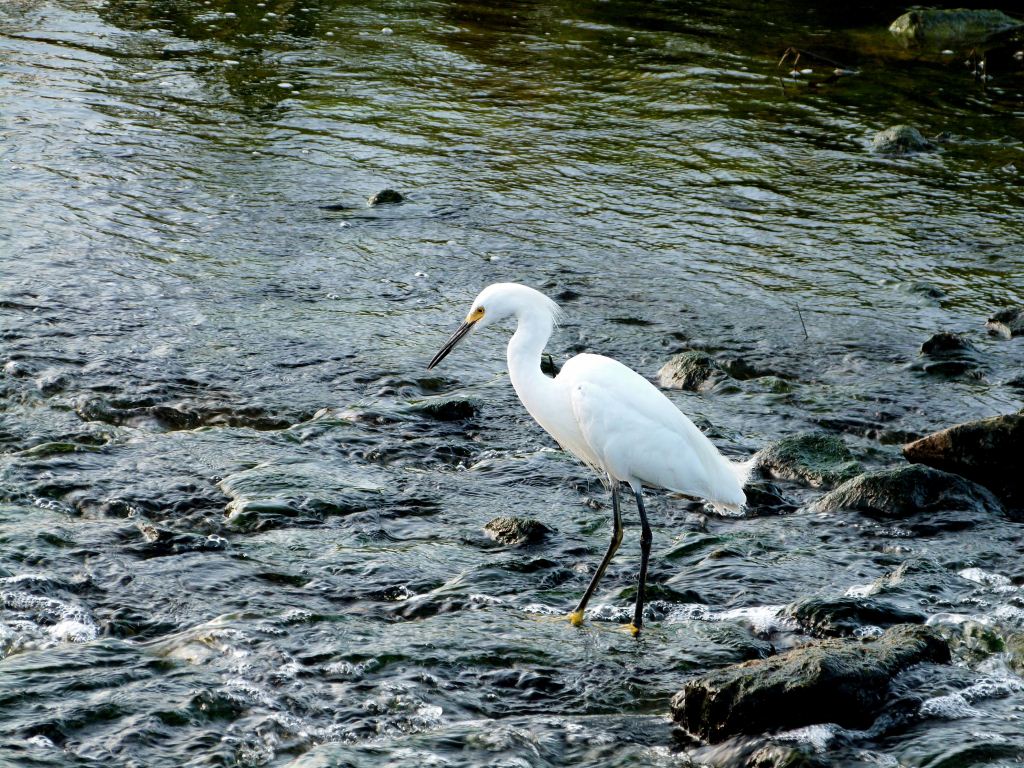
Snowy Egret (Egretta thula) Notice Yellow Feet by Lee at Circle B

Snowy Egret (Egretta thula) Notice Yellow Feet by Lee at Circle B

“For since the creation of the world His invisible attributes are clearly seen, being understood by the things that are made, even His eternal power and Godhead, so that they are without excuse,” (Romans 1:20 NKJV)

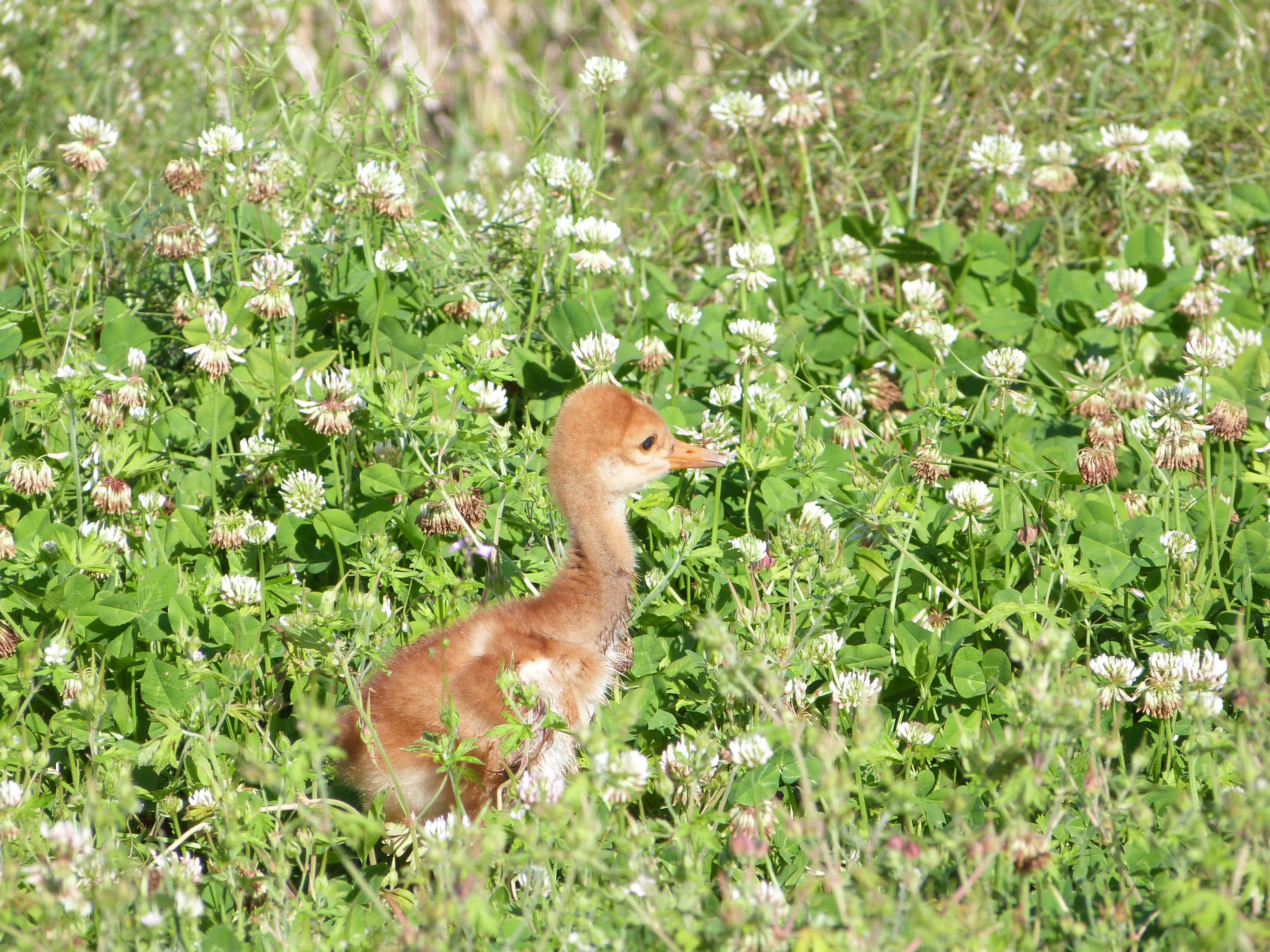
Sandhill Crane Chick at Circle B by Lee

Sandhill Crane Chick at Circle B by Lee

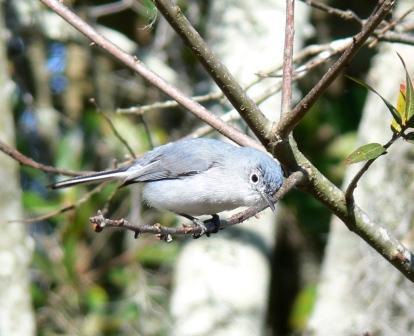
Blue-Gray Gnatcatcher at Circle B Reserve by Lee

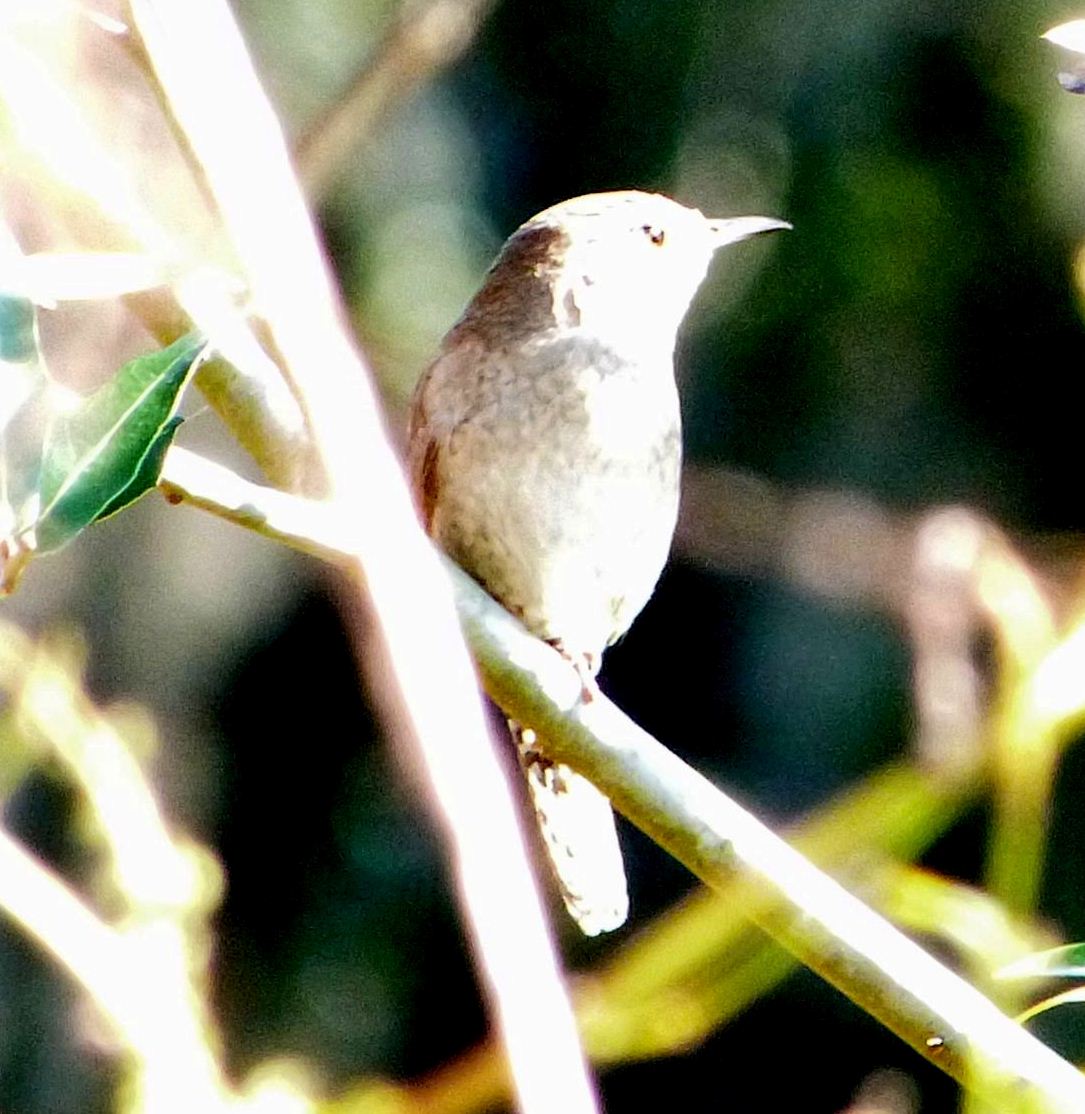
House Wren Proof Shot by Lee at Circle B

House Wren Proof Shot by Lee at Circle B

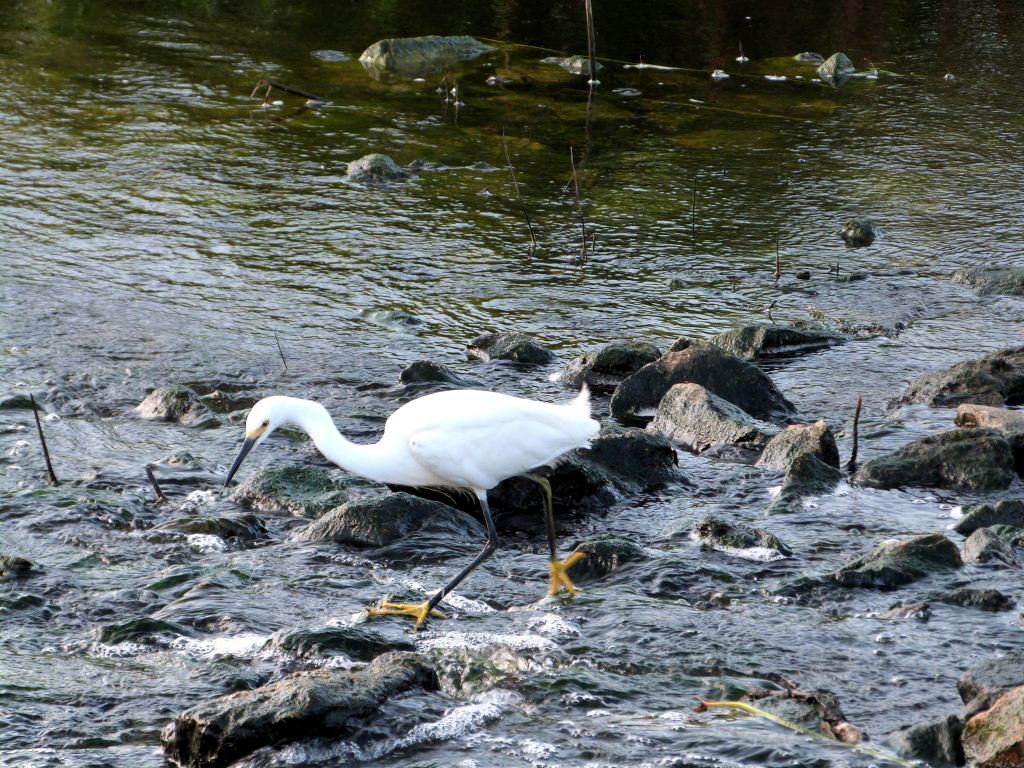
Snowy Egret Circle B by Lee

Snowy Egret Circle B by Lee

Snowy Egret Circle B 8-3-12 by Lee

Snowy Egret Circle B by Lee

Happy Fourth Of July!

Originally entitled Yankee Doodle, this is one of several versions of a scene painted by A. M. Willard that came to be known as The Spirit of ’76

During the American Revolution, the legal separation of the Thirteen Colonies from Great Britain in 1776 actually occurred on July 2, when the Second Continental Congress voted to approve a resolution of independence that had been proposed in June by Richard Henry Lee of Virginia declaring the United States independent from Great Britain’s rule. After voting for independence, Congress turned its attention to the Declaration of Independence, a statement explaining this decision, which had been prepared by a Committee of Five, with Thomas Jefferson as its principal author. Congress debated and revised the wording of the Declaration, finally approving it two days later on July 4. [Some debate the actual date – Wikipedia]

A Fourth of July fireworks display at the Washington Monument ©WikiC.

It is time for another holiday here in the United States of America. This is one of the most important celebrations for the country because of what it represents. Once this Declaration of Independence was signed, the real growth of America began. God has blessed our country with one of the most freedoms for personal liberty and freedom of religion. [Unfortunately, many of these freedoms are being taken away. Christians have less and less freedom to worship the Lord as we once had. Our country was founded on Christian principles, but now some are trying to remove all traces of our founding truths.

I try not to get political on this site, but it does make us sad what is going on currently. With that said, I will be silent on the political side.

4th of July Independence Day Parade 2014 DC ©WikiC

Now is a day to show off some of our Red, White, and Blue birds that live here. [And fly off to other countries also.]

Northern Cardinal (Cardinalis cardinalis) Male ©NW Ohio Bird Pictures

One of my favorite Red birds! A visitor to our feeders.

White Ibis on Table by Lee

White Ibis on Table by Lee

A very common White bird that walked through our yard today.

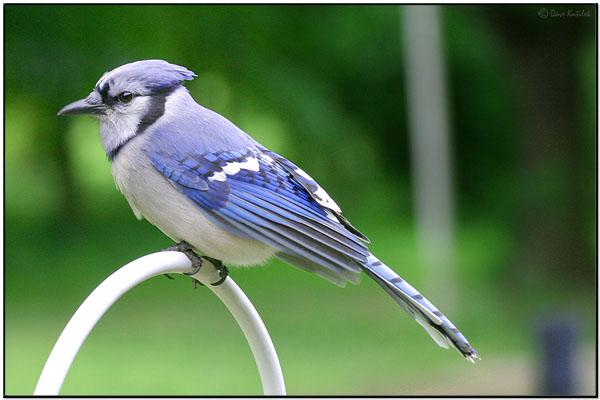
And the Blue Jay, another regular visitor to our feeders:

Blue Jay (Cyanocitta cristata) by Daves BirdingPix

Blue Jay (Cyanocitta cristata) by Daves BirdingPix

This refers to Abraham, but it is still very true today:

“All these died in faith, without receiving the promises, but having seen them and having welcomed them from a distance, and having confessed that they were strangers and exiles on the earth. For those who say such things make it clear that they are seeking a country of their own. And indeed if they had been thinking of that country from which they went out, they would have had opportunity to return. But as it is, they desire a better country, that is, a heavenly one. Therefore God is not ashamed to be called their God; for He has prepared a city for them.” (Hebrews 11:13-16 NASB)

PS: Keep me in your prayers. Tomorrow morning I am having a Cataract implant surgery. That is one reason this is a few days early for the holiday. Will be off the computer for a few days. I had the left eye implant completed several years ago and all went well. We are praying that the same will be true for this right eye. All the more to see the Lord’s Avian Wonders – BETTER!

Wordless Birds

Independence Day – Our Christian Heritage

Independence Day Wikipedia

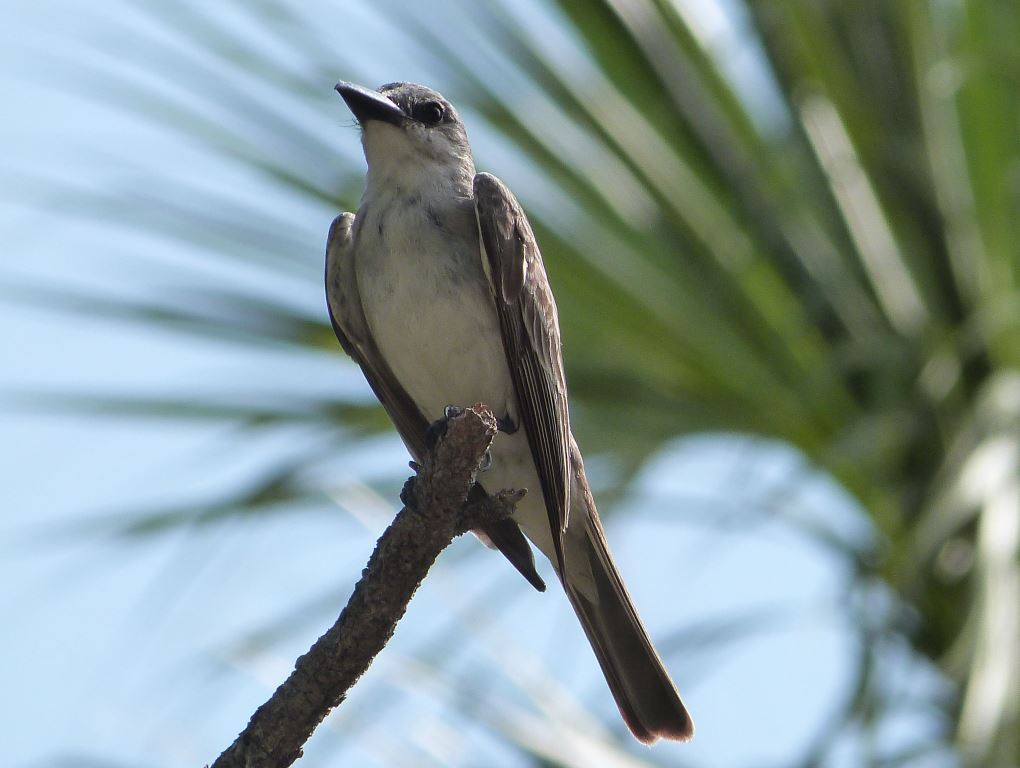
The Kingbird – McGuffey’s Second Grade Reader

Grey Kingbird (Tyrannus dominicensis) by Lee at Honeymoon Is SP

McGuffey Readers were a series of graded primers for grade levels 1-6. They were widely used as textbooks in American schools from the mid-19th century to the mid-20th century, and are still used today in some private schools and in homeschooling. [Posting these for young readers to enjoy and practice reading while school is out.]

Relocated Here

The Eagle – Fourth Grade McGuffey’s Reader

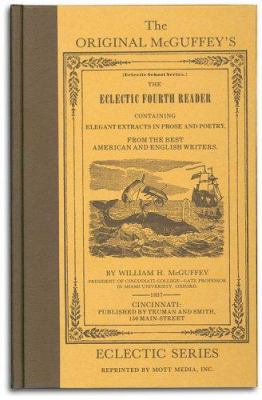
Fourth Grade McGuffey Reader

“Does the eagle mount up at your command, And make its nest on high?” (Job 39:27 NKJV)

McGuffey Readers were a series of graded primers for grade levels 1-6. They were widely used as textbooks in American schools from the mid-19th century to the mid-20th century, and are still used today in some private schools and in homeschooling.

Relocated Here


What Is A Gripe or An Aliet? – Do Not Eat List

Rock Kestrel (Falco rupicolus) ©WikiC

Here are two more birds that are listed on the “Do Not Eat” list. A Gripe and an Aliet.

Leviticus 11:13 These things be of (the) fowls which ye shall not eat, and shall be eschewed of you (and shall be shunned by you); an eagle, and a gripe, [and] an aliet,
Deuteronomy 14:12 (but) eat ye not unclean birds, that is, an eagle, and a gripe, and an aliet,
These verses are in the Wycliffe Bible (WYC) version. “The earliest existing edition is from 1525, but manuscripts of that only have a part of Matthew. Of the whole New Testament, the earliest manuscripts available are from 1526. Old Testament books are from later, 1530’s for some. This means that these two birds mentioned, the Gripe and the Aliet, were the names they were called by back then. Languages change over hundreds of years.

Interesting note about how these birds are listed in the “Do Not Eat List” Here is what the Expositor’s Bible Commentary (Abridged Edition): Old Testament says:

13-19 There was no easy rule of thumb for clean birds. A negative list is given that in cases is difficult to translate with certainty. The different modern versions vary in detail. In general carrion-eating and fish-eating birds were forbidden, just as they are not used for food today. Chickens are not mentioned in the OT. The eating of bird eggs and the mother bird together is forbidden in Deuteronomy 22:6, apparently for conservation reasons. If the eggs are taken, the mother bird will lay more; but if the mother bird is taken, there will be no more eggs! Doves, their eggs, and their young were eaten.

After doing some searching on Google, the Gripe doesn’t seem to be a recognizable bird today. When searching for the Aliet, After just about giving up, this interesting article was found:

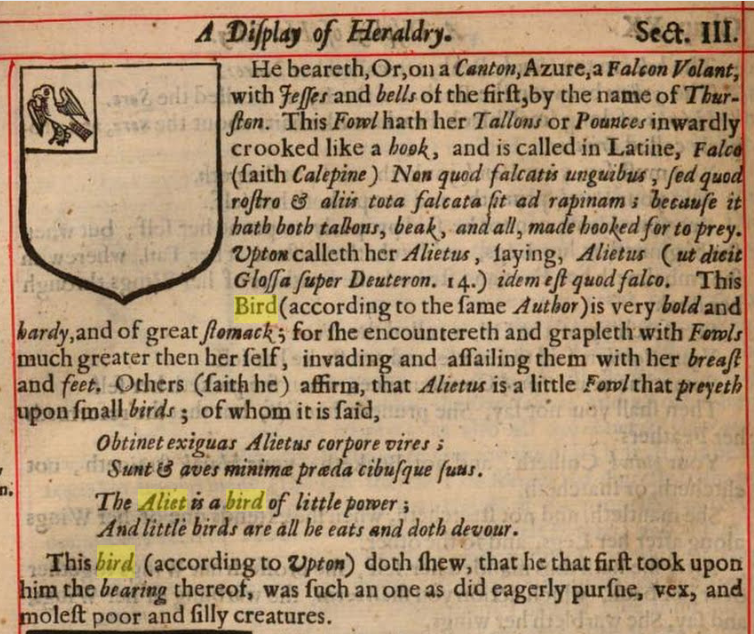
Hearldry is a displaying of different Coats of Arms. The bird in on this Crest or Coat of Arms is the Aliet:

These verses in other translations indicate some type of birds of prey. That is what is article is saying also. If you can read the “old English”, notice that it mentions “This Fowl hath her Tallons or Pounces inwardly crooked like a hook.” That is a good description of a Hawk, Falcon, or some other type of bird of prey. “and is called in Latine [Latin], Falco (faith Calepine). Falco is the genus for Falcons and includes 15 Kestrels, 22 Falcons and 4 Hobbys.

It also mentions the “Alietus is a little Fowl that preyeth upon small birds…”

Peregrine Falcon on Watch! by Ray

Peregrine Falcon on Watch! by Ray

Falcons, Kestrels and Hobbies are part of the Falconidae Family.

  1. Nave’s Topical Bible – Falcon
  2. Falconiformes Order
  3. Bible Birds – Falcons
  4. See More Bible Birds
  5. ABC’s of the Gospel


Running The Race

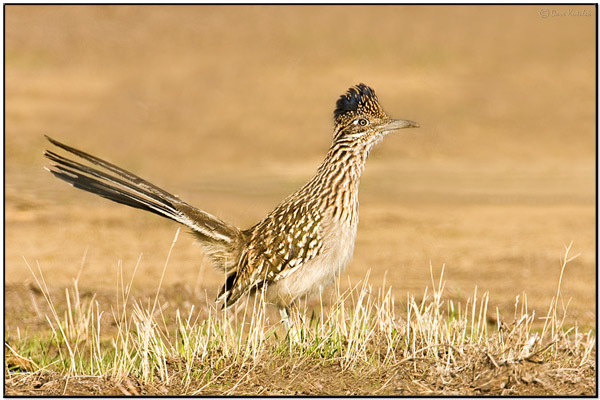
Greater Roadrunner (Geococcyx californianus) by Daves BirdingPix

Greater Roadrunner (Geococcyx californianus) by Daves BirdingPix

“Do you not know that those who run in a race all run, but one receives the prize? Run in such a way that you may obtain it.” 1 Corinthians 9:24 (NKJV)

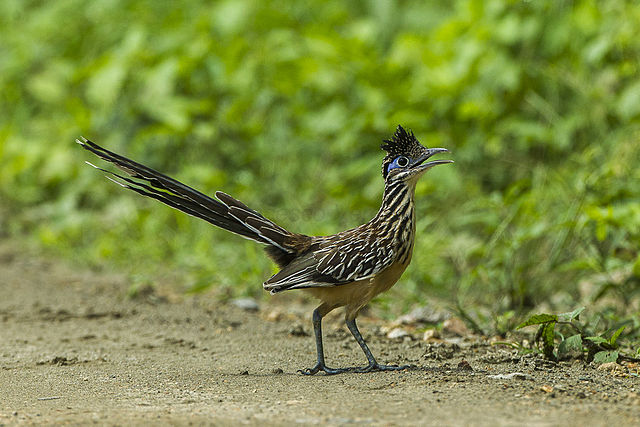
Have you ever wondered what kinds of birds can run fast? We read about how fast birds can fly, but what about when they are on the ground. The bird pictured above is one that you might have thought of. That is the Greater Roadrunner. He chases lizards and other speedy critters so they need speed and agility. There are other birds that run fast, but we will check them out later.

“The roadrunners (genus Geococcyx), also known as chaparral birds or chaparral cocks, are two species of fast-running ground cuckoos with long tails and crests. They are found in the southwestern United States and Mexico, usually in the desert. Some have been clocked at 20 miles per hour (32 km/h) while a few have also been clocked up to 27 miles per hour.”

“The roadrunner forages on the ground and, when hunting, usually runs after prey from under cover. It may leap to catch insects, and commonly batters certain prey against the ground. Because of its quickness, the roadrunner is one of the few animals that preys upon rattlesnakes; it is also the only real predator of tarantula hawk wasps.” Wikipedia – Roadrunners

Lesser Roadrunner (Geococcyx velox) ©WikiC

The Bible tells us, that after we accept the Lord as our Savior, we are supposed to do certain things. We should read God’s Word, talk to Him in prayer, obey our parents, be kind to others, and so on. Most times, you and I know when we do something we shouldn’t. We also know how we feel when we do do the things we know are right.

Living as a Christian is sort of like being in a race. We want to do our best and hopefully win. Others will be watching, and cheering us on to do our best. If we trip and fall, do we stay down, or get up and keep going?

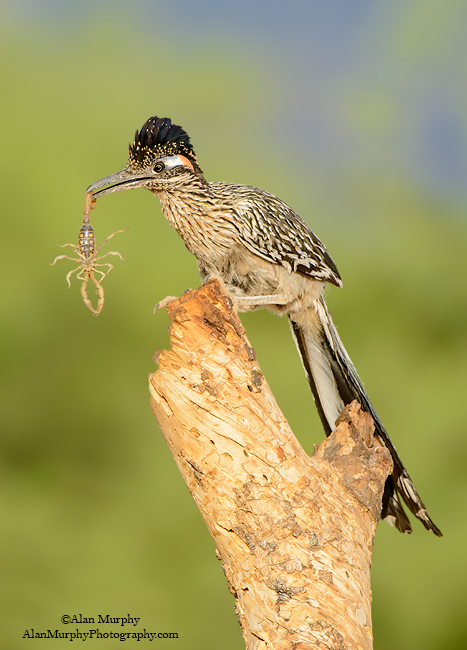
Greater Roadrunner (Geococcyx californianus) ©©Alan Murphy Flickr

Again, the Bible tells us that we need to ask forgiveness when we do wrong (sin). If you misbehaved, wouldn’t you ask your parents to forgive you? [That is if you meant it.] Get rid of those bad behaviors and run the race [do your best]. The same is true with the Lord Jesus Christ. We should do our best to please and serve Him.

“Therefore we also, since we are surrounded by so great a cloud of witnesses, let us lay aside every weight, and the sin which so easily ensnares us, and let us run with endurance the race that is set before us,” Hebrews 12:1 (NKJV)