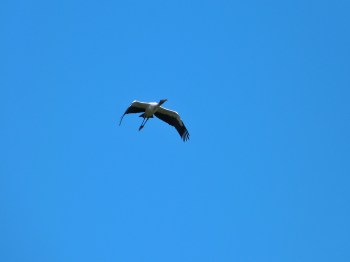
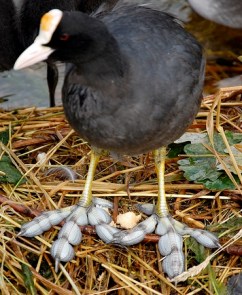
Greetings From …?

Greetings From …?

by Golden Eagle

Golden Eagle ©PubDom

Golden Eagle ©PD

Oh, I know you don’t know them all, neither do I! But that is how we learn about God’s Creation. We use the five senses that Jesus created us with. Hey, can you let us know what the five senses are?

Also, in your very own journal, write down interesting bird stories. We all have one I am sure.

Let’s start this amazing journey together. If you stay with me, at the end of your life, you will also fly like a bird all the way to a place called Heaven, if you are saved!

The first book of the Bible is a book of beginnings! It is called Genesis for good reason, it means beginning. On day number five the Bible says in Genesis1:20

And God said, Let the waters bring forth abundantly the moving creature that hath life, and fowl (birds) that may fly above the earth in the open firmament of heaven. And God created great whales, and every living creature that moveth, which the waters brought forth abundantly, after their kind, and every winged fowl after his kind: and God saw that it was good.

So boys and girls, birds have been with us since day number five! A long time, not millions of years, but thousands of years! Another interesting bit of knowledge: The great whales are actually the sea monsters that maybe you have heard about, yes that’s right, the dinosaurs of past ages. Also, the land animals and land dinosaurs were created the day after the birds. You know evolution teaches us that birds have evolved from the dinosaurs! However, the Bible says that God made dinosaurs and birds at the same time!

Well, I must fly away for now, I have other things that I must do today! Bye until next time!

Oh, thanks for joining us on this amazing journey into the world of birds and the Word of God!

Golden Eagle

See Ya!

*

Read more of Golden Eagle’s articles

*

Riddlers – The Woodpeckers

The Woodpeckers by Fannie Hardy Eckstorm - coverThe Woodpeckers, by Fannie Hardy Eckstorm

A Project Gutenberg EBook

*

THE WOODPECKERS

BY

FANNIE HARDY ECKSTORM

WITH ILLUSTRATIONS

The Woodpeckers by Fannie Hardy Eckstorm

BOSTON AND NEW YORK
HOUGHTON, MIFFLIN AND COMPANY
The Riverside Press, Cambridge
1901

Title: The Woodpeckers

Author: Fannie Hardy Eckstorm

Release Date: January 25, 2011 [EBook #35062]

*** START OF THIS PROJECT GUTENBERG EBOOK THE WOODPECKERS ***

(This eBook is for the use of anyone anywhere at no cost and with almost no restrictions whatsoever. You may copy it, give it away or re-use it under the terms of the Project Gutenberg License included with this eBook or online at www.gutenberg.org)

COPYRIGHT, 1900, BY FANNIE HARDY ECKSTORM

ALL RIGHTS RESERVED

To

MY FATHER
MR. MANLY HARDY
A Lifelong Naturalist


THE WOODPECKERS


FOREWORD: THE RIDDLERS


_
Long ago in Greece, the legend runs, a terrible monster called the Sphinx used to waylay travelers to ask them riddles: whoever could not answer these she killed, but the man who did answer them killed her and made an end of her riddling.

To-day there is no Sphinx to fear, yet the world is full of unguessed riddles. No thoughtful man can go far afield but some bird or flower or stone bars his way with a question demanding an answer; and though many men have been diligently spelling out the answers for many years, and we for the most part must study the answers they have proved, and must reply in their words, yet those shrewd old riddlers, the birds and flowers and bees, are always ready for a new victim, putting their heads together over some new enigma (mystery) to bar the road to knowledge till that, too, shall be answered; so that other men’s learning does not always suffice. So much of a man’s pleasure in life, so much of his power, depends on his ability to silence these persistent questioners, that this little book was written with the hope of making clearer the kind of questions Nature asks, and the way to get correct answers.

This is purposely a little book, dealing only with a single group of birds, treating particularly only some of the commoner species of that group, taking up only a few of the problems that present themselves to the naturalist for solution, and aiming rather to make the reader acquainted with the birds than learned about them.

The woodpeckers were selected in preference to any other family because they are patient under observation, easily identified, resident in all parts of the country both in summer and in winter, and because more than any other birds they leave behind them records of their work which may be studied after the birds have flown.

The book provides ample means for identifying every species and subspecies of woodpecker known in North America, though only five of the commonest and most interesting species have been selected for special study. At least three of these five should be found in almost every part of the country. The Californian woodpecker is never seen in the East, nor the red-headed in the far West, but the downy and the hairy are resident nearly everywhere, and some species of the flickers and sapsuckers, if not always the ones chosen for special notice, are visitors in most localities.

Look for the woodpeckers in orchards and along the edges of thickets, among tangles of wild grapes and in patches of low, wild berries, upon which they often feed, among dead trees and in the track of forest fires. Wherever there are boring larvæ, beetles, ants, grasshoppers, the fruit of poison-ivy, dogwood, june-berry, wild cherry or wild grapes, woodpeckers may be confidently looked for if there are any in the neighborhood.

Be patient, persistent, wide-awake, sure that you see what you think you see, careful to remember what you have seen, studious to compare your observations, and keen to hear the questions propounded you. If you do this seven years and a day, you will earn the name of Naturalist; and if you travel the road of the naturalist with curious patience, you may some day become as famous a riddle-reader as was that OEdipus, the king of Thebes, who slew the Sphinx.


Downy Woodpecker (Picoides pubescens) by Raymond Barlow

Downy Woodpecker (Picoides pubescens) by Raymond Barlow

Lee’s Addition:

This is the beginning of a series from The Woodpeckers book. Our writer, Fannie Hardy Eckstorm, wrote this in 1901. There are 16 chapters, plus this Forward, which are about the Woodpecker Family here in America. All the chapters can be found on The Woodpeckers page.

Woodpeckers belong to the Picidae – Woodpeckers Family.

Here are the upcoming chapter titles:

CHAP. PAGE
 Foreword: the Riddlers  
I.  How to know a Woodpecker  
II.  How the Woodpecker catches a Grub  
III.  How the Woodpecker courts his Mate  
IV.  How the Woodpecker makes a House  
V.  How a Flicker feeds her Young  
VI.  Friend Downy  
VII.  Persona non Grata. (Yellow-bellied Sapsucker)  
VIII.  El Carpintero. (Californian Woodpecker)  
IX.  A Red-headed Cousin. (Red-headed Woodpecker)  
X.  A Study of Acquired Habits  
XI.  The Woodpecker’s Tools: His Bill  
XII.  The Woodpecker’s Tools: His Foot  
XIII.  The Woodpecker’s Tools: His Tail  
XIV.  The Woodpecker’s Tools: His Tongue  
XV.  How each Woodpecker is fitted for his own Kind of Life  
XVI.  The Argument from Design  

APPENDIX

A. Key to the Woodpeckers of North America

B. Descriptions of the Woodpeckers of North America

C. Explanation of Terms

*

I trust you will enjoy reading about these fantastic birds and how the Lord has created them to be able to carry out their task.

See:

The Woodpeckers by Fannie Hardy Eckstorm

Wordless Birds

*

Birds Vol 2 #6 – The Volume II. July to December 1897 – Index

Yellow-Breasted Chat (Icteria virens) by USGS

Yellow-Breasted Chat (Icteria virens) by USGS

*

VOLUME II. JULY TO DECEMBER, 1897.

INDEX.

Anhinga, or Snake Bird, Anhinga Anhinga pages  Page  26-27
Avocet, American, Recurvirostra Americana 14-15
Audubon, John James 161
Bird Song Jul – Sep
More Bird MiscellanyBird Miscellany Plus 195-235
Blue Bird, Mountain, Sialia arctica 203-205
Bunting, Lazuli, Passerina amoena 196-198-199
Chimney Swift, Chætura pelagica 131-133
Captive’s Escape 116
Chat, Yellow-Breasted, Icteria virens 236-238-239
Cuckoo, Yellow-Billed, Coccyzus americanus 94-95
Dove, Mourning, Zenaidura macrura 111-112-113
Duck, Canvas-back, Athya valisneria 18-20
Duck, Mallard, Anas boschas 10-11-13
Duck, Wood, Aix Sponsa 21-23-24
Eagle, Baldheaded, Haliœtus lencocephalus 2-3-5
Flamingo, Phœnicopterus ruber 218-221
Flycatcher, Vermillion, Pyrocephalus rubineus mexicanus     Ver II 192-193
Gold Finch, American, Spinus tristis 128-129-130
Goose, White-fronted, Anser albifrons gambeli 166-168-169
Grackle, Bronzed, Quiscalus quiscula 228-230-231
Grosbeak, Evening, Cocothraustes vespertina 68-70-71
Grouse, Black, Tetrao tetrix 217-220-223
Heron, Snowy, Ardea candidissima 38-39
How the Birds Secured Their Rights 115
Humming Bird, Allen’s Selasphorus alleni 210-211
Humming Bird, Ruby-Throated, Trochilus colubris 97-100-103
Junco, Slate Colored, Junco hyemalis 153-155
Kingbird, Tyrannus tyrannus 156-158-159
Kingfisher, European, Alcedo ispida 188-190-191
Kinglet, Ruby-crowned, Regulus calendula 108-110
Lark, Horned, Otocoris alpestris 134-135
Lost Mate 126
Merganser, Red-Breasted, Merganser serrator 54-55
Nuthatch, White-Breasted, Sitta carolinensis 118-119
Old Abe 35
Ornithological Congress 201
Osprey, American, Pandion paliœtus carolinenses 42-43-45
Partridge, Gambel’s, Callipepla gambeli 78-79
Phalarope, Wilson’s, Phalaropus tricolor 66-67
Pheasant, Ring-Necked, Phasianus torquatus 232-233
Phœbe, Sayornis phœbe 106-107
Plover, Belted Piping, Aegialitis meloda circumcincta 174-175
Plover, Semipalmated Ring, Aegialitis semi-polmata 6-8-9
Rail, Sora, Porzana Carolina 46-48-49
Sapsucker, Yellow-bellied, Sphyrapicus varius 137-140-143
Scoter, American, Oidemia deglandi 32-33
Skylark, Alauda arvensis 61-63-64
Snake Bird, (Anhinga) Anhinga anhinga 26-27
Snowflake, Plectrophenax nivalis 150-151-152
Sparrow, English, Passer domesticus 206-208-209
Sparrow, Song, Melospiza fasciata 90-91-93
Summaries (See each bird)
Tanager, Summer, Piranga rubra 163-165
Teal, Green winged, Anas carolinensis 213-214-215
The Bird’s Story-More Miscellany 224
Thrush, Hermit, Turdus Aonalaschkae 86-88-89
To a Water Fowl 76
Tropic Bird, Yellow-billed, Phaethon flavirostris 184-186-187
Turkey, Wild, Meleagris gallopava 177-180-183
Turnstone, Arenaria interpres 170-171
Verdin, Auriparus flaviceps 226-227
Vireo, Warbling, Vireo gilvus 138-141
Vulture, Turkey, Catharista Atrata 72-73-75
Warbler, Blackburnian, Dendroica blackburnia 123-125
Warbler, Cerulean, Dendrœca caerulea 178-181
Warbler, Kentucky, Geothlypis formosa 50-51-53
Warbler, Yellow, Dendroica æstiva 83-85
Woodcock, American, Philohela minor 28-30-31
Wren, House, Troglodytes ædon 98-101-104
Wood Pewee, Contopus Virens 144-146-147-
Yellow Legs, Totanus flavipes 58-60

*

How precious also are Your thoughts to me, O God! How great is the sum of them! (Psalm 139:17 NKJV)

*

Birds Illustrated by Color Photography – Revisited

The above article is an article in the monthly serial for October 1897 “designed to promote Knowledge of Bird-Live.” These include Color Photography, as they call them, today they are drawings. There are at least three Volumes that have been digitized by Project Gutenberg.

To see the whole series of – Birds Illustrated by Color Photography – Revisited

*

Next Article – TBA

The Previous Article – The Yellow-breasted Chat

Wordless Birds

*

Vol 2, #6 – The Green-winged Teal

Green-winged Teal (Anas carolinensis) for Birds Illustrated

Green-winged Teal (Anas carolinensis) for Birds Illustrated

THE GREEN-WINGED TEAL.

Just a common Duck?

No, I’m not. There is only one other Duck handsomer than I am, and he is called the Wood Duck. You have heard something about him before. I am a much smaller Duck, but size doesn’t count much, I find when it comes to getting on in the world—in our world, that is. I have seen a Sparrow worry a bird four times its size, and I expect you have seen a little boy do the same with a big boy many a time.

What is the reason I’m not a common Duck?

Well, in the first place, I don’t waddle. I can walk just as gracefully as I can swim. Your barn-yard Duck can’t do that. I can run, too, without getting all tangled up in the grass, and he can’t do that, either. But sometimes I don’t mind associating with the common Duck. If he lives in a nice big barn-yard, that has a good pond, and is fed with plenty of grain, I visit him quite often.

Where do I generally live?

Well, along the edges of shallow, grassy waters, where I feed upon grass, seeds, acorns, grapes, berries, as well as insects, worms, and small snails. I walk quite a distance from the water to get these things, too.

Can I fly?

Indeed I can, and very swiftly. You can see I am no common Duck when I can swim, and walk, and fly. You can’t do the last, though you can the first two.

Good to eat?

Well, yes, they say when I feed on rice and wild oats I am perfectly delicious. Some birds were, you see, born to sing, and flit about in the trees, and look beautiful, while some were born to have their feathers taken off, and be roasted, and to look fine in a big dish on the table. The Teal Duck is one of those birds. You see we are useful as well as pretty. We don’t mind it much if you eat us and say, “what a fine bird!” but when you call us “tough,” that hurts our feelings.

Good for Christmas?

Oh, yes, or any other time—when you can catch us! We fly so fast that it is not easy to do; and can dive under the water, too, when wounded.

Something about our nests?

Oh, they are built upon the ground, in a dry tuft of grass and weeds and lined with feathers. My mate often plucks the feathers from her own breast to line it. Sometimes she lays ten eggs, indeed once she laid sixteen.

Such a family of Ducklings as we had that year! You should have seen them swimming after their mother, and all crying, Quack, quack, quack! like babies as they were.

Green-winged Teal (Anas carolinensis) by Bob-Nan

Green-winged Teal (Anas carolinensis) by Bob-Nan


THE GREEN-WINGED TEAL.

imga1

HANDSOME little Duck indeed is this, well known to sportsmen, and very abundant throughout North America. It is migratory in its habits, and nests from Minnesota and New Brunswick northward, returning southward in winter to Central America and Cuba.

The green wing is commonly found in small flocks along the edges of shallow, grassy waters, feeding largely upon seeds of grasses, small acorns, fallen grapes or berries, as well as aquatic insects, worms, and small snails. In their search for acorns these ducks are often found quite a distance from the water, in exposed situations feeding largely in the night, resting during the day upon bogs or small bare spots, closely surrounded and hidden by reeds and grasses.

On land this Duck moves with more ease and grace than any other of its species except the Wood Duck, and it can run with considerable speed. In the water also it moves with great ease and rapidity, and on the wing it is one of the swiftest of its tribe. From the water it rises with a single spring and so swiftly that it can be struck only by a very expert marksman; when wounded it dives readily.

As the Teal is more particular in the selection of its food than are most Ducks, its flesh, in consequence, is very delicious. Audubon says that when this bird has fed on wild oats at Green Bay, or soaked rice in the fields of Georgia or Carolina, it is much superior to the Canvas back in tenderness, juiciness, and flavor.

G. Arnold, in the Nidologist, says while traveling through the northwest he was surprised to see the number of Ducks and other wild fowl in close proximity to the railway tracks. He found a number of Teal nests within four feet of the rails of the Canadian Pacific in Manitoba. The warm, sun-exposed banks along the railway tracks, shrouded and covered with thick grass, afford a very fair protection for the nests and eggs from water and marauders of every kind. As the section men seldom disturbed them—not being collectors—the birds soon learned to trust them and would sit on their nests by the hour while the men worked within a few feet of them.

The green-winged Teal is essentially a fresh-water bird, rarely being met with near the sea. Its migrations are over the land and not along the sea shore. It has been seen to associate with the Ducks in a farmer’s yard or pond and to come into the barn-yard with tame fowls and share the corn thrown out for food.

The nests of the Teal are built upon the ground, generally in dry tufts of grass and often quite a distance from the water. They are made of grass, and weeds, etc., and lined with down. In Colorado under a sage brush, a nest was found which had been scooped in the sand and lined warmly with down evidently taken from the bird’s own breast, which was plucked nearly bare. This nest contained ten eggs.

The number of eggs, of a pale buff color, is usually from eight to twelve, though frequently sixteen or eighteen have been found. It is far more prolific than any of the Ducks resorting to Hudson’s Bay, and Mr. Hearn says he has seen the old ones swimming at the head of seventeen young when the latter were not much larger than walnuts.

In autumn the males usually keep in separate flocks from the females and young. Their notes are faint and piping and their wings make a loud whistling during flight.

*
Summary:

GREEN-WINGED TEAL.Anas carolinensis.

Range—North America, migrating south to Honduras and Cuba.

Nest—On the ground, in a thick growth of grass.

Eggs—Five to eight, greenish-buff, usually oval.


Green-winged Teal (Anas crecca) by Ian

Green-winged Teal (Anas crecca) by Ian

Lee’s Addition:

Of all clean birds ye shall eat. (Deuteronomy 14:11 KJV)

Unfortunately, at least for me, people do eat ducks and teals. I prefer to go birdwatching and only “shoot” the birds with my camera. They just seem too pretty to harm, but I can’t condemn those who eat them. I do have a problem with those who only kill them to hang them on a wall. Anyway.

The Green-winged Teals are in the Anatidae – Ducks, Geese & Swans – Family which has currently 172 species of which 24 are Teals. Are North American ones, according to Sibley’s, are the Green-winged, Blue-winged and the Cinnamon Teals.

The Green-winged Teal (Anas carolinensis) or (Anas crecca carolinensis) is a common and widespread duck that breeds in the northern areas of North America except on the Aleutian Islands. It was considered conspecific with the Common Teal (A. crecca) for some time but the issue is still being reviewed by the American Ornithologists’ Union; based on this the IUCN and BirdLife International do not accept it as a separate species at present. However, nearly all other authorities consider it distinct based on behavioral, morphological, and molecular evidence.

This dabbling duck is strongly migratory and winters far south of its breeding range. It is highly gregarious outside of the breeding season and will form large flocks. In flight, the fast, twisting flocks resemble waders.
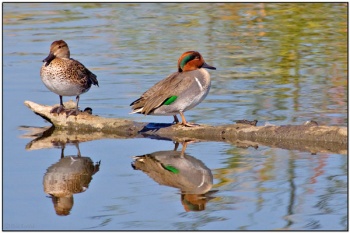
Green-winged Teal (Anas carolinensis) by Daves BirdingPix

Green-winged Teal (Anas carolinensis) by Daves BirdingPix

This is the smallest North American dabbling duck. The breeding male has grey flanks and back, with a yellow rear end and a white-edged green speculum, obvious in flight or at rest. It has a chestnut head with a green eye patch. It is distinguished from drake Common Teals (the Eurasian relative of this bird) by a vertical white stripe on side of breast, the lack of both a horizontal white scapular stripe and the lack of thin buff lines on its head.

The females are light brown, with plumage much like a female Mallard. They can be distinguished from most ducks on size, shape, and the speculum. Separation from female Common Teal is problematic. In non-breeding (eclipse) plumage, the drake looks more like the female.

It is a common duck of sheltered wetlands, and usually feeds by dabbling for plant food or grazing. It nests on the ground, near water and under cover. It is plentiful enough to make it a species of Least Concern if it were; it is far more plentiful than the Common Teal. It can be seen in vast numbers in the Marismas Nacionales of western Mexico, a main wintering area.

This is a noisy species. The male has a clear whistle, whereas the female has a feeble “quack”.

All three Green-winged Teal subspecies occur in the northern hemisphere during summer and in winter extend to northern South America, central Africa, southern India, Burma, and the Philippines. In North America, ssp.carolinensis occurs across the continent and is joined in the Aleutian Islands by ssp. nimia, which remains there throughout the year. Anas crecca breeds in Iceland, Europe, and Asia. It is also seen occasionally during the winter in North America along the Atlantic Coast. The American green-winged teal winters from southern Alaska and southern British Columbia east to New Brunswick and Nova Scotia and south to Central America. It also winters in Hawaii.

The American green-winged teal breeds from the Aleutian Islands, northern Alaska, Mackenzie River delta, northern Saskatchewan, Manitoba, Ontario, Quebec, and Labrador south to central California, central Nebraska, central Kansas, southern Minnesota, Wisconsin, Ontario, Quebec, Newfoundland, and the Maritime Provinces. Nesting chronology varies geographically. In North Dakota, Green-winged Teal generally begin nesting in late April. In the Northwest Territories, Canada, Green-winged Teal begin nesting between late May and early July. At Minto Lakes, Alaska, Green-winged Teal initiate nesting as early as June 1 and as late as July 20. 

Green-winged Teal lay 5 to 16 eggs. The incubation period is 21 to 23 days. They often fledge 34 to 35 days after hatching or usually before 6 weeks of age. Young Green-winged Teal have the fastest growth rate of all ducks. Male Green-winged Teal leave females at the start of incubation and congregate on safe waters to molt. Some populations undergo an extensive molt migration while others remain on or near breeding grounds. Females molt on breeding grounds.

Green-winged Teal are among the earliest spring migrants. They arrive on nesting areas almost as soon as the snow melts. In early February, Green-winged Teal begin to depart their winter grounds, and continue through April. In central regions Green-winged Teal begin to arrive early in March with peak numbers in early April.

In northern areas of the United States, Green-winged Teal migrating to wintering grounds appear in early September through mid-December. They begin migrating into most central regions during September and often remain through December. On their more southerly winter areas, Green-winged Teal arrive as early as late September, but most do not appear until late November.

Green-winged Teal inhabit inland lakes, marshes, ponds, pools, and shallow streams with dense emergent and aquatic vegetation. They prefer shallow waters and small ponds and pools during the breeding season. Green-winged Teal are often found resting on mudbanks or stumps, or perching on low limbs of dead trees. These ducks nest in depressions on dry ground located at the base of shrubs, under a log, or in dense grass. The nests are usually 2 to 300 feet (6–91 m) from water. Green-winged teal avoid treeless or brushless habitats. Green-winged teal winter in both freshwater or brackish marshes, ponds, streams, and estuaries. As they are smaller birds, they tend to stay in the calmer water.

Green-winged Teal, more than any other species of duck, prefer to seek food on mud flats. They usually eat vegetative matter consisting of seeds, stems, and leaves of aquatic and emergent vegetation. Green-winged Teal appear to prefer the small seeds of nutgrasses, millets and sedges to larger seeds, but they also consume corn, wheat, barley, and buttonbush seeds. In marshes, sloughs, and ponds, Green-winged Teal select the seeds of bulrushes, pondweeds, and spikerushes. To a lesser extent they feed upon the vegetative parts of muskgrass, pondweeds, widgeongrass and duckweeds. They will occasionally eat insects, mollusks, and crustaceans.[8][10] Occasionally during spring months, Green-winged Teal will gorge on maggots of decaying fish which are found around ponds.

Common predators of Green-winged Teal include humans, skunks, red foxes, raccoons, crows, and magpies.

Green-winged Teal (Anas carolinensis) by Daves BirdingPix

Green-winged Teal (Anas carolinensis) by Daves BirdingPix

*

Birds Illustrated by Color Photography – Revisited

The above article is an article in the monthly serial for October 1897 “designed to promote Knowledge of Bird-Live.” These include Color Photography, as they call them, today they are drawings. There are at least three Volumes that have been digitized by Project Gutenberg.

To see the whole series of – Birds Illustrated by Color Photography – Revisited

*

(Information from Wikipedia and other internet sources, with editing)

Next Article – The Black Grouse

The Previous Article – The Allen’s Humming Bird

Falling Plates

Links:

*

Vol. 2, # 5 – The Vermilion Fly-Catcher (II)

Vermilion Flycatcher (Pyrocephalus rubinus)

Vermilion Flycatcher for Birds Illustrated, 1897

THE VERMILION FLY-CATCHER.

imgt

HICKETS along water courses are favorite resorts of this beautiful Fly-catcher, which may be seen only on the southern border of the United States, south through Mexico to Guatemala, where it is a common species. Mr. W. E. D. Scott notes it as a common species about Riverside, Tucson, and Florence, Arizona. Its habits are quite similar to those of other Fly-catchers, though it has not been so carefully observed as its many cousins in other parts of the country. During the nesting season, the male frequently utters a twittering song while poised in the air, in the manner of the Sparrow Hawk, and during the song it snaps its bill as if catching insects.

The Vermilion’s nest is usually placed in horizontal forks of ratana trees, and often in mesquites, not more than six feet from the ground; they are composed of small twigs and soft materials felted together, with the rims covered with lichens, and the shallow cavity lined with a few horse or cow hairs. Dr. Merrill states that they bear considerable resemblance to nests of the Wood Pewee in appearance and the manner in which they are saddled to the limb. Nests have been found, however, which lacked the exterior coating of lichens.

Three eggs are laid of a rich creamy-white with a ring of large brown and lilac blotches at the larger end.

Vermilion Flycatcher (Pyrocephalus rubinus) Eggs ©WikiC

Vermilion Flycatcher (Pyrocephalus rubinus) Eggs ©WikiC

*

Summary:

VERMILION FLY-CATCHER.Pyocephalus rubineus mexicanus.

Range—Southern Border of the United States south through Mexico and Guatemala.

Nest—In forks of ratana trees, not more than six feet up, of small twigs and soft materials felted together, the rims covered with lichens; the cavity is shallow.

Eggs—Usually three, the ground color a rich creamy-white, with a ring of large brown and lilac blotches at the larger end.


Vermilion Flycatcher (Pyrocephalus rubinus) by Margaret Sloan

Vermilion Flycatcher (Pyrocephalus rubinus) by Margaret Sloan

Lee’s Addition:

“Come now, and let us reason together,” Says the LORD, “Though your sins are like scarlet, They shall be as white as snow; Though they are red like crimson, They shall be as wool. (Isaiah 1:18 NKJV)

But He replied to them, “When it is evening, you say, ‘It will be fair weather, for the sky is red.’ “And in the morning, ‘There will be a storm today, for the sky is red and threatening.’ Do you know how to discern the appearance of the sky, but cannot discern the signs of the times? (Matthew 16:2-3 NASB)

Everytime I go to pronounce “Vermilion”, an extra “L” shows up and I say “million.” You have to admit that this beautiful bird looks like a “million.” This is another of the Lord’s fantastic birds.

For great is the LORD and greatly to be praised; He is to be feared above all gods. For all the gods of the peoples are idols, But the LORD made the heavens. Splendor and majesty are before Him, Strength and beauty are in His sanctuary. Ascribe to the LORD, O families of the peoples, Ascribe to the LORD glory and strength. (Psalms 96:4-7 NASB)

The Vermilion Flycatcher (Pyrocephalus rubinus) is a small passerine bird in the Tyrannidae – Tyrant Flycatchers Family. Most flycatchers are rather drab, but the Vermilion Flycatcher is a striking exception. It is a favourite with birders, but is not generally kept in aviculture, as the males tend to lose their vermilion colouration when in captivity.

Vermilion Flycatchers generally prefer somewhat open areas, and are found in trees or shrubs in savannah, scrub, agricultural areas, riparian woodlands, and desert as well, but usually near water. Their range includes almost all of Mexico; it extends north into the southwestern United States, and south to scattered portions of Central America, parts of northwestern and central South America, and on southwards to central Argentina. They are also found in the Galapagos Islands.

The species grows to about 5-7 inches in length, and is strongly dimorphic; males are bright red, with dark brown plumage. Females have a peach-coloured belly with a dark grey upperside, and are similar to Say’s Phoebe. They frequently wag their tails. They have a bright red cap, throat and underparts with a black on an eyeline, back, wings and tail. Immatures are similar to females with varying amounts of red on the underparts. Females have brown underparts and their undertail coverts are tinged pink.

The flycatchers feed mostly on insects such as flies, grasshoppers and beetles. These are usually taken in mid-air, after a short sally flight from a perch.

Vermilion Flycatcher (Pyrocephalus rubinus) Female on nest ©WikiC

Vermilion Flycatcher (Pyrocephalus rubinus) Female on nest ©WikiC

They lay 2-3 whitish eggs in a nest made of twigs, stems and roots, and lined with hair. The eggs are incubated for around two weeks by the female and the young are ready to leave the nest 15 days after hatching.

Sounds both by Andrew Spencer at xeno-canto.org

Song

Call

Vermilion Flycatcher (Pyrocephalus rubinus) by Michael Woodruff

Vermilion Flycatcher (Pyrocephalus rubinus) by Michael Woodruff

*

Bonus:

Besides the Vermilion Flycatcher (Pyrocephalus rubinus);

Vermilion Flycatcher (Pyrocephalus rubinus) by Dario Sanches

Vermilion Flycatcher (Pyrocephalus rubinus) by Dario Sanches

There are two more “Vermilion” birds:

Vermilion Tanager (Calochaetes coccineus) ©Nick Athanas

Vermilion Tanager (Calochaetes coccineus) ©Nick Athanas

Vermilion Tanager (Calochaetes coccineus)

237 Vermilion Cardinal (Cardinalis phoeniceus)

Vermilion Cardinal (Cardinalis phoeniceus) ©Flickr barloventomagico

Vermilion Cardinal (Cardinalis phoeniceus) ©Flickr barloventomagico

Birds Illustrated by Color Photography – Revisited

The above article is an article in the monthly serial for October 1897 “designed to promote Knowledge of Bird-Live.” These include Color Photography, as they call them, today they are drawings. There are at least three Volumes that have been digitized by Project Gutenberg.

To see the whole series of – Birds Illustrated by Color Photography – Revisited

*

(Information from Wikipedia and other internet sources, with editing)

Next Article – The Lazuli Bunting

The Previous Article – The European Kingfisher

ABC’s of the Gospel

Links:

(Oops. Just realized this is a duplicate, but I added to it today. Keeping it.)

*