

Red-Rumped Tanager
Birds Illustrated by Color Photography – Revisited
Vol 1. January, 1897 No. 1
*
THE RED-RUMPED TANAGER.
(RELOCATED – CLICK HERE)
Red-Rumped Tanager
*

Yellow Throated Toucan for the Birds Illustrated article
*

Golden Pheasant (Chrysolophus pictus)
*

Mandarin Duck
*
While searching for e-books for my reader, I came across the Birds Illustrated by Color Photograpy. It was a monthly serial started in 1897 “Designed to Promote Knowledge of Bird-Life.” There are at least 3 volumes that have been digitized by the Project Gutenberg and these are all in the Public Domain.
The Drawings, “Photography,” are very good and the stories and details about the different birds are interesting. So, starting today, those pages from the past will be “Revisited” with updates to current names and more information about the birds. They will be released as they are completed.
Below is a copy of the Birds Illustrated by Color Photography – Revisited page.
Under Construction
Vol. 1. No. 1. JANUARY, 1897. PRICE 15 CENTS: $1.50 A YEAR.
ONCE A MONTH.

Birds Illustrated by Color Photograhy Vol 1 January 1897 No 1 – Cover
Nature Study Publishing Company OFFICE: FISHER BUILDING CHICAGO
BIRDS
ILLUSTRATED BY COLOR PHOTOGRAPHY
A MONTHLY SERIAL
DESIGNED TO PROMOTE
KNOWLEDGE OF BIRD-LIFE
“With cheerful hop from perch to spray, They sport along the meads; In social bliss together stray, Where love or fancy leads.
Through spring’s gay scenes each happy pair Their fluttering joys pursue; Its various charms and produce share, Forever kind and true.”
CHICAGO, U. S. A. Nature Study Publishing Company, Publishers 1896
PREFACE.
It has become a universal custom to obtain and preserve the likenesses of one’s friends. Photographs are the most popular form of these likenesses, as they give the true exterior outlines and appearance, (except coloring) of the subjects. But how much more popular and useful does photography become, when it can be used as a means of securing plates from which to print photographs in a regular printing press, and, what is more astonishing and delightful, to produce the real colors of nature as shown in the subject, no matter how brilliant or varied.
We quote from the December number of the Ladies’ Home Journal: “An excellent suggestion was recently made by the Department of Agriculture at Washington that the public schools of the country shall have a new holiday, to be known as Bird Day. Three cities have already adopted the suggestion, and it is likely that others will quickly follow. Of course, Bird Day will differ from its successful predecessor, Arbor Day. We can plant trees but not birds. It is suggested that Bird Day take the form of bird exhibitions, of bird exercises, of bird studies—any form of entertainment, in fact, which will bring children closer to their little brethren of the air, and in more intelligent sympathy with their life and ways. There is a wonderful story in bird life, and but few of our children know it. Few of our elders do, for that matter. A whole day of a year can well and profitably be given over to the birds. Than such study, nothing can be more interesting. The cultivation of an intimate acquaintanceship with our feathered friends is a source of genuine pleasure. We are under greater obligations to the birds than we dream of. Without them the world would be more barren than we imagine. Consequently, we have some duties which we owe them. What these duties are only a few of us know or have ever taken the trouble to find out. Our children should not be allowed to grow to maturity without this knowledge. The more they know of the birds the better men and women they will be. We can hardly encourage such studies too much.” Of all animated nature, birds are the most beautiful in coloring, most graceful in form and action, swiftest in motion and most perfect emblems of freedom. They are withal, very intelligent and have many remarkable traits, so that their habits and characteristics make a delightful study for all lovers of nature. In view of the facts, we feel that we are doing a useful work for the young, and one that will be appreciated by progressive parents, in placing within the easy possession of children in the homes these beautiful photographs of birds. The text is prepared with the view of giving the children as clear an idea as possible, of haunts, habits, characteristics and such other information as will lead them to love the birds and delight in their study and acquaintance. NATURE STUDY PUBLISHING CO.
Lee’s Addition:
Above is the Cover Photo and Preface to a monthly magazine written about Birds. The different birds are illustrated with a lovely Colorful Illustration and then details about the individual bird. Some of the birds have poems and stories also included. The Birds, Illustrated by Color Photography was begun in January of 1897 and went until at least February 1898. Why produce these pages? For one, they are very interesting and as birdwatchers, reading about the various birds that were so beautifully created, is enjoyable. The writers back in 1897 and 1898 spent many hours preparing this magazine, so why not re-visit their work. Just because time moves on does not mean everything from the past should be forgotten.
Remove not the ancient landmark, which thy fathers have set. (Proverbs 22:28 KJV)
Yea, whereto might the strength of their hands profit me, in whom old age was perished? (Job 30:2 KJV)
I remember the days of old; I meditate on all thy works; I muse on the work of thy hands. (Psalms 143:5 KJV)
These will be produced with updates to today and current photos also. Some of the names have been changed since then and that will be shown. Also, current links to more information will be provided, like our Bible Birds, Birds of the Bible and Birds of the World, plus others. Some editing will happen, as I have already found one incident to remove because it was offensive to a people group. This book was digitized by the great people at the Project Gutenberg and this is in the Public Domain, including the Illustrations.
Most articles have two parts. The first is geared to the reading level for children and the other part for more mature readers. I trust you enjoy reading and learning about the birds.

Nonpareil – Painted Bunting (Passerina ciris) – Drawing
Volume 1, Number 1, January 1987 (Articles will be activated as they are published here.)
The Nonpareil – Painted Bunting
The Resplendent Trogon
The Mandarin Duck
The Golden Pheasant
The Australian Grass Parrakeet
The Cock-Of-The-Rock
The Red Bird Of Paradise
The Yellow Throated Toucan
The Red-Rumped Tanager
The Golden Oriole
Volume 1, Number 2, February 1897
The Blue Jay
The Swallow-Tailed Indian Roller
The Red Headed Woodpecker and The Drummer Bird
Mexican Mot Mot
King Parrot Or King Lory
The American Robin – The Bird Of The Morning
The Kingfisher – The Lone Fisherman
The Red Wing Black Bird – The Bird Of Society
Blue Mountain Lory
The American Red Bird
Volume 1, Number 3, March 1897
Little Boy Blue – The Blue Bird
The Swallow
The Brown Thrush
The Japan Pheasant
The Flicker
The Bobolink
The Crow and The Common Crow
The Return Of The Birds
The Black Tern
The Meadow Lark
The Long-Eared Owl (Great Horned)
Volume 1, Number 4, April 1897
The Rose-Breasted Grosbeak
The Canada Jay
The Purple Gallinule
Smith’s Painted Longspur
The American Cross Bill and The Legend
Bird Day In The Schools
The California Woodpecker
The Piedbill Grebe
The Bohemian Wax-Wing
The Marsh Wren
The Arizona Green Jay
Amateur Photography
Volume 1, Number 5, May 1897
Nesting Time
National Council of Women
The Screech Owl
The Orchard Oriole
The Marsh Hawk
The Black-Capped Chickadee
The Scissor-Tailed Flycatcher
The Prothonotary Yellow Warblers
The Indigo Bunting
The Night Hawk
The Wood Thrush
The American Catbird
Volume 1, Number 6, June 1897
Bird Song
The Yellow-Throated Vireo
The Mocking Bird
June and the Birds and Farmers
The Black-Crowned Night Heron
The Ring-Billed Gull
The Loggerhead Shrike
The Baltimore Oriole
Birds Vol 1 #6 – The Snowy Owl
June, Birds And Farmers
The Scarlet Tanager
The Ruffed Grouse
The Black And White Creeping Warbler
Birds Vol 1 #6 – The Volume 1. January to June 1897 – Index
Volume 2, Number 1, July 1897
Bird Song – July
The Bald-Headed Eagle
The Semi-Palmated Ring Plover
The Mallard Duck
The American Avocet
The Canvas-Back Duck
The Wood Duck
The Anhinga Or Snake Bird
The American Woodcock
The American Scoter
Old Abe
The Snowy Heron
Volume 2, Number 2, August 1897
Bird Song
The American Osprey
The Sora Rail
The Kentucky Warbler
The Red Breasted Merganser
The Yellow Legs
The Skylark
Wilson’s Phalarope
The Evening Grosbeak
The Turkey Vulture
To A Water-Fowl
Gambel’s Partridge
Volume 2, Number 3, September 1897
Bird Song – September
The Yellow Warbler
The Hermit Thrush
The Song Sparrow
The Cuckoo
The Ruby-Throated Humming Bird
The House Wren
The Phoebe
The Ruby-Crowned Kinglet
The Mourning Dove
How The Birds Secured Their Rights
The Captive’s Escape
The White-Breasted Nuthatch
Volume 2, Number 4, October 1897
The Blackburnian Warbler
The Lost Mate
The American Goldfinch
The Chimney Swift
Shore Lark
The Yellow-Bellied Sapsucker
The Warbling Vireo
The Wood Pewee
The Snowflake
The Slate-Colored Junco
The Kingbird
Volume 2, Number 5, November 1897
John James Audubon
The Summer Tanager
The American White-Fronted Goose
The Turnstone
The Belted Piping Plover
The Wild Turkey
The Cerulean Warbler
The Yellow-Billed Tropic Bird
The European Kingfisher
The Vermilion Fly-Catcher Version II
The Lazuli Bunting
Bird Miscellany Plus
Volume 2, Number 6, December 1897
The Ornithological Congress
The Mountain Bluebird
The English Sparrow
Allen’s Humming Bird
The Green-Winged Teal
The Black Grouse
The American Flamingo
The Verdin
The Bronzed Grackle
The Ring-Necked Pheasant
More Bird Miscellany
The Yellow-Breasted Chat
Birds Vol 2 #6 – The Volume II. July to December 1897 – Index
*

White-tailed Hawk (Buteo albicaudatus) by Daves BirdingPix
In the first Names of Birds, I covered the English names of birds. This time the scientific names are going to be looked at, especially the second one. (The first part of the scientific name is the bird’s genus or group) “Birds normally have a scientific name and a common name. The scientific name is usually Latin-bases and is agreed upon by biologists across the world. The common name will vary by region, culture, and language.” (birding.com) No matter what the bird is called in different countries or by different ornithology groups, the scientific name refers to one specific bird. Birds do migrate many miles and spend time in many countries. This naming system helps keep from having the same bird counted numerous times in lists.
As I have worked with the list of the Birds of the World, I have observed similarities in the naming of the birds. For instance, “alba” is the second part of all of these birds–Western Great Egret, White Cockatoo, Sanderling, White Tern, White Wagtail, African Spoonbill, Phoenix Petrel, Western Barn Owl. Could you figure out what color they all are?
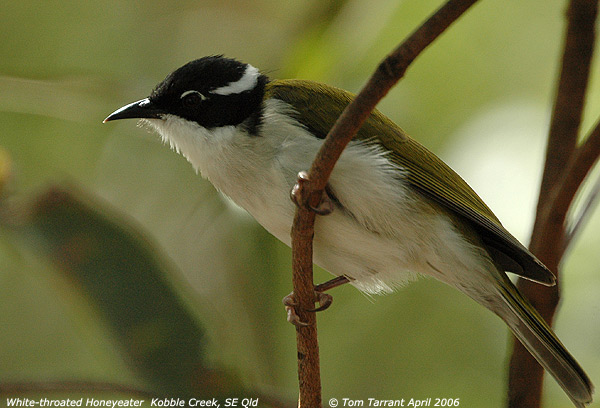
White-throated Honeyeater (Melithreptus albogularis) by Tom Tarrant
How about “albicauda“–White-tailed Shrike-Tyrant, White-tailed Blue Flycatcher, White-tailed Lark, White-tailed Hawk? Or “albogularis“–White-throated Jacamar, Rufous-banded Honeyeater, White-throated Pewee, White-throated Canary, White-throated Laughingthrush, White-throated Screech Owl, White-throated Honeyeater, White-throated Francolin, White-throated Caracara, White-throated Treerunner, White-spotted Fantail, White-throated Seedeater, White-throated Kingbird, White-chested White-eye? That last group was not all “white-throated,” in name, but they have white throats.
We know that Adam named the birds and other critters as the Scripture tells us:
Out of the ground the LORD God formed every beast of the field and every bird of the air, and brought them to Adam to see what he would call them. And whatever Adam called each living creature, that was its name. So Adam gave names to all cattle, to the birds of the air, and to every beast of the field. But for Adam there was not found a helper comparable to him. (Genesis 2:19-20 NKJV)

Blue-throated Bee-eater (Merops viridis) by Ray
Did Adam use scientific names? I doubt it. Adam didn’t have to go though all this. Today the ornithologist (those who study birds) use this method of naming along with a common name in whatever language they speak.
Thought you might find it interesting to see some of the species’ second scientific names:
Colors:
albus/alba, white; cf albino, ater/atra, matt black, brachy-, short (Greek), brunne-, brown, caeruleus, blue, canus, grey, chloro-, green or yellow (Greek), cinerea-, grey or ash-coloured; cf cinders, crocus, cyan, blue, erythro-, red (Greek), flava, yellow, fuscus/fusca, dusky, guttatus, speckled or spotted, haema-, blood-red (Greek); cf haemoglobin, leuco-, white (Greek), lineatus, lined or striped, livia, blue-grey, longi-, long, luteus/lutea, yellow, major, greater, mega-, great (Greek), melas, black (Greek); cf melanistic, minor, lesser, niger/nigra, glossy black; cf negro, punctatus, spotted; cf punctuation, pusilla, tiny, rosea, rosy, ruber, red, rufus/rufa, red, striatus/striata, striped, versicolor, many-collored, varied, viridis, green, albogularis – White-throated
Countries:
abyssinicus, africana, americana, angolensis, antarctica,
Characteristics:
cauda, tail, –cephalus, head (Greek), –ceps, capped, headed, cilla, tail, collis, neck, cristatus, crested, dactyl, finger or toe (Greek), frons, front, i.e. forehead, –gularis, throat, –ops, eye, –opsis, face, ptera, wing (Greek), –rhynchos, bill (Greek), –rostris, bill, torquatus, collared
Names are important and have meaning. Christ was named long before He was born. It was foretold.
Now all this was done, that it might be fulfilled which was spoken of the Lord by the prophet, saying, Behold, a virgin shall be with child, and shall bring forth a son, and they shall call his name Emmanuel, which being interpreted is, God with us. (Matthew 1:22-23 KJV)
After this manner therefore pray ye: Our Father which art in heaven, Hallowed be thy name. (Matthew 6:9 KJV)
And in his name shall the Gentiles trust. (Matthew 12:21 KJV)
And Jesus came and spake unto them, saying, All power is given unto me in heaven and in earth. Go ye therefore, and teach all nations, baptizing them in the name of the Father, and of the Son, and of the Holy Ghost: Teaching them to observe all things whatsoever I have commanded you: and, lo, I am with you alway, even unto the end of the world. Amen.
(Matthew 28:18-20 KJV)
(Some information from Scientific bird names explained and How Do Birds Get Their Names?)
Also see: Story behind the common names of birds
Out of the ground the LORD God formed every beast of the field and every bird of the air, and brought them to Adam to see what he would call them. And whatever Adam called each living creature, that was its name. So Adam gave names to all cattle, to the birds of the air, and to every beast of the field… (Genesis 2:19-20a NKJV)
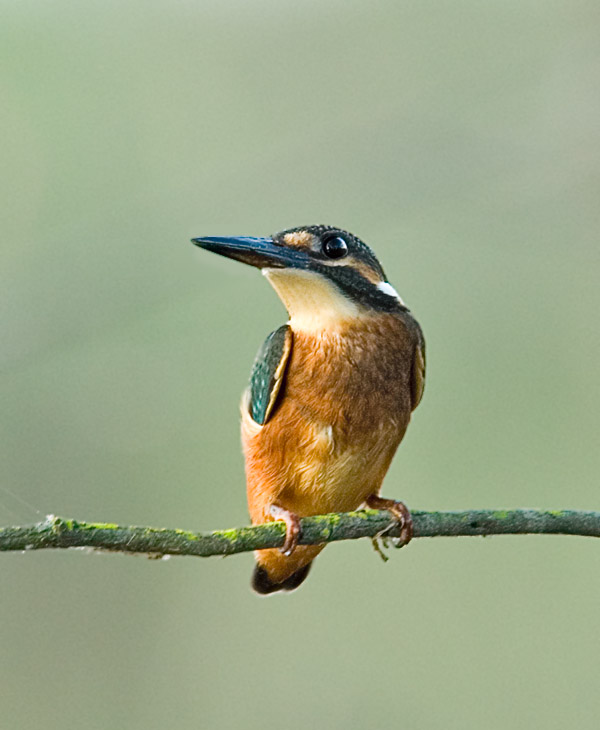
Common Kingfisher by Phil Kwong
It would be nice to know which birds Adam named and what he named them. Today, the birds we see around the world are variations from those original bird kinds. The names that they now have are different, but, if Adam were to name the birds living today, do you think he might use these current names on the birds?
Below are some bird names that have caught my attention and you can almost visualize something about them:
A – Amazon, Antbird, Antpitta, Antshrike, Antvireo, Antwren, Apostlebird, Awlbill
B – Babbler, Bamboowren, Barbtail, Barbthroat, Bare-eye, Barwing, Baywing, Bee-eater, Bellbird, Berryeater, Berrypecker, Bird-of-paradise, Bishop, Blackbird, Blackcap, Blackeye, Black-headed, Blackstart, Blackthroat, Bleeding-heart, Bluebill, Bluewing, Bluebird, Bluebonnet, Bluetail, Bluethroat, Boatbill, Bowerbird, Brilliant, Bristlebill, Bristlebird, Broadbill, Bronzewing, Brushrunner, Bushbird, Bush-hen
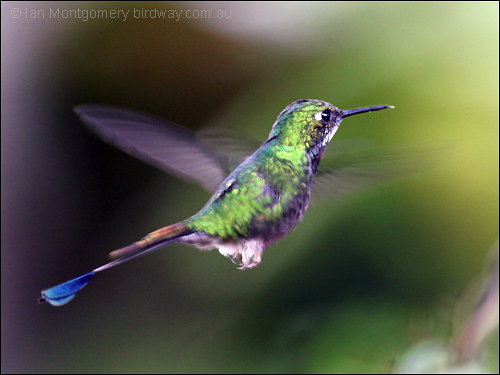
Booted Racket-tail (Ocreatus underwoodii) by Ian
C – Canvasback, Cardinal, Catbird, Chat, Chatterer, Cicadabird, Comet, Conebill, Cowbird, Creeper, Crestentchest, Crimsonwing, Crossbill, Cuckoo
D – Darkeye, Darter, Dipper, Dollarbird, Dove
E – Earthcreeper, Emerald
F – Fairy, Fairy-bluebird, Fairywren, Fantail, Fieldwren, Figbird, Finfoot, Fireback, Firecrest, Firecrown, Fire-eye, Firefinch, Firetail, Firethroat, Flamecrest, Flatbill, Flicker, Flowerpecker, Flowerpiecer, Flufftail, Flycatcher, Foliage-gleaner, Forktail, Friarbird, Frigatebird, Frogmouth, Fruitcrow, Fruiteater, Fruithunter
G – Gnatcatcher, Gnatwren, Go-away-bird, Goldcrest, Goldenback, Goldeneye, Goldenthroat, Goldfinch, Grassbird, Grassquit, Grasswren, Greytail, Groundcreeper, Groundpecker, Guineafowl
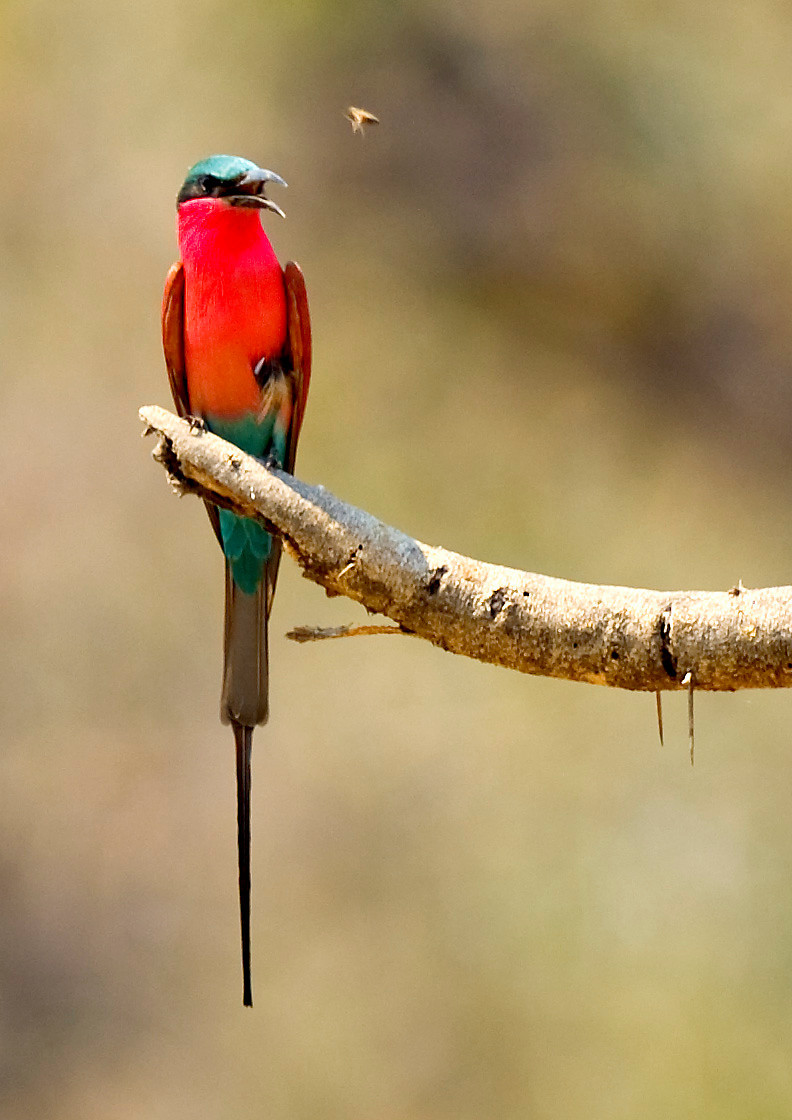
Carmine BeeEater (Merops nubicus or nubicoides) by Marc at Africaddict
H – Hardhead, Helmetcrest, Helmetshrike, Hermit, Hillstar, Hobby, Honeybird, Honeycreeper, Honeyeater, Honeyguide, Hookbill, Hornbill, Hummingbird
J – Jewel-babbler, Jewelfront, Junglefowl
K – Kingbird, Kingfisher, Kite, Knot,
L – Laughingthrush, Leafbird, Leaftosser, Longbill, Longclaw, Longtail, Lovebird
M – Marshbird, Metaltail, Mockingbird, Monarch, Morepork, Mountaingem, Mourner, Mousebird, Mudnester
N – Needletail, Nighthawk, Nunbird, Nutcracker, Nuthatch
O – Oilbird, Openbill, Ovenbird, Oxpecker, Oystercatcher
P – Palmchat, Palmcreeper, Pewee, Pilotbird, Pintail, Prickletail, Puffback, Puffbird, Puffleg
R – Racket-tail, Rail, Razorbill, Recurvebill, Redhead, Redwing, Rockfinch, Rockfowl, Rockjumper, Rockrunner, Rockwarbler, Rockwren, Roller, Rushbird
S – Sabrewing, Saddleback, Sanderling, Sandgrouse, Sandpiper, Sapphire, Sapphirewing, Sapsucker, Screamer, Screech, Scrubbird, Scrubfowl, Scrubtit, Scrubwren, Secretarybird, Seedcracker, Seedeater, Sheathbill, Shieldbill, Shoebill, Shortwing, Shoveler, Sicklebill, Silktail, Silverbird, Skimmer, Snowcock, Snowfinch, Softtail, Solitaire, Spadebill, Spatuletail, Spiderhunter, Spinebill, Spinetail, Spoonbill, Standardwing, Starfrontlet, Starthroat, Stilt, Stichbird, Straightbill, Streamcreeper, Streamertail, Stubtail, Sugarbird, Sunangel, Sunbeam, Sunbird, Sunbittern, Sungem, Surfbird, Swift
T – Tailorbird, Tattler, Thicketbird, Thick-knee, Thistletail, Thornbill, Tinkerbird, Trainbearer, Treecreeper, Treehunter, Treepie, Treerunner, Treeswift, Trembler, Triller, Tropicbird, Trumpeter, Tuftedcheek, Tyrant
U – Umbrellabird
V – Violetear, Visorbearer
W – Wagtail, Wallcreeper, Warbler, Waxbill, Waxwing, Weaver, Weebill, Wheatear, Whipbird, Whistler, White-eye, Whiteface, Whitethroat, Whitetip, Widowbird, Winter, Wiretail, Woodcock, Woodcreeper, Woodhen, Woodhaunter, Woodpecker, Woodstar
Y – Yellowbrow, Yellowhammer, Yellowlegs, Yellowthroat
The slide show has just some of the Passerines (Song Birds) whose names might have been easy. I’ll save the non-Passerines for later. Tried not to use too many colors because that is also for other blogs.
*
*
See Also:
Bird Name Challenges
Variation within Created Kinds
Species and Kinds
Explaining Diversity within Created Kinds
*
I trust you like my effort to use the Slideshow this way.
KJV
Most photos were provided by permission of the photographers in the sidebar.
Deuteronomy 14:11-18 KJV
(11) Of all clean birds ye shall eat.
(12) But these are they of which ye shall not eat: the eagle, and the ossifrage, and the ospray,
(13) And the glede, and the kite, and the vulture after his kind,
(14) And every raven after his kind,
(15) And the owl, and the night hawk, and the cuckow, and the hawk after his kind,
(16) The little owl, and the great owl, and the swan,
(17) And the pelican, and the gier eagle, and the cormorant,
(18) And the stork, and the heron after her kind, and the lapwing, and the bat.
*


 Birds of the Bible For Kids